
01
Grade named, condition left blank
A drawing says 6061 or 17-4PH with no temper called out. T6 and O machine nothing alike, and H900 is not the same part as H1075. We have to stop and ask, which pushes the quote back a day.
Pick the grade before you pick the tolerance. This reference set covers alloy family, temper and finish, and shows which combinations hold ±0.005 mm and which ones should be re-specified early.
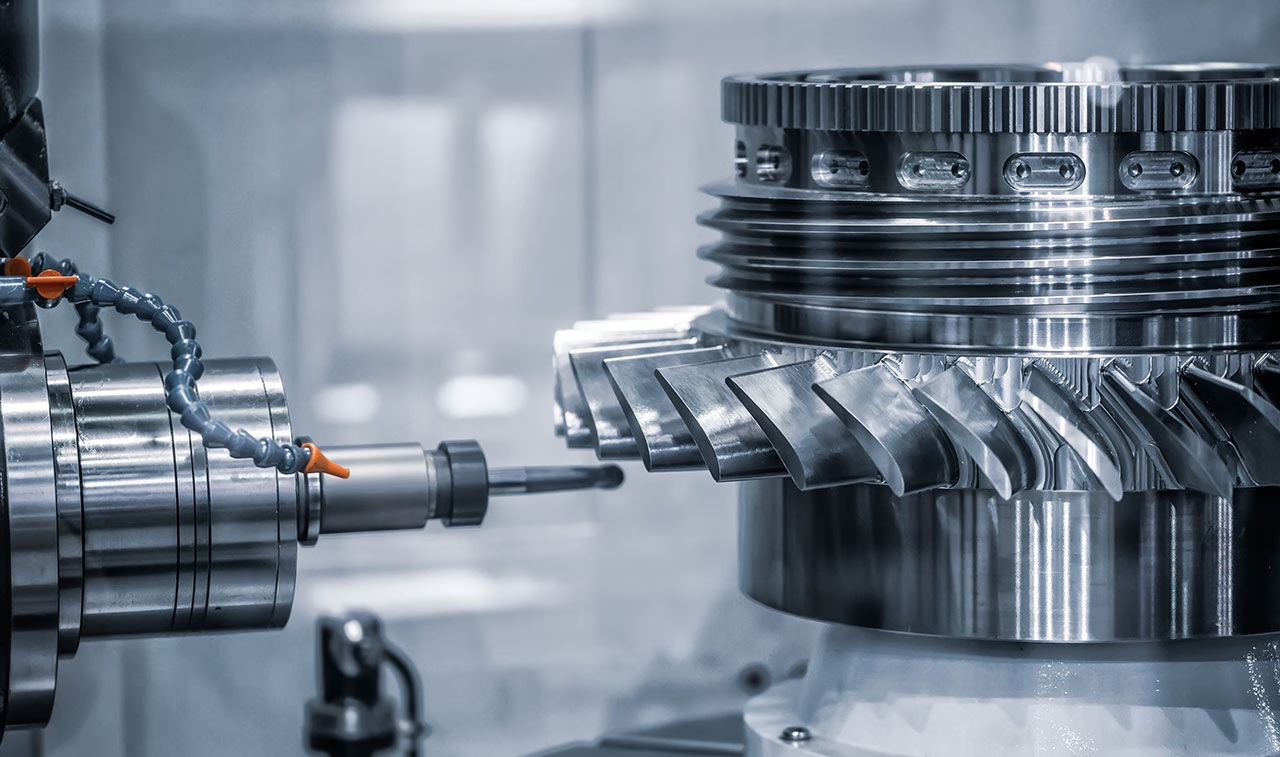
Most of these are decided on the drawing, not on the machine. Each one costs a re-quote or a scrap lot.
A drawing says 6061 or 17-4PH with no temper called out. T6 and O machine nothing alike, and H900 is not the same part as H1075. We have to stop and ask, which pushes the quote back a day.
Hardcoat anodizing builds 25–50 μm per surface. A bore sized for bare aluminum closes up past its tolerance. Fixing it means re-cutting the part or opening the drawing, not re-running the bath.
300-series stainless is largely non-magnetic, 400-series is not. If a sensor or a reed switch depends on holding a magnet, the grade has to match. Swapping it later changes corrosion behavior too.
±0.005 mm on magnesium or on a thin-wall 304 housing is a fight against thermal growth, not a machining problem. The material is the constraint. We flag it before cutting, not after.
Know the failure mode of the grade before you commit the design.

6061-T6 is the default for structural brackets, housings and fixtures. It machines clean, takes anodizing evenly and holds ±0.005 mm on features up to about 500 mm. 7075-T6 is roughly twice the strength and noticeably worse to cut; it is the right answer for a high-load arm or a mold insert, and the wrong answer for a cosmetic cover.
On the steel side, the split is corrosion versus machinability. 303 turns fast and finishes well but is not for outdoor or wash-down service. 304 is the general-purpose stainless. 316L is for chloride or medical contact. 17-4PH gives you strength after aging, and the aging temperature you pick decides the final hardness.
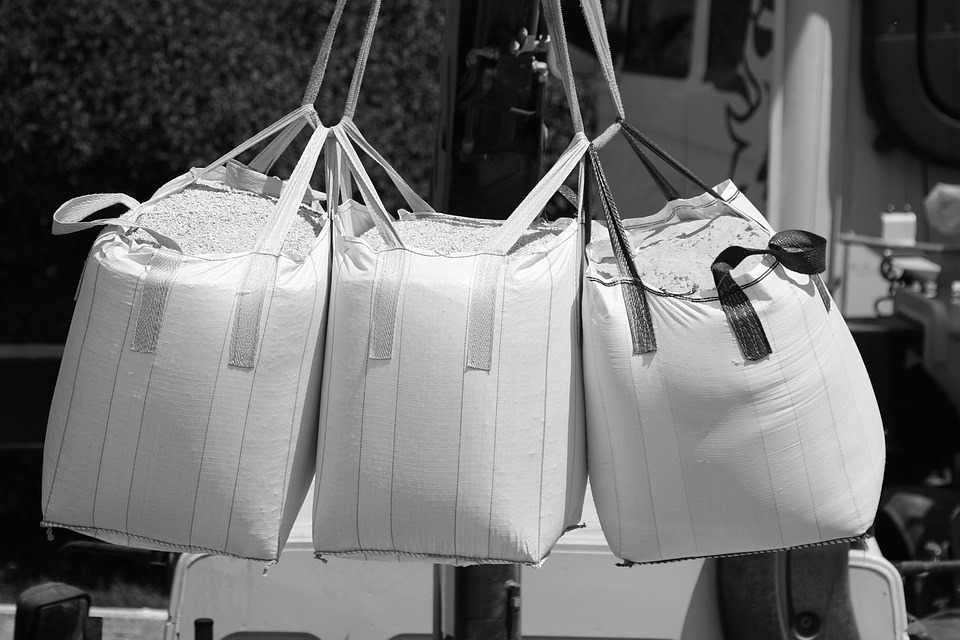
Titanium, aluminum, copper, brass and magnesium are all effectively non-magnetic in their normal forms. That matters if a part sits next to a sensor, a magnetic chuck or a reed switch. It does not matter much for stiffness or strength, so do not pick titanium just to avoid magnetism.
Titanium earns its cost through strength-to-weight ratio and corrosion resistance, and it pays for that in tool life and cut time. Copper and brass solve conductivity and thermal problems. Magnesium is the lightest option we machine, and it needs chip control and coolant discipline because fine magnesium swarf is a fire risk.
Use this as a first filter. If two rows fit, send the drawing and we will confirm.
| Material | Pick it for | Avoid it when |
|---|---|---|
| 6061-T6 aluminum | Structural brackets, housings, anodized covers | Surface hardness is the limiting factor |
| 7075-T6 aluminum | High-load arms, mold inserts, aerospace fittings | Part is cosmetic or welded |
| 304 stainless | General corrosion resistance, food contact | Chlorides or salt spray are present |
| 316L stainless | Medical, marine, wash-down equipment | Cost is the only driver |
| 17-4PH stainless | Shafts and valves needing aged strength | You need maximum corrosion resistance |
| Ti-6Al-4V | Weight-critical aerospace and medical parts | Budget and cycle time are fixed |
| C36000 brass | Fittings, bushings, electrical contacts | Part sees high wear or high load |
| AZ91D magnesium | Housings where every gram counts | The shop cannot control fine swarf |
One shop for the metal, the plastic and the finish. No handoff between vendors.
Sixteen simultaneous 5-axis centers cut complex geometry in one setup. Fewer setups means fewer datum shifts on titanium and hardened stainless.
Three, four and five-axis mills plus 16 mill-turn centers. Turned parts down to Ø400 mm on a rotary table, milled parts up to 4,000 mm.
One-off parts in the final production material, so the prototype tells you something real about machinability and fit before tooling is committed.
Formed and welded assemblies in 5052, 5083 and A36. Good for enclosures and brackets that do not need full machining.
ADC12 and magnesium castings for higher volumes, with machining on the critical faces after the casting cools.
Anodizing, plating, powder coating, bead blasting, brushing and polishing. We account for coating build on the drawing before the part is cut.
| Item | Range | Note |
|---|---|---|
| Aluminum | 6061, 2024, 5052, 6063, 6082, 7075 | 6061-T6 stocked most often |
| Stainless | 303, 304, 316L, 420, 440C, 17-4PH | 17-4PH aged to your spec |
| Steel | 1018, 1045, 4130, 4140, 4340, A36 | Tool steel on request |
| Titanium and special | Ti-6Al-4V, Inconel, AZ31B, AZ91D | Longer cycle times |
| Plastics | ABS, PC, POM, PA, PEEK, carbon fibre | PEEK and CF need sharp tooling |
| Tolerance | ±0.005 mm (±0.0002 in) | Confirmed per feature |
| Surface finish | Ra 0.2–0.8 μm to Ra 1.6–3.2 μm | Depends on material and tool |
| Laser marking | Minimum character height 1.5 mm | After finishing |
Fifteen years of cutting the same alloy families. If a grade behaves badly in a setup, we already know where the problem will show up.
We quote the tolerance per feature, not per drawing. If a feature cannot hold it in the chosen material, we say so before the job starts.
Quotation and a free DFM analysis come back within 12 hours. Material substitutions and coating build get flagged in that review.
Dongguan plus a Singapore factory. 7,600 m² of manufacturing space and 150 technicians across the sites.
Raw material check, in-process monitoring and final inspection on every order. Reports available on request.
From one prototype to 10,000+ part runs. Material guides matter most on the first part, so there is no reason to gate that.
Weight and traceability drive the grade choice. Titanium and 7075 usually win.
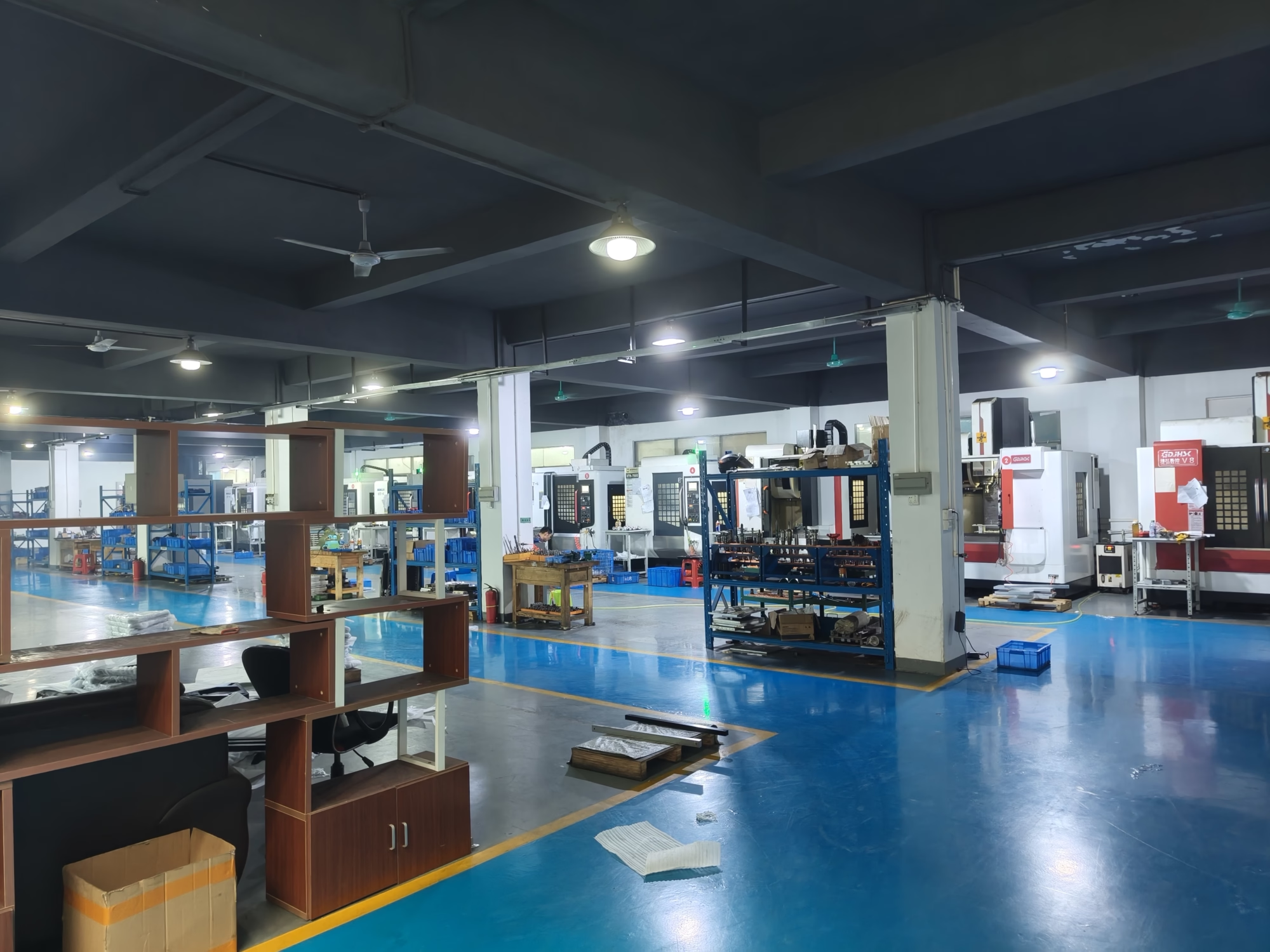
Bus bars and housings pivot on conductivity and thermal path, not strength.

Body contact and cleanability rule out many grades before geometry is discussed.

Moving mass is the enemy. Magnesium and aluminum arms cut inertia directly.
No. Aluminum and its alloys are not ferromagnetic, so a magnet will not stick and the part will not respond to a magnetic sensor.
The exception is contamination, not the alloy. Steel chips embedded from a previous operation or a steel insert pressed into the part will read as magnetic. We keep aluminum workholding separate to avoid that.
It depends on the crystal structure. 304 and 316L are austenitic and largely non-magnetic in the annealed state, though cold working can make them weakly magnetic at a formed edge.
400-series grades such as 420 and 440C are martensitic and do respond to a magnet. If a magnetic chuck or a reed switch is involved, tell us which behavior you need and the grade follows from that.
No. Commercially pure titanium and Ti-6Al-4V are non-magnetic, which is one reason they show up near sensors and in MRI-adjacent equipment.
That property is not why titanium is expensive to machine. Low thermal conductivity and high chemical reactivity are. Heat stays in the cutting edge, so tool life and feed rates need different numbers than steel.
Copper, brass and bronze are non-magnetic. C101, C110 and C36000 all behave the same way in a magnetic field.
Copper is gummy, so it wants sharp tooling and generous rake. Beryllium copper is a separate case because of dust hazards during machining, and we handle it with controlled chip collection.
6061-T6 covers most brackets. It is cheaper, welds, anodizes evenly and machines predictably at ±0.005 mm.
Move to 7075-T6 when the load path is the limiting factor or when you are chasing stiffness in a thin section. Accept the trade: worse weldability, shorter tool life, and a surface that anodizes to a darker, less uniform tone.
Type II clear anodizing builds roughly 5–15 μm per surface. Hardcoat runs 25–50 μm per surface. Both grow outward and, on some alloys, slightly inward.
On a Ø10 H7 bore, that build can consume the whole tolerance band. We size the pre-plate geometry accordingly, which is why the finish callout needs to reach us before the first cut, not after.
Often yes. Send the grade and the specification and we will check tooling, coolant and lead time before quoting.
The honest answer is sometimes no. Exotic grades with poor machinability and no schedule benefit are not worth forcing, and we will tell you that in the DFM notes rather than quote a part we cannot hold.
Yes, on request. Mill certificates travel with the order and inspection reports can be issued for the finished part.
For aerospace, medical and automotive work, the material cert is usually the first document the quality team asks for. Ask for it at quote stage so it is planned into the paperwork, not added at shipment.
Tell us the grade and the tolerance you need. Quotation and free DFM analysis come back within 12 hours.
12-hour quote100% inspectionNo minimum order quantityNDA on request
Trusted by engineers and manufacturers worldwide










Upload your 3D model or 2D drawing and get a quotation with a free DFM analysis. Maximum processing size 4,000 mm.
CNC Metals 13 grades
CNC Plastics 10 grades
Machines & processes 12 options
Surface & post-processing 10 options
Material: not selected Machine: not selected Post-process: not selected
Fill in this short form and we'll open WhatsApp with your message ready to send. We only use these details to reply to you.
Nothing is sent until you press send inside WhatsApp.