GreatLight CNC Machining Factory logo
CNC Machining
Rapid Prototyping
Materials
Industries
News
About GL

Get Instant Quote

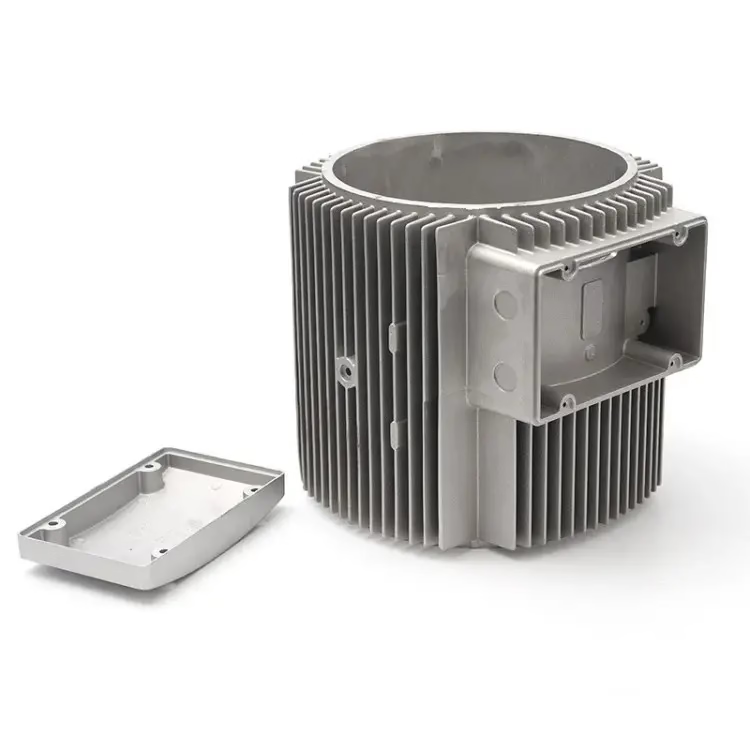
Pressure Die Casting

Low-Volume Metal Die Casting Services

GreatLight runs hot and cold chamber die casting for zinc, aluminum and magnesium parts, then machines them to ±0.005 mm. One prototype or 10,000 pieces, with no minimum order quantity.

Zinc, Al, Mg alloysHot + cold chamber±0.005 mm post-machiningOrder from one pieceDFM in 12 hoursISO 9001 / IATF 16949
die-casting-technology
2011Casting and machining since
±0.005 mmTolerance after CNC finishing
12 hoursQuote plus free DFM analysis
99.99%Qualification rate
Common Problems

Where die casting projects go wrong

Most failures show up before the first shot. These four are the ones we see most.

01

Tooling cut before the wall thickness is fixed

A 2 mm wall that should be 3 mm will short-shot at the far end of the cavity. The die is already cut, so the fix means welding and re-cutting steel. That is weeks of delay and a second tooling bill nobody planned for.
02

Porosity found after anodizing

Gas trapped during fill turns into surface blisters once the part hits the anodizing line. The lot gets rejected, and you are left sorting good parts from bad by hand. Vacuum assist and proper gate placement remove most of this before it starts.

03

As-cast tolerance treated as a finished tolerance

Die casting alone holds roughly ±0.1 mm on small features. If a bearing bore or a mating face is called out tighter than that, the drawing needs a machining step, not a tighter die. Skipping that step leads to assembly problems downstream.

04

Quotes that arrive after the schedule is gone

A week spent waiting on tooling prices pushes the whole program. By the time the number lands, the launch date has already moved. We return a quote and a DFM report within 12 hours so you can make the call.

The Approach

Cast near net shape, then machine what matters

Die casting gets you the geometry. CNC finishing gets you the tolerance. Both run under one roof in Dongguan.

low volume manufacturing
Process Selection

Hot chamber for zinc, cold chamber for aluminum

Hot chamber machines keep the melt in a heated gooseneck, so the shot cycle is short and the metal stays clean. That suits zinc, magnesium and tin-based alloys, and it is the better route for thin walls and small, detailed parts where cycle time drives cost.

Cold chamber machines ladle metal into the shot sleeve for each cycle. The melt never sits in the injection system, which is why aluminum, copper and higher-melting alloys run here. Cycle times are longer, but the process handles the temperatures those alloys need.

  • 1
    Zinc and magnesiumHot chamber. Thin walls, tight as-cast detail, fast cycles.
  • 2
    Aluminum and copperCold chamber. Higher melt temperature, larger parts, structural housings.
  • 3
    Mixed programsWe quote both routes when the alloy and geometry allow either one.

Get Instant Quote

greatlight-cnc-machining-center-11
Post-Casting

Machining the features the die cannot hold

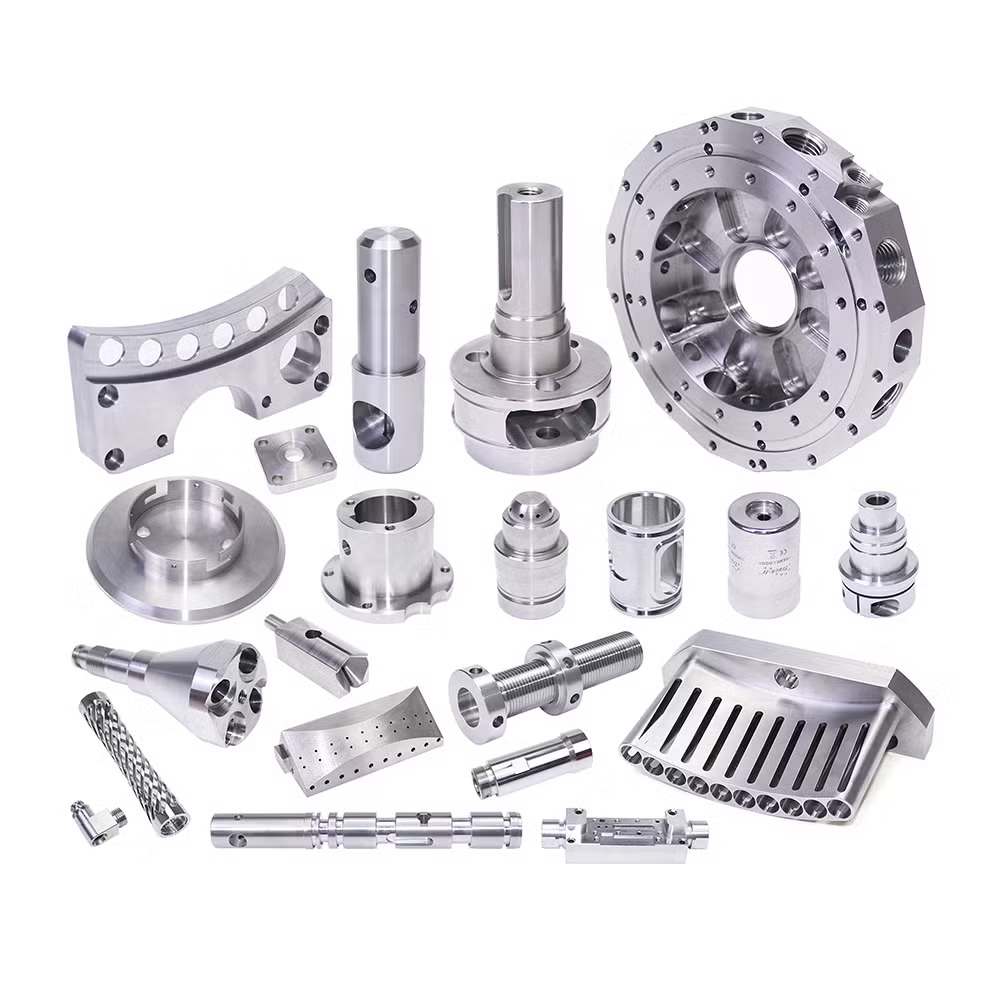
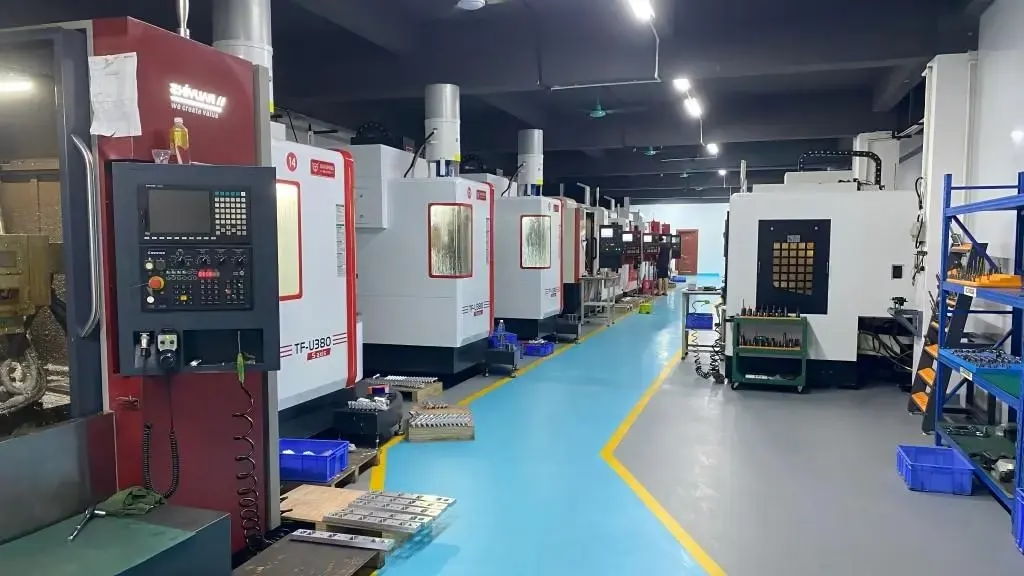
A cast surface carries draft and a parting line. Bores, threads and mating faces usually need more than that. We clamp the casting on 3-axis and 5-axis centers and cut only the critical features, which keeps cycle time down compared with machining the whole part from bar stock.

This is also where the tolerance lands. Cast to ±0.1 mm, then machine the bore to ±0.005 mm. Surface finish follows the same logic: as-cast for the outside, Ra 0.8–1.6 μm on sealing faces that need it.

  • 1
    Cast and machine in one quoteNo second supplier to coordinate, no re-fixturing questions.
  • 2
    Fixtures built for castingsDraft and parting lines are located in the fixture, not ignored.
  • 3
    Finish after machiningAnodizing, plating, powder coating, bead blasting, laser marking.

Talk to an Engineer

Selection Guide

Which process fits the part

Use this as a first filter. The DFM report refines it once we see the geometry.

Part conditionRecommended routeWhy
Wall under 1.5 mm, zinc or MgHot chamber die castingFast fill, thin sections hold
Aluminum housing over 200 mmCold chamber die castingMelt volume and temperature
Bore or thread under ±0.05 mmCast plus CNC machiningDies cannot hold that tolerance
Fewer than 50 pieces, simple shapeMachining from billetTooling cost is not repaid
Visible cosmetic surfaceCast, machine, then finishHides parting lines and porosity
Large flat plate, low loadSheet metal fabricationCheaper than a casting die
Capabilities

What we run alongside die casting

One shop for the casting, the machining and the finish.

01

Metal Die Casting

Hot and cold chamber casting in zinc, aluminum, magnesium and copper alloys. Tooling, first article and production runs.

02

5-Axis CNC Machining

16 simultaneous 5-axis centers for contoured faces and multi-side features on castings and billet parts.

03

CNC Milling & Turning

27 three-axis machines and 16 mill-turn centers. Bores, threads, faces and turn profiles after casting.

04

Rapid Prototyping

Check fit and form before committing to a die. Patterns and prototypes from your STEP file.

05

Vacuum Casting

Urethane and low-volume duplicates in the tens to low hundreds, useful for pre-tooling validation.

06

Part Surface Finishing

Anodizing, plating, powder coating, black oxide, bead blasting and laser marking on cast and machined parts.

Scope

What a die casting job includes

ItemDetail
AlloysZinc, aluminum, magnesium, copper, tin-based
Cast toleranceAround ±0.1 mm on small features
Machined tolerance±0.005 mm where the drawing calls for it
Surface finishRa 0.8–1.6 μm on machined faces
Part sizeUp to 4,000 mm on finishing equipment
ToolingQuoted per part, with DFM feedback first
VolumeOne prototype to 10,000+ piece runs
InspectionRaw material, in-process and final; reports on request
Why GreatLight

Numbers behind the service

Fifteen years of casting and machining, run as one process.

15Y

Casting since 2011

Fifteen years of tooling and production work, with the process knowledge that only shows up on the shop floor.

±0.005

Machined tolerance in mm

Cast near net shape, then cut the critical features to the tolerance the drawing actually needs.

127

CNC machines on site

Casting, machining and finishing under one roof. No part travels between suppliers.

12H

Quote and DFM turnaround

Send the file and get a price plus a manufacturability review within 12 hours.

4

Quality certifications

ISO 9001:2015, IATF 16949:2016, ISO 13485:2016 and ISO 27001:2022.

NDA

Confidentiality on request

Uploads stay secure. We sign an NDA before reviewing sensitive designs when you ask.

7,600 m²Manufacturing space
3Wholly-owned plants
150Technicians on staff
99.99%Qualification rate
Industry Fit

Where cast parts ship

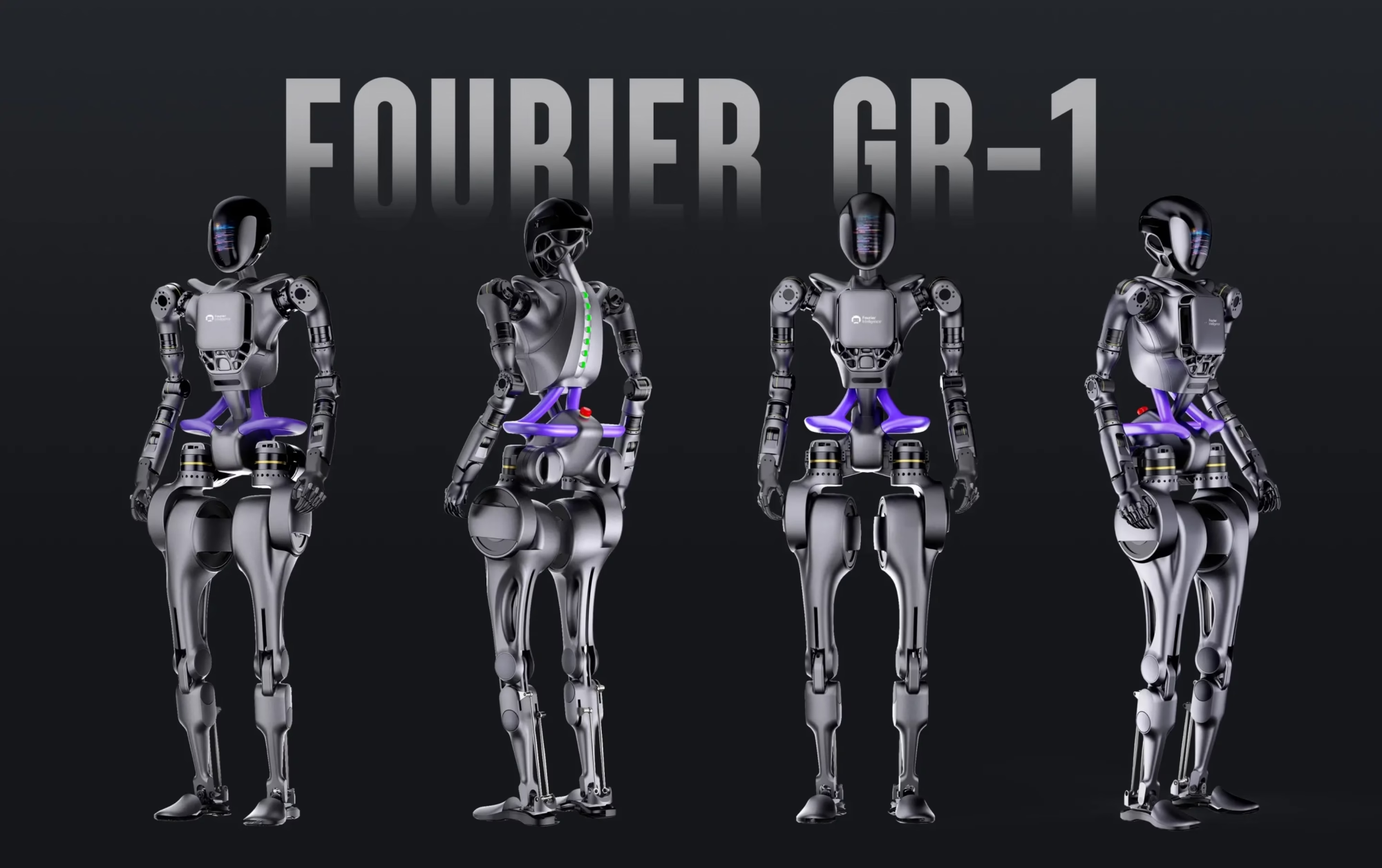
GreatLight Specializing In Humanoid Robot Components

Robotics and automation

Lightweight zinc and aluminum housings for joint modules, cast then machined on the bore faces.

  • ±0.005 mm bores
  • Wall down to 1.5 mm
Experience the GreatLight Advantage in Auto Parts Processing!

Automotive and EV

Structural brackets and housings run under IATF 16949, with in-process checks on every lot.

  • IATF 16949 line
  • 100% final inspection
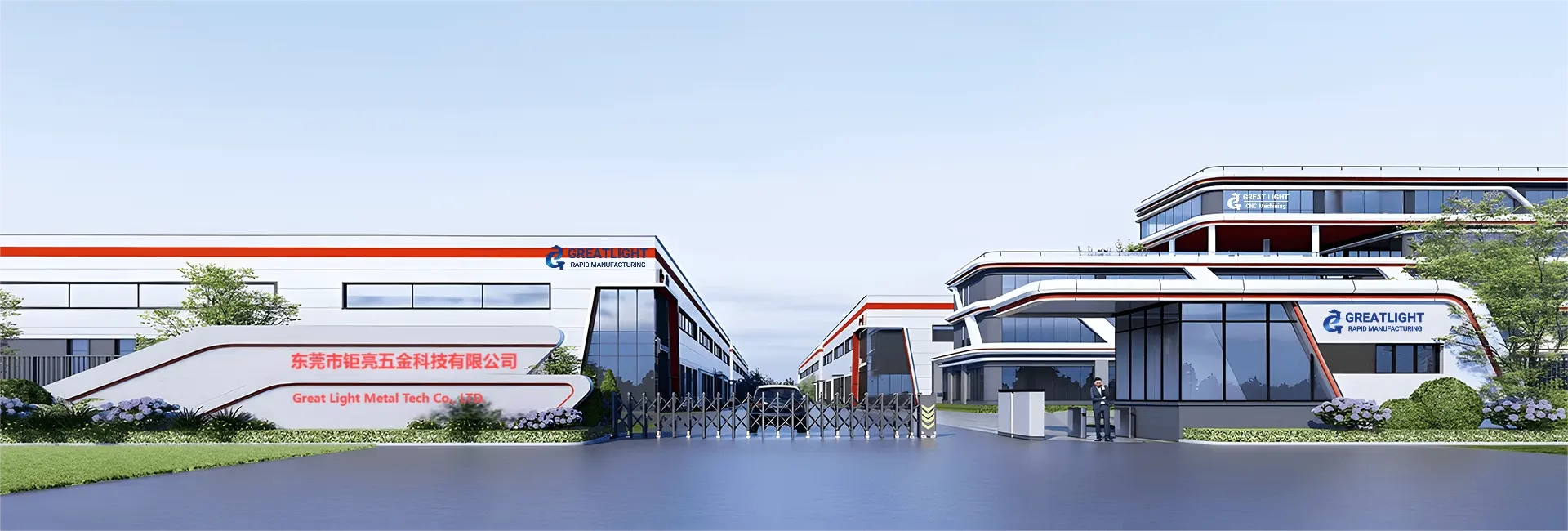
GreatLight Metal new factory building

Industrial machinery

Pump bodies and gear covers cast in aluminum, then milled flat on sealing faces.

  • Ra 0.8–1.6 μm faces
  • Up to 4,000 mm
GreatLight CNC Machining Compliance Center

Medical device housings

Small cast and machined enclosures produced under ISO 13485 with documented inspection.

  • ISO 13485
  • Reports on request
FAQs

Questions engineers ask before sending a file

What alloy should I pick for a thin-wall housing?

Zinc and magnesium flow better than aluminum in thin sections, so a 1.5 mm wall is routine in a hot chamber machine. Aluminum at the same wall is possible but the window is narrower.

If the part also needs to carry load or dissipate heat, aluminum is usually still the right call. We will tell you in the DFM report whether the wall in your model is castable.

Can die casting hold the tolerances on my drawing?

As-cast, expect roughly ±0.1 mm on small features, plus draft on vertical walls. Anything tighter than that needs a machining operation after the part cools.

We mark the tight features in the DFM report and quote the machining step separately, so you can see what the tolerance actually costs.

How do I avoid porosity showing up after anodizing?

Porosity comes from gas trapped during fill or from shrinkage as the part solidifies. Gate placement, venting and wall thickness control most of it.

For cosmetic parts we can run vacuum assist and adjust the gate so the last metal to fill sits in a hidden area. Send the cosmetic surface callout with the file.

Do I need a die if I only want a few hundred parts?

It depends on part size and geometry. Below roughly 50 pieces with a simple shape, machining from billet is usually cheaper than cutting a die.

Between a few hundred and a few thousand, casting starts to win because the per-part cycle cost drops. We can quote both routes so the comparison is on the table.

What files do you need for a quote?

STEP, STP, SLDPRT, IPT, PRT, SAT, IGES, IGS, CATPART, X_T, OBJ and STL all work. A 2D drawing helps if the tolerances are not in the model.

Send whatever you have. If the model is missing the tolerance callouts, we will flag it rather than guess.

How long does a casting project take?

The quote and DFM analysis come back within 12 hours. Production can start within 24 hours once the design and tooling are approved.

Parts ship in 3–5 days for machined work. Die cutting adds its own lead time, which we state in the quote rather than in a general promise.

Is there a minimum order quantity?

No. Runs start from a single prototype and go past 10,000 pieces. The economics change across that range, but the entry point does not.

A one-piece order still goes through the same inspection steps as a production lot.

How is my design kept confidential?

Uploads stay secure and are not shared outside the project team. We can sign an NDA before you send files if that is easier for your process.

ISO 27001:2022 covers how we handle information internally, which matters when the part is unreleased.

Send a file, get a cast and machined quote

Upload your model and we return a price plus a DFM review within 12 hours. One prototype or a full production run.

12-hour quote100% inspectionOrder from one pieceNDA on request

Trusted by engineers and manufacturers worldwide

Tesla Ford Motor Company BYD Auto Denso Magna International Boeing Airbus Medtronic KUKA FANUC