GreatLight CNC Machining Factory logo
CNC Machining
Rapid Prototyping
Materials
Industries
News
About GL

Get Instant Quote

Precision CNC Machining Rapid Prototyping

Precision CNC Machining Rapid Prototyping to Production

Send us your CAD file. We quote and return a DFM analysis within 12 hours, machine the first article on 5-axis centers, and carry the same program into 10,000+ part runs. One shop, one tolerance, no re-qualification between stages.

±0.005 mm toleranceFrom 1 to 10,000+ partsQuote in 12 hoursNo minimum orderISO 9001 / IATF 16949100% inspection
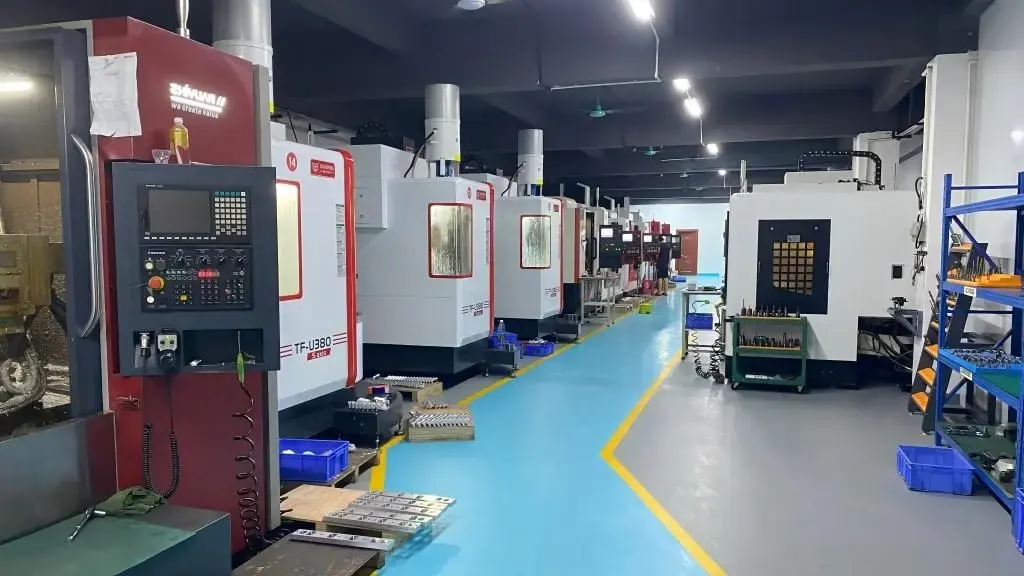
greatlight-cnc-machining-center-11 (1)
16Simultaneous 5-axis centers
127High-precision CNC machines
±0.005 mmAchievable tolerance
3–5 daysTypical ship time
Where prototypes stall

Four problems we hear before the first PO

Most delays are not machining problems. They are handoff problems.

01

The prototype shop cannot run your production volume

You validate a design at a prototyping house, then move to a second supplier for the production order. New fixtures, new feeds and speeds, a fresh first-article report. The part that passed validation is not the part you ship. Weeks disappear in the gap.
02

Tolerances drift once the quote turns into a job

A ±0.05 mm print gets quoted as ±0.01 mm because the RFQ never listed which features matter. The first parts arrive out of spec on a bore that carries a bearing. Rework, re-inspection, and a schedule slip that the design team has to absorb.

03

Small quantities get refused or priced out

You need three parts to test a bracket before committing tooling. Most shops set a minimum that makes a three-part order uneconomical, so you either over-order or wait. Either way the test loop stretches from days into weeks.

04

No DFM feedback until the parts are already cut

Thin walls, deep pockets, sharp internal corners, a thread that cannot be cut with the tool you planned. None of this surfaces at quote time. It surfaces at inspection, when the fix costs a redesign instead of an email.

One supplier, idea to volume

How we run rapid prototyping and production on the same floor

The prototype and the production part come off the same machines, from the same program, checked against the same tolerance.

Aerospace CNC Machining Prototype Service Savannah
Prototype stage

First parts machined in days, not weeks

Upload a STEP file and we return a quotation plus a DFM analysis within 12 hours. Production can start within 24 hours of approval. For machined prototypes, parts typically ship in 3–5 days. That covers functional test parts, fit checks, and small bridge builds before tooling is committed.

We machine prototypes from the real material whenever the design allows: 6061-T6, 7075, 304 stainless, 17-4PH, PEEK, and others from our stock list. A prototype in the production alloy tells you more about wear, weight, and thread strength than a substitute ever will. When a machined part is the wrong call, we say so and route the job to vacuum casting or 3D printing instead.

  • 1
    Quote plus DFM in 12 hoursWall thickness, tool reach, and tolerance callouts flagged before you commit.
  • 2
    No minimum order quantityOne part or 10,000+. A three-piece test run is a normal job here.
  • 3
    Production material on prototypes6061-T6, 7075, 304, 17-4PH, PEEK and more, machined to the final print.

Get Instant Quote

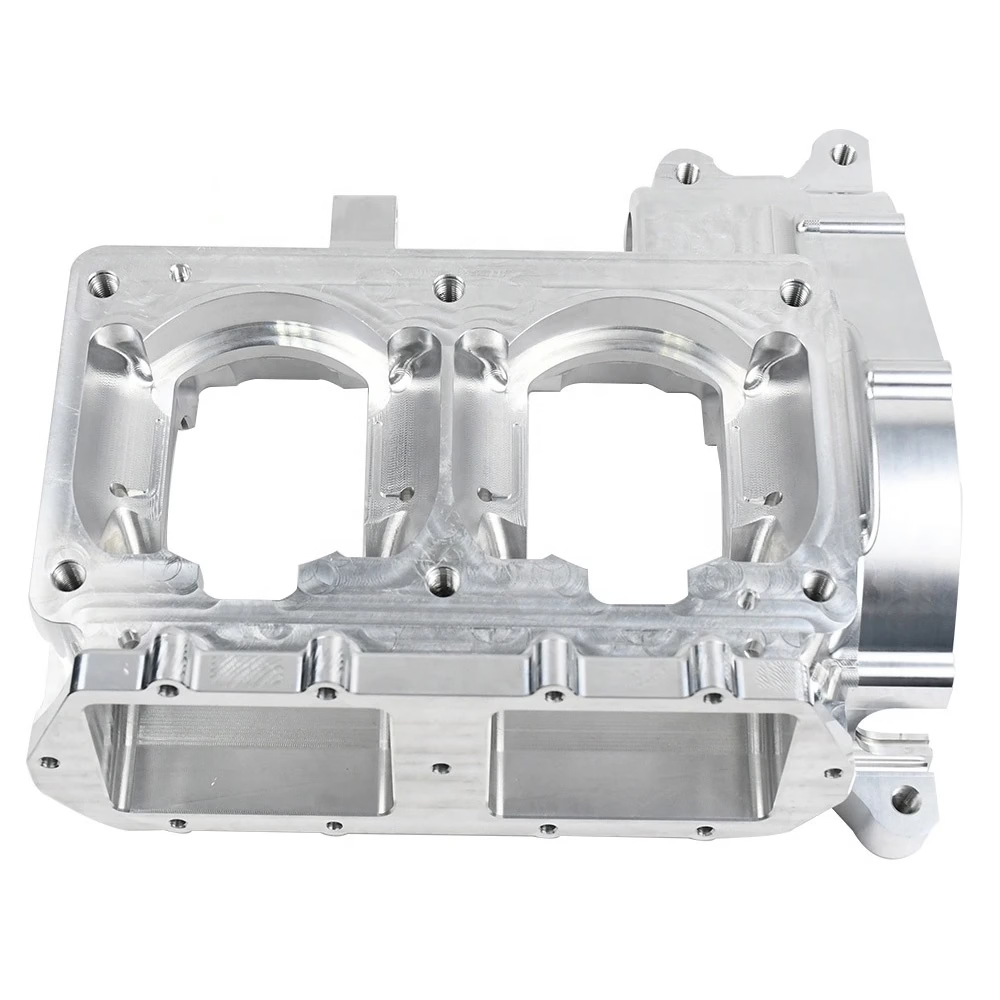
Custom Auto Spare Parts 5 Axis CNC Machining Engine Parts
Production stage

The same program scales to 10,000+ parts

When the design freezes, nothing about the setup changes. The 5-axis program that cut the prototype runs the production batch. Fixtures carry over. The inspection plan carries over. This matters most on parts with multiple datum references, where re-fixturing at a new shop is the single biggest source of dimensional drift.

Capacity for volume work sits at 127 high-precision CNC machines across three wholly-owned plants, including 16 simultaneous 5-axis machining centers, 12 four-axis mills, 27 three-axis machines, and 16 mill-turn centers. Maximum processing size reaches 4,000 mm. Cycle times, tool life, and in-process checks get locked down before the first production lot, not after.

  • 1
    Same program, same fixturesNo re-qualification between prototype approval and volume release.
  • 2
    4,000 mm maximum sizeLarge travel of 4,000 × 400 × 150 mm for long parts and frames.
  • 3
    99.99% qualification rateBacked by 100% inspection before shipment and reports on request.

Get Instant Quote

Process selection

Which process fits your part

Pick the route by geometry, material, and how many parts you actually need.

ProcessBest forWatch out for
5-axis CNCComplex geometry, tight tolerance, metal partsHigher unit cost at very high volumes
3-axis / 4-axis CNCPrismatic parts, bores, faces, simple profilesUndercuts need extra setups
Vacuum casting20–50 cosmetic or functional plastic partsNot for structural load or high heat
3D printingFast form checks, internal channels, jigsLayer lines and weaker Z-axis strength
Sheet metalEnclosures, brackets, panels, chassisNot for thick or heavily machined features
Die castingAluminium or zinc parts above roughly 1,000 piecesTooling lead time and upfront cost
What we run in-house

Six services that cover a product from concept to shipment

Machining, casting, forming, printing, and finishing sit under one quality system.

01

Precision CNC Machining

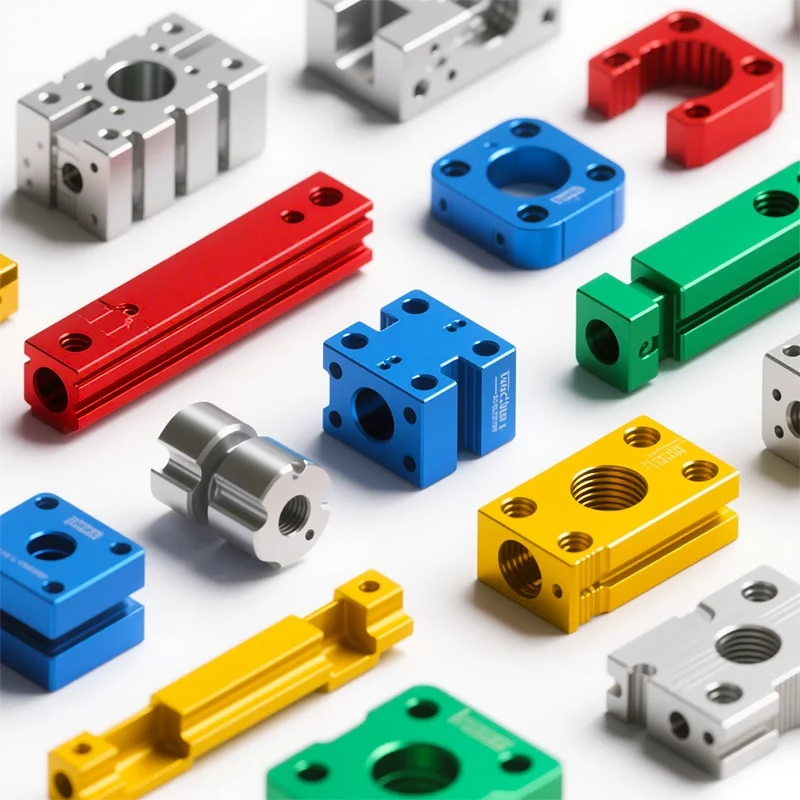
5-axis, 4-axis, and 3-axis milling plus mill-turn work in aluminium, stainless, steel, titanium, copper alloys, and engineering plastics. Tolerances to ±0.005 mm and surface finishes from Ra 0.2 μm.

02

Rapid Prototyping

Functional prototypes in production material, machined from your STEP file. Quote and DFM in 12 hours, parts in 3–5 days, no minimum quantity.

03

Sheet Metal Fabrication

Brackets, panels, and enclosures with laser cutting, forming, and hardware insertion. A practical route for chassis parts that would waste machine time.

04

Vacuum Casting

Silicone tooling for 20–50 plastic parts per mold. Good for pre-tooling fit checks, cosmetic samples, and small pilot batches in ABS, PC, or PMMA-like resins.

05

Custom 3D Printing

Form and fit checks with internal channels that machining cannot reach. Used when speed matters more than final material properties.

06

Metal Die Casting

Aluminium and zinc casting with tooling for parts above roughly 1,000 pieces. We machine the critical features after casting to hold the tolerances that matter.

Capacity and scope

Machine envelope, tolerance, and finishing range

Numbers you can check a print against before sending an RFQ.

ItemRangeNotes
Tolerance±0.005 mm (±0.0002 in)On critical features, with report on request
Fine finishRa 0.2–0.8 μmPolished or lapped sealing surfaces
Standard finishRa 0.8–1.6 μmTypical machined mating faces
As-machinedRa 1.6–3.2 μmNon-critical faces and clearance areas
Large travel4,000 × 400 × 150 mmLong frames, rails, structural parts
Medium travel750 × 1,150 × 550 mmMost plate and housing work
Compact travel500 × 500 × 450 mmSmall precise components
Rotary tableØ400 mm4-axis and 5-axis positioning
Laser marking1.5 mm minimum character heightSerial numbers, logos, traceability
Inspection100% before shipmentMaterial, in-process, and final checks
Why engineers keep the work here

Six reasons the second order looks like the first

Capability is easy to claim. Repeatability is the part that shows up in your incoming inspection.

15Y

Manufacturing since 2011

15 years of machining and prototyping for aerospace, automotive, medical, robotics, electronics, and industrial machinery programs.

127

CNC machines on three plants

16 simultaneous 5-axis centers, 12 four-axis mills, 27 three-axis machines, and 16 mill-turn centers across 7,600 m² of floor space.

12h

Quote plus DFM analysis

You get a price and a manufacturability review within 12 hours. Production can start within 24 hours of approval.

±0.005

Tolerance held at volume

The same ±0.005 mm capability runs from first article to the 10,000th part. A 99.99% qualification rate backs it.

1

No minimum order quantity

One prototype or a 10,000+ part run. Small test builds are treated as normal work, not exceptions.

4

Four management system certificates

ISO 9001:2015, IATF 16949:2016, ISO 13485:2016, and ISO 27001:2022 cover quality, automotive, medical, and data security.

7,600 m²Manufacturing space
150Technicians on staff
< 2%Historical late-delivery rate
3Wholly-owned plants
Sector requirements and what we deliver

Where rapid prototypes turn into qualified production parts

CNC Machining Prototype Service Georgia

Aerospace brackets and housings

Thin-wall aluminium and titanium parts with traceable material and inspection records on request.

  • ±0.005 mm
  • 5-axis
  • Material certs
automotive-prototyping-manufacturing

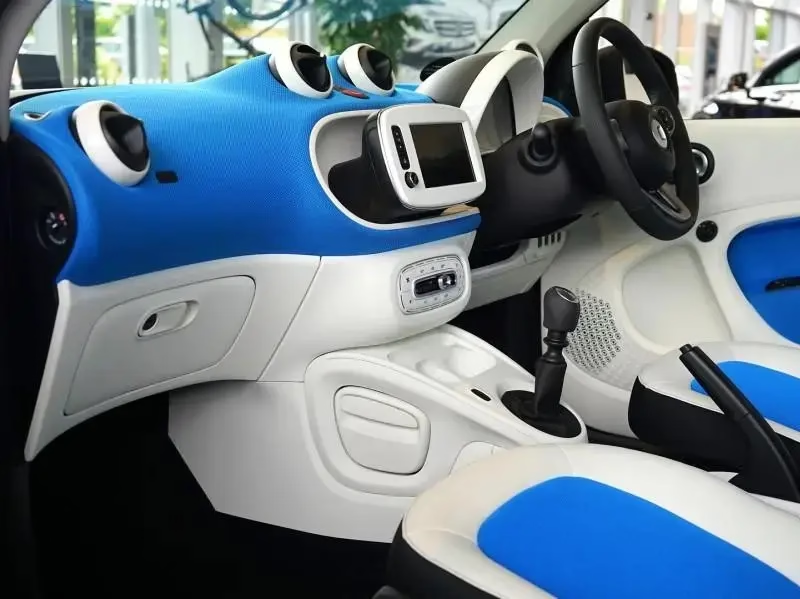
Automotive and EV components

Engine, drivetrain, and thermal parts run under IATF 16949 with in-process monitoring.

  • IATF 16949
  • 10,000+ runs
  • 100% inspection
medical-devices-rapid-prototyping

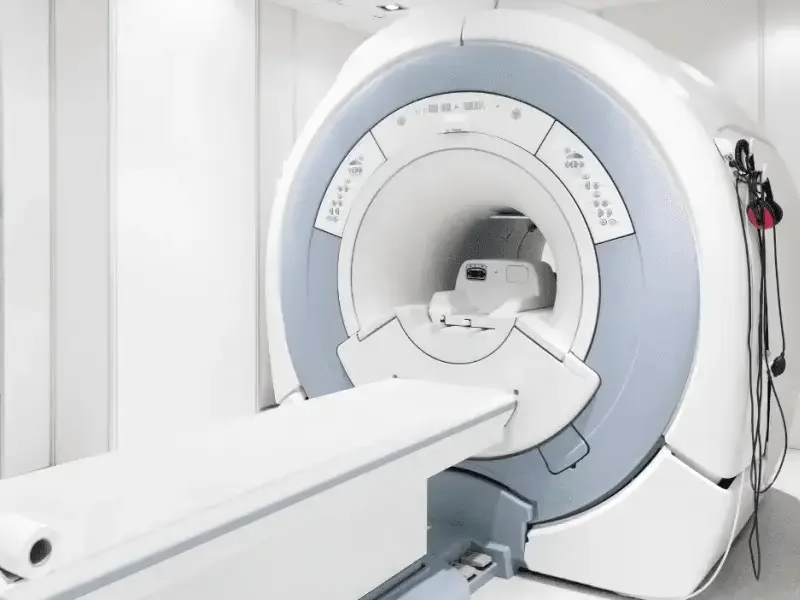
Medical device parts

Stainless and titanium components with fine surface finishes for cleanable, mating surfaces.

  • ISO 13485
  • Ra 0.2–0.8 μm
  • 3–5 day ship
Rapid-3D-Printing-Services-jpg

Robotics and automation hardware

End-effector plates and fixture parts machined to match the production print from day one.

  • No MOQ
  • 12-hour quote
  • 4,000 mm travel
FAQs

Questions engineers ask before the first order

How fast can I get a quote and a DFM review?

Upload your CAD file and we return a quotation plus a manufacturability analysis within 12 hours. The review covers wall thickness, tool reach, tolerance callouts, and features that will need a second setup.

If the design has a problem that would show up at inspection, we flag it at quote time so you can change the model instead of the schedule.

What is the smallest quantity you will run?

There is no minimum order quantity. A single functional prototype is a normal job, and so is a 10,000+ part production run.

Small test builds let you check fit and function before committing to tooling or a volume order. That is usually cheaper than over-ordering parts you will revise anyway.

Can you machine prototypes in the production material?

Yes, whenever the geometry allows. We stock aluminium 6061, 6061-T6, 2024, 5052, 7075, and ADC12; stainless 303, 304, 316L, 17-4PH, and 440C; steels including 1018, 1045, 4130, and 4140; titanium TC4 (Ti-6Al-4V); and plastics such as POM, PEEK, PC, and HDPE.

A prototype cut from the final alloy gives you real data on weight, thread strength, and wear. If a plastic or cast substitute is the better route for the stage you are at, we will tell you.

When does vacuum casting or 3D printing beat CNC machining?

Vacuum casting makes sense for roughly 20 to 50 plastic parts, especially cosmetic samples or pilot batches where silicone tooling is cheaper than machining each piece. It is not the right choice for structural load or high-temperature service.

3D printing wins when you need a form check in a day or two, or when internal channels cannot be reached by a cutting tool. Layer lines and weaker Z-axis strength are the trade-offs you accept.

How do you keep tolerances consistent between prototype and volume?

The production batch runs on the same 5-axis program and the same fixtures as the approved prototype. Nothing gets re-fixtured, so datum relationships do not shift.

Inspection follows the same plan at both stages: raw material check, in-process monitoring, and final inspection. Reports are available on request.

What surface finishes and markings can you apply?

Options include anodizing in clear, colour, hardcoat, and conductive types; electroless nickel, zinc, silver, and gold plating; powder coating and black oxide; and bead blasting, tumbling, brushing, or polishing.

Laser marking and engraving handle serial numbers, logos, and traceability codes. Minimum character height for legible marking is 1.5 mm.

Which certifications cover the work?

GreatLight holds ISO 9001:2015, IATF 16949:2016, ISO 13485:2016, and ISO 27001:2022. The first three cover quality management, automotive, and medical device work respectively.

ISO 27001:2022 covers information security, which is relevant if your drawings and models are sensitive. Uploads are kept secure and confidential, and we sign an NDA on request.

What happens if a part fails inspection?

Inspection runs at 100% before shipment, so a non-conforming feature is caught before it leaves the plant rather than at your receiving dock.

If a dimension is out of tolerance, we machine a replacement against the same program and fixtures. The historical late-delivery probability across our work is below 2%.

Send the print. Get a price and a DFM review.

Upload your CAD file and we return a quotation with manufacturability feedback within 12 hours. From one prototype to 10,000+ parts, on the same machines and the same tolerance.

12-hour quote and DFMNo minimum order quantity100% inspection before shipmentNDA available on request

Trusted by engineers and manufacturers worldwide

Tesla Ford Motor Company BYD Auto Denso Magna International Boeing Airbus Medtronic KUKA FANUC