GreatLight CNC Machining Factory logo
CNC Machining
Rapid Prototyping
Materials
Industries
News
About GL

Get Instant Quote

Plastic CNC Machining

Engineering Plastics CNC Processing for Functional Parts

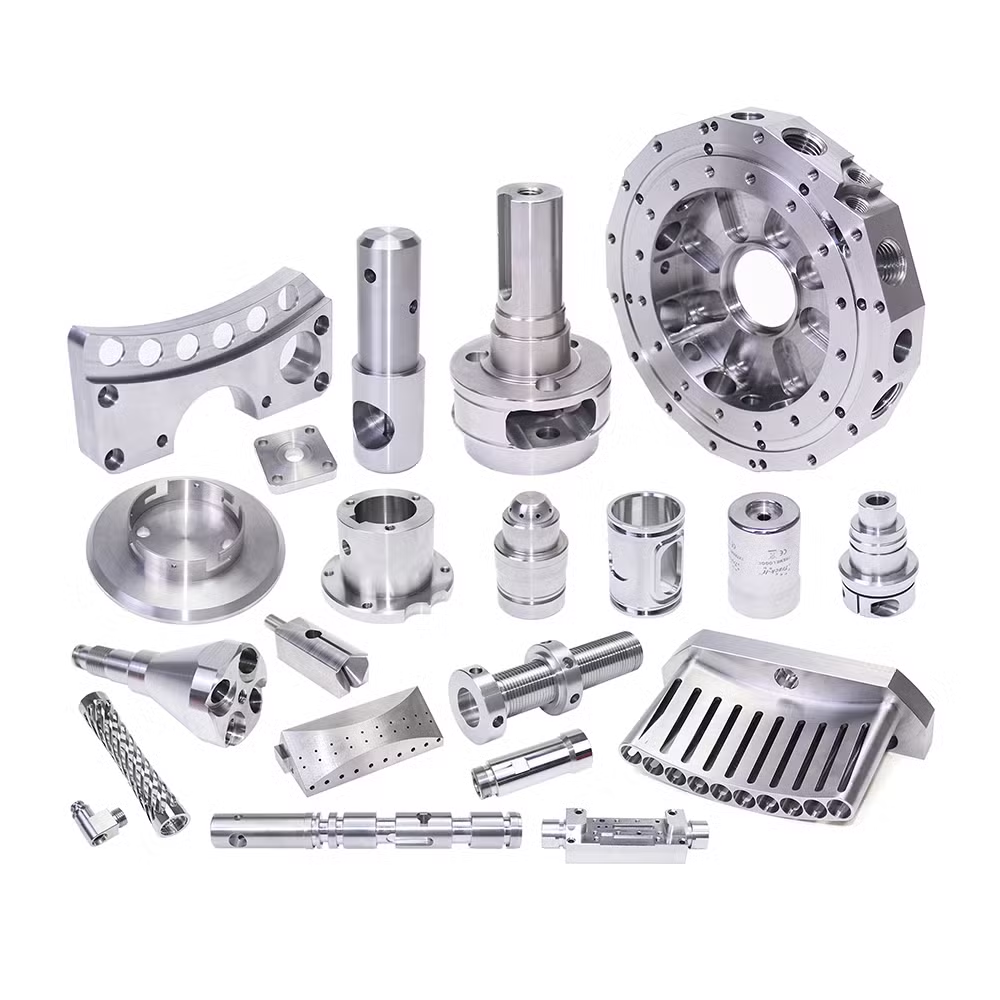
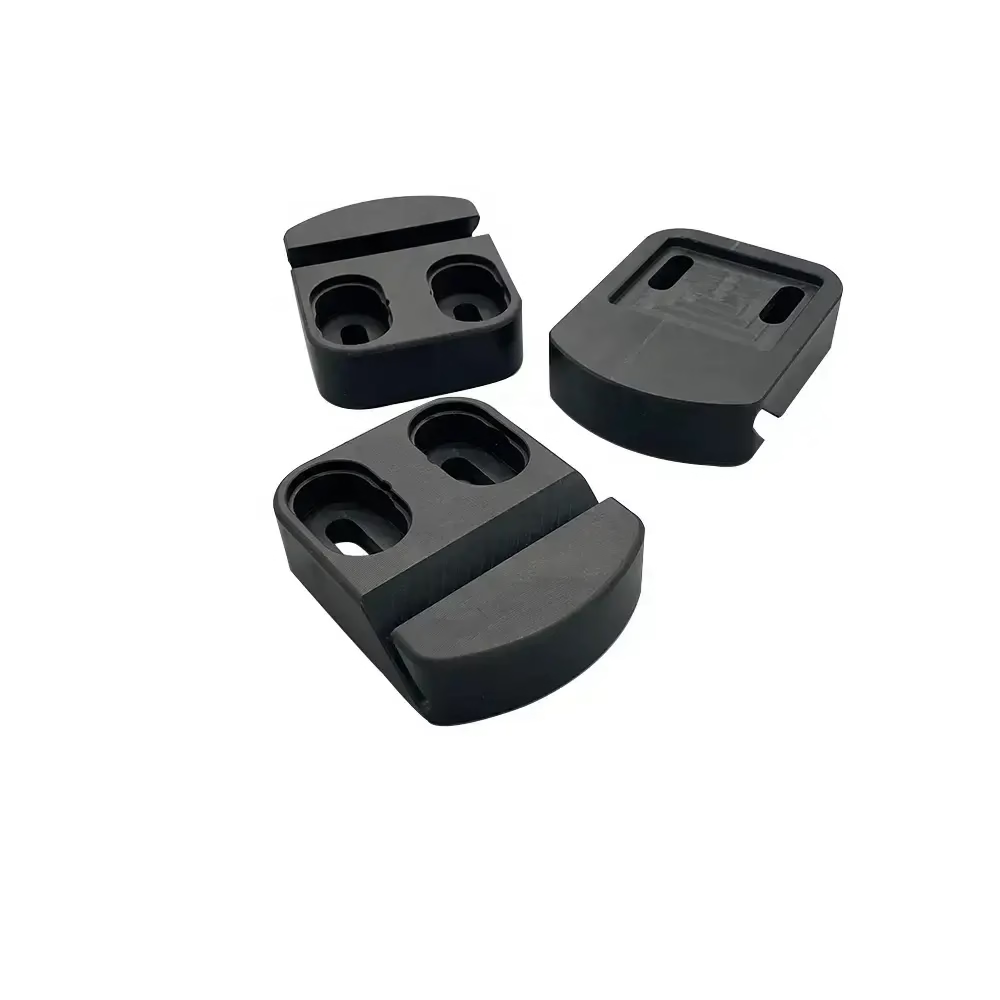
We machine ABS, POM, PEEK, PA, PC, PP, PMMA and HDPE from one prototype to 10,000+ parts. Tolerances hold at ±0.005 mm, and every lot ships with inspection records you can file.

±0.005 mm toleranceRa 0.2–0.8 μm finishNo minimum orderDFM in 12 hours
cnc-machining-hdpe
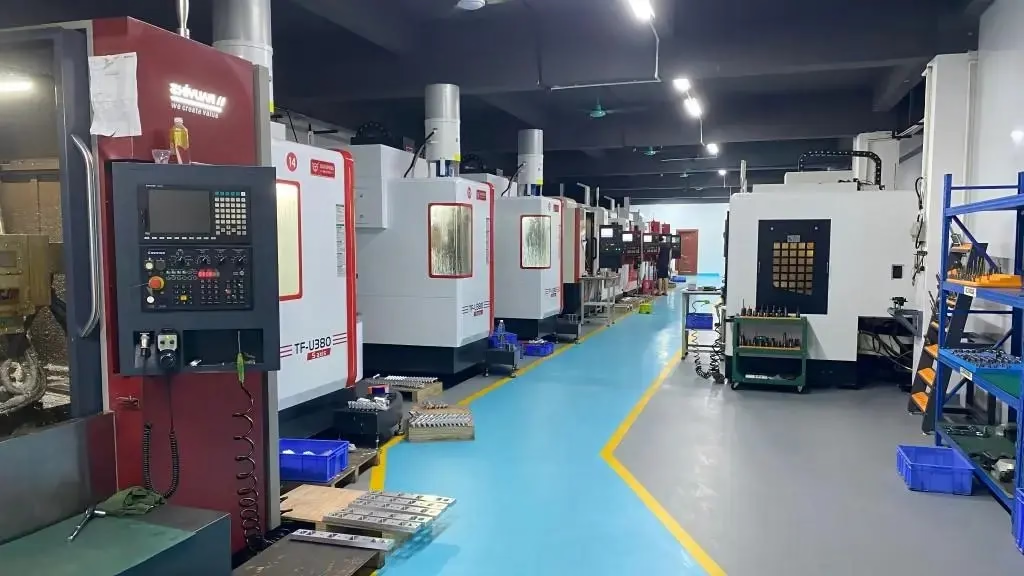
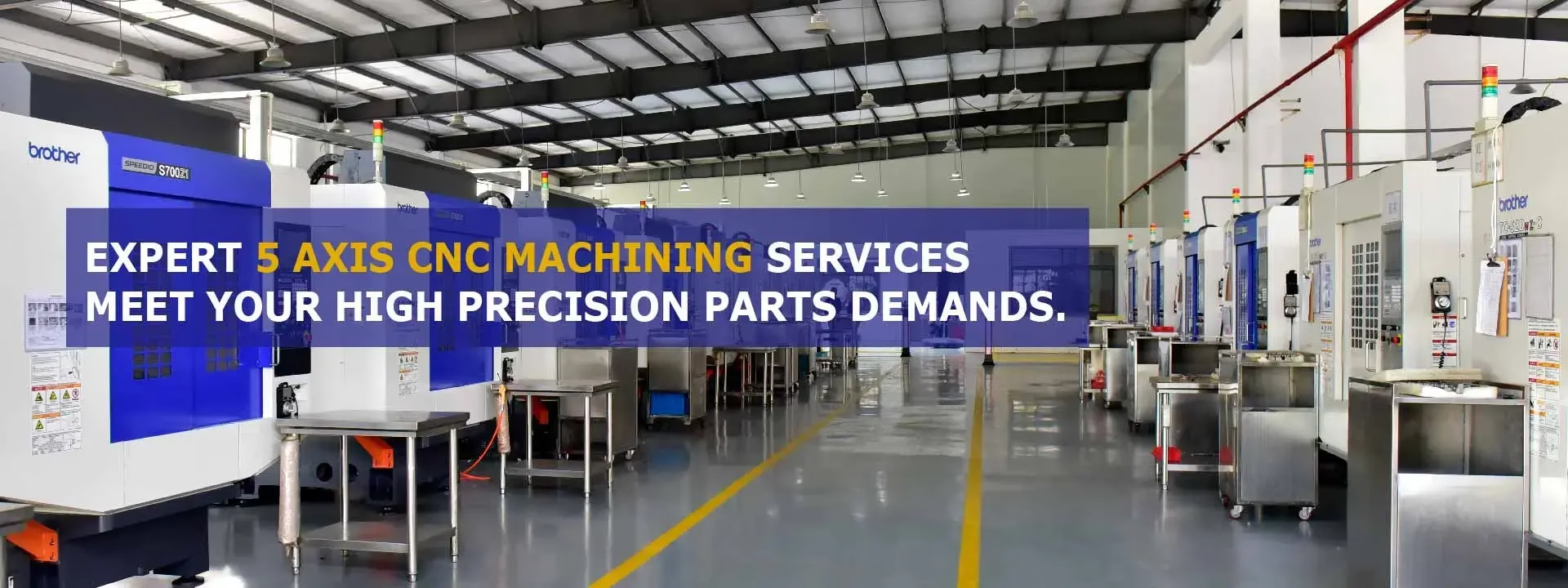
127High-precision CNC machines
16Simultaneous 5-axis centers
±0.005 mmAchievable tolerance
99.99%Qualification rate
Where plastic parts go wrong

Four Problems That Show Up After Machining

These are the failures we get called in to fix.

01

Melted edges and burrs on soft plastics

ABS and PP cut hot. A tool path run at metal speeds leaves gummy edges, stringy chips and a finish that no bead blasting will hide. You end up hand-deburring parts that were supposed to come off the machine ready.

02

Dimensional drift overnight

POM and PA absorb moisture and move after machining. A bore that gauges on size at 4 pm can be 0.02 mm off the next morning. If the drawing calls for a press fit, that drift becomes a scrap batch.

03

Wall thickness that flexes in the vise

Thin ribs and 1 mm walls bow under clamping force. The cutter pushes instead of shearing, so the finished face reads wavy on a height gauge. Soft jaws and light passes fix it, but only if the shop plans for it before the first cut.

04

A shop that treats plastic like aluminum

Same feeds, same cutters, same coolant. PEEK and PEI then come back with subsurface cracks or a chalky surface. Re-machining a cracked part rarely saves it, and the second run costs you the schedule you promised.

How we run it

Cutting Parameters Built Around the Polymer

Material first, then geometry, then tolerance.

greatlight-cnc-machining-center-11 (1)
Material-specific cutting

Feeds, Speeds and Tooling Chosen per Resin

Every polymer cuts differently. PEEK and PEI are abrasive and need sharp carbide with high rake angles. POM machines clean and holds a crisp edge. HDPE and PP want high positive rake and generous chip clearance so the chip leaves before it re-welds to the wall.

We keep a cutting library per resin and adjust from the first article. You get a part that measures right and looks right, not one that needs a second operation to hide the first.

  • 1
    Cryogenic or chilled-air optionsHolds dimensions on low-melting plastics.
  • 2
    Sharp carbide and PCD toolingReduces heat and built-up edge.
  • 3
    First-article check before the runYou approve the setup, not just the drawing.

Get Instant Quote

5-axis-cnc-machining-services-1
Geometry and fixturing

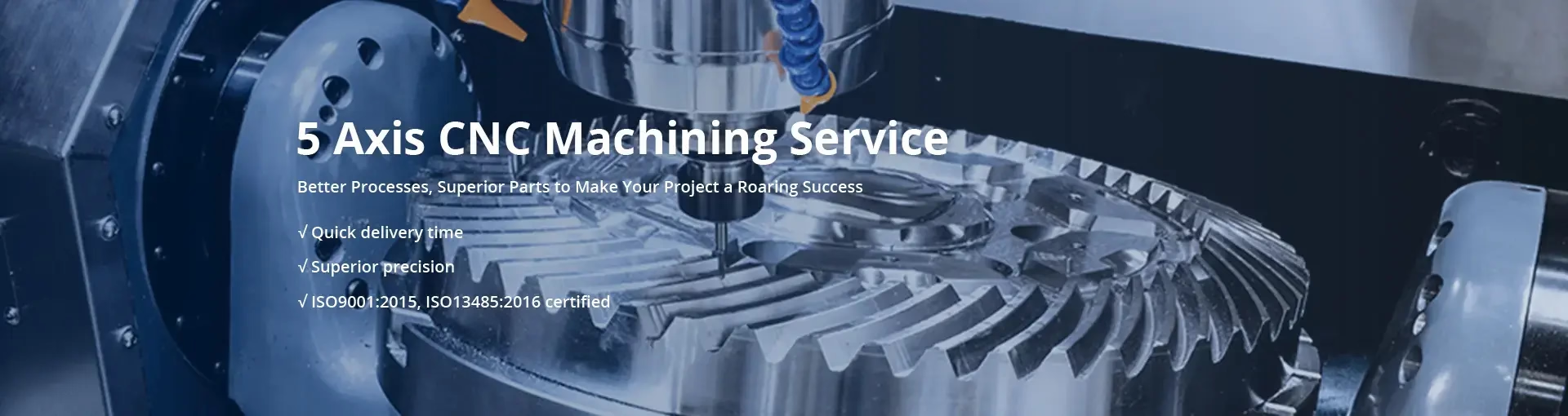
5-Axis Work on Parts That Flex

Plastic parts are often thin, tall or open on one side. Clamping them the way you would clamp aluminum introduces stress that shows up as a bowed face or an out-of-round bore. We fixture on soft jaws, vacuum plates or sacrificial tabs, and we take light finishing passes to release the stress.

With 16 simultaneous 5-axis centers we reach undercuts and angled faces in one setup. Fewer setups means less re-clamping, and less re-clamping means the last dimension is as good as the first.

  • 1
    One setup for compound anglesFewer datum shifts on complex parts.
  • 2
    Soft jaws and vacuum fixturingLess clamp-induced distortion.
  • 3
    0.005 mm position on boresVerified on a CMM before shipment.
Selection guide

Which Resin for Which Job

A quick read on common trade-offs.

ResinGood forWatch out for
ABSHousings, covers, bracketsLow stiffness, heat softens it
POM (acetal)Gears, bushings, sliding partsHard to bond, moves with moisture
PEEKHigh heat, chemical contactAbrasive, tool wear, high cost
PA (nylon)Wear strips, structural clipsAbsorbs moisture, dimension shift
PCImpact covers, guardsStress cracks near sharp corners
PMMAOptical windows, light guidesBrittle, chips easily when tapped
What we cover

Services Around Plastic Machining

Machining is the core. These are the steps that come with it.

01

3, 4 and 5 Axis CNC Machining

Milling and turning on 127 machines, up to 4,000 mm travel for long parts. Simultaneous 5-axis handles compound angles and undercuts in one setup.

02

CNC Milling & Turning

Mill-turn centers cut round and prismatic features without re-fixturing. Good for bushings, rollers, manifolds and threaded bodies.

03

Rapid Prototyping

Machined prototypes in the production resin, so the material behaves like the final part. No substitute resin, no surprise on the production run.

04

Surface Finishing

Bead blasting, tumbling, brushing and polishing. Laser marking to a minimum character height of 1.5 mm when parts need traceability.

05

Sheet Metal Fabrication

When a plastic housing needs a metal frame or bracket, we build both and check the assembly fit before shipping.

06

Assembly and Inspection

Insert installation, bonding and dimensional reports. 100% inspection before shipment, with raw material and in-process checks logged.

Capacity

Machine Range and What It Covers

Pick the envelope that fits your part.

Machine typeEnvelopeTypical plastic work
5-axis centers (16)Ø400 mm rotary tableAngled ports, impellers, joints
Mill-turn (16)Up to 4,000 mm lengthRollers, bushings, threaded bodies
3-axis mills (27)750 × 1,150 × 550 mmPlates, covers, manifolds
4-axis mills (12)600 × 600 × 600 mmPrismatic parts with side holes
Large travel4,000 × 400 × 150 mmLong extrusions and rails
Compact cells500 × 500 × 450 mmSmall precision components
Why GreatLight

What You Get on Every Order

±0.005

Tolerance We Hold

Bores, pockets and faces verified against the drawing. Imperial drawings read ±0.0002 in on the report.

Ra 0.2

Finish Down to Ra 0.2–0.8 μm

Fine finishes where sealing or sliding contact matters. As-machined Ra 1.6–3.2 μm is fine for most covers.

12 h

Quote and DFM in 12 Hours

Send a STEP file and a drawing. You get a price and a manufacturability note the same working day.

24 h

Production Starts in 24 Hours

Once the first article is approved, the run begins. Parts ship in 3–5 days.

15Y

15 Years in Precision Machining

Founded in 2011. Three wholly-owned plants and 7,600 m² of floor space in Dongguan, plus a Singapore site.

0

No Minimum Order Quantity

One prototype or 10,000+ parts, same process and same inspection standard.

150Technicians on staff
7,600 m²Manufacturing space
ISO 9001Quality system in place
<2%Historical late-delivery rate
Where these parts go

Industry Requirements and What We Deliver

5-axis-cnc-machining-services

Robotics and Automation

Robot joint housings and gripper jaws in POM and PA. The requirement is tight bore alignment across an angled face.

  • ±0.005 mm bores
  • One-setup 5-axis
Unitree G1 Humanoid Robot Price

Electronics

Insulating spacers, light guides and enclosures in PC, PMMA and ABS. The requirement is flatness and clean optical edges.

  • Ra 0.2–0.8 μm
  • Bead-blast finish
low volume manufacturing

Medical Devices

Housings and fixtures in PEEK and PEI. The requirement is repeatability lot to lot and a paper trail.

  • 100% inspection
  • Material certs on file
Unitree G1 Humanoid Robot

Industrial Machinery

Wear pads, guides and manifold blocks in PA, HDPE and POM. The requirement is dimensional stability under load.

  • No MOQ
  • Ships in 3–5 days
FAQs

Questions We Get on Plastic Machining

Which plastics can you machine?

ABS, PC, PMMA, POM, PA, PEEK, PP and HDPE, plus carbon fibre sheet. If you need a resin that is not on that list, send the datasheet and we will tell you whether it cuts cleanly or needs a different process.

How do you hold tolerance on a part with 1 mm walls?

We fixture on soft jaws or a vacuum plate and take light finishing passes rather than one heavy cut. Clamping pressure is set so the wall is supported, not squeezed. The bore and the outer face are checked on a CMM before the run continues.

Will my POM or PA part change size after shipping?

Both absorb moisture, so they can move after machining. We rough machine, let the part rest, then finish to the drawing. For tight fits, tell us the service environment so we can bias the dimension rather than hold it dead-on at the machine.

What is the largest plastic part you can machine?

Up to 4,000 mm on the long travel machines, with a 4,000 × 400 × 150 mm envelope. Most plastic work fits the 750 × 1,150 × 550 mm or 600 × 600 × 600 mm range.

Do you machine prototypes and production runs on the same setup?

Yes. We machine the prototype in the production resin on the same class of machine, so the material behaviour carries over. There is no minimum order quantity, so a single prototype and a 10,000-part run go through the same inspection standard.

What surface finishes are available?

As-machined Ra 1.6–3.2 μm, high finish Ra 0.8–1.6 μm, and fine finish Ra 0.2–0.8 μm. Bead blasting, tumbling, brushing and polishing are done in house, and laser marking is available at a minimum character height of 1.5 mm.

How fast can you quote and ship?

Quotation and DFM analysis come back within 12 hours. Production can start within 24 hours of approval, and parts ship in 3–5 days. Our historical late-delivery probability is below 2%.

How do you handle confidential drawings?

Uploads are kept secure and confidential. We can sign an NDA before you send files, and we do not share part geometry or customer drawings outside the project team.

Send Your Plastic Part Drawing

STEP file and a drawing is enough. You get a price, a DFM note and a finish call within 12 hours.

12-hour quote100% inspectionNo minimum order

Trusted by engineers and manufacturers worldwide

Tesla Ford Motor Company BYD Auto Denso Magna International Boeing Airbus Medtronic KUKA FANUC