GreatLight CNC Machining Factory logo
CNC Machining
Rapid Prototyping
Materials
Industries
News
About GL

Get Instant Quote

New Energy Hardware

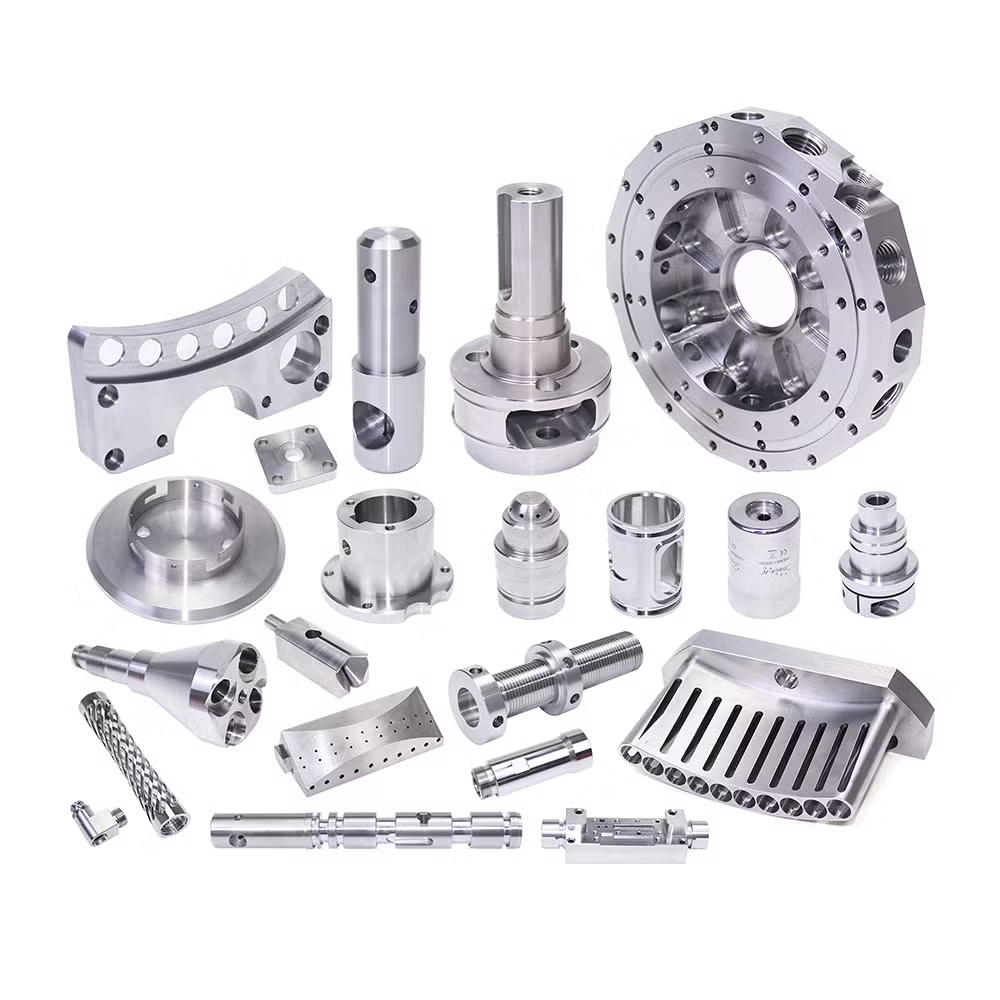
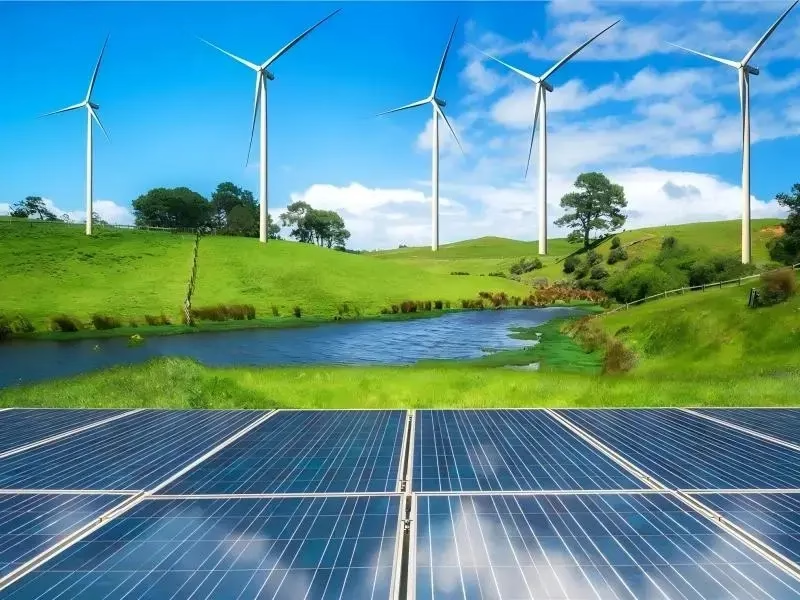
New Energy Industry GreatLight: CNC Prototyping for Power Hardware

We machine busbars, heat sinks, inverter housings and structural brackets from production-grade metal. One prototype or a 10,000-part run, inspected before it ships.

±0.005 mm toleranceCopper and aluminium12-hour quoteFrom one piece100% inspection
new-energy-industry1
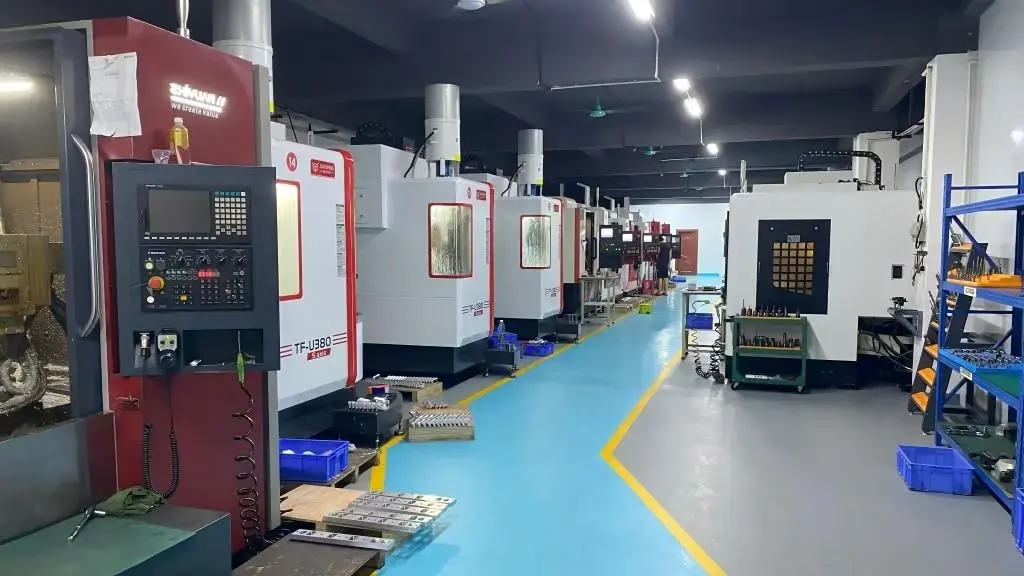
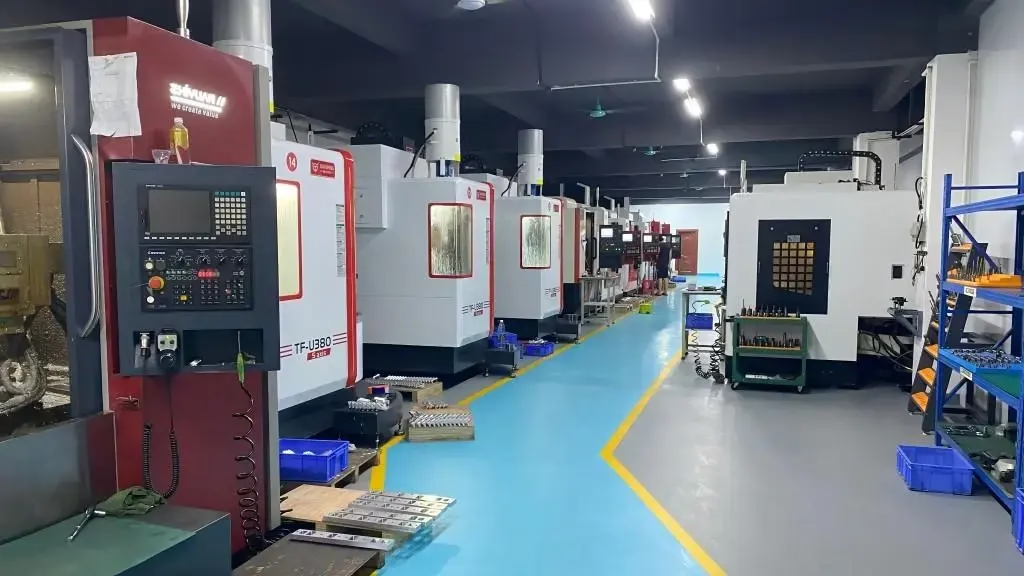
127High-precision CNC machines
16Simultaneous 5-axis centers
±0.005 mmAchievable tolerance
15 yearsMetal manufacturing since 2011
Common Problems

Where New Energy Prototypes Go Wrong

These are the failures we see most often on energy hardware programs.

01

A copper busbar that runs hot under load

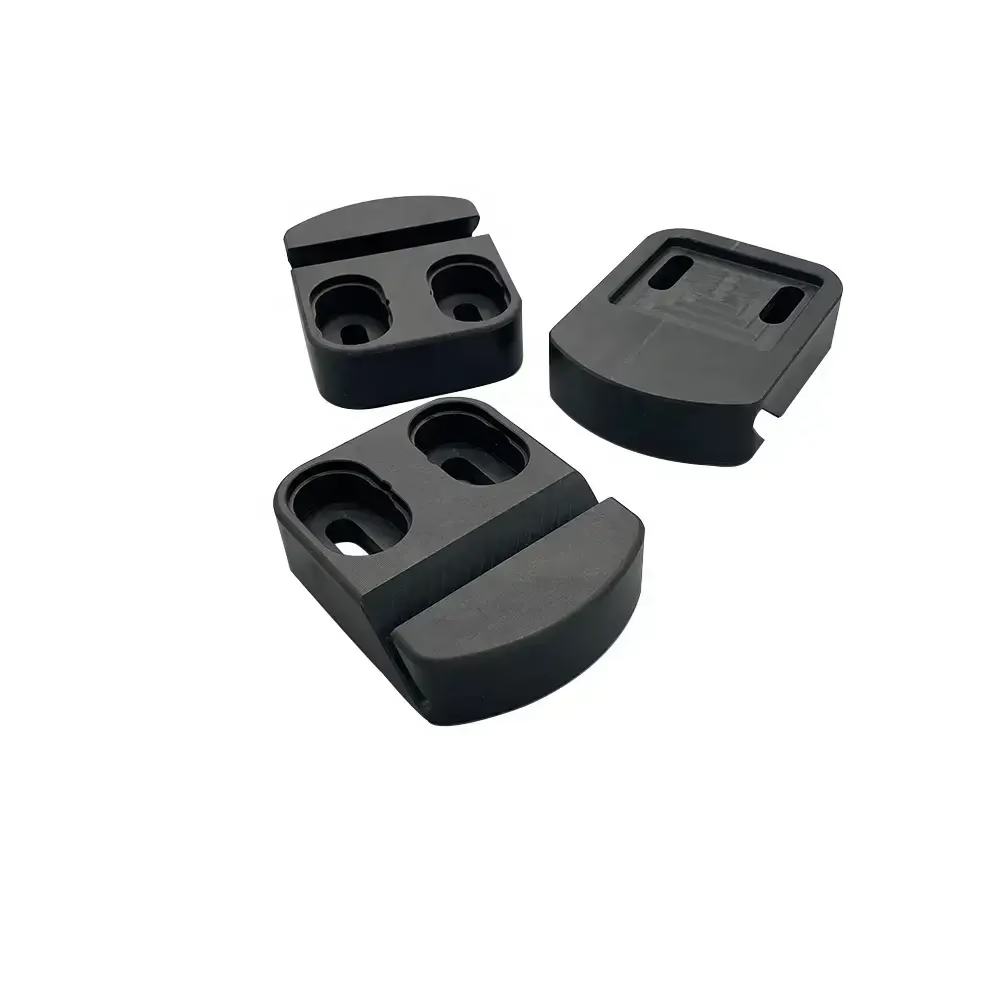
Cross-section and surface condition drive resistance. If the machined edge is rough or the bend radius is wrong, current density concentrates and the part heats up in test. The fix is a machined profile held to a tight tolerance, not a cut-and-file job.
02

A heat sink that misses its flatness spec

A base that is not flat leaves air gaps at the interface. Thermal resistance climbs, junction temperature rises, and the whole assembly needs a redesign. Flatness on the mounting face has to be controlled at the machine, not shimmed later.

03

A bracket that will not fit the pack frame

Hole positions drift between the first article and the tenth. The welder forces the part, the coating cracks, and the line stops while someone reworks it. Positional tolerance on bolt holes is what keeps this from happening.

04

A supplier who cannot scale past the prototype

The first five parts look fine. Then the order grows and the process changes, so the parts no longer match the validated samples. Re-qualification eats weeks you had already committed to your customer.

How We Work

Machining Energy Parts From Real Metal

Prototype and production on the same machines, so the part you qualify is the part you buy.

cnc-machining-hdpe
Material and Geometry

Busbars, Cold Plates and Current-Carrying Parts

Copper and aluminium behave differently at the spindle. Copper grabs the tool and pushes heat into the workpiece, so we adjust feed, speed and coolant before the first cut instead of after. Aluminium 6061 and 6063 move fast, but thin walls deflect if the fixture is soft.

For busbars we hold the machined profile and the hole pattern in one setup where possible. That keeps the pitch between bolted connections consistent, which matters when the bar lands on a laminated stack or a welded frame.

  • 1
    Copper: C101, C103, C110Cut with light radial engagement to control heat and burrs.
  • 2
    Aluminium: 6061, 6063, 6082, 7075Stable for housings, plates and extruded-style profiles.
  • 3
    Beryllium copperMachined when spring contact is needed, with dust control.

Get Instant Quote

greatlight-cnc-machining-center-11
Thermal and Structural

Heat Sinks, Housings and Pack Brackets

A heat sink is a flatness problem before it is a fin problem. We face the base in a single pass and measure it, because a base that rocks by 0.02 mm is a base that will not transfer heat the way the simulation predicted. Fin thickness is set by the tool you can actually run, not by the drawing alone.

Enclosures and brackets usually start as a machined or cast blank and end up as a coated part. We keep the machining datum and the coating datum the same so the mounting features stay where the assembly expects them.

  • 1
    Base flatness held at the machineFace-milled and checked before the part leaves the fixture.
  • 2
    Thin fins down to tooling limitsWe tell you when a fin will chatter rather than quote it anyway.
  • 3
    Coating after machiningAnodizing, chromate or powder without losing the bolt pattern.

Get Instant Quote

Choosing a Process

Which Route Fits Your Energy Part

Use this to pick a process before you commit tooling money.

Part typeBest first routeWhy
Busbar, small batchCNC millingProfile and hole pattern in one setup.
Heat sink baseCNC millingFlatness controlled at the face.
Housing, complex ribs5-axis machiningFewer setups, tighter position.
Bracket, thin plateSheet metalFaster and cheaper than milling.
Enclosure, higher volumeDie casting + CNCTooling pays back above a few thousand.
Seal, gasket, coverVacuum castingLow tooling cost for the first build.
Capabilities

What We Can Build for Energy Programs

Six routes, matched to the part and the volume.

01

5 Axis CNC Machining

Sixteen simultaneous 5-axis centers for housings, impellers and parts with angled features that would need three fixtures on a 3-axis mill.

02

CNC Milling and Turning

Shafts, connectors, threaded inserts and turned bosses. Mill-turn centers keep a turned bore and a milled flat concentric in one cycle.

03

Rapid Prototyping

Machined prototypes from the production alloy so the first test is a real test, not a plastic stand-in that behaves differently.

04

Sheet Metal Fabrication

Brackets, trays and covers. Laser cut, formed and finished, with hole patterns that match the machined parts they bolt to.

05

Metal Die Casting

Aluminium housings and frames once volumes justify tooling. ADC12 and similar alloys, with machining and finishing after the cast.

06

Surface Finishing

Anodizing, plating, powder coating, bead blasting and laser marking. Conductive anodizing is available for parts that need a ground path.

Machine Range

Sizes and Tolerances We Hold

Numbers from our own equipment list.

ItemSpecificationNote
Maximum part size4,000 mmLongest travel on the large mill.
Large travel4,000 × 400 × 150 mmExtrusions, rails, long busbars.
Medium travel750 × 1,150 × 550 mmMost housings and plates.
Compact travel500 × 500 × 450 mmSmall brackets and connectors.
Tolerance±0.005 mmOn features that need it.
Fine finishRa 0.2–0.8 μmSealing faces and sliding fits.
Standard finishRa 1.6–3.2 μmGeneral machined surfaces.
Inspection100% before shipmentReports on request.
Why GreatLight

What You Get on the Shop Floor

Six things that decide whether an energy prototype program stays on schedule.

15Y

Metal manufacturing since 2011

Three wholly-owned plants and 150 technicians. The same team handles the prototype and the production run, so nothing is handed to a stranger at the volume step.

±0.005

Tolerance in millimeters

Tight fits are machined and measured, not assumed. When a feature cannot hold that number, we say so before the job starts.

12H

Quote and DFM in 12 hours

Send a model and get a price plus a manufacturability note. Production can begin within 24 hours of approval.

3–5D

Parts ship in 3–5 days

Standard turnaround on machined parts. Historical late-delivery probability sits below 2%.

1–10K+

Any quantity

From a single prototype to a 10,000-part run, with no minimum order quantity.

100%

Inspection before shipment

Raw material check, in-process monitoring and final inspection. Reports are issued on request.

7,600 m²Manufacturing space
150Technicians on staff
3Wholly-owned plants
99.99%Qualification rate
Industry Requirements

What Energy Programs Demand, and What We Deliver

low volume manufacturing

Battery Pack Hardware

Busbars and module brackets where hole pitch and flatness decide whether the pack assembles without force.

  • ±0.005 mm
  • 100% inspection
  • C110 copper
GreatLight CNC Machining Compliance Center

Power Conversion Housings

Inverter and converter enclosures that must seal, ground and dissipate heat at the same time.

  • Ra 0.8–1.6 μm
  • Conductive anodizing
  • IATF 16949
aerospace-prototyping

Thermal Management Parts

Cold plates and heat sink bases held flat at the mounting face so the interface does the work it was designed for.

  • Face flatness
  • 6061-T6
  • Leak-test ready
greatlight-cnc-machining-center-11 (1)

Structural Frames

Mounting rails and frame brackets machined to the same datum as the coated finish.

  • 4,000 mm travel
  • Powder coating
  • 3–5 day ship
FAQs

Questions Engineers Ask Before Sending a Model

Can you machine copper busbars without heavy burrs?

Yes, with light radial engagement and sharp tooling. Copper burrs form fast when the tool rubs, so we cut with a positive rake and control the heat instead of pushing the feed.

Edges that will be handled during assembly can be deburred or chamfered as part of the operation. Tell us where the contact surfaces are and we will keep them clean.

How flat can you hold a heat sink base?

On a faced base we work to the flatness called out on your drawing, and we measure it before the part leaves the machine. If a base is thin relative to its size, clamping pressure alone can distort it during measurement.

When the base is too thin to hold the number without stress relief, we tell you before machining rather than after.

Do you have a minimum order quantity?

There is no minimum order quantity. One prototype and a 10,000-part run both go through the same process planning.

Small runs are machined from solid or plate. Larger runs may move to die casting or another route if that is cheaper for you, and we will say so in the quote.

Which alloys do you keep in stock for energy parts?

Aluminium 6061, 6061-T6, 2024, 5052, 5083, 6063, 6082 and 7075, plus ADC12 for castings. Copper grades include C101, C103 and C110, with beryllium copper available.

Stainless 303, 304, 316 and 17-4PH cover most fastening and wet-environment parts. Titanium and Inconel are machined when the application needs them.

How do you handle confidentiality on a new pack design?

Uploads are secure and confidential. We can sign your NDA, or use our own non-disclosure agreement if you do not have one ready.

Files are kept inside the project team. If you need to limit who sees the model, tell us at the quote stage so we can set that up before any machining starts.

Can you supply prototypes and then the production run?

That is the point of running both on the same equipment. The prototype is machined from the production alloy on the machine that will eventually make the parts.

When the design freezes, the process plan carries over. You avoid the re-qualification step that happens when a prototype shop and a production shop are two different companies.

What finish options work for parts that need electrical contact?

Conductive anodizing and selective masking keep contact areas live while the rest of the part is coated. Electroless nickel, silver and gold plating are also available.

Laser marking is limited to a minimum character height of 1.5 mm. Small serial numbers need to be sized accordingly.

How fast can I get a quote and a first article?

Quotation and DFM analysis come back within 12 hours. Production can start within 24 hours of approval, and parts typically ship in 3–5 days.

If your model has a feature that cannot be machined as drawn, the DFM note will flag it before the schedule is set.

Send the Model, Get a Machining Plan

Upload a drawing or STEP file and we will return a price, a DFM note and a realistic lead time.

12-hour quote100% inspectionFrom one piece

Trusted by engineers and manufacturers worldwide

Tesla Ford Motor Company BYD Auto Denso Magna International Boeing Airbus Medtronic KUKA FANUC