GreatLight CNC Machining Factory logo
CNC Machining
Rapid Prototyping
Materials
Industries
News
About GL

Get Instant Quote

Die Casting & Finishing

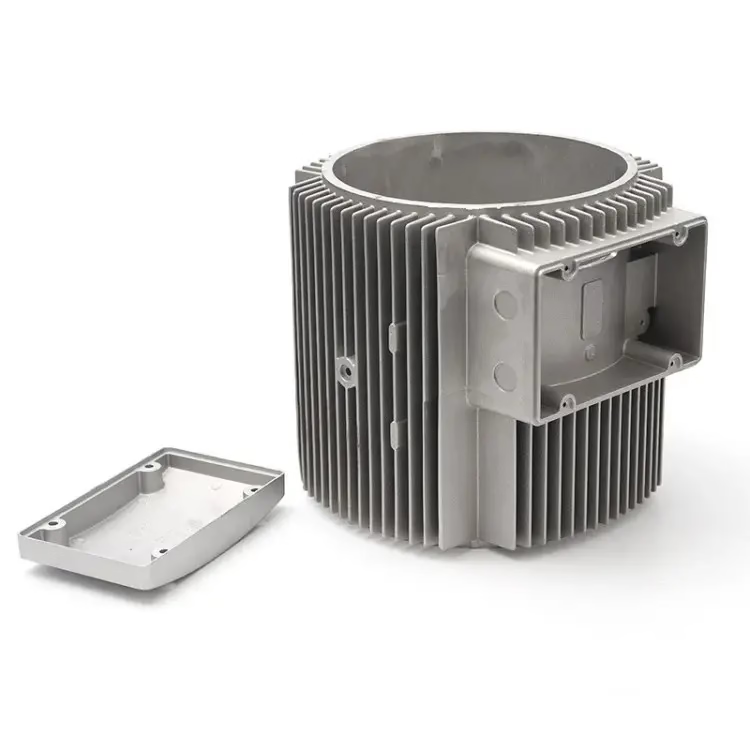
Precision Cast Parts from Tooling to Finished Machining

We cast aluminum, zinc, magnesium and copper alloys, then machine and finish them in-house. One supplier for tooling, casting, CNC work and inspection. Volume runs from a single prototype to 10,000+ parts.

Hot- and cold-chamber±0.005 mm CNC finishing12-hour quote + DFMNo minimum order quantityISO 9001 / IATF 16949Uploads kept confidential
die-casting-technology
3Wholly-owned plants
7,600 m²Manufacturing space
150Technicians on staff
99.99%Qualification rate
Where castings go wrong

Four Problems That Show Up After the Mold Is Cut

Most casting failures are decided before the first shot. These are the ones we see most often.

01

Wall thickness varies across the part

Thin sections freeze before thick ones, so the thick area pulls metal back and leaves a shrink void. You find it at the machining stage, after the tool is already paid for. Rework means welding or scrapping the lot.

02

Porosity opens up on the machined face

Gas trapped during fill appears when you take the first 0.5 mm cut. A cosmetic part becomes a reject. If the porosity sits where a seal or bearing lands, the whole lot goes back to the furnace.

03

Draft and parting lines fight the finish

A tool built without enough draft drags on ejection and scuffs the surface. Now you need extra polishing on every part, and the cost per piece climbs with the volume instead of falling.

04

Two suppliers, no single owner

The caster blames the machine shop for the porosity. The machine shop blames the casting. Weeks pass, the launch date moves, and nobody owns the tolerance stack on the finished part.

How we build them

One Shop Owns the Casting and the Cut

Tooling, casting, CNC finishing and inspection stay under one roof, so the tolerance is measured on the finished part, not on the raw casting.

vacuum-casting-services1
Process selection

Hot-chamber or cold-chamber, chosen by alloy

Hot-chamber machines keep the shot cylinder submerged in the melt, so cycle times are short and wall sections stay consistent. We use that route for zinc alloys such as Zamak 2, 3, 5, 7, 8, ACuZinc5, EZAC and ZA 27, and for magnesium AZ91D where the melt temperature allows it.

Cold-chamber casting suits aluminum and copper, which attack the gooseneck at hot-chamber temperatures. A380, A360, 383, B390, A413 and 518 all run this way. Copper alloys go cold-chamber too, because the higher melting point and thermal conductivity that make them useful also wear tooling faster.

  • 1
    Zinc and magnesiumHot-chamber, short cycle, thin walls down to 0.6 mm in small parts
  • 2
    Aluminum and copperCold-chamber, higher tonnage, better for thick sections and inserts
  • 3
    Both routesIn-house tooling, first-article report before the production run

Get Instant Quote

large-die-cast-metal-part-back-5
Finishing

Machining the casting to the drawing tolerance

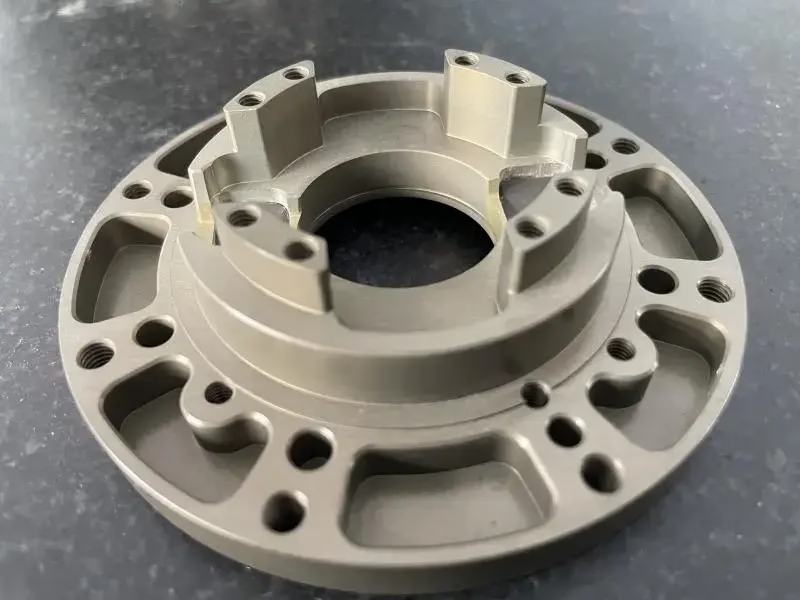
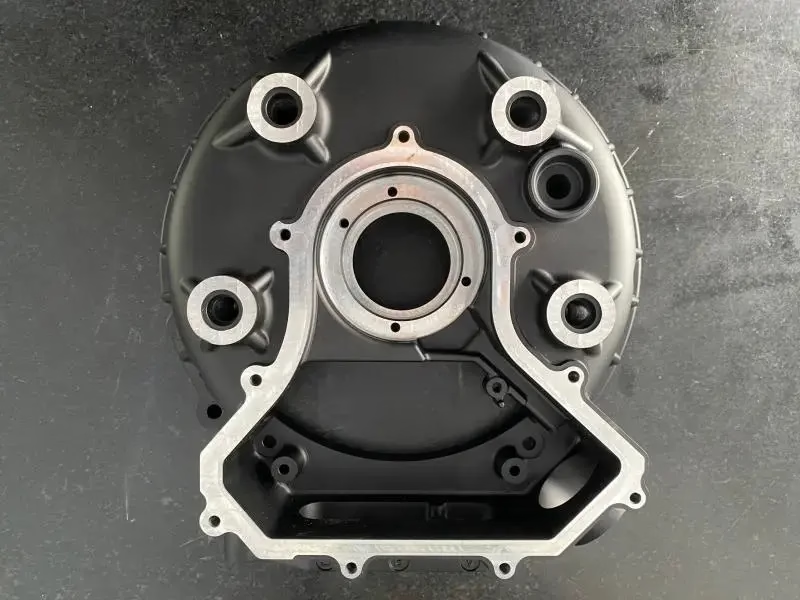
A raw casting holds a few tenths at best. If your drawing calls out a bore, a seal face or a bearing seat, the casting is only the blank. We clamp it on the as-cast datum, take the first cut, then measure before the second pass.

Across 127 CNC machines, including 16 simultaneous 5-axis centers and 16 mill-turn centers, we hold ±0.005 mm on machined features and Ra 0.8–1.6 μm on sealing surfaces. Maximum processing size is 4,000 mm, so large housings stay on one machine instead of being split.

  • 1
    Datum strategyCast datum located on a fixture before the first cut
  • 2
    Tolerance±0.005 mm on machined features, reports on request
  • 3
    Surface finishRa 0.2–0.8 μm available where a seal or slide needs it

Talk to an Engineer

Selection guide

Which Casting Route Fits Your Part

Use alloy, wall thickness and volume to pick the process before you commit to tooling.

Alloy groupTypical gradesProcessWhere it fits
AluminumA380, A360, 383, B390, A413, 518Cold-chamberHousings, brackets, heat sinks, anodized covers
ZincZamak 2, 3, 5, 7, 8, ACuZinc5, EZAC, ZA 27Hot-chamberSmall precise parts, thin walls, plated hardware
MagnesiumAZ91D, AZ31BHot-chamberWeight-critical housings, EMI shielding frames
CopperC101, C110, C36000Cold-chamberBus bars, thermal plates, bearing surfaces
What we run

Casting and Machining Services Under One Roof

Pick the process; the finishing and inspection steps follow in the same plant.

01

Aluminum Die Casting

A380, A360, 383, B390, A413 and 518. Corrosion resistant, thermal crack resistant, anodizable and machinable. Used for enclosures, brackets and heat-dissipating bodies.

02

Zinc Alloy Die Casting

Zamak 2, 3, 5, 7, 8, ACuZinc5, EZAC and ZA 27. Heavier than aluminum but stronger per volume and easier to plate. Small parts with fine detail and thin walls.

03

Magnesium Die Casting

AZ91D gives a good balance of mechanical properties, corrosion resistance and castability. Chosen when weight matters more than cost, such as handheld and portable equipment.

04

Copper Alloy Casting

For parts that need high thermal or electrical conductivity, a good bearing surface, or corrosion resistance beyond what aluminum offers. Bus bars and thermal plates are typical work.

05

Hot-Chamber Casting

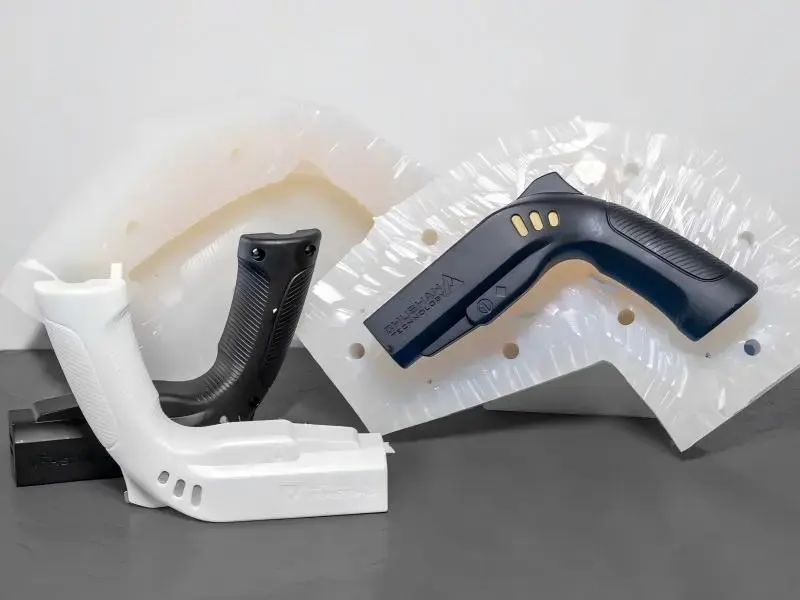
Low-melting alloys run in a submerged shot cylinder. Fast cycles, consistent fill, good for zinc and magnesium parts in the thousands.

06

Cold-Chamber Casting

Aluminum and copper pour from a ladle into the shot sleeve. Higher tonnage handles thick sections, inserts and larger projected areas.

Scope

What Each Order Includes

ItemStandardNotes
ToolingIn-house design and buildDFM feedback before cutting steel
First articleReport with dimensionsApproval before the production run
Machining±0.005 mm on features5-axis, mill-turn, up to 4,000 mm
FinishingAnodizing, plating, coatingBead blasting, brushing, laser marking
Inspection100% before shipmentMaterial, in-process and final checks
VolumeOne prototype to 10,000+No minimum order quantity
Why GreatLight

Numbers We Work To

Six figures that decide whether a casting program runs smoothly.

15Y

Making parts since 2011

Fifteen years of tooling and production work, now across three wholly-owned plants in Dongguan and Singapore.

±0.005

Machined tolerance

Held on critical features after casting, measured on the finished part rather than the blank.

12H

Quote and DFM turnaround

Quotation with free DFM analysis within 12 hours. Production can start within 24 hours of approval.

3–5D

Shipping window

Parts ship in 3–5 days once production is released. Historical late-delivery probability is below 2%.

127

CNC machines

Sixteen simultaneous 5-axis centers, twelve four-axis mills, twenty-seven three-axis machines and sixteen mill-turn centers.

4

Management certifications

ISO 9001:2015, IATF 16949:2016, ISO 13485:2016 and ISO 27001:2022 cover quality, automotive, medical and information security.

99.99%Qualification rate
150Technicians
7,600 m²Plant area
Ø400 mmRotary table capacity
What industries ask for

Requirements We Get Held To

aluminum-alloy-industrial-control-chassis-sheet-metal-processing

Industrial control housings

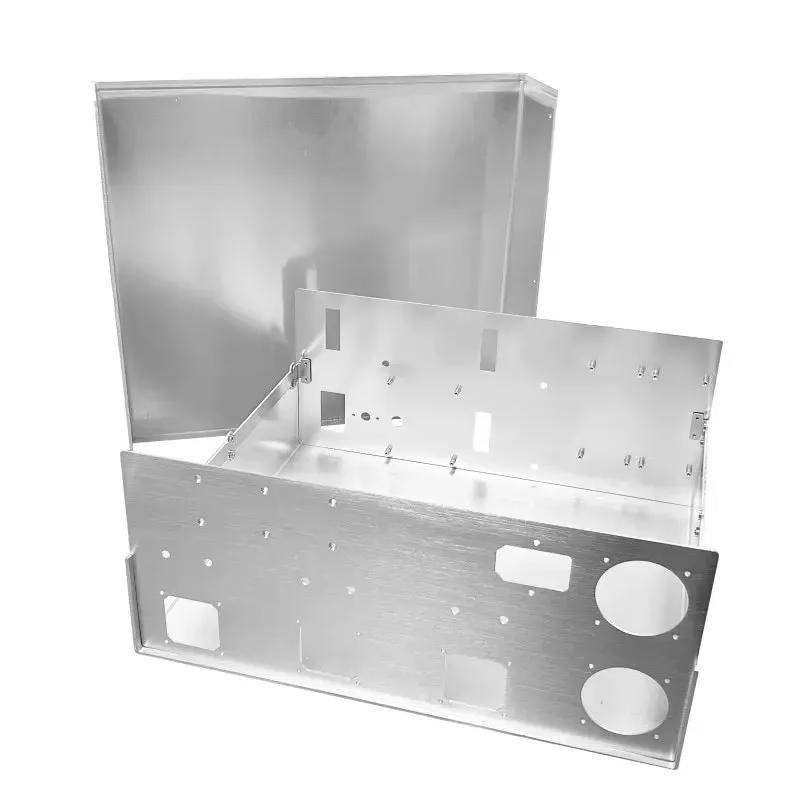
Aluminum cold-chamber casting, machined sealing faces, powder coated.

  • ±0.005 mm
  • Ra 0.8–1.6 μm
  • 100% inspection
cnc-machining-metal

Automotive brackets

A380 parts with machined bores, run under IATF 16949 process control.

  • IATF 16949
  • First article report
  • 3–5 day ship
large-die-cast-metal-part-back-19

Large cast housings

Parts up to 4,000 mm stay on one machine for the full finishing sequence.

  • 4,000 mm
  • 5-axis
  • Mill-turn
greatlight-metal-technology-co-ltd-1

Medical device frames

Magnesium and aluminum frames finished and cleaned to medical workflow needs.

  • ISO 13485
  • Clean handling
  • Traceable
FAQs

Questions Engineers Ask Before Tooling

How do I know if my part should be cast or machined from solid?

Cast when the geometry has ribs, bosses or a hollow shape that would need many hours of milling, and when you need more than a few hundred parts. Machine from solid when the part is simple, the volume is low, or the tolerance is tighter than a casting can hold without a full machining pass.

A middle route works well too: cast near-net shape, then machine only the critical features. That keeps the tool cost low and the tolerance where it matters.

What wall thickness can you cast?

For zinc and magnesium in hot-chamber machines, thin sections down to about 0.6 mm are practical on small parts. Aluminum in cold-chamber tooling generally starts around 1.5 mm and prefers 2 mm or more.

Below those numbers the metal freezes before it fills the cavity. We would rather thicken the wall or move the feature than cut a tool that cannot run.

Will the casting be porous?

Some porosity is normal in die casting. The question is where it lands. We keep it out of sealing faces, bearing seats and machined bores by controlling fill, venting and gate position.

If your part must hold pressure or be leak-tight, tell us at the quote stage. That changes the tool design and sometimes the alloy choice.

Which alloys can be anodized or plated?

Aluminum grades such as A380, A360, A413 and 518 anodize well, including clear, color, hardcoat and conductive finishes. Zinc alloys plate well with nickel, zinc, silver or gold. Magnesium needs specific pretreatment before coating.

Copper alloys are usually left bare or given a light protective finish, since plating changes the conductivity at the contact surface.

What volume makes tooling worth it?

Tooling cost is fixed, so the per-part price falls as volume rises. Below roughly 1,000 parts, machining or vacuum casting is often cheaper overall. Above that, die casting usually wins.

We have no minimum order quantity. A single prototype can be run, then the same design moves to a production tool once the geometry is locked.

How do you hold ±0.005 mm on a casting?

That tolerance applies to machined features, not to the as-cast surface. The casting becomes the blank; we locate it on an as-cast datum, cut, measure, and cut again if needed.

Sixteen simultaneous 5-axis centers and sixteen mill-turn centers let us reach features that would need two setups on a three-axis machine. Fewer setups means a smaller tolerance stack.

How is my design kept confidential?

Uploads are secure and confidential. We work under NDA when a customer needs one, and ISO 27001:2022 covers how design data is stored and accessed internally.

Files stay with the project team. They are not shared outside the plants.

What do you need to quote a casting?

A 3D file in STEP or IGES, a 2D drawing with tolerances and finishes, the alloy if you have one in mind, and an annual volume estimate. A target price helps but is not required.

Quotation and free DFM analysis come back within 12 hours. If the design has a casting problem, we say so in that reply rather than after the tool is cut.

Send the Drawing, Get a Casting Quote in 12 Hours

Upload your 3D file and 2D drawing. We return a quote with DFM notes, then start production within 24 hours of approval.

12-hour quote + DFM100% inspection before shipmentNo minimum order quantityUploads secure and confidential

Trusted by engineers and manufacturers worldwide

Tesla Ford Motor Company BYD Auto Denso Magna International Boeing Airbus Medtronic KUKA FANUC