
01
Undercuts and deep cavities
Features on the back of the part, angled ports and deep pockets make a 3-axis spindle stop short — so someone ends up hand-working the geometry.
Simultaneous 5-axis milling and mill-turn from our Dongguan and Singapore plants — ±0.005 mm accuracy, 16 five-axis centers, parts in 3–5 days.
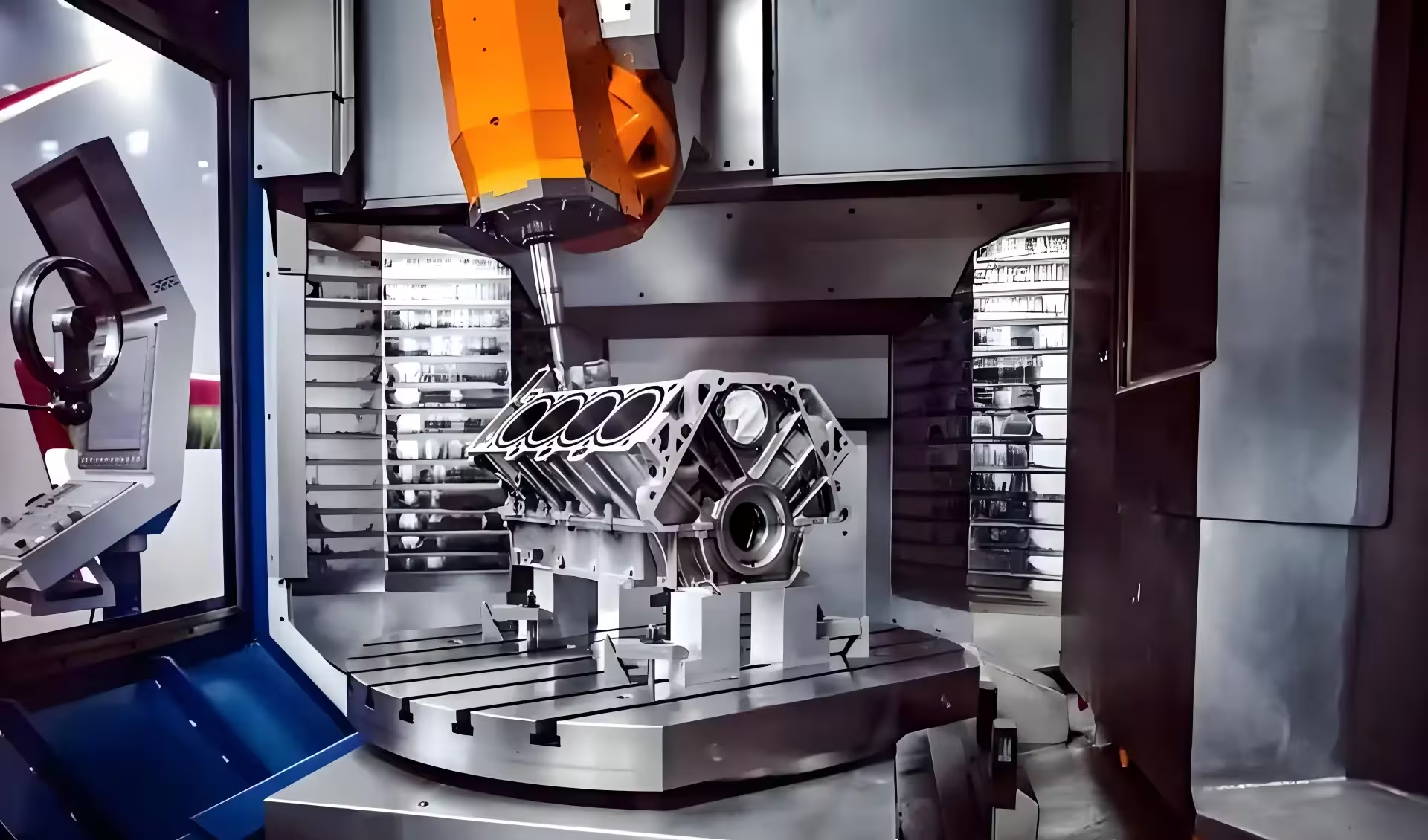
Most quotes that go wrong start from a part that does not fit the process. If any of these describes your project, 5-axis machining is usually the cheaper answer — not the more expensive one.
Features on the back of the part, angled ports and deep pockets make a 3-axis spindle stop short — so someone ends up hand-working the geometry.
Every re-clamping adds a new datum and stacks tolerance on tolerance. By the fourth face, the hole pattern no longer matches the drawing.
Curved blades, impellers and organic housings need a tool that stays normal to the surface. Ball-nose milling in three axes leaves witness lines and polishing hours.
Titanium, Inconel and hardened tool steel punish long, thin tools. Short tools held in a tilting spindle cut far more efficiently.
Re-fixturing after finishing means touching cosmetic surfaces again. Single-setup machining keeps those faces untouched from roughing to final pass.
Multi-vendor routing — machining here, finishing there — is where NPI schedules die. One in-house chain removes the hand-off risk.
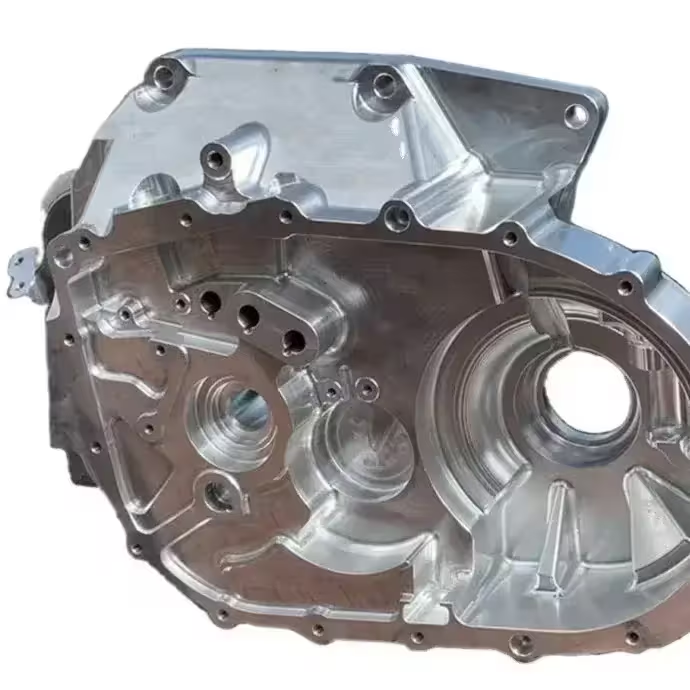
Two rotary axes move with the linear axes at the same time, so the cutter follows the part instead of the part chasing the cutter. Deep pockets, angled ports and blended surfaces come off the machine complete — with one datum for the whole part.
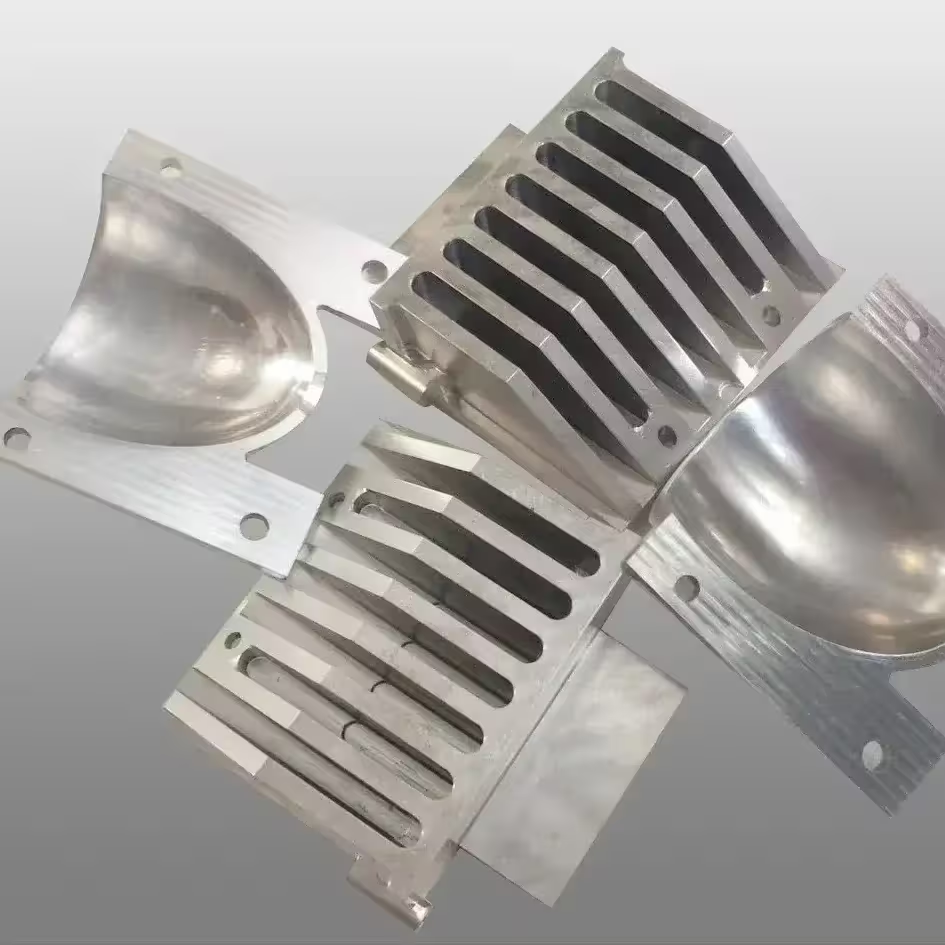
When a part is mostly flat faces and bores, the rotary axes can index to a position, lock, and cut like a rigid 3-axis machine — with the productivity of having all faces available without manual re-fixturing.
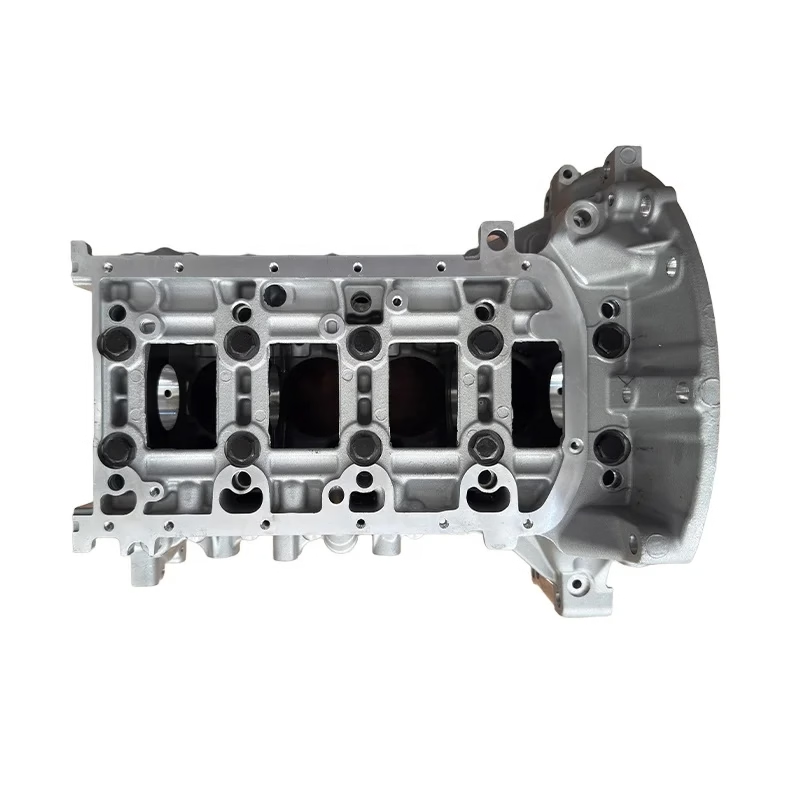
Milling, turning, mill-turn, heat treatment coordination, surface finishing and inspection sit under one roof. That removes the transport time and the “who broke it” conversations that come with multi-vendor routing.
Most projects need more than one process. These are the ones we run in-house, so your part moves between them without a new supplier onboarding.
Continuous five-axis contouring for impellers, blades, complex housings and any geometry with undercuts or blended surfaces.
Positional multi-face machining for prisms, frames, plates and housings — the economical route to several machined faces in one setup.
27 three-axis machines for flat, square and pocketed parts where extra axes add nothing but cost.
Turned shafts, fittings and motor parts, including mill-turn cycles that combine turning and milling in one program.
Anodizing, hard anodizing, plating, bead blasting, brushing and polishing to match the surface callout on your drawing.
Manufacturability review before cutting, in-process checks, and dimensional reports / first-article documentation on request.
16 simultaneous 5-axis centers, 12 four-axis mills, 27 three-axis machines and 16 mill-turn centers — 127 high-precision machines in total, supported by 150 technicians across 7,600 m² of manufacturing space.
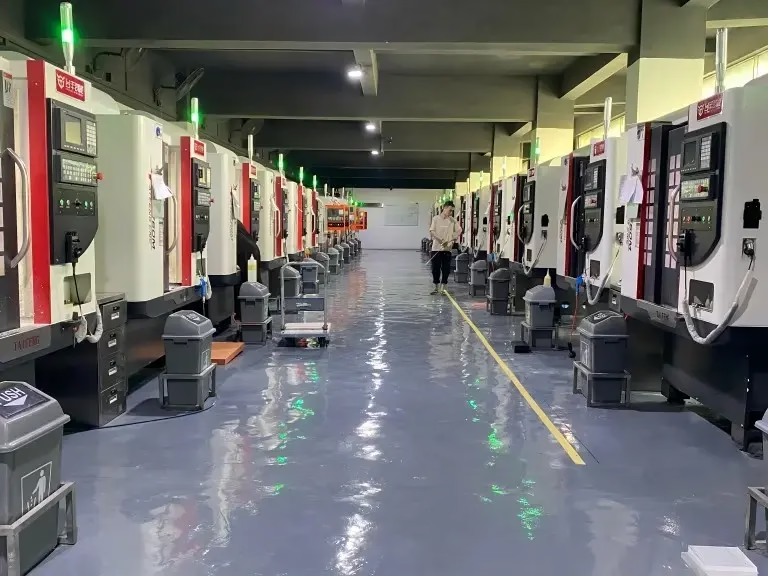
Simultaneous five-axis work with integrated tool measurement.
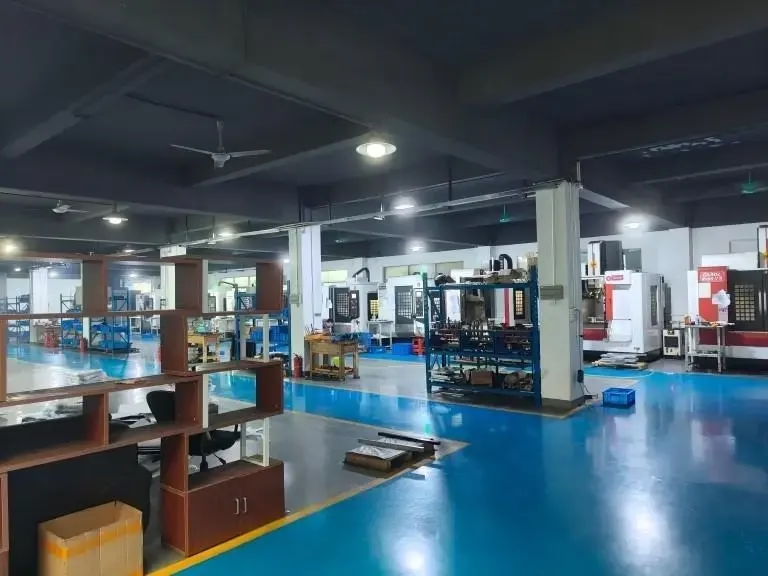
Ø400 mm rotary table for single-setup multi-face machining.
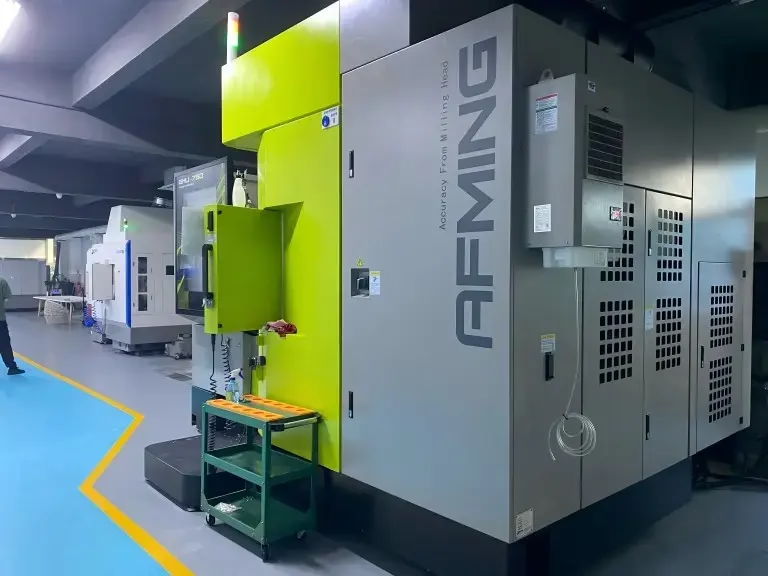
High-speed milling centers for repeat and volume orders.
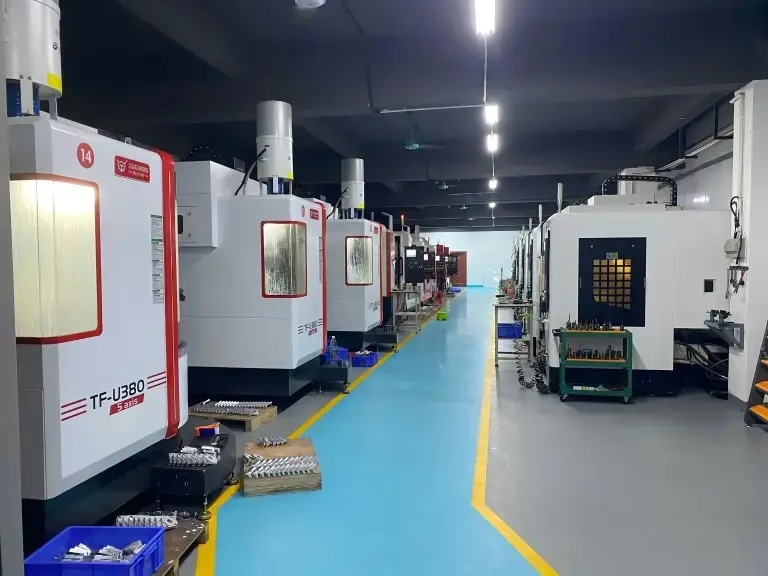
Prototypes and production parts run on the same equipment.
Aluminium, stainless and tool steel, copper alloys, titanium, magnesium and engineering plastics — plus the finishing operations that follow machining.
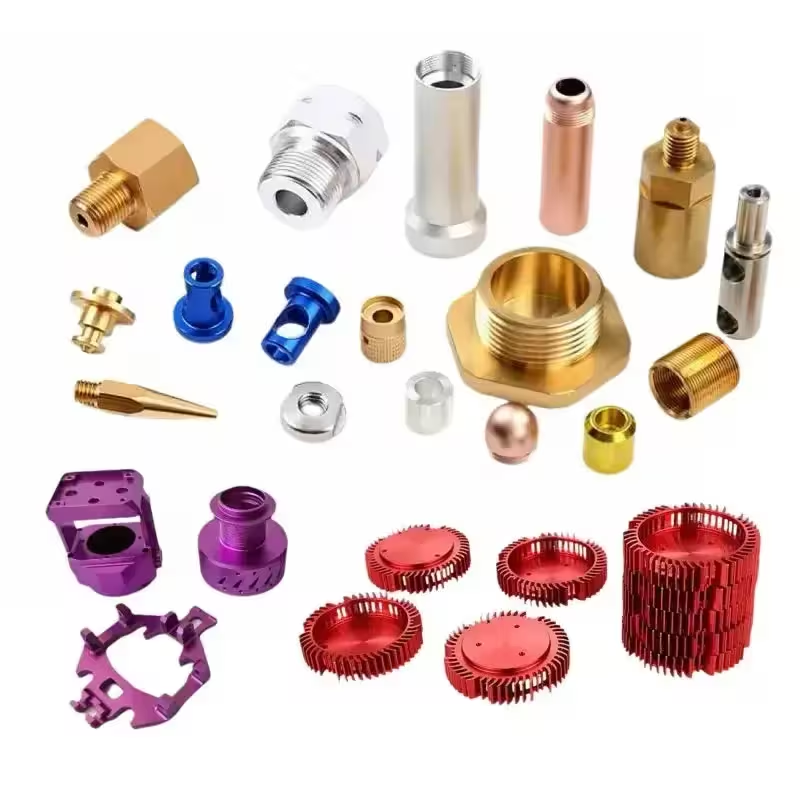
6061 / 6061-T6 · 2024 · 5052 · 5083 · 6063 · 6082 · 7075 · ADC12
303 · 304 · 316 · 316L · 420 · 430 · 431 · 440C · 17-4PH (SUS630)
1018 · 1045 · 4130 · 4140 · 4340 · A36 · tool steel
C101 · C103 · C110 · beryllium copper · C27400 · C28000 · C36000
TA1 · TA2 · TC4 (Ti-6Al-4V) · Inconel · magnesium AZ31B / AZ91D
ABS · PC · PMMA · POM · PA · PEEK · PP · HDPE · carbon fibre
Founded in 2011 and focused on precision CNC machining ever since — prototypes, bridge tooling and production runs from the same plants.
DFM engineering, 3/4/5-axis machining, mill-turn, finishing, assembly and international express — all handled under one roof.
One part or ten thousand. The same engineering support applies to a single prototype as to a production release.
Upload a STEP file and a drawing; you get pricing and a free DFM analysis back within 12 hours, production can start within 24.
Own equipment and own finishing lines mean fewer external dependencies — our historical late-delivery probability stays below 2%.
ISO 9001:2015 for quality, IATF 16949:2016 for automotive programmes, ISO 13485:2016 for medical hardware and ISO 27001:2022 for your data.
These are the part families we machine most often on five axes. If your project looks like one of them, tell us the drawing number and we will tell you which machine we would run it on.
Thin-wall frames, brackets and structural parts in 7075 and titanium, machined to a single datum with inspection reports on request.
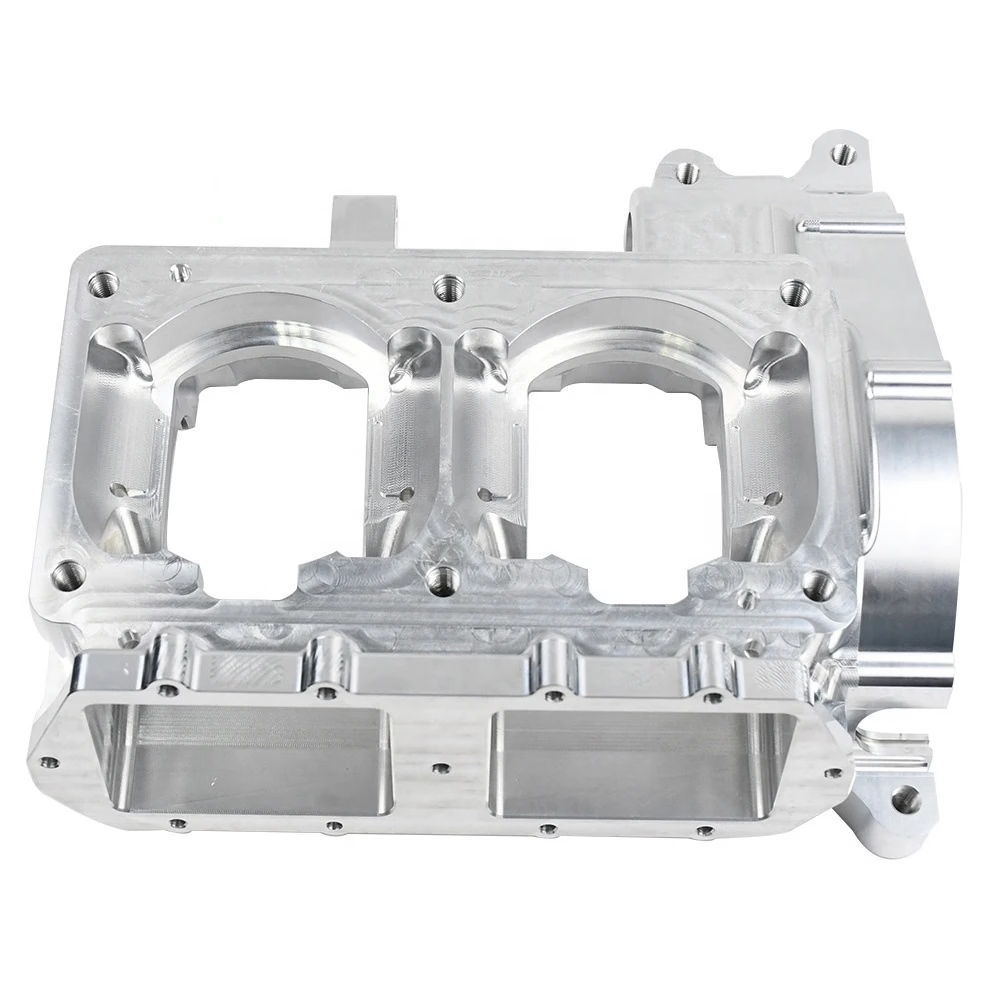
Motor housings, bell housings, oil pans and stator/rotor components produced under IATF 16949 process control.
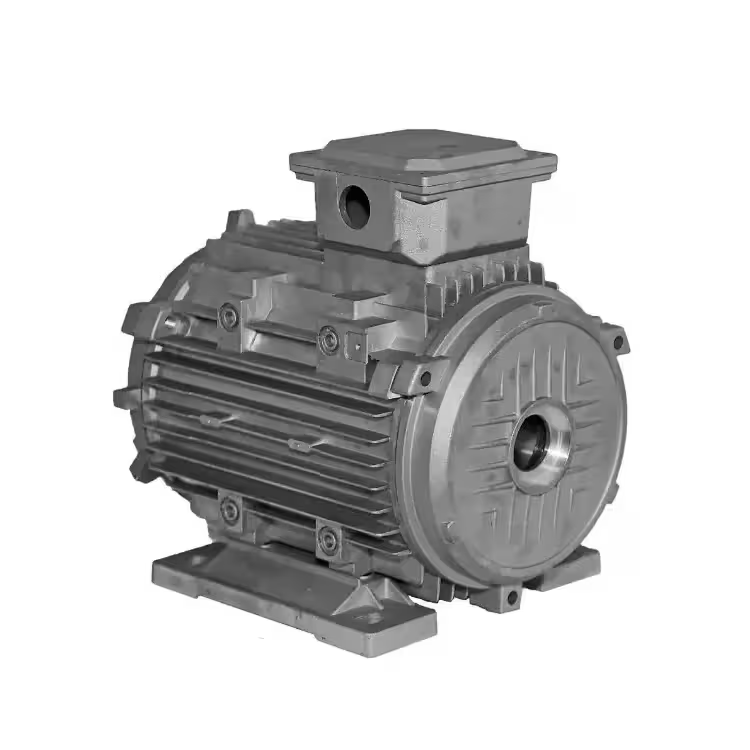
Joint housings, harmonic-drive parts and machine hardware where bore alignment and surface finish decide whether the assembly runs smoothly.
5-axis machining moves the cutting tool in three linear directions and rotates the tool or the workpiece around two additional axes — at the same time. Instead of stopping to re-clamp the part for each new face, the machine re-orients the geometry, so the cutter can reach five sides of the workpiece in a single setup.
The practical result: complex geometry with undercuts and curved surfaces can be produced in one operation, with one datum controlling the relationship between every feature.
3-axis machines move the tool in X, Y and Z only. Any feature on the side of the part needs a new setup. 4-axis machines add rotation around one axis — the usual answer for parts that are turned as well as milled, or for a series of faces around a cylinder. 5-axis machines add a second rotary axis, so the tool can approach the part from almost any angle, either indexed (3+2) or continuously.
More axes are not automatically better: they cost more per hour. We quote the process the geometry actually needs, and for flat prismatic parts that is often 3-axis or 3+2.
If every face is flat and reachable while the rotary axes are locked, 3+2 is the faster and cheaper route: the machine cuts as rigidly as a 3-axis mill but reaches five faces without manual re-fixturing.
Simultaneous 5-axis is the right choice when the surface itself is free-form — impellers, blades, organic housings — or when the tool has to stay normal to a curved surface to avoid witness lines and long manual polishing. Send us the STEP file and we will tell you which of the two we would program.
Our 5-axis work is held to ±0.005 mm / ±0.0002 in — on the features you call out and on the dimensions the drawing leaves open. Holding that tolerance takes slower passes, specialized tooling and more inspection than general machining, which is why tight-tolerance work is quoted per part rather than assumed.
As-machined surfaces are typically Ra 1.6–3.2 μm. High-quality finishing reaches Ra 0.8–1.6 μm and fine finishing Ra 0.2–0.8 μm; a mirror finish is added as a post-process rather than cut on the machine.
Maximum processing size is 4,000 mm. On our large-format 5-axis centers the working envelope is 4,000 × 400 × 150 mm; medium-format machines run 750 × 1,150 × 550 mm and 600 × 600 × 600 mm; compact machines cover 500 × 500 × 450 mm and 500 × 310 × 200 mm, with a Ø400 mm rotary table for single-setup multi-face work.
If your part is close to or beyond an envelope, send the bounding box and we will confirm the machine and the fixturing before quoting.
Aluminium (6061, 2024, 5052, 5083, 6063, 6082, 7075, ADC12), stainless steel (303, 304, 316, 316L, 420, 430, 431, 440C, 17-4PH), carbon and alloy steels (1018, 1045, 4130, 4140, 4340, A36, tool steel), copper and brass grades, magnesium alloys, titanium (TA1, TA2, TC4 / Ti-6Al-4V), Inconel, and engineering plastics including POM, PEEK, PA, PC, PMMA, ABS and carbon fibre.
Finishing follows the same order: anodizing, hard anodizing, plating, powder coating, black oxide, bead blasting, brushing, polishing and laser marking.
Upload your 3D model (STEP, STP, IGS, IGES, STL, X_T) and a 2D drawing (DWG, DXF, PDF) through the online quotation form. You get pricing and a free DFM analysis back within 12 hours, and production can start within 24 hours of approval — parts typically ship in 3–5 days.
All uploads are treated as confidential; an NDA can be signed on request. Tell us the target lead time in the enquiry and we will confirm the schedule before the order is released.
Yes — there is no minimum order quantity. A single 5-axis prototype runs on the same equipment as a 10,000+ part production order, with the same engineering review, inspection and documentation available.
Prototypes are usually quoted as machined-only to keep the cost down; when the design stabilises we can add finishing, marking and packaging for the production release.
No minimum order quantity. Uploads are secure and confidential — view our NDA. If the geometry needs a different process than you expect, we will say so in the quotation.
12-hour quotation24-hour production start3–5 day delivery100% inspection
Trusted by engineers and manufacturers worldwide










Upload your 3D model or 2D drawing and get a quotation with a free DFM analysis. Maximum processing size 4,000 mm.
CNC Metals 13 grades
CNC Plastics 10 grades
Machines & processes 12 options
Surface & post-processing 10 options
Material: not selected Machine: not selected Post-process: not selected
Fill in this short form and we'll open WhatsApp with your message ready to send. We only use these details to reply to you.
Nothing is sent until you press send inside WhatsApp.