
01
Work hardening mid-cut
Feed and speed set wrong on a first pass, and the surface hardens under the tool. The next pass burns the insert and the finish turns rough. You pay for a re-cut, or you accept a part that fails roughness inspection.
Milling and turning of 304 stainless steel parts to ±0.005 mm, with 16 simultaneous 5-axis centers in Dongguan. Quote and DFM feedback within 12 hours, from one prototype to 10,000+ parts.
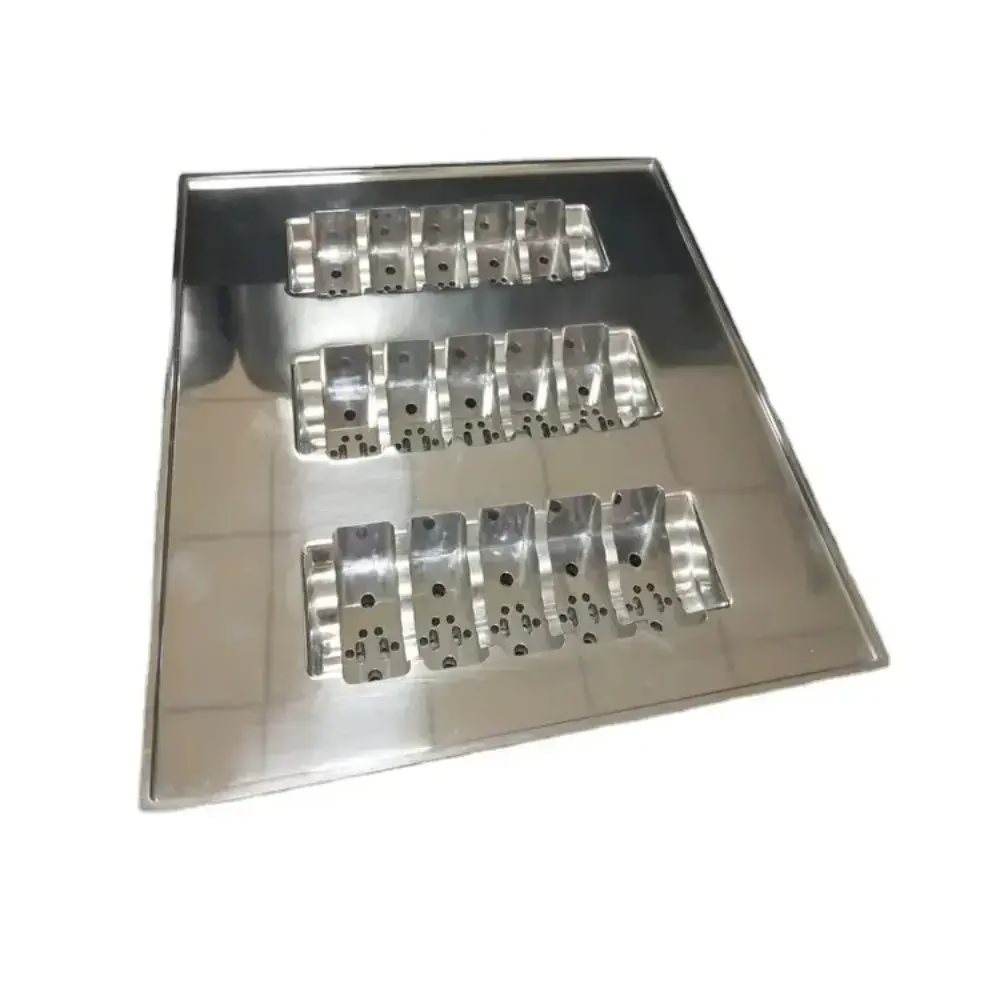
Most stainless failures are process failures, not material failures. These are the ones buyers send back to us.
Feed and speed set wrong on a first pass, and the surface hardens under the tool. The next pass burns the insert and the finish turns rough. You pay for a re-cut, or you accept a part that fails roughness inspection.
Stainless galls against stainless. Parts that thread fine in the shop lock up at assembly when the mating part is also 304. Thread milling with the right pitch diameter and a controlled root radius avoids it.
Without through-spindle coolant, heat builds at the cutting edge and the bore comes out tapered. A 20 mm deep bore can drift 0.03 mm from top to bottom. That shows up only when the mating pin will not seat.
Machined 304 carries free iron on the surface. Without a passivation step, rust spots appear on the shelf or in the field. The fix is cheap at the machine, expensive after the customer opens the box.
Tooling, coolant and speeds chosen for the alloy, not copied from an aluminum job.
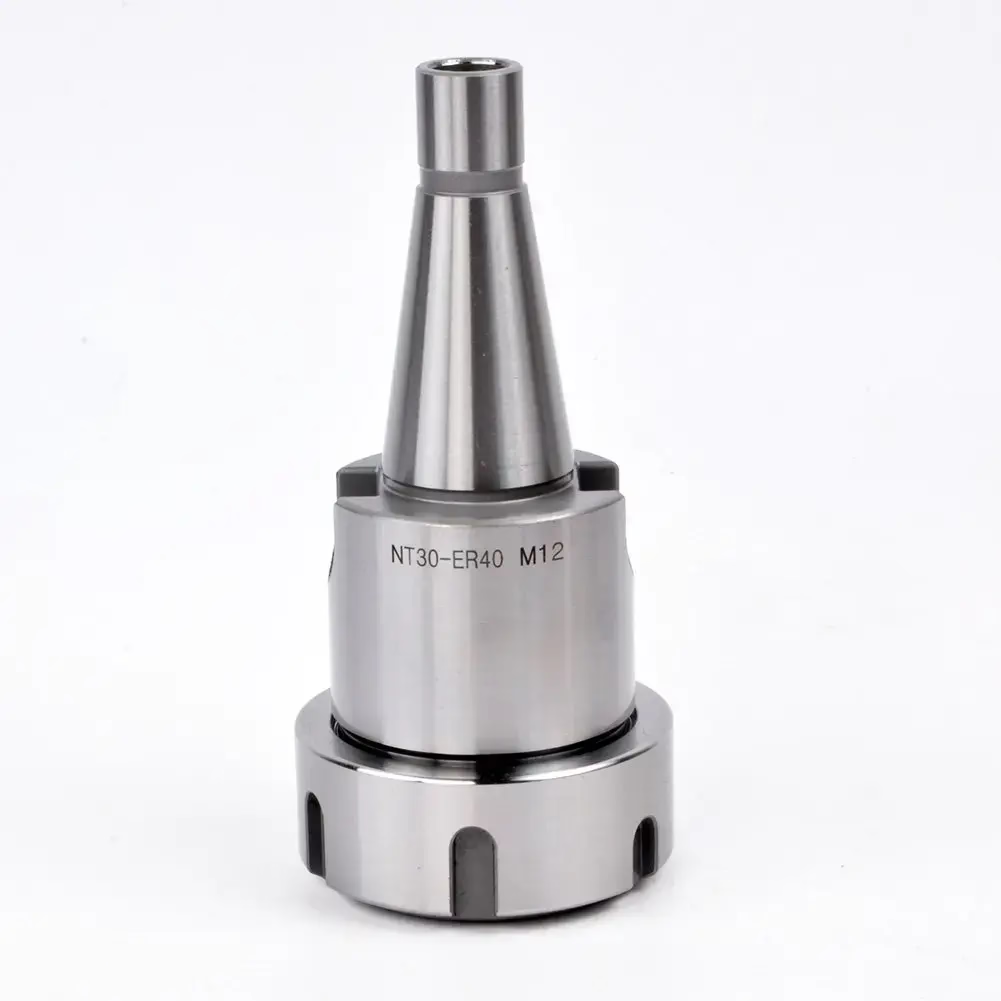
304 is austenitic. It does not harden before the cut, it hardens during it. Once the tool rubs instead of shears, the surface layer goes from around 200 HV to well past 300 HV and the next insert has to cut through that skin.
We run sharp, positive-rake carbide at moderate surface speed with a feed heavy enough to stay under the hardened layer. High-pressure through-coolant carries heat away from the edge instead of into the part. On thin-wall or long-reach features we drop radial engagement and accept a slower cycle rather than fight chatter.
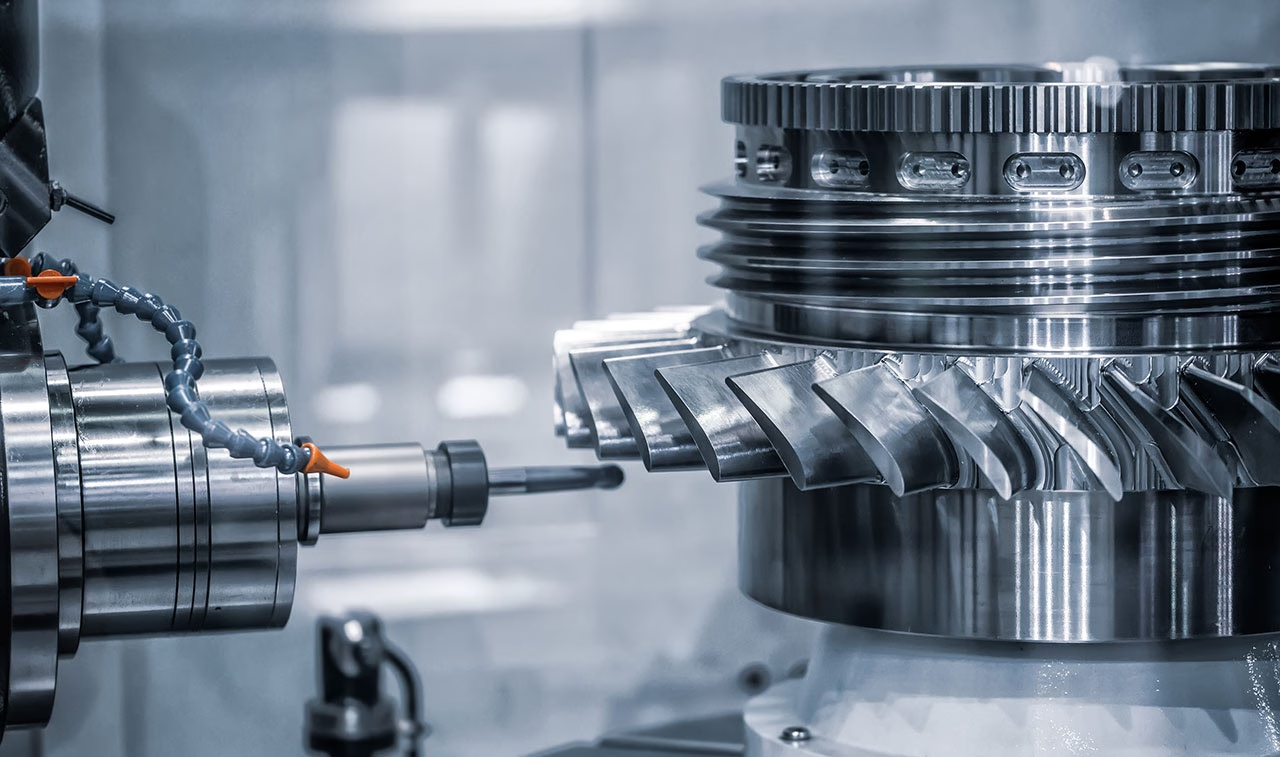
A 304 housing with ports, a flange face and a bore usually needs four or five setups on a 3-axis machine. Every setup adds a datum shift and a chance for error. On our simultaneous 5-axis centers the part stays in one fixture and the features come off one datum.
That matters most for position tolerance. A pattern of holes called out to ±0.05 mm across two setups is a coin flip; from one setup it is routine. We inspect 100% of parts before shipment and can supply dimensional reports on request.
304 is the default for corrosion resistance and cost. It is not always the right answer.
| Grade | Best for | Watch out for |
|---|---|---|
| 304 / 304L | Food, water, general corrosion, welded frames | Galls on threads; needs sharp tooling |
| 303 | Screw-machine parts, high-volume turning | Lower corrosion resistance than 304 |
| 316 / 316L | Chloride, marine, medical, chemical service | Higher cost, more tool wear |
| 17-4PH | High-strength shafts and valves | Heat treat step adds lead time |
| 420 / 440C | Wear surfaces, knife edges, bearings | Hard to machine after hardening |
One shop for the machining, the finishing and the inspection paperwork.
Simultaneous 5-axis for complex housings, impellers and multi-face parts from one setup.
3-axis and 4-axis milling plus mill-turn centers for round parts with cross features.
One-off and low-volume stainless parts for fit checks before tooling is committed.
Passivation, bead blasting, brushing and polishing to bring 304 to the finish the drawing calls out.
Serial numbers, logos and traceability marks, minimum character height 1.5 mm.
Laser cutting, bending and welding for 304 enclosures, brackets and frames.
| Item | Range | Notes |
|---|---|---|
| 5-axis centers | 16 simultaneous | One-setup multi-face work |
| 4-axis mills | 12 machines | Round parts with cross holes |
| 3-axis machines | 27 machines | Prismatic parts, plates, brackets |
| Mill-turn centers | 16 machines | Turned parts with milled features |
| Max part size | 4,000 mm | Largest travel 4,000 × 400 × 150 mm |
| Tolerance | ±0.005 mm | ±0.0002 in on qualifying features |
| Surface finish | Ra 0.2–0.8 μm | Fine finish on request |
| Rotary table | Ø400 mm | Indexed and simultaneous work |
Running since 2011, with cutting data built up from thousands of austenitic jobs rather than a tool catalog.
You get a price and a manufacturability note the same working day, before you commit to anything.
Once the drawing and PO are confirmed, material goes to the machine the next day.
Standard stainless jobs leave the shop within the week after release.
Programmers, machinists and inspectors across three wholly-owned plants.
Dongguan plus a Singapore plant for customers who need a second shipping point.
Housings and instrument bodies washed and sterilized repeatedly.
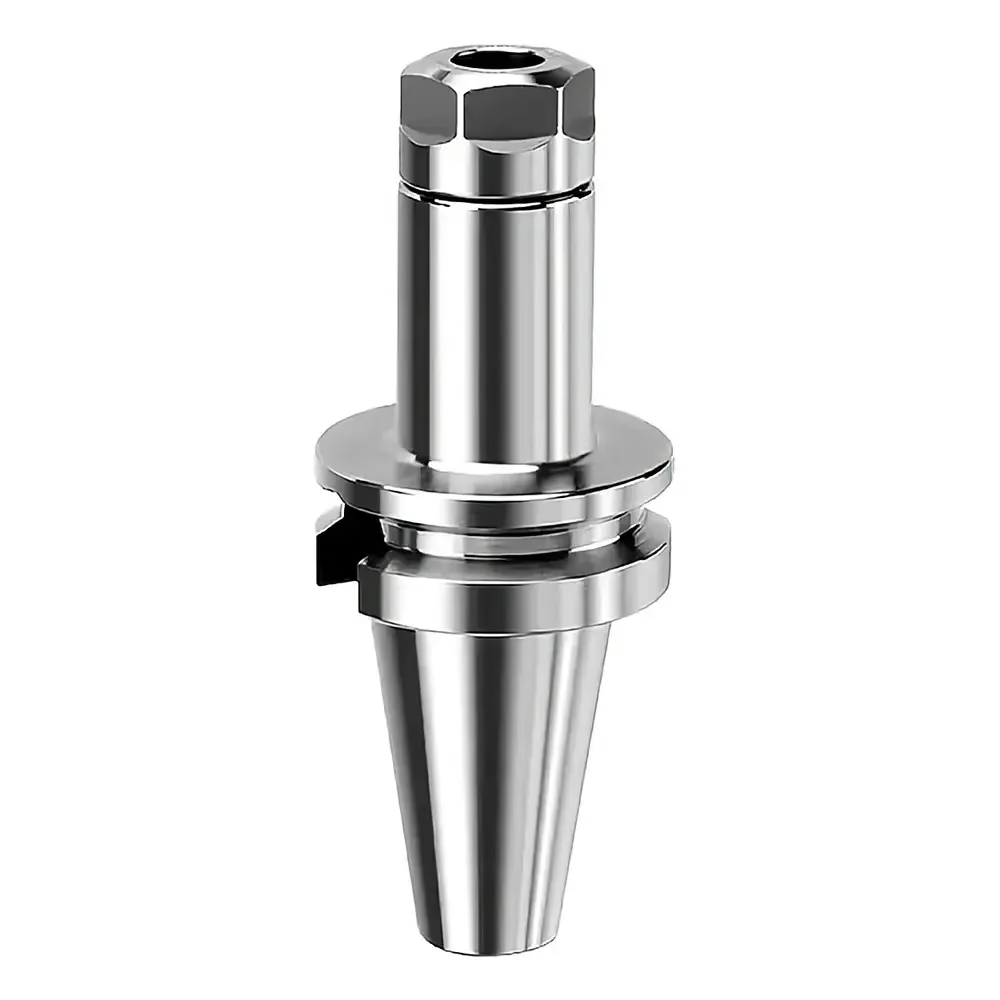
Brackets, sensor bodies and fluid fittings in volume.
Manifolds, valve bodies and shafts up to 4,000 mm.
Yes, on features where the geometry allows it. 304 moves with heat and cutting load, so the tolerance depends on wall thickness, part length and how many setups the feature needs.
Send the drawing and we will tell you which callouts we can hold as drawn and which ones need a process change. We answer that in the same 12-hour quote window.
303 machines faster and leaves a better finish, so turned parts get cheaper. It adds sulfur for machinability, and that lowers corrosion resistance.
Use 303 for internal screws, spacers and fittings that stay dry. Stay with 304 or 316 anywhere the part sees water, chlorides or cleaning chemicals.
We can include passivation as a finishing step. Machining leaves free iron and embedded tool material on the surface, and that is where rust spots start.
If the drawing calls for it, we run it. If it does not and the part is going outdoors or into a washdown environment, we will flag it during DFM review.
There is no minimum order quantity. We machine single prototypes and we run batches above 10,000 parts.
For one part, the setup cost dominates the price. If you expect volume later, say so up front and we will quote both paths in one response.
We control pitch diameter and root radius instead of cutting to nominal, and we keep the thread mill sharp. Thread milling beats tapping on 304 for this reason.
For mating stainless parts, specify a slightly different grade on one side, such as 303 against 304, or add a dry-film lubricant.
As machined is Ra 1.6–3.2 μm. A controlled finishing pass reaches Ra 0.8–1.6 μm, and fine work goes to Ra 0.2–0.8 μm.
Beyond machining we offer bead blasting, tumbling, brushing and polishing, plus laser marking for traceability.
Yes. Our largest travel is 4,000 × 400 × 150 mm, with additional envelopes at 750 × 1,150 × 550 mm and 600 × 600 × 600 mm.
Long stainless parts deflect under cutting force. We plan support and light finishing passes rather than pushing a single heavy cut.
Uploads stay secure and confidential, and we sign an NDA on request before you send files.
We machine parts for customers in medical, automotive and defense supply chains, so drawing control is part of the routine here.
Upload the STEP file and drawing. You get a price and a manufacturability note within 12 hours, no minimum order quantity.
12-hour quote100% inspectionNo MOQNDA on request
Trusted by engineers and manufacturers worldwide










Upload your 3D model or 2D drawing and get a quotation with a free DFM analysis. Maximum processing size 4,000 mm.
CNC Metals 13 grades
CNC Plastics 10 grades
Machines & processes 12 options
Surface & post-processing 10 options
Material: not selected Machine: not selected Post-process: not selected
Fill in this short form and we'll open WhatsApp with your message ready to send. We only use these details to reply to you.
Nothing is sent until you press send inside WhatsApp.