
A Complete Guide to Manage the Defects of Loose Tools in a Five-Axis Vertical Machining Center
Loose tooling shows up as chatter, taper fretting, size drift or a tool pulled out mid-cut. This guide is written for process engineers and shop supervisors who need to trace the cause and fix it. By the end you can tell whether the fault sits in the retention system, the holder, the spindle taper or the cutting program.
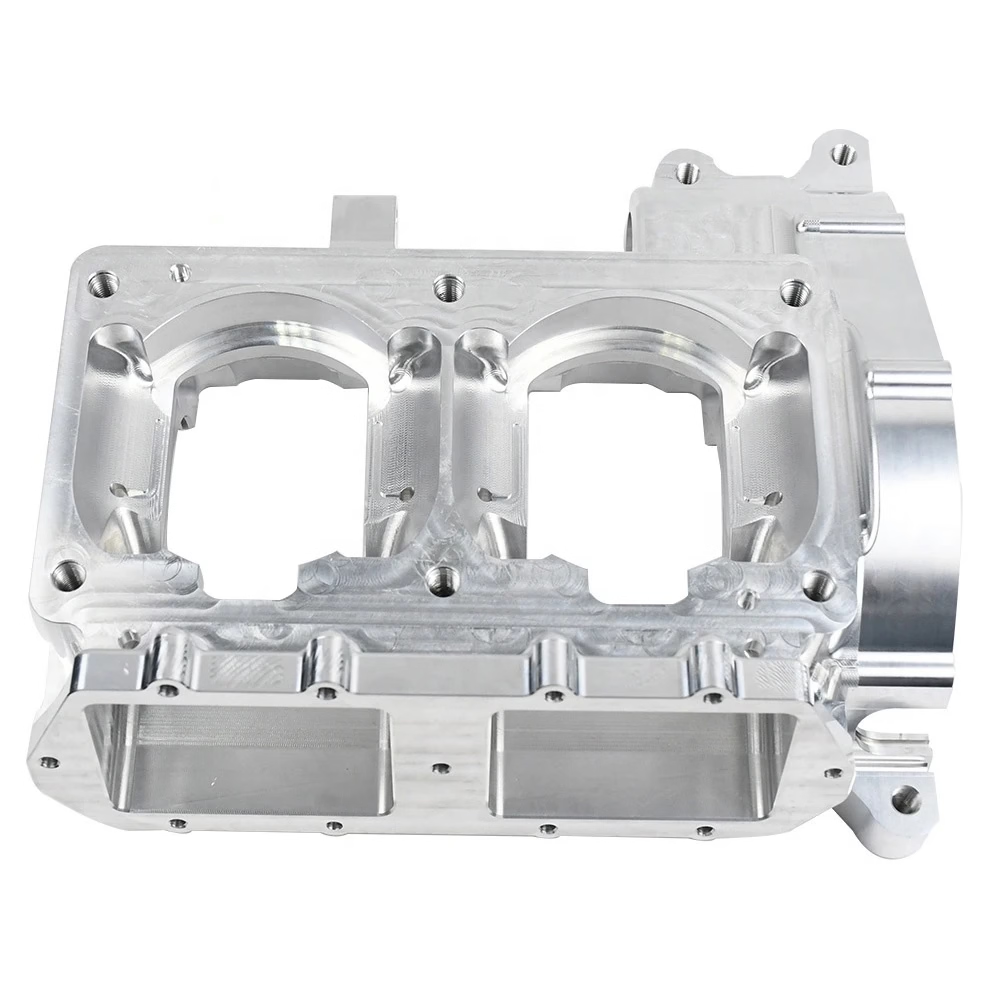
What counts as a loose tool defect
A short definition first, because the phrase covers four different failures on the floor.
Loose tool defects are a retention problem, not a cutting problem
A loose tool defect is any condition where the tool-to-spindle connection loses stiffness or position during a cycle. It covers a tool that creeps in Z, a holder that frets against the taper, a pull stud that backs out, and a tool that releases without a command. The symptom is often blamed on the cutter. The cause is almost always upstream of the cutting edge.
In a five-axis vertical machining center the retention chain has four links: the pull stud, the drawbar and disc springs, the holder taper, and the spindle taper. Each link has its own wear mode and its own measurement. When a tool moves, one link has already failed. Finding which one is the whole job.
This guide stays on the machine side of the problem. We list what each failure looks like, which checks separate one cause from another, and when a holder or spindle is past saving. Nothing here replaces the machine builder's manual, but it gives you an order of checks that stops you from replacing good parts.
Four failure modes and the evidence each one leaves
Pull stud fatigue is the most common cause we see. The stud stretches under repeated clamp and unclamp cycles, thread engagement drops, and the knob sits lower in the gripper. You will not see it by eye. Measure stud length and thread depth against the holder manufacturer's number, and replace on a cycle count rather than on suspicion.
Disc spring fatigue in the drawbar shows up as a slow loss of clamp force. Springs do not break, they sag. A stack that held 12 kN when new may hold 7 kN after two years of heavy duty. That is still enough to hold a finishing cutter and not enough to hold a face mill in a heavy radial cut.
Taper fretting appears as a polished ring or a dark band near the large end of the holder taper. It means the holder has been moving in the spindle under load. Check the contact pattern with bluing. A healthy 40 taper should show contact over most of the length, not a narrow band at one end.
Contamination is the quiet one. A chip or a film of dried coolant on the taper cuts contact area and lets the holder seat at an angle. Clean and dry the taper before every load, and check the air blast that is supposed to do it for you. If the nozzle is blocked, the machine has been loading dirty tools for weeks.
- 1Pull studStretch, low knob height, worn thread
- 2Disc springsSagging clamp force, no visible break
- 3Holder taperFretting band, poor bluing pattern
- 4Spindle taperBellmouth, scoring, chip damage
How to isolate the cause in a defined order
Start with a static clamp force check. Most machine builders publish a minimum for each taper size, and a drawbar force gauge gives you the number in under ten minutes. If force is below spec, the problem is in the drawbar or the springs and nothing downstream matters yet.
If clamp force is good, move to the holder. Blue the taper, load it, unload it, and read the pattern. Then check runout at the gauge line and again 50 mm out. A holder that passes at the gauge line and fails at 50 mm has a bent or worn shank. Scrap it rather than shimming around it.
Next, check the spindle taper itself. Look for a bellmouth at the large end, which comes from years of elastic deformation, and for scoring or a raised lip at the small end. A spindle that has lost its taper geometry will fretting every holder you put in it. That is a regrind or a spindle replacement decision, not a holder decision.
Only after the retention chain is cleared should you look at the program. High radial engagement with a long gauge length will pull a marginal holder loose. So will a rigid tapping cycle with a mismatched feed and speed. Fix the mechanical fault first, then revisit the cutting data.
Symptom, likely cause and the check that confirms it
Use this as a routing table when a tool moves and you have ten minutes to decide what to pull.
| Symptom | Likely cause | Check |
|---|---|---|
| Tool creeps in Z over a run | Low clamp force | Drawbar force gauge |
| Chatter that worsens over time | Taper fretting | Bluing contact pattern |
| Pull stud backs out | Stud stretch or bad torque | Stud length and thread depth |
| Size drift on finishing pass | Holder runout | Indicator at gauge line and 50 mm |
| Tool releases mid-cut | Drawbar or spring failure | Clamp force plus unclamp signal |
| Dark band on holder taper | Contamination or bellmouth | Clean taper, then inspect spindle |
What actually prevents a repeat
Put the pull stud on a cycle count. Track loads per stud in the tool management system and replace at the interval the holder maker specifies, not when one fails. On a busy five-axis cell that interval arrives faster than most shops expect.
Measure drawbar clamp force on a schedule. Once a quarter is enough for a machine running normal duty. Once a month for a machine running heavy roughing in titanium or Inconel. Log the number so you can see the trend before it crosses the minimum.
Keep the taper clean and keep the air blast working. Wipe holders before they go back in the magazine, and check the spindle air blast during a tool change. A blocked nozzle is a cheap fault with an expensive result.
Match holder and gauge length to the operation. A long, slender holder in a heavy radial cut is asking for movement even when every component is in spec. If the geometry of the part forces a long reach, reduce radial engagement and accept a slower cycle.
Train the people loading tools. Most loose tool defects we trace start with a holder that was loaded with a chip on the taper or a stud torqued by feel. A torque wrench and a clean rag cost less than one scrapped part.
When to repair, when to replace, and when the part is the problem
Holders are consumable. Once a taper is fretted or a shank is bent, regrinding rarely brings back the original contact and runout. For a standard 40 taper holder, replacement is usually the cheaper decision. For a large or custom holder, get the maker's opinion before you write it off.
Spindle tapers can be reground within a defined material removal limit. Past that limit, the holder sits deeper and the retention geometry changes. If a regrind is quoted, ask what the new taper contact will be and how the drawbar will be adjusted to match.
Some parts simply should not run on a five-axis center with the holder you have. Deep pockets, long overhangs and thin walls all push the connection harder. In those cases the right answer may be a different process route, a shorter holder, or a redesign that lets you reach the feature from a stiffer direction.
We machine parts with 16 simultaneous five-axis centers and hold ±0.005 mm when the tooling is sound. When tooling is marginal, no amount of machine accuracy saves the job. Fix the retention chain and the rest of the process behaves.
Common questions on loose tool defects
How often should drawbar clamp force be checked?
Quarterly is a reasonable default for a machine on normal duty.
Increase to monthly for heavy roughing in titanium, Inconel or hardened steel, and log the reading so you can see the trend.
Can a loose tool defect damage the spindle?
Yes. A holder that moves in the taper wears the spindle taper itself, and a bellmouth or a scored taper will fret every holder loaded after it.
Catch the fault at the holder stage and the spindle lasts. Ignore it and you are looking at a regrind or a spindle replacement.
Is a fretting band on the holder always a scrap decision?
Not always, but usually. Light polishing that blues correctly can still hold tolerance.
A dark band with a narrow contact pattern means the holder is moving under load. For standard 40 taper holders, replacement is normally cheaper than rework.
Does cutting data cause loose tools?
It can push a marginal connection over the edge. Long gauge length with high radial engagement is the usual combination.
Check the retention chain first. If clamp force and taper contact are good, then reduce radial engagement or shorten the holder.
What torque should pull studs be tightened to?
Use the holder or stud manufacturer's figure for that specific thread and stud size.
Do not torque by feel. A stud that is too loose backs out, and one that is over-torqued can be pre-loaded past yield.
Do we need a force gauge, or can we judge by hand?
A gauge gives a number you can trend. Hand feel does not.
Clamp force loss from sagging disc springs is gradual, so the fault is easy to miss until a tool moves mid-cut.
Send us the part and the tooling problem
Upload your drawing and tell us where the tool moves. We return a quotation and a DFM analysis within 12 hours, with 100% inspection before shipment.
12-hour quote100% inspectionNo minimum order quantity









