
Basic Knowledge of CNC Rubber Processing
This page covers what happens when you cut rubber on a CNC mill or lathe: which grades machine cleanly, which smear, how to hold a soft part, and what tolerance is realistic. Written for design engineers and buyers who need to decide between machining and molding a rubber component.
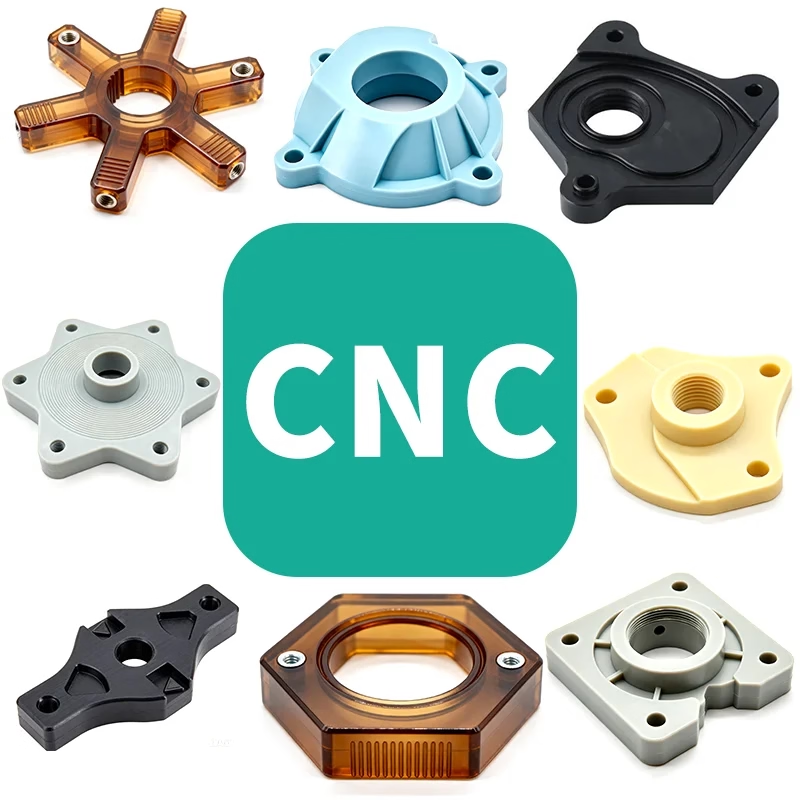
What CNC Rubber Processing Actually Involves
Rubber is not a hard metal that cuts into chips. It deflects, springs back and heats up, so the whole setup changes.
Why Rubber Behaves Differently Under a Cutting Tool
A metal cutting tool shears material and throws a chip. Rubber does not cooperate in the same way. The edge pushes the surface down, the material stretches ahead of the flute, then snaps back behind it. That springback is what ruins a finish and pulls a thin wall out of position.
Heat is the second problem. Rubber conducts heat poorly, so friction stays at the contact point instead of flowing into the chip. Above roughly 80 °C many nitrile and EPDM grades start to soften and gum. Once the surface smears, the cutter rubs instead of cuts and the edge dulls fast.
The third factor is elastic recovery after the pass. A bore that measures 20.00 mm right after cutting may settle to 19.85 mm a day later. For anything with a tight fit, we cut, wait, then measure.
- 1Low modulusThe part bends under normal cutting force, so support the whole surface, not just the edges.
- 2Heat buildupKeep surface speed down and clear chips to stop the rubber gumming on the flute.
- 3Elastic recoveryDimensions can drift after the tool passes. Inspect after the part has relaxed.
Which Rubber Grades Machine Cleanly
Hardness drives everything. Rubber below roughly 50 Shore A is difficult to machine because it deforms instead of fracturing. Grades from 60 Shore A up to 80 Shore A hold their shape well enough to be milled and turned with acceptable results. Above 90 Shore A the material behaves more like a stiff plastic and cuts predictably.
Chemistry matters too. Silicone is soft and springy but cuts cleanly with a sharp, polished tool and no coolant. EPDM and NBR sit in the middle. Viton (FKM) is denser and more abrasive, so tool wear climbs. Polyurethane is a different animal: it is tough, resists tearing and often gives a better machined edge than any of the pure elastomers.
We machine unfilled grades most often. Adding carbon black or mineral filler raises stiffness but also abrasiveness, which shortens tool life. If the drawing calls for a filled compound, expect to change inserts sooner.
Machinability by Rubber Grade
A rough guide based on Shore A hardness and how the material behaves at the cutting edge.
| Grade | Typical hardness | Machinability | Notes |
|---|---|---|---|
| Silicone (VMQ) | 40–70 Shore A | Good | Cuts clean; no coolant needed. |
| EPDM | 50–80 Shore A | Good | Stable, low swelling, easy to fixture. |
| NBR | 55–85 Shore A | Fair to good | Watch heat; tends to gum if speeds run high. |
| Viton (FKM) | 60–90 Shore A | Fair | Dense and abrasive; shorter tool life. |
| Polyurethane | 70–95 Shore A | Very good | Tough, holds a sharp edge, resists tearing. |
| Natural rubber | 30–60 Shore A | Poor | Too tacky and soft for most milling work. |
Tooling, Speeds and Workholding
Sharp is the whole game. A two-flute or single-flute carbide cutter with a high rake angle and a polished flute keeps the edge slicing rather than rubbing. Single-flute tools clear chips better in soft rubber and reduce the load on the part. Dull tools are the fastest way to a smeared finish.
Spin fast, feed fast. Surface speeds in the range of 100–300 m/min with a heavy chip load per tooth give the cleanest cut, because the edge spends less time rubbing. A light feed with a slow spindle just heats the rubber. Coolant is usually avoided; compressed air or a cold-air gun clears swarf without swelling the material.
Holding a soft part is half the job. Vacuum chucks and custom soft jaws spread the clamping load so the rubber does not compress and rebound out of tolerance. For thin sections, we freeze the blank or back it with a rigid support plate. Every setup is checked for deflection before the first cut.
- 1Tool geometryHigh rake, polished flute, single or two flutes.
- 2Cutting dataHigh surface speed, heavy chip load, air blast for chip clearing.
- 3WorkholdingVacuum chucks, soft jaws, backing plates for thin walls.
What Tolerance Is Realistic on Rubber
Rubber does not hold tolerance the way aluminium or steel does. On a rigidly supported part above 60 Shore A, we can hold ±0.005 mm on critical metal-contact features and Ra 0.8–1.6 μm on a finished surface. On unsupported thin sections, the practical window widens to ±0.1 mm or more, driven by elastic recovery rather than by the machine.
The rule we give customers: tolerance should follow function. Sealing surfaces and mating bores need tight control. Cosmetic edges and non-critical radii do not. Over-tolerancing a rubber part raises cost without adding value, because every tight dimension needs its own inspection step.
Every part is inspected before shipment. Raw material is checked on receipt, dimensions are monitored during the run, and a final inspection confirms the drawing. Reports are available on request.
Machining Versus Molding: When Each Wins
Molding is the right call for high-volume runs of a fixed shape. The tooling cost is real, but the per-part price drops fast once the mold is amortized. If you need 50,000 identical gaskets with no design changes, mold them.
Machining wins when the geometry is complex, the quantity is low, or the design is still moving. A prototype seal, a one-off test fixture, a short bridge run before the mold is ready: these are all machined. There is no tooling cost and no minimum order quantity, so a single part can ship in 3–5 days.
There is also a hybrid route. Machine the prototype, validate the fit, then cut the mold from the frozen design. That sequence avoids paying for a mold twice when the first revision was wrong.
Surface Finish and Post-Processing
Rubber finishes differ from metal finishes. Bead blasting and tumbling remove flash and soften edges without changing dimensions much. Brushing and polishing can bring a matte surface up to Ra 0.8–1.6 μm, but aggressive polishing heats the surface and can distort thin features.
Laser marking works on many dark rubber grades, with a minimum character height of 1.5 mm. Lighter compounds may not show enough contrast. If the part needs a permanent mark, test it on the actual compound before committing.
Coating and plating do not apply to elastomers. Anodizing, electroless nickel and powder coating are metal processes. For rubber, the finish options are mechanical: blasting, tumbling, brushing, polishing and laser marking.
Frequently Asked Questions
Which rubber types can be processed on a CNC machine?
Most common grades work: silicone, EPDM, NBR, Viton (FKM) and polyurethane. Hardness is the limiting factor more than chemistry. Grades from about 60 Shore A upward machine predictably. Softer compounds tend to deform under the tool and are better molded.
What tolerance can you hold on a machined rubber part?
On a rigidly supported part above 60 Shore A, we can hold ±0.005 mm on critical features and Ra 0.8–1.6 μm on the finished surface. Unsupported thin sections relax more, so the practical window widens to ±0.1 mm or more.
Do you use coolant when machining rubber?
Usually not. Many rubber grades absorb or swell with liquid coolant, and the chips clump. We clear swarf with compressed air or a cold-air gun instead, which also helps control the heat at the cutting edge.
Is machining cheaper than molding for a rubber part?
For low volumes and prototypes, yes. There is no tooling cost and no minimum order quantity. For high-volume runs of a fixed design, molding wins once the tooling is amortized. A common route is to machine the prototype, freeze the design, then cut the mold.
How do you hold a soft rubber part during machining?
Vacuum chucks and custom soft jaws spread the clamping load. Thin sections get a rigid backing plate or are frozen first. The setup is checked for deflection before the first cut, because a soft part will move if the support is uneven.
What lead time should I expect for a machined rubber component?
A quote and free DFM analysis come back within 12 hours. Production can start within 24 hours of approval, and parts typically ship in 3–5 days depending on geometry and quantity.
Send Us Your Rubber Part Drawing
We will review the geometry, grade and tolerance, and tell you whether machining or molding is the better route before you commit.
12-hour quote100% inspectionNDA on request









