GreatLight CNC Machining Factory logo
CNC Machining
Rapid Prototyping
Materials
Industries
News
About GL

Get Instant Quote

Welding and Machining Advice

Can Aluminum Be Welded

Yes. Most grades we machine weld clean, but heat treat, filler choice and joint design decide the result. We weld light-gauge aluminum frames, cabinets and brackets, then finish to print.

TIG and MIG welding6061, 5052, 6063Light-gauge partsWeld then finish±0.005 mm after welding100% inspection
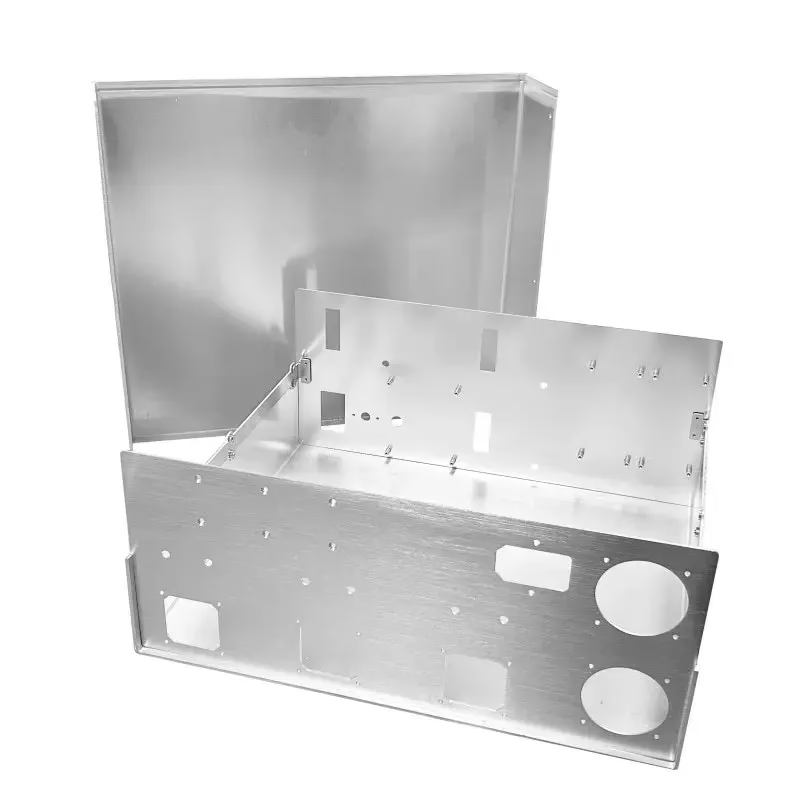
aluminum-alloy-industrial-control-chassis-sheet-metal-processing
15 yearsSince 2011
127CNC machines in three plants
±0.005 mmMachining tolerance
3–5 daysParts ship
Why weld failures happen

Four problems we see on welded aluminum jobs

Most welding issues start before the torch is lit. Here is what goes wrong.

01

Cracks appear at the weld toe

7xxx and some 6xxx grades are heat-treated and crack-sensitive. If the filler does not match the base alloy, the joint can crack within hours of cooling. We check the alloy certificate before choosing 4043 or 5356 filler.

02

Parts pull out of tolerance

Aluminum conducts heat five times faster than steel, so a 300 mm frame can move 0.5 mm or more at the far end. Weld sequence and fixture design matter more than machine settings. We rough machine, weld, then finish machine to ±0.005 mm.

03

Porosity shows up after anodizing

Hydrogen trapped in the weld pool leaves pinholes. Clear anodizing turns them dark and hardcoat makes them worse. Gas flow, wire cleanliness and travel speed control this. We seal and inspect before any finish runs.

04

The oxide layer fights the arc

Aluminum oxide melts at 2,072 °C while the metal below melts at 660 °C. Without AC cleaning action or proper polarity, the arc rides on the skin and you get cold lap. Cleaning with a stainless brush and keeping the window short fixes it.

Our approach

How we make welded aluminum parts hold tolerance

Weld first, machine second. That order solves most of the problems above.

aluminum-alloy-cnc-processing-2
Process order

Rough machine, weld, then finish machine

A welded frame that is machined only before welding will not stay flat. The heat-affected zone softens 6061-T6 to roughly T4 strength, and the part moves as it cools. We leave 0.3–0.5 mm of stock on every critical face, weld the assembly in a fixture, then take the final cut after the part reaches room temperature.

For thin-wall enclosures and support frames, this keeps flatness and hole position inside ±0.005 mm. It also lets us drill and tap after welding, so threads stay clean and do not fill with spatter.

  • 1
    Stock allowance0.3–0.5 mm left on mating faces for post-weld machining
  • 2
    Fixture controlTack in sequence, then weld in short passes to spread heat
  • 3
    Cool before cuttingNo final machining until the assembly is at room temperature
aluminum-vs-stainless-steel-cnc-lathing-machining-service
Alloy selection

Which aluminum grades weld well, and which do not

5052, 5083, 6061 and 6063 are the workhorses. They weld with 4043 or 5356 filler and hold up in frames, cabinets and brackets. 6061-T6 loses strength near the weld, but if the joint is not the load path, that rarely matters.

7075 and 2024 are a different story. Both are strong and machine beautifully, but they are generally considered non-weldable by arc processes. If a part needs 7075 strength and a welded joint, the usual answer is to split the design: machine the high-load detail, weld it to a 6061 or 5052 structure.

  • 1
    Good weldability5052, 5083, 6061, 6063, 6082 — standard TIG or MIG
  • 2
    Limited weldability2024, 7075 — crack-sensitive, avoid arc welding
  • 3
    Filler choice4043 for general work, 5356 for higher strength and anodized parts

Grade reference

Weldability by aluminum grade

Use this to decide whether a joint should be welded or redesigned.

GradeArc weldabilityTypical use
5052ExcellentEnclosures, panels, tanks
5083ExcellentMarine and structural frames
6061-T6Good, strength drops at HAZBrackets, housings, fixtures
6063GoodExtrusions, frames, trim
6082GoodStructural extrusions
2024Poor, crack-sensitiveAircraft skins, machined ribs
7075Not recommendedHigh-load machined parts
What we do

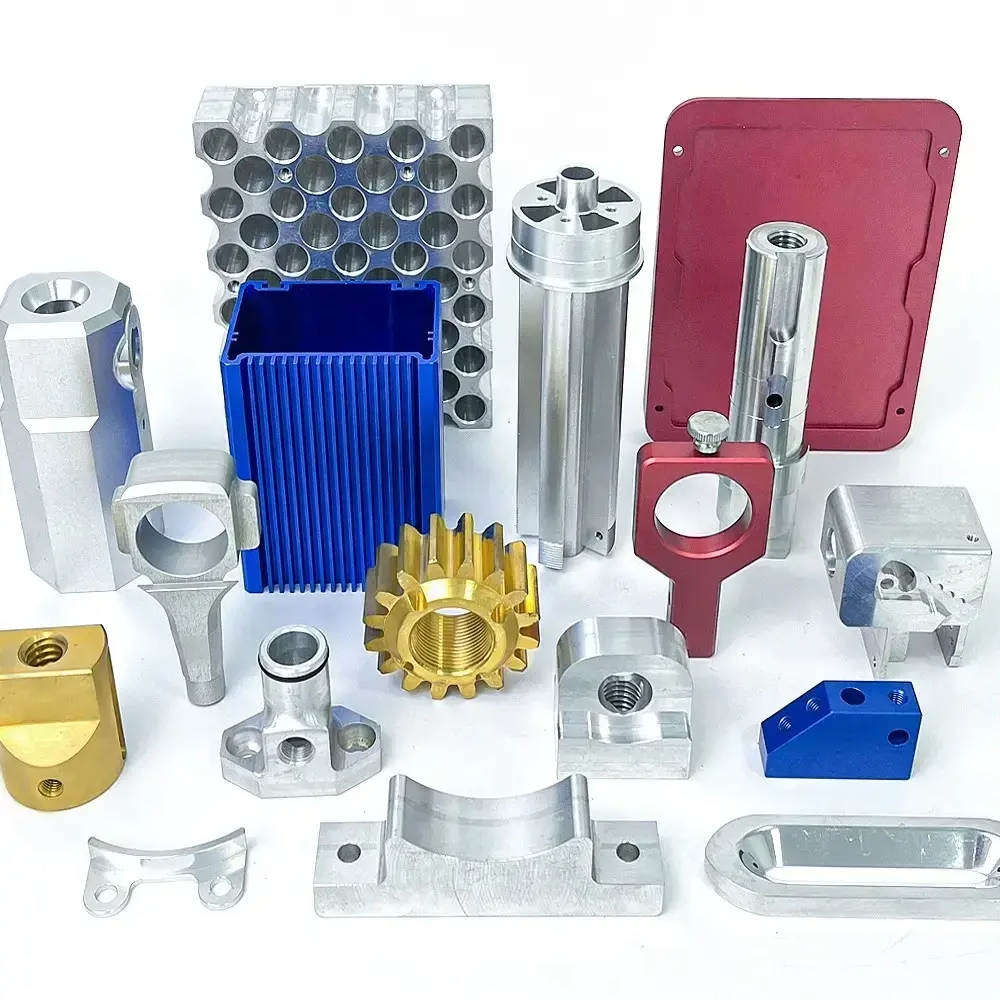
Welding plus the machining steps around it

One shop for the whole part, so nothing gets lost between vendors.

01

TIG welding

AC TIG for thin sheet from 1.0 mm up, and for visible joints on cabinets, boxes and frames. Clean beads, low spatter, easy to finish.

02

MIG welding

For longer runs and thicker sections where speed matters. Good for support frameworks and welded assemblies that will be powder coated.

03

Pre-weld machining

Faces, steps and locating features cut before welding so the fixture has something true to clamp against.

04

Post-weld machining

Final faces, bores, slots and threads cut after the assembly cools. Holds ±0.005 mm on critical features.

05

Sheet metal fabrication

Laser cutting, forming and welding under one roof. Electrical boxes, chassis and support frames ship as one unit.

06

Surface finishing

Anodizing, powder coating, bead blasting and laser marking. We pick finishes that hide weld porosity instead of highlighting it.

Scope and limits

What our welding and machining cell covers

ItemCapability
Max part size4,000 mm maximum processing size
Thin sheetTIG from 1.0 mm thickness
Materials6061, 6061-T6, 2024, 5052, 5083, 6063, 6082, 7075, ADC12
Tolerance after welding±0.005 mm on machined features
Finish rangeRa 0.8–1.6 μm standard, Ra 0.2–0.8 μm on request
Inspection100% inspection before shipment, reports on request
Order sizeNo minimum order quantity, one prototype to 10,000+ parts
Why GreatLight

Reasons engineers send welded assemblies here

Numbers instead of adjectives.

15Y

Aluminum experience since 2011

Three wholly-owned plants and 150 technicians. Welding and machining sit in the same building, so a tolerance problem gets fixed the same day.

127

CNC machines on site

16 simultaneous 5-axis centers, 12 four-axis mills, 27 three-axis machines and 16 mill-turn centers. Post-weld features get cut without waiting for an outside shop.

±0.005

Machining tolerance in mm

That is ±0.0002 in. Final machining happens after the weld cools, so the tolerance applies to the finished part, not the pre-weld blank.

99.99%

Qualification rate

Raw material check, in-process monitoring and final inspection. Welded assemblies get the same treatment as single machined parts.

12h

Quote and DFM feedback

Send drawings or a STEP file. We return a quotation and free DFM analysis within 12 hours, including weld and machining notes.

10k+

Parts per run, no MOQ

From one prototype to 10,000+ part runs. Production can start within 24 hours of a released order.

7,600 m²Manufacturing space
150Technicians
ISO 9001 / IATF 16949Quality systems
<2%Historical late-delivery rate
Industry fit

Where welded aluminum parts are used

Aluminum-machining-for-automotive-engine-parts

Industrial control chassis

Sheet metal boxes and support frames welded from 5052 and 6061, then machined and powder coated.

  • 6061 / 5052
  • TIG welded
  • ±0.005 mm post-weld
products-that-can-only-be-made-with-5-axis-cnc-machining

Automotive brackets and mounts

Welded brackets where the joint is not the primary load path, machined after welding for bolt-hole alignment.

  • IATF 16949
  • 6061-T6
  • 100% inspection
cnc machining

Robotics and automation frames

Welded frames with 5-axis machined mounting faces. Flatness held after the weld cools, not before.

  • 5-axis finishing
  • 4,000 mm max size
  • Flatness held
FAQs

Welded aluminum questions engineers ask

Can aluminum welded joints be as strong as the base metal?

Not in the heat-affected zone. When you weld 6061-T6, the zone next to the weld drops to roughly T4 strength, so the joint is the weak point in tension.

If the joint carries the main load, either increase the weld length, move to 5052 or 5083, or redesign so the load goes through a machined feature instead of the weld.

Why does 7075 crack when welded?

7075 contains zinc and copper in amounts that form low-melting phases at the grain boundaries. As the weld cools, those boundaries tear before the metal gains strength.

There is no filler that fixes this in arc welding. Split the part into a machined 7075 detail and a 6061 or 5052 welded structure.

Do you weld before or after machining?

Both, on parts that need it. We rough machine, weld in a fixture, let the assembly cool, then finish machine the critical faces, bores and threads.

This costs one extra setup. It is the only reliable way to hold ±0.005 mm on a welded assembly.

Will anodizing ruin the look of a weld?

It can. Clear anodizing darkens porosity and shows the filler as a slightly different shade. Hardcoat makes both effects stronger.

If appearance matters, we use 5356 filler, keep porosity low, and often recommend powder coating or bead blasting instead of clear anodizing.

What is the thinnest aluminum you can weld?

Around 1.0 mm with AC TIG, if the joint is supported and the fit-up is tight.

Below that, distortion becomes hard to control on a frame or enclosure. We usually change the design to a folded or riveted joint, or add a thicker flange at the weld line.

How do I know if my part should be welded or machined from one block?

If the part fits inside a 4,000 mm envelope and has no internal cavities, machining from solid gives better tolerance and no weld cleanup.

Welding wins when the part is a frame, a box or a large enclosure where 80% or more of the material would be removed as chips. Send the model and we will quote both routes.

Can you supply welded parts with a finish and inspection report?

Yes. We handle anodizing, powder coating, black oxide, plating, bead blasting and laser marking, then inspect 100% before shipment.

Material certificates and inspection reports are available on request. We work under ISO 9001:2015, IATF 16949:2016, ISO 13485:2016 and ISO 27001:2022.

Do you sign an NDA for welded assembly projects?

Yes. Uploads are secure and confidential, and we sign an NDA on request before drawings are shared.

For prototype and low-volume runs there is no minimum order quantity, so you can test one welded assembly before committing to a larger batch.

Send your welded assembly drawing

Tell us the alloy, the joint and the tolerance that matters. We will reply with a quote and DFM notes within 12 hours.

12-hour quote100% inspectionNo minimum order quantityNDA on request

Trusted by engineers and manufacturers worldwide

Tesla Ford Motor Company BYD Auto Denso Magna International Boeing Airbus Medtronic KUKA FANUC