
CNC copper alloy processing
Copper alloys cut fast, conduct heat away from the tool, and still ruin a batch when the alloy or the coolant choice is wrong. This page explains what happens at the cutting edge, which alloys behave which way, and how to judge whether a part belongs on a mill or somewhere else.
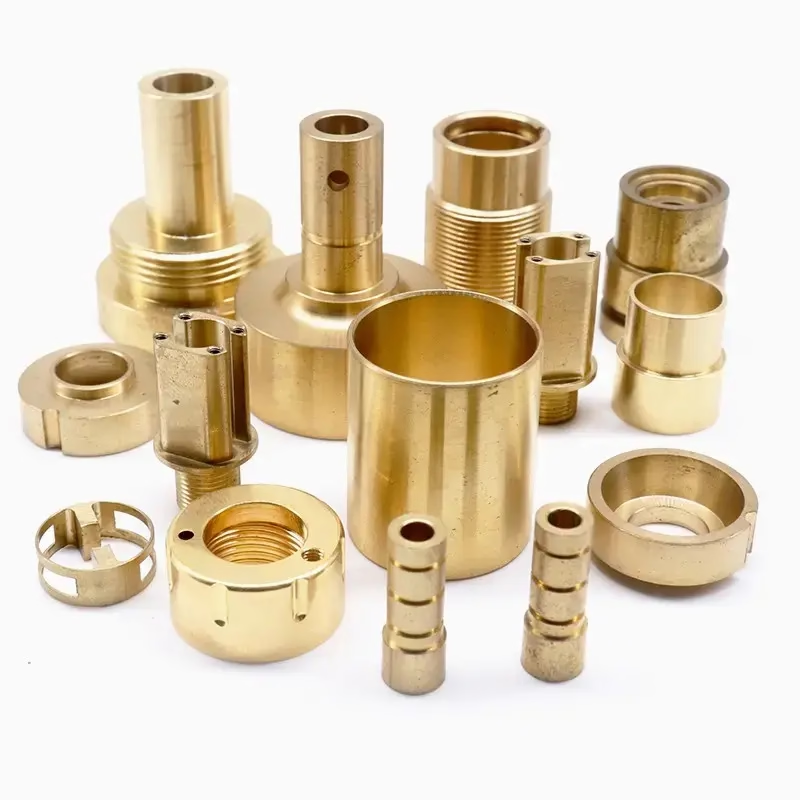
Why copper behaves differently at the cutting edge
Copper is soft, but softness is not the whole story. Pure copper and most of its alloys conduct heat roughly ten times better than steel. When a carbide insert shears the metal, most of the heat leaves through the chip and the workpiece instead of building up in the tool. That sounds helpful. In practice the chip stays soft and sticky right at the interface, where pressure peaks.
That sticky zone is where built-up edge forms. A thin layer of copper welds itself to the rake face, grows, then breaks off and takes tool coating with it. The result is a torn surface, uneven dimensions, and a tool that fails earlier than its wear curve predicts. The problem gets worse as cutting speed rises, because the interface temperature climbs even while the bulk part stays cool.
The fix is not slower cutting. It is a sharper edge and a geometry that lifts the chip away fast. Positive rake, high relief angles, and polished flutes all reduce the pressure that lets copper weld to carbide. Feed per tooth matters more than spindle speed. Push the chip thick enough to carry heat out, and the built-up edge never gets a chance to settle in.
How the main copper alloy families machine
Free-machining brass is the easy case. C36000 contains lead particles that act as chip breakers, so the material shears into short chips at high speed. Surface finish comes out clean with minimal built-up edge. If a part does not touch food, drinking water, or a medical fluid path, C36000 is usually the fastest route to a finished copper alloy component.
Pure coppers behave the opposite way. C101, C103, and C110 are chosen for conductivity, not for chip control. They are gummy, produce long stringy chips, and demand sharp tools and generous coolant flow. Deep holes and thin walls are risky because the material moves under cutting pressure. Expect to take lighter radial cuts and to check dimensions more often.
Beryllium copper sits in its own category. After age hardening it reaches tensile strengths that rival some steels while keeping useful conductivity. Machining it in the hardened state is straightforward, but the dust is a health hazard. Coolant flood, enclosed machines, and filtered mist collection are not optional. Shops that skip those controls create a real exposure problem for operators.
The C27400 and C28000 brasses fall between these groups. They machine well, cost less than beryllium copper, and hold up in plumbing and electrical hardware. C28000 gives better corrosion resistance at slightly lower machinability. When a drawing calls for brass and the service environment is wet, that trade is usually worth taking.
Speeds, feeds, and coolant choices that hold tolerance
Cutting data for copper alloys lives in a wide band. Free-machining brass runs comfortably at surface speeds from 150 to 300 m/min with carbide. Pure copper wants 100 to 200 m/min and a heavier feed per tooth to control the chip. Beryllium copper in the hardened state cuts closer to 80 to 150 m/min. These are starting points, not fixed numbers. Rigidity and tool overhang move them.
Coolant selection changes the outcome more than most operators expect. Water-soluble flood coolant handles heat and flushes chips, and it works for nearly every copper alloy. Neat oil gives better finish on pure copper and small-diameter work, though it needs fire precautions. For beryllium copper, flood coolant is a containment measure first and a lubricant second.
Tool material is the other lever. Uncoated micro-grain carbide with a polished surface usually beats coated grades on copper, because coatings add friction without adding wear resistance the material needs. Diamond-coated tools earn their cost on long runs of abrasive beryllium copper. High-speed steel still has a place in small-diameter drilling and reaming where carbide chips too easily.
Tolerance planning matters as much as cutting data. Copper expands roughly 16 to 17 μm per meter per °C, so a part that measures correctly on a warm machine can shrink out of tolerance once it cools. For work held to ±0.005 mm, let the part stabilize before final inspection. Measuring hot is one of the most common sources of a rejected batch.
Where CNC copper alloy processing stops making sense
Machining wins on tight tolerances, low volumes, and complex geometry. It loses on hollow shapes with uniform wall thickness, where a casting or a deep draw produces the same part in one operation. A machined housing that takes forty minutes of cycle time is often a casting that takes two minutes of finishing.
Very thin walls are the second boundary. Copper deflects under cutting force, and a wall under about 0.5 mm will chatter or spring no matter how sharp the tool is. Sometimes the answer is a fixture that supports the wall from behind. Other times the answer is a different process entirely.
Deep small holes create a third limit. Chip evacuation in gummy copper is poor, and a 1 mm hole at ten diameters deep will break drills unless the shop uses peck cycles, high-pressure coolant, or EDM. When a drawing stacks several of those holes, the cost curve turns steep quickly.
None of this means copper alloys are hard to machine. They are simply sensitive to process choices. A shop that runs stainless every day will not automatically run C110 well. Ask for the cutting data and the inspection plan before releasing a tight-tolerance part.
Copper alloy grades and what drives the choice
Match the alloy to the function first, then to the machine.
| Alloy | Machinability | Typical Use | Watch Out For |
|---|---|---|---|
| C36000 brass | Excellent, short chips | Fittings, connectors, fasteners | Lead content limits fluid contact |
| C27400 / C28000 | Good, moderate chips | Plumbing, electrical hardware | Lower strength than hardened alloys |
| C101 / C103 / C110 | Poor, stringy chips | Bus bars, thermal conductors | Gummy cutting, long chips, hole drilling |
| Beryllium copper | Good when hardened | Springs, contacts, molds | Dust hazard, strict containment needed |
| C110 thin walls | Poor below 0.5 mm | Heat sinks, shielding | Deflection and chatter at light walls |
Pick the alloy for the job, not the machine
For fast turnaround on hardware that never touches a fluid path, choose C36000 and machine it dry or with light flood coolant. When conductivity or spring performance sets the requirement, accept the slower speeds of C110 or the containment cost of beryllium copper and plan the process around them.
Common questions about copper alloy machining
Can copper alloys be machined without coolant?
Yes, for free-machining brass on light cuts. C36000 sheds heat in the chip and produces short, dry chips that clear easily, so air blast plus a little lubricant is often enough.
Pure coppers and beryllium copper are a different matter. C110 needs flood coolant to control heat and flush stringy chips, and beryllium copper needs flood coolant as a dust control measure. Running either dry is a shortcut that shows up in tool life and operator safety.
What tolerance can CNC copper alloy processing hold?
On rigid setups with stable temperature, ±0.005 mm is achievable on critical features, and surface finish lands in the Ra 0.8–1.6 μm range for most alloys.
The limit is usually thermal, not mechanical. Copper's high expansion coefficient means a part measured on a warm machine may drift after cooling. Let parts stabilize and inspect at a controlled temperature before signing off on a tight run.
Why do copper parts sometimes come out with a torn surface?
That is built-up edge. Soft copper welds to the rake face of the tool, grows into a lump, then breaks away and drags material with it. The torn patches repeat at a regular spacing along the cut.
Fix it with a sharper edge, a positive rake geometry, and a heavier feed per tooth. Slowing the spindle down usually makes it worse, because the chip gets thinner and the pressure at the interface rises.
Is beryllium copper safe to machine in a normal shop?
Only with dust controls in place. Beryllium copper is safe as solid bar stock, but fine machining dust is a respiratory hazard. The usual setup is flood coolant, an enclosed machine, and filtered mist collection.
Shops that already machine stainless and aluminum can usually add beryllium copper with a few process changes. The controls are well established, and the material is not something to avoid, just something to handle deliberately.
When should a copper part be cast instead of machined?
Choose casting when the part is hollow, has a fairly uniform wall, or needs a shape that would require removing most of the stock. A machined version of a thin hollow housing can take forty minutes of cycle time; the cast version finishes in minutes.
Machining still wins on prototypes, low volumes, and any feature that needs a tight tolerance or a fine surface. Many programs use both: a casting for the body and machining for the sealing faces and bores.
Do copper alloys need a special surface finish after machining?
Often yes, for corrosion or conductivity reasons. Electroless nickel and silver plating are common on electrical contacts, and they bond well to a freshly machined surface. Laser marking works on copper and needs a minimum character height of 1.5 mm.
Bare machined copper will tarnish in normal air. If the part ships without plating, plan for a protective wrap and a short storage window so the surface arrives in the condition the drawing specifies.
Send the drawing, get cutting data and a price
We review the alloy, the geometry, and the tolerance callouts, then come back with a quote and a DFM note within 12 hours. No minimum order quantity, from one prototype upward.
12-hour quote100% inspectionNDA on request
More from the shop floor
We publish setup notes, tooling trials and inspection data from the factory floor.











