
CNC Processing Contract 101: A Beginner's Guide
CNC processing contract 101 comes down to seven clauses that decide price, acceptance and risk. This guide explains what each clause controls on the shop floor, which terms protect the buyer, and when a plain purchase order is enough. Written for engineers and sourcing staff placing a first machining order.
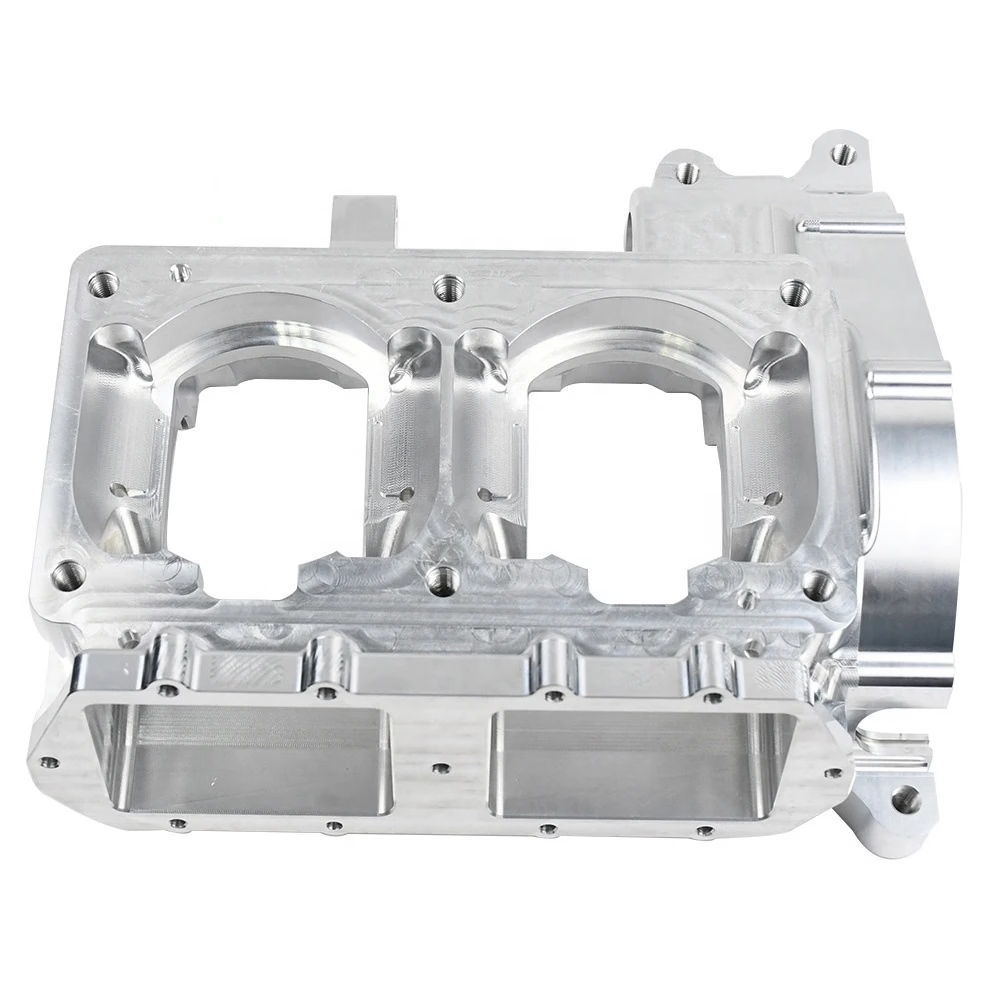
The seven clauses that decide the outcome
A machining agreement binds a drawing revision to a price, a quantity and an inspection method. Seven clauses do the real work: scope, revision control, material, tolerances and finish, inspection, lead time, and liability. Miss one and the gap gets filled by whoever is holding the parts when the argument starts.
Scope looks simple. It is not. A line that reads "machine per drawing" leaves tooling, fixturing, deburring, surface treatment and packaging undefined. Each of those is a real cost. Write them in, or write them out on purpose.
Revision control is where most first contracts fail. Quote against Rev B, manufacture against Rev C, and the parts are scrap even though both sides behaved in good faith. Name the revision number and the date in the contract body, not in an email thread.
Tolerances need a default. A title block tolerance of ±0.1 mm is fine for a bracket and useless for a bearing bore. Say which features carry tight tolerance and which can run as machined. That single distinction often moves the price more than any negotiation on hourly rate.
- 1ScopeInclude fixturing, deburring, finishing and packaging
- 2RevisionPin the revision number and date in the contract body
- 3ToleranceName the tight features instead of tightening the whole drawing
Material, inspection and who pays for a bad part
Material clauses fail quietly. A contract that says "aluminium 6061" does not say temper, mill source or whether the certificate travels with the shipment. For structural parts, specify 6061-T6 and require the mill certificate. For a housing or a cover, 6061-T6 and 6061 behave the same.
Substitution is the second failure point. If the shop may swap 304 for 316L to save a week, the contract should say so and should say who signs off. Silent substitution on a medical or marine part is not a cost saving. It is a recall.
Inspection language sets the real acceptance bar. "Inspected" means nothing. Write the sampling plan, the instrument class and the report format. For tight work, name the tolerance: our standard machining tolerance is ±0.005 mm, with 100% inspection before shipment and reports on request.
Who pays for a bad part follows from the same clause. If the drawing was ambiguous and the shop machined to a reasonable reading, splitting the cost is normal. If the shop ignored a clear callout, it absorbs the rework. Contracts that name this in advance skip a two-week argument.
- 1CertificatesRequire mill certs when the part carries load
- 2SubstitutionName approved alternates and the sign-off owner
- 3ReportsFix the sampling plan and report format up front
Lead time, payment and the terms that actually bite
Lead time clauses should describe milestones, not a single date. Quotation and DFM feedback within 12 hours, production start within 24 hours after approval, and parts shipping in 3–5 days is a schedule you can plan around. A single promised ship date is not.
Payment terms carry more risk than most buyers expect. Tooling and first-article approval are separate events from production. Tying a payment tranche to first-article sign-off keeps both sides honest and gives the buyer a clean stopping point if the process is not capable.
Volume terms matter at the edges. No minimum order quantity means a single prototype and a 10,000-part run can sit in the same agreement. What changes is the setup amortization and the fixture cost, and the contract should say which of those is one-time.
Confidentiality is the last clause people add and the first one they need. Drawings, CAD files and process notes are the buyer's IP. Uploads are secure and confidential, and an NDA is available on request. Put it in place before the first file moves, not after.
- 1MilestonesQuote, first article, production, shipment as separate dates
- 2ToolingState whether fixture cost is one-time or amortized
- 3NDASign before the first drawing is transferred
When you do not need a full contract
Not every order needs a negotiated agreement. A one-off prototype bracket in 6061, with a clear drawing and a purchase order that references it, is covered by normal commercial law. Adding twenty pages of terms slows the order without reducing real risk.
A full contract earns its place when three things are true at once: the run is large enough that a scrap event hurts, the tolerance is tight enough that capability matters, or the part is regulated. Automotive and medical work usually hits at least two of those.
Regulated parts bring certification into scope. Our plants hold ISO 9001:2015, IATF 16949:2016, ISO 13485:2016 and ISO 27001:2022. If your contract requires a specific certificate, name the standard and the year. Vague quality language creates an audit problem later.
Size and geometry also drive the paperwork. A 4,000 mm part in one piece needs a machine that can hold it and a fixture plan that keeps it stable. That is worth writing down. A 40 mm bushing is not.
- 1Skip itSimple geometry, loose tolerance, small quantity
- 2Write itTight tolerance, regulated industry, or large run
- 3Name standardsQuote the certificate number and year exactly
Clause checklist: what to write and what it prevents
Match the clause to the failure it blocks
| Clause | Write this | Prevents |
|---|---|---|
| Scope | Fixturing, deburring, finishing, packaging | Surprise charges after award |
| Revision | Revision letter and date in the body | Machining to the wrong drawing |
| Material | Grade, temper, mill certificate | Silent substitution on load-bearing parts |
| Tolerance | Named tight features plus a default | Whole-drawing tightening and price creep |
| Inspection | Sampling plan, instrument class, reports | Disputes over what "inspected" means |
| Schedule | Quote, first article, production, ship | A single date nobody can hold |
| Confidentiality | NDA signed before file transfer | Drawings reused without consent |
Where to draw the line
Small, simple, loose-tolerance parts: use a purchase order that references the drawing revision and skip the negotiation. Large runs, tight tolerances, or regulated parts: write the seven clauses out, sign the NDA first, and tie payment to first-article approval.
Questions buyers ask before signing
Does a CNC processing contract 101 checklist change for prototypes?
For a prototype, scope, revision and material matter most. Tolerance can stay loose, and inspection can be visual plus a few key dimensions.
Once the design freezes and the run moves to production, add the inspection plan and the tooling terms. Those two are what make the second order cheaper than the first.
Who owns the tooling and fixtures?
Default position in most agreements is that the buyer pays for dedicated tooling and owns it. That should be stated, along with where it is stored if the project pauses.
If the fixture is generic and reusable, it usually stays with the shop. Write the distinction down; it becomes a real question when you switch suppliers.
What happens if the parts measure out of tolerance?
The contract should say who measures, with what, and what happens next. Typically the shop reworks or remakes at its cost when the drawing was clear.
If the drawing was ambiguous, both sides usually share the cost. Naming this in advance is what keeps the conversation short.
Can a contract set a fixed price for a 10,000-part run?
It can, but material and finishing are the volatile inputs. Most agreements index the material portion or quote it valid for a set window.
No minimum order quantity means we can start at one part and scale. The unit price at 10,000 pieces reflects setup amortization, not a different process.
How tight a tolerance can we actually write in?
Our standard machining tolerance is ±0.005 mm, and surface finish runs from Ra 0.2–0.8 μm for fine work to Ra 1.6–3.2 μm as machined.
Writing a tighter number than the process can hold does not improve the part. It just guarantees a rejected lot. Ask for a DFM review before the contract is signed.
Is an NDA needed if the drawings are simple?
If the part is simple and not novel, a mutual NDA adds little. For anything with a new geometry or a new assembly, sign one first.
Uploads are secure and confidential, and an NDA is available on request. It costs an afternoon and removes the main source of hesitation.
Get a quote and a DFM review on the same day
Send the drawing and the revision. We return a quotation and a free DFM analysis within 12 hours, with the tolerance and inspection plan written out so you can put it straight into the contract.
12-hour quote100% inspectionNDA on request
Follow GreatLight
We publish setup notes, tooling trials and inspection data from the factory floor.











