GreatLight CNC Machining Factory logo
CNC Machining
Rapid Prototyping
Materials
Industries
News
About GL

Get Instant Quote

Nickel-copper alloy machining

Monel 400 (N04400) CNC Machining

This nickel-copper alloy cuts slow, work-hardens fast and moves when you take heavy passes. We machine it on 127 CNC machines to ±0.005 mm and inspect every part before shipment.

±0.005 mm toleranceØ400 mm rotary tableUp to 4,000 mmNo minimum order12-hour quote
CNC Lathe Technical Specifications Terminology
127High-precision CNC machines
16Simultaneous 5-axis centers
±0.005 mmAchievable tolerance
15 yearsMachining nickel alloys
Where it goes wrong

The alloy fails in the cut, not in the drawing

If your current supplier quotes this grade like 316 stainless, one of these is already happening.

01

Tolerances drift after the second pass

The alloy work-hardens under the tool. A shop running free-machining speeds on a 316 job will hold size on pass one and lose 0.03 mm on pass two. The part measures fine on the bench, then will not fit the mating bore.

02

Burns and pull-out at the thread flanks

Low thermal conductivity keeps cutting heat in the part and the edge. Threads tear, small holes gall, and the surface that has to seal against seawater arrives rough and out of round.

03

Distortion on thin walls and long bores

Roughing heat plus residual stress in the bar stock moves the part after clamping is released. A 1.5 mm wall on a 60 mm bore can spring 0.05 mm oval, so a seal leaks at test pressure.

04

Scrap you only find at final inspection

One torn thread or one galled bore writes off the whole part. On a nickel-copper blank that costs more than the cutting time, a late catch turns a 20-piece lot into a re-order and a missed build slot.

Our approach

How we hold size in a work-hardening alloy

The cutting strategy matters more than the machine list.

CNC Machining Services Online
Cutting strategy

Climb milling, positive rake, and a depth that stays under the hard layer

This alloy sits around 125–150 HB as supplied and climbs quickly once the edge rubs instead of cuts. We run sharp positive-rake carbide, climb milling, and depth-of-cut values that keep the tool under the hardened skin rather than skating on it. Speeds stay conservative; feed per tooth stays high enough to cut, not rub.

Coolant goes to the edge, not the chip pile. High-pressure through-tool coolant clears the heat that low conductivity would otherwise push back into the workpiece. On turning, we peck the bore in short passes so the insert never dwells.

  • 1
    Rough and finish in separate setupsStress relief between passes on tight-tolerance parts
  • 2
    Chip control firstStringy chips wrap the tool and scrap the finish
  • 3
    Thermal stabilityParts measured after they return to room temperature

Get Instant Quote

Forge ahead with determination and create the future together.
Complex geometry

Five-axis work for ports, radii and valve bodies

Seawater hardware is rarely a simple turned blank. Valve bodies, pump housings and manifolds carry angled ports, blended radii and faces that must sit square to each other. A single five-axis setup cuts those features without re-clamping, which removes the stack-up error that comes from moving the part between three machines.

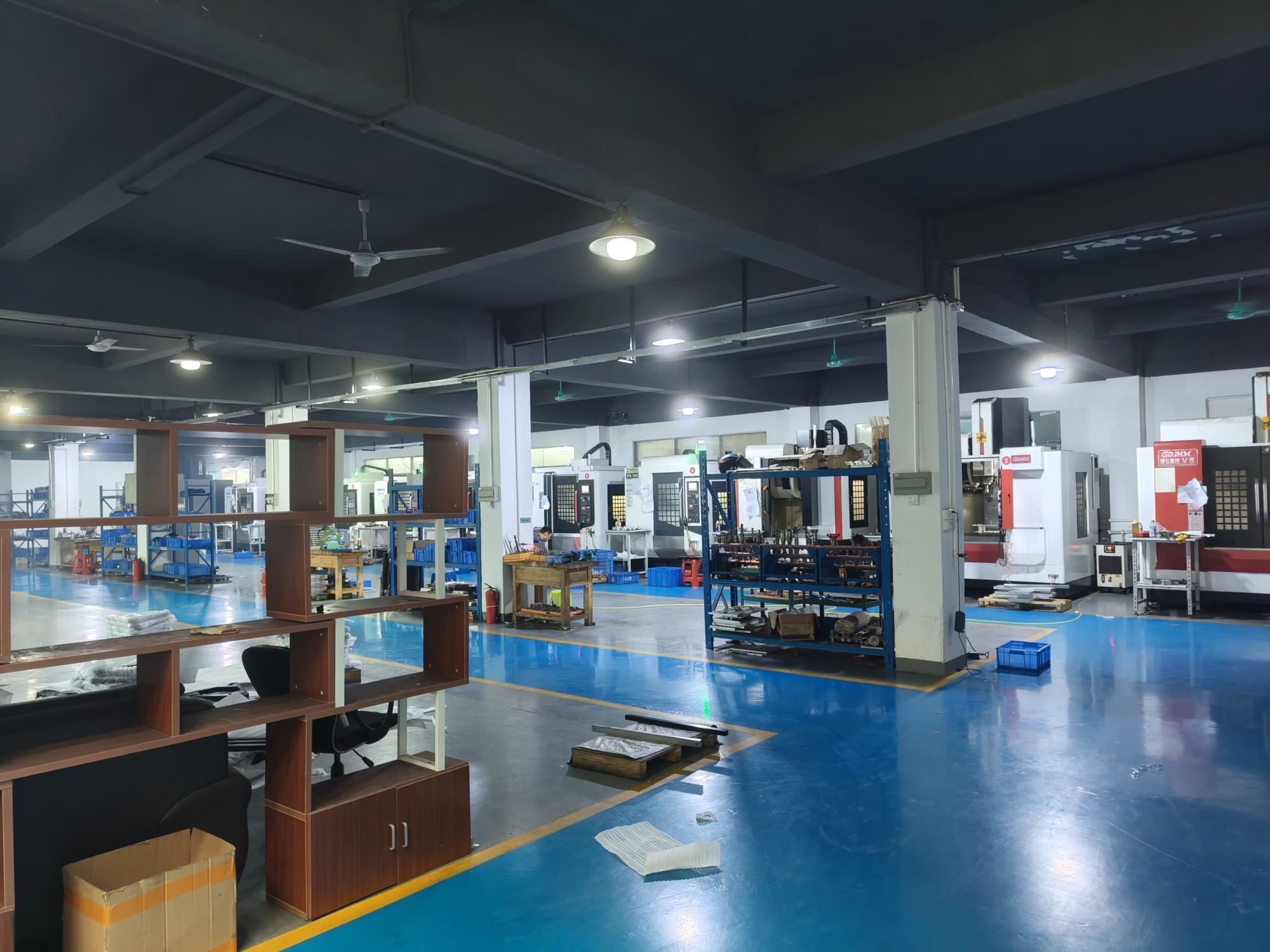
We hold 16 simultaneous five-axis centers, 16 mill-turn centers and a Ø400 mm rotary table. Maximum processing size runs to 4,000 mm, so long shafts and oversized housings stay in one program. Tighter geometry means fewer fittings that leak at hydro test.

  • 1
    One setup, more featuresAngled ports and blended radii in a single program
  • 2
    Mill-turn for round partsTurning and cross-drilling without a second fixture
  • 3
    Datum controlGD&T held from a single reference face

Material selection

Pick the alloy for the environment, not the spec sheet

Three questions decide it: what is in the fluid, how hot does it run, and what stress does the part carry.

Service conditionMonel 400 (N04400)Consider instead
Seawater, static or flowingStandard choice, low corrosion rate316L if cost drives the decision
Hydrofluoric and hydrochloric acidGood resistance in reducing mediaHastelloy for higher temperature
Caustic and alkaline serviceStrong resistance, no chloride crackingCarbon steel for dry caustic only
High-strength shaftingWork-hardens, needs slow speeds17-4PH if hardness is the priority
Marine fasteners and fittingsCommon and provenMonel K-500 for higher yield
Very high chloride at 200 °C+Check temperature limit firstNickel alloys with more Mo
What we machine

Monel 400 (N04400) CNC machining services

From one prototype to a 10,000-part run, on the same process sheet.

01

5-axis machining

Angled ports, blended fillets and contoured faces cut in one setup. 16 simultaneous five-axis centers.

02

CNC turning and mill-turn

Shafts, sleeves, bushings and threaded fittings. Cross-drilling handled without a second fixture.

03

3-axis and 4-axis milling

Plates, flanges, covers and brackets. 27 three-axis and 12 four-axis machines in the pool.

04

Rapid prototyping

One-off seawater test parts before the production tool is committed. No minimum order quantity.

05

Surface finishing

Bead blasting, brushing, polishing, passivation and plating on nickel-copper parts.

06

Inspection and reporting

Raw material check, in-process monitoring and final inspection. Reports on request.

Capability range

What we can hold on this alloy

Numbers below are what the shop floor actually runs, not catalogue limits.

ItemCapabilityNote
General tolerance±0.005 mm±0.0002 in on critical features
As-machined finishRa 1.6–3.2 μmStandard milled and turned surfaces
Fine finishRa 0.2–0.8 μmWhere a seal or bearing fits
Maximum part size4,000 mmLong shafts and housings
Rotary tableØ400 mmAngled features on round parts
Qualification rate99.99%First-pass acceptance on shipped lots
Order quantity1 to 10,000+No minimum order quantity
QuotationWithin 12 hoursIncludes free DFM analysis
Why GreatLight

Reasons engineers keep the job here

Six things you can check before you send the purchase order.

15Y

Nickel alloy experience

Machining difficult alloys since 2011. Process sheets are written for the material, not copied from a stainless job.

127

Machines in one pool

16 five-axis, 16 mill-turn, 27 three-axis and 12 four-axis centers. Capacity does not stall at one machine.

±0.005

Tolerance held in production

Not just on a first article. In-process checks catch drift before the lot is finished.

12 h

Quote and DFM turnaround

Drawings reviewed and quoted within 12 hours. Production can start within 24 hours.

3–5 d

Typical shipping window

Parts ship in 3–5 days once the process is released. Historical late-delivery risk stays under 2%.

100%

Inspection before shipment

Every part checked. Raw material certification and dimensional reports on request.

7,600 m²Manufacturing space
150Technicians on staff
3Wholly-owned plants
ISO 9001Plus IATF 16949, ISO 13485, ISO 27001
Industry requirements

What these sectors demand, and what we deliver

Leader in Cnc Machining Service China

Marine and seawater systems

Pump housings, valve bodies and fittings that must survive continuous saltwater exposure without pitting at the seal face.

  • ±0.005 mm
  • 100% inspection
  • Ra 0.8–1.6 μm
6011

Chemical process equipment

Parts for reducing-acid service where the alloy resists attack but the bore still has to hold a gasket seal under pressure.

  • Bore roundness
  • Seal-face finish
  • Material certs
GreatLight Metal new factory building

Aerospace and defense hardware

Brackets, bushings and duct components where traceability and a stable process matter as much as the alloy choice.

  • ISO 9001:2015
  • Traceable lots
  • In-process checks
oplus_262178

Oil and gas instrumentation

Sensor bodies and fittings that see chloride-rich fluids and thermal cycling, with threads that must not gall on assembly.

  • Thread control
  • Ra 0.2–0.8 μm
  • NDA on request
FAQs

Questions engineers ask before releasing the job

How does Monel 400 (N04400) machine compared with 316 stainless?

Slower, and with more attention to the edge. The alloy work-hardens faster than 316 and carries heat into the part because thermal conductivity is low. Expect reduced surface speeds, positive-rake carbide, and a rigid setup.

A shop that treats it as a stainless job usually holds the first pass and loses size on the second. The tell is a tolerance that drifts in the same direction across the lot.

What tolerance can you actually hold on production parts?

±0.005 mm on critical features, checked in process rather than only on the first article. As-machined surfaces come off at Ra 1.6–3.2 μm, and seal or bearing fits go to Ra 0.8–1.6 μm, with Ra 0.2–0.8 μm when the drawing calls for it.

Thin walls and long bores are the limits. Below roughly 1.5 mm wall thickness the part starts moving after unclamping, so we usually rough, stress relieve and finish in separate operations.

When is this alloy the wrong choice?

If the fluid is strongly oxidizing, or the temperature runs high with heavy chloride, a higher-molybdenum nickel alloy usually lasts longer. If hardness and yield strength drive the design, Monel K-500 or 17-4PH is the better fit.

Cost matters too. Nickel-copper stock costs more than stainless, so on a dry, mild-duty part there is no reason to specify it.

Do you machine thin-wall and long-bore parts without distortion?

Yes, with a process built for it. Roughing passes leave stock, the part is allowed to stabilise, and finishing runs at light depth with coolant directed at the edge. Long bores are pecked rather than plunged.

We measure after the part returns to room temperature. A reading taken on a warm part is not a reading.

Can you supply one prototype before a production run?

Yes. There is no minimum order quantity, so a single test part and a 10,000-piece run go through the same process sheet. Prototypes are useful for hydro test and fit checks before tooling or fixtures are committed.

Quotation and DFM feedback come back within 12 hours, and production can start within 24 hours of release.

What inspection and documentation comes with the parts?

Raw material check, in-process monitoring and final inspection on every lot. Parts are inspected 100% before shipment, and dimensional or material reports are provided on request.

We work to ISO 9001:2015, IATF 16949:2016, ISO 13485:2016 and ISO 27001:2022. Uploads stay confidential, and an NDA is available on request.

What surface finishes and post-processing do you offer?

Bead blasting, tumbling, brushing and polishing are the common choices on nickel-copper parts. Electroless nickel, zinc, silver and gold plating are available where conductivity or wear calls for them.

Laser marking and engraving are available with a minimum character height of 1.5 mm. Tell us the environment the part sees and we will say which finish earns its cost.

How do I send drawings and get a quote?

Upload the STEP file, PDF drawing and quantity through the online quotation page. We return pricing and a free DFM analysis within 12 hours.

If the geometry is difficult to cut, the DFM note will say so and suggest a change before the first chip is made. That is cheaper than finding out at final inspection.

Send your Monel 400 (N04400) drawings

Upload the model and drawing, and we will come back with pricing, a DFM note and a process route within 12 hours.

12-hour quote100% inspectionNo minimum orderNDA on request

Trusted by engineers and manufacturers worldwide

Tesla Ford Motor Company BYD Auto Denso Magna International Boeing Airbus Medtronic KUKA FANUC