
01
Parts shrink after a week on the shelf
Nylon absorbs moisture from the air. A bore that gauges 20.02 mm on the bench can read 20.09 mm after a week. The fit fails at assembly, and nobody changed the drawing.
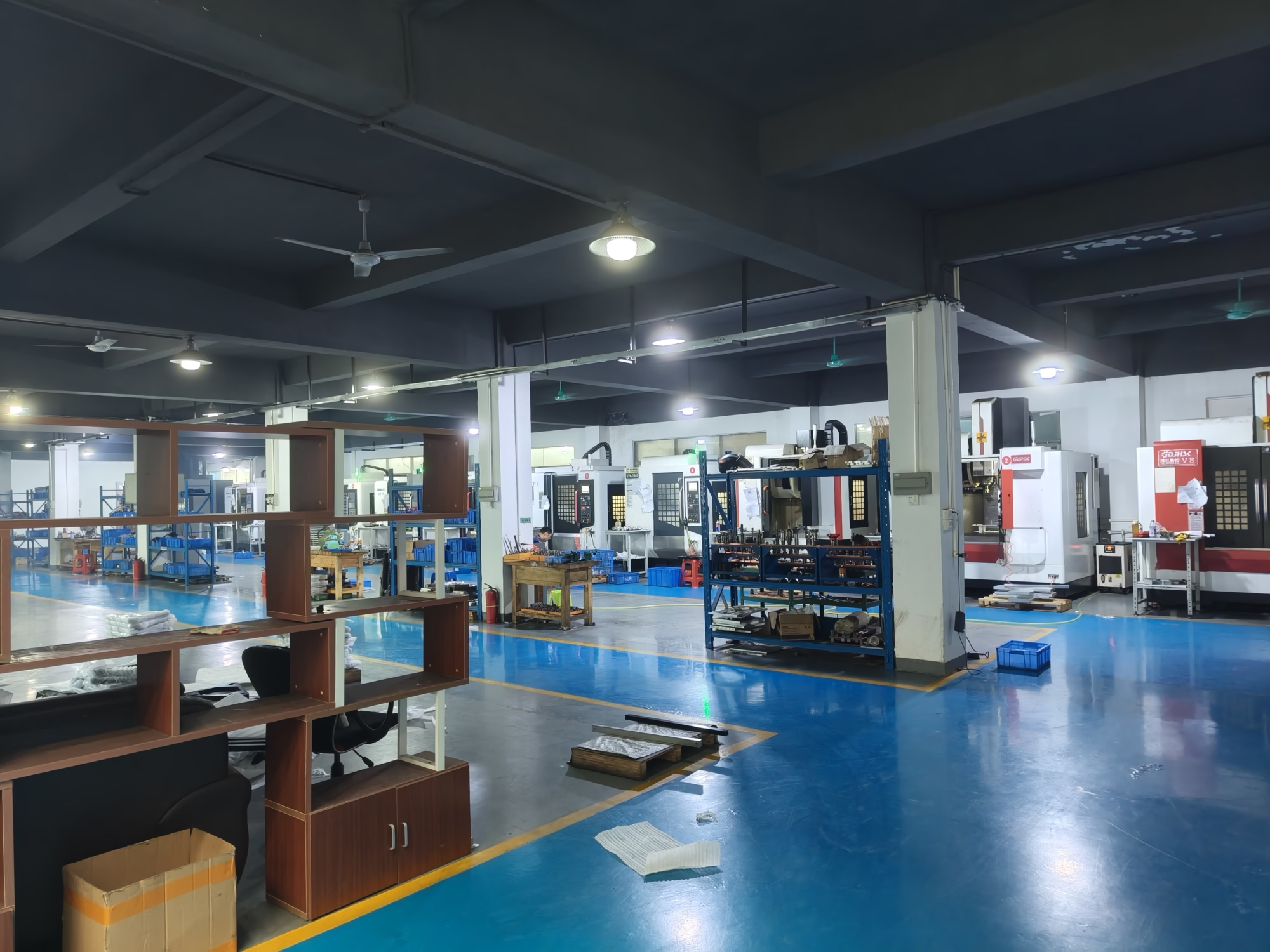
We machine nylon 6, nylon 66 and MXD6 on 127 CNC machines, with moisture and stress control built into the process so parts hold their dimensions after they leave the shop.
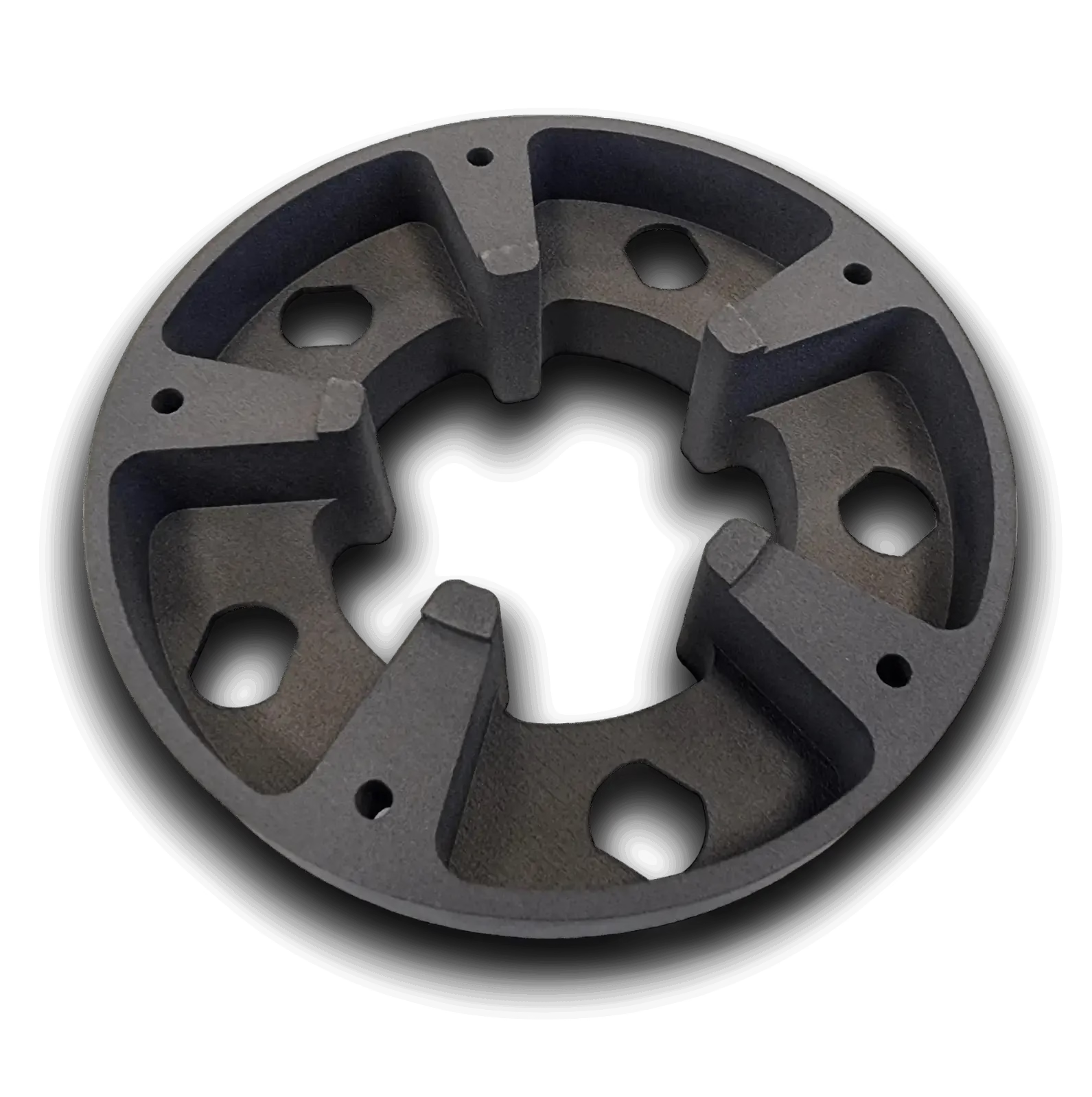
Nylon absorbs moisture from the air. A bore that gauges 20.02 mm on the bench can read 20.09 mm after a week. The fit fails at assembly, and nobody changed the drawing.
Extruded nylon plate carries internal stress. Cut both faces evenly and the part bows. Gaskets leak, covers rock, and flatness is lost before the part reaches inspection.
Nylon cuts soft and moves heat poorly. A cutter run at steel parameters rubs instead of cutting. Chips weld to the flute, the wall smears, and a finishing pass cannot recover it.
Send a nylon drawing to three shops and you may get three different assumptions. One quotes dry machining, another anneals, a third does neither. You cannot compare the numbers.
Stock selection, cutter geometry and moisture conditioning are decided before the first chip.
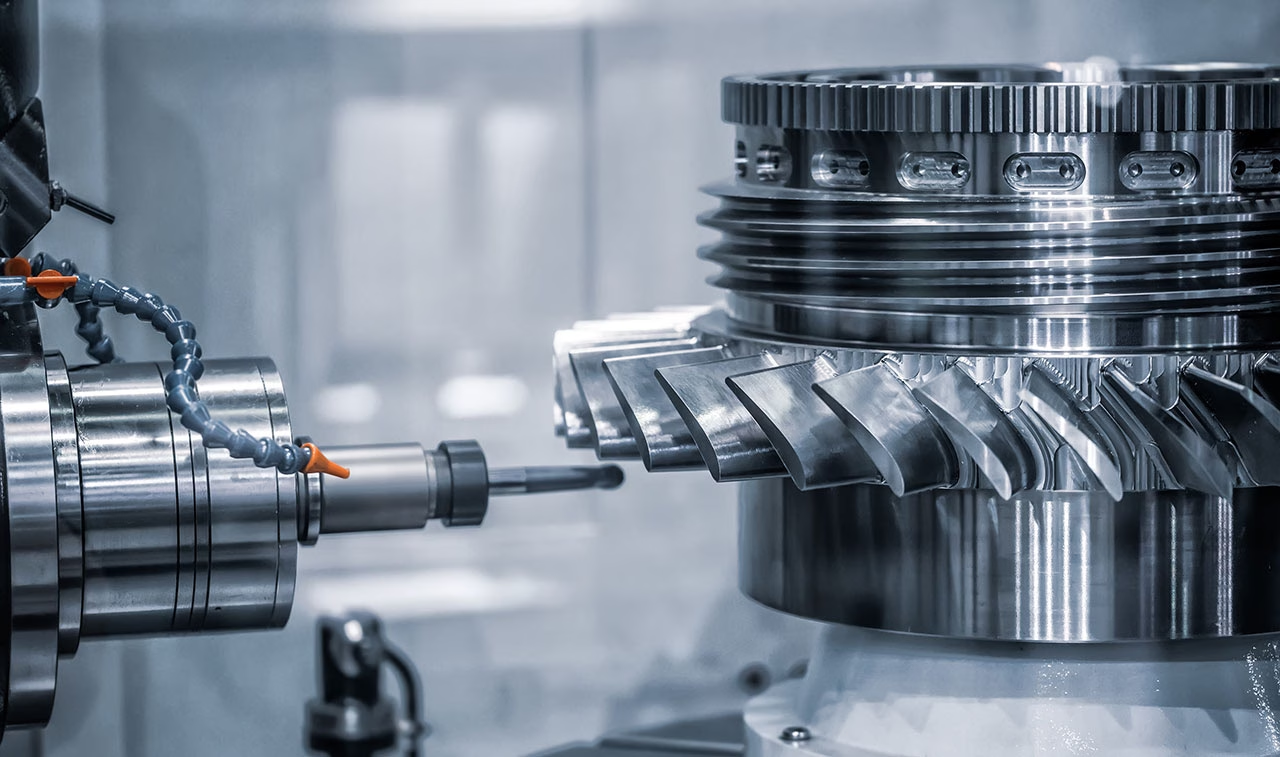
Cast and extruded nylon arrive with different moisture content and different internal stress. We check the lot, then condition the blank to a target moisture range so the cut happens on stable material rather than on a blank that will keep moving.
For tight parts we rough, stress-relieve, then finish. That adds a step to the routing, but it removes the bow that shows up two days later on a flat cover or a long slide.
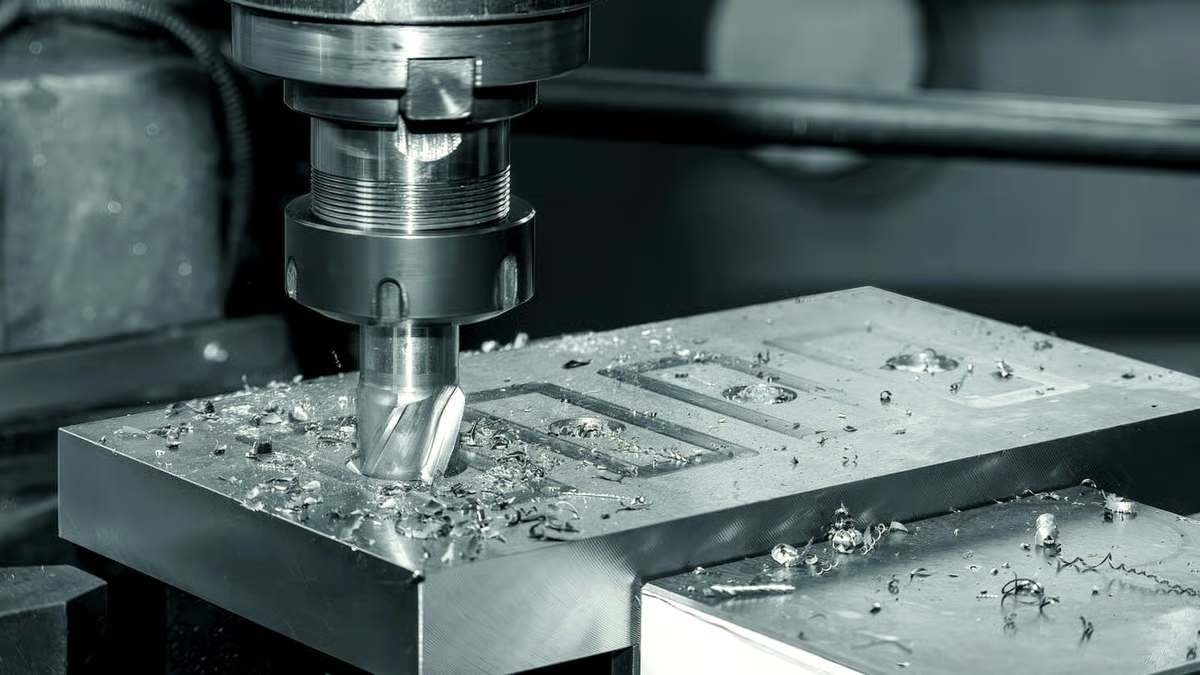
Nylon is soft, so it does not break a chip the way brass or steel does. We run sharp polished carbide with high rake angles, keep the feed per tooth high enough to cut rather than rub, and clear chips with strong air blast. Flood coolant on a finishing pass can swell the surface and leave a fuzzy edge.
Drilling and tapping need their own numbers. A standard 118° drill grabs in nylon and oversizes the hole. We use sharp point geometry, back the feed off on breakthrough, and cut threads slightly oversize so a fastener does not seize after the part takes on moisture.
Choose by load, temperature and how much moisture the part will see.
| Grade | Typical use | Watch out for |
|---|---|---|
| PA6 | Gears, bushings, rollers, covers | Tougher than PA66, takes on moisture faster |
| PA66 | Structural brackets, wear pads, insulators | Higher stiffness and heat resistance, more notch sensitive |
| PA6 + 30% glass | Loaded brackets, housings with ribs | Abrasive to tooling, edge chipping on thin walls |
| MXD6 | Precision parts that must stay near size | Lower moisture pickup, higher cost per kg |
| PA cast plate | Thick sections, low-stress blanks | Limited thickness range, slower to source |
Plates, covers, brackets and pockets. 27 machines, travels from 500 × 500 × 450 mm up to 4,000 × 400 × 150 mm.
Long parts and multiple faces in one setup. 12 four-axis mills with a Ø400 mm rotary table.
Contoured ducts, angled ports and one-setup geometry. 16 simultaneous 5-axis centers.
Bushings, rollers, spacers and threaded inserts, with 16 mill-turn centers for parts that need both.
One-off nylon prototypes to check fit and function before a mold decision is made. No minimum order quantity.
Bead blasting, tumbling, polishing, laser marking, plus light assembly and kitting before shipment.
Capability we can hold on nylon parts, and what we check.
| Item | Range | Notes |
|---|---|---|
| Achievable tolerance | ±0.005 mm | On conditioned blanks, stable geometry |
| Surface finish | Ra 0.8–1.6 μm | Ra 0.2–0.8 μm on request |
| Maximum part size | 4,000 mm | On large-travel machines |
| Wall thickness | 1.0 mm and up | Thicker on glass-filled grades |
| Inspection | 100% before shipment | Reports on request |
| Order size | 1 to 10,000+ parts | No minimum order quantity |
Founded in 2011. Three wholly-owned plants and 150 technicians across 7,600 m².
Nylon moves. We hold the callout by controlling stock, heat and conditioning, not by pushing the machine harder.
A quotation with free DFM analysis comes back within 12 hours. Production can start within 24 hours.
ISO 9001:2015, IATF 16949:2016, ISO 13485:2016 and ISO 27001:2022.
Raw material check, in-process monitoring, final inspection. Reports on request.
Drawings stay confidential. A non-disclosure agreement is available on request.

Under-hood brackets and insulators that must resist vibration and take a fastener without cracking.
Wear pads, rollers and slides that run dry or lightly lubricated and need low noise at speed.

Insulating housings, spacers and connector bodies where dielectric strength and clean edges matter.

Lightweight arms, gripper jaws and guards that keep moving mass low without giving up stiffness.
It depends on the grade, the section thickness and the humidity where the part ends up. A thin wall in dry air can move a few hundredths of a millimeter over the first week.
We condition the blank to a target moisture range before cutting and quote the tolerance from that starting point. If your drawing calls for ±0.005 mm on a long part, ask us to review the geometry first.
MXD6 takes on less moisture and holds dimensions better, so it suits precision parts that must stay near size in a changing shop or field environment. It costs more per kilogram and is less widely stocked.
For a garden-variety bracket or a gear running at moderate load, PA6 or PA66 usually does the job at lower cost. Tell us the moisture exposure and we will say which one is worth the money.
Yes, but it changes the tooling plan. Glass fiber is abrasive, so we expect shorter tool life and plan insert changes into the routing. Thin walls and sharp internal corners are more likely to chip.
We also check the drawing for sharp corners that a glass-filled grade cannot hold, and suggest a radius before cutting rather than after.
Ra 0.8–1.6 μm is routine. Ra 0.2–0.8 μm is possible on flat or cylindrical features with a dedicated finishing pass.
Surfaces cut dry with an air blast come out cleaner. Flood coolant on a finishing pass tends to raise fibers and leave a fuzzy edge, so we avoid it there.
When the drawing calls out flatness, a close bore fit or a thin long section, we rough, stress-relieve and then finish. That costs an extra setup.
For simple covers and spacers it is usually unnecessary, and we will say so rather than add cost to the quote.
We take orders from one prototype to 10,000+ part runs with no minimum order quantity. Small parts come off the compact machines with 500 × 310 × 200 mm travels.
At the other end, large-travel machines handle up to 4,000 mm in length for long slides and rails.
Every part is inspected before shipment, with raw material checks, in-process monitoring and a final inspection. A qualification rate of 99.99% is what we work to.
Inspection reports are available on request. If you need first-article documentation for a new nylon part, ask for it at the quote stage.
Yes. Uploads are kept secure and confidential, and a non-disclosure agreement is available on request before you send files.
If your project is under a customer NDA of its own, send us that document and we will work to its terms.
Upload the drawing and tell us where the part will be used. You get a quotation with free DFM analysis, a material recommendation and a process note on conditioning.
12-hour quote100% inspectionNo minimum orderNDA on request
Trusted by engineers and manufacturers worldwide










Upload your 3D model or 2D drawing and get a quotation with a free DFM analysis. Maximum processing size 4,000 mm.
CNC Metals 13 grades
CNC Plastics 10 grades
Machines & processes 12 options
Surface & post-processing 10 options
Material: not selected Machine: not selected Post-process: not selected
Fill in this short form and we'll open WhatsApp with your message ready to send. We only use these details to reply to you.
Nothing is sent until you press send inside WhatsApp.