GreatLight CNC Machining Factory logo
CNC Machining
Rapid Prototyping
Materials
Industries
News
About GL

Get Instant Quote

Plastic CNC Machining

Polypropylene Machining

PP is soft, light, and cheap. It also fights back on the machine. We cut it at controlled spindle speeds and feeds so walls stay straight, holes stay round, and burrs come off clean.

Ø0.90 g/cm³ density−30 °C to 140 °C serviceFood-safe grades availableNo minimum order
oplus_262178
±0.005 mmAchievable tolerance on rigid PP parts
127High-precision CNC machines
12Plastic materials stocked, PP included
3–5 daysTypical shipping after production start
Where PP parts fail

Four problems that show up in the box

Polypropylene punishes the wrong cutting strategy. These are the failures we see on incoming drawings.

01

The part moves after clamping

PP has a low modulus, so a vise or chuck squeezes it flat. Release the clamp and the bore is oval, the flat face is bowed. Thin walls under 1.5 mm are the worst case. Soft jaws, light clamping pressure, and support under the cut keep the geometry where the drawing says it should be.

02

Chips weld to the cutter

PP melts around 160 °C. A dull carbide tool at high surface speed rubs instead of shearing, and the softened chip welds to the flute. The next pass drags that lump across the surface and tears it. Sharp tooling, climb milling, and air blast clearing solve most of this.

03

Burrs you cannot deburr

PP does not snap off like brass. It folds over and stays attached. A raised lip on a sealing face or a threaded port leaks. Deburring by hand smears the edge and changes the dimension. We plan the deburring operation into the toolpath instead of treating it as a cleanup step.

04

Flatness drifts as the part cools

Cutting heat sits in the skin of the part. Measure it warm and the face looks good. Measure it the next morning and a 300 mm plate has moved 0.3 mm or more. Rough, rest, then finish after the material returns to room temperature is the only reliable sequence.

How we run PP

Machining strategy built around a soft, waxy plastic

The material sets the parameters. We do not run PP on aluminum numbers.

CNC Lathe Technical Specifications Terminology
Cutting parameters

High spindle speed, moderate feed, sharp edges

PP is a semicrystalline thermoplastic. It does not soften gradually the way PVC or polyethylene does. Below its melting range it stays stiff, then it goes soft fast. The window for clean cutting is narrow, so we keep the tool edge sharp and the chip thin.

For polypropylene machining we run spindle speeds in the 15,000–18,000 rpm range with feed rates around 3,000–5,000 mm/min on small to medium cutters. Carbide or high-speed steel both work when the geometry is right. A positive rake and a polished flute matter more than the substrate.

  • 1
    Two-flute and single-flute cuttersLarge chip room keeps the softened chip from packing in the flute.
  • 2
    Air blast, not flood coolantPP absorbs almost no water, but coolant carries chips back into the cut. Compressed air clears and cools at the same time.
  • 3
    Climb milling on finishing passesThe tooth enters at full chip thickness, which shears the material instead of rubbing it.

Get Instant Quote

cnc machining
Fixturing and inspection

Hold it lightly, measure it cold

A PP blank is about 0.90 g/cm³, roughly 60 percent the density of PVC. Light weight does not mean stiff. The same low modulus that makes the part flexible in service makes it deflect under clamping load and cutting force.

We fixture thin sections with vacuum or dedicated soft jaws that match the part contour. Support under the floor of a pocket stops the bottom from drumming. After finishing, parts rest before final inspection so the dimensions we record are the dimensions the customer receives.

  • 1
    Soft jaws matched to the contourContact over a wide area instead of two point loads.
  • 2
    Rest before final inspectionMeasurements taken on a warm part are not the shipped numbers.
  • 3
    100% inspection before shipmentRaw material check, in-process monitoring, final inspection. Reports on request.

Talk to an Engineer

Material selection

PP against the plastics it usually competes with

Pick the material before you pick the tolerance. The two are linked.

MaterialDensityService temperatureWhere it wins
PP (polypropylene)0.90 g/cm³−30 °C to 140 °CLiving hinges, chemical tanks, low-cost covers
HDPE0.94–0.96 g/cm³−50 °C to 80 °CWear strips, cutting boards, low-friction liners
POM (acetal)1.41 g/cm³−40 °C to 90 °CTight-tolerance gears, bushings, sliding parts
PC (polycarbonate)1.20 g/cm³−40 °C to 120 °CImpact guards, transparent covers, strong brackets
PEEK1.30 g/cm³−60 °C to 250 °CHigh-temperature and medical implants
What we make in PP

Part families that suit polypropylene

If your part is on this list, PP is probably the right call. If it is not, we will say so.

01

Living hinges and snap fits

PP tolerates repeated folding without cracking, which is why it dominates one-piece hinge designs. We cut the hinge line to a controlled thickness so it flexes where you want.

02

Chemical and fluid handling

PP resists most acids, bases, and solvents. Tanks, manifolds, pump housings, and dip tubes come off the machine ready for service.

03

Food-contact components

Food-safe PP grades are available for chutes, guides, trays, and conveyor parts. We machine them without introducing contamination from the setup.

04

Thin-wall covers and guards

Low density keeps weight down. We hold wall thickness above 1.5 mm where the geometry allows, and fixture thin panels so they do not bow.

05

Prototype and bridge tooling

Machined PP parts validate a design before injection tooling is cut. Same resin family, same wall sections, no tooling cost.

06

Weldable assemblies

PP welds to itself. We machine mating faces flat enough for hot-plate or ultrasonic welding, then check flatness before the parts ship.

Capability

What our PP work covers

Numbers from our own shop, not a general industry range.

ItemSpecification
Achievable tolerance±0.005 mm (±0.0002 in) on rigid features
As-machined surface finishRa 1.6–3.2 μm
Fine finish when requiredRa 0.8–1.6 μm
Maximum part size4,000 mm
Machine count127 high-precision CNC machines
Minimum order quantityNone. One prototype to 10,000+ parts
Quotation turnaroundQuote and free DFM analysis within 12 hours
Production startWithin 24 hours of approval
Why GreatLight

Fifteen years of cutting plastics that move

15Y

Machining since 2011

Three wholly-owned plants in Dongguan and Singapore, 7,600 m² of manufacturing space, 150 technicians.

±0.005

Tolerance we hold

Millimeters on rigid PP features. We will tell you when a feature cannot hold it in this material.

12

Plastics stocked

ABS, PC, PMMA, POM, PA, PEEK, PP, HDPE, and carbon fibre. PP grades include food-contact options.

127

CNC machines

16 simultaneous 5-axis centers, 16 mill-turn centers, 27 three-axis machines, plus four-axis mills.

12h

Quote turnaround

Quotation with a free DFM analysis inside 12 hours. Production can start within 24 hours.

100%

Inspection before shipment

Raw material check, in-process monitoring, final inspection. Reports on request.

7,600 m²Manufacturing space
150Technicians on staff
99.99%Qualification rate
<2%Historical late-delivery probability

Where PP parts go

Industry requirements and what we deliver

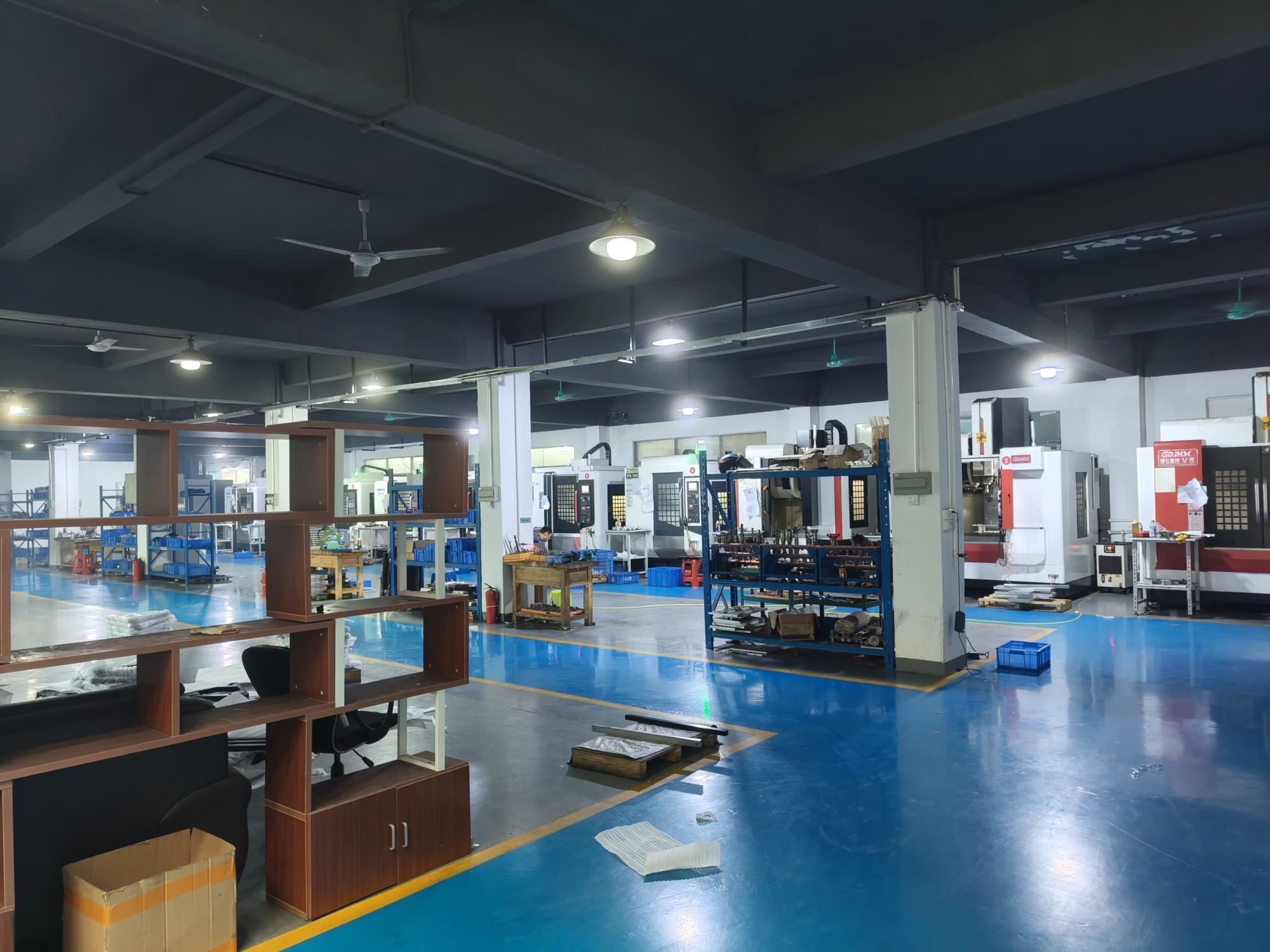
GreatLight Metal new factory building

Industrial machinery

Wear strips and guide covers that must keep sliding without lubrication.

  • Ra 1.6–3.2 μm
  • ±0.005 mm
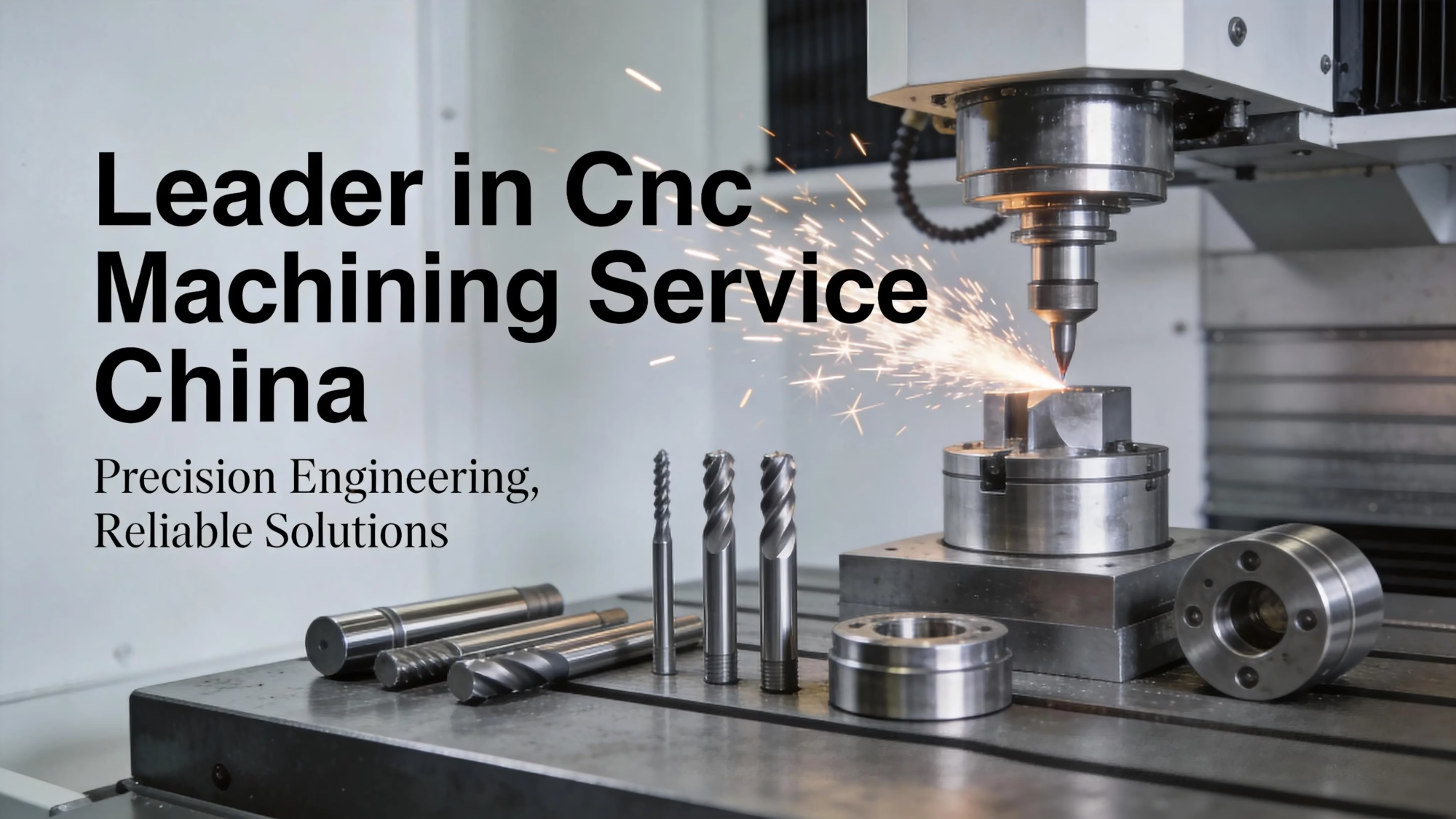
Leader in Cnc Machining Service China

Electronics

Insulating brackets and spacers that need low weight and no conductivity.

  • 0.90 g/cm³
  • 100% inspection
cnc machining

New energy

Electrolyte-resistant fixtures and trays for cell handling lines.

  • Chemical resistance
  • 3–5 days ship
FAQs

Polypropylene machining questions we get from engineers

Can PP hold ±0.005 mm on every feature?

No. The tolerance depends on the feature. A short bore in a thick section can hold ±0.005 mm. A 300 mm long unsupported wall cannot, because the material deflects under its own cutting load and keeps moving after the cut.

We review each drawing and tell you which dimensions are realistic before we quote. If a feature needs tighter, we suggest a geometry change or a stiffer material like POM or aluminum.

Why does my PP part measure differently the next day?

The part was measured warm. Cutting heat sits near the surface, and a soft semicrystalline plastic relaxes as it cools. A plate that reads flat at the machine can move several tenths of a millimeter overnight.

Our sequence is rough, rest, then finish. Final inspection happens after the part returns to room temperature, so the numbers on the report match what you measure in your own inspection room.

What spindle speed and feed should I use?

For small to medium cutters we run 15,000–18,000 rpm and 3,000–5,000 mm/min. That is a starting point, not a rule. Cutter diameter, flute count, and depth of cut all shift the numbers.

The principle is a thin chip and a sharp edge. If you hear rubbing instead of cutting, slow the feed or change the tool. Rubbing is what melts PP.

Do I need coolant for polypropylene machining?

Usually not. PP absorbs almost no water, so coolant does not damage the material, but it does carry chips back into the cut and make them harder to clear.

Compressed air is our default. It clears the chip from the flute and removes heat at the same time. We use coolant only on deep pockets where chip evacuation needs the extra help.

When should I not choose PP?

Skip PP when the part needs high stiffness, tight tolerances over a long span, or service above 140 °C. Skip it when the part will be painted or bonded with standard adhesives, since PP has very low surface energy.

For those cases we usually suggest POM for stiffness, PC for impact, or PEEK for temperature. We will say so at the quote stage rather than after the first article fails.

Can PP parts be sterilized or used in medical devices?

PP tolerates steam autoclave cycles and most chemical sterilants, which is why it appears in trays and fluid path components. It is not a substitute for a material qualified to a specific device standard.

We machine PP in a shop holding ISO 13485:2016, and we work from your material specification. The grade and the sterilization method are your call, and we will document what we cut.

What is the smallest wall thickness you will machine?

We prefer 1.5 mm and above for a wall that has to stay straight without support. Below that, the wall deflects during cutting and the finished thickness varies along the length.

Thinner sections are possible when the geometry gives us something to back up the cut, or when the wall is short. Send the drawing and we will tell you which walls are a risk.

How do you handle confidentiality on a new PP project?

Uploads are secure and confidential, and we sign an NDA on request before drawings are shared. That is standard practice for the prototype and bridge-tooling work we do.

You can also start with a simplified model or a single critical feature if you want to test the process before releasing the full assembly.

Send your PP drawing and get a real answer

We will tell you which features hold tolerance in polypropylene and which ones need a design change. Quote and DFM analysis back within 12 hours, no minimum order quantity.

12-hour quote100% inspectionNo minimum orderNDA on request

Trusted by engineers and manufacturers worldwide

Tesla Ford Motor Company BYD Auto Denso Magna International Boeing Airbus Medtronic KUKA FANUC