GreatLight CNC Machining Factory logo
CNC Machining
Rapid Prototyping
Materials
Industries
News
About GL

Get Instant Quote

Plastic CNC Machining

PVC CNC Machining

PVC cuts clean and holds a dimension well when the grade, the stock and the cutter are matched to the job. We machine PVC sheet, rod, tube and structural foam for chemical, electrical and fluid parts, from one prototype to 10,000+ pieces.

±0.005 mm tolerancePrototype to 10,000+ partsPVC sheet, rod, tube, foam12-hour quote and DFMISO 9001 / IATF 169493–5 day shipping
cnc machining
±0.005 mmAchievable tolerance on rigid PVC
127High-precision CNC machines
4,000 mmMaximum processing size
12 hQuote and free DFM analysis
Where it goes wrong

Four PVC machining problems that cost you a batch

Most PVC scrap comes from heat, clamping and stock choice, not from the toolpath.

01

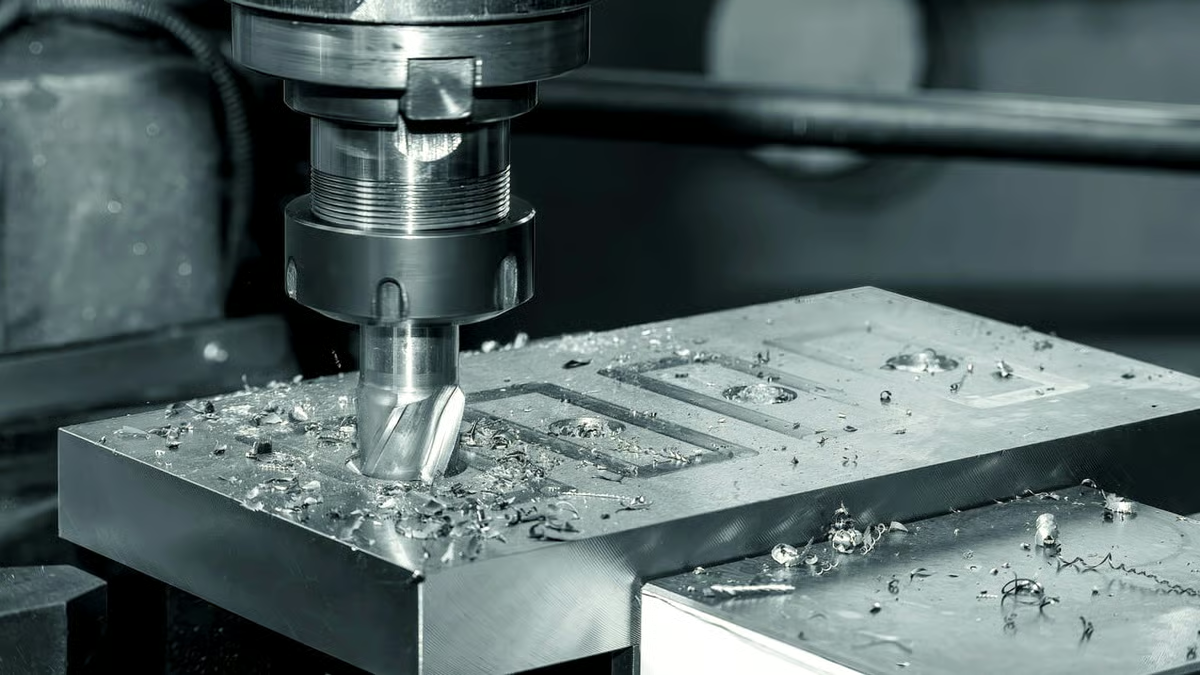
Softening and gummy edges

The cutter rubs instead of shearing, the chip welds back onto the wall, and you get a rough edge that will not seal. On a valve body or a manifold plate that means a leak test failure and a full re-run. Rigid PVC loses stiffness fast once the surface passes roughly 60 °C, so spindle speed and feed have to be set for the material, not for aluminum habits.
02

Burning and brown marks

Heat-sensitive grades scorch where the tool dwells. A dwell of half a second in a corner is enough to leave a brown stain that no amount of polishing removes. Buyers reject those parts on appearance even when the dimension is right.

03

Chatter on thin walls

PVC is not stiff. A 2 mm wall standing 40 mm tall will deflect under normal clamping and ringing appears in the finish. Parts that should press-fit by hand come out loose or cracked at the corner. The fix is support and light passes, not more force.

04

Size drift after machining

Extruded sheet carries internal stress from the extrusion line. Cut a pocket and the part can move 0.1–0.3 mm over the next few days. A gasket groove that measured correct at inspection no longer seals a week later.

How we run it

Machining PVC so the part still fits next month

Grade, stock and cutter chosen together, then measured.

CNC Machining Services Online
Stock and stress

Pick the stock, then relieve the stress

We ask what the part has to do before we quote. A chemical tank cover and a machined insulator can both be PVC, but they are not the same grade. Rigid PVC sheet is the default for flat parts and covers. PVC rod suits bushings and turned parts. Tube is used for sight glasses and spacers where a bore is already there. Type I (normal impact) machines more predictably than Type II (high impact), which is tougher but gummier at the cutter.

On sheet thicker than about 20 mm we take a roughing pass leaving 0.5–0.8 mm, let the part rest, then finish. That gives the internal stress somewhere to go before the final dimension is set. Dual-durometer and clear PVC need slower feeds again, because the plasticizer that makes them flexible also makes them smear.

  • 1
    Rough, rest, finish0.5–0.8 mm of stock left for the finishing pass on thick sheet.
  • 2
    Grade by functionType I for flat and structural parts, Type II where impact resistance matters more than finish.
  • 3
    Foam is differentPVC structural foam machines dry and fast, but edges stay open; it is not a sealing surface.
CNC Lathe Technical Specifications Terminology
Heat and holding

Keep the cut cool and the clamping gentle

Heat is the whole game with PVC. We run two-flute and three-flute polished carbide cutters with high rake angles, because uncoated carbide lifts the chip instead of dragging it. Cobalt and titanium-tantalum-tungsten carbide grades hold an edge long enough to keep the cut shearing. Router-style O-flute tools handle the softer foam grades, where chip evacuation matters more than edge life.

Clamping follows the same logic. A vacuum platen or a broad soft-jaw spread holds the part flat without point loads. Thin standing walls get support from a machined pocket or a wax fill rather than a side clamp. We take light radial passes at moderate feed instead of one heavy pass. The cut stays cool, the wall stays straight, and the edge comes off the machine without a deburring knife.

  • 1
    Polished carbideHigh rake, sharp geometry, no coating that dulls on plastic.
  • 2
    Vacuum or soft jawsDistributes load across the part instead of pinching a wall.
  • 3
    Light radial passesLower cutting temperature and less tool pressure.
Selection

Which PVC form fits which part

Match the stock to the geometry before you send the model.

Material formTypical partsWhat to watch
Rigid PVC sheetCovers, panels, insulator platesInternal stress on cuts over 20 mm deep
PVC rodBushings, turned spacers, fittingsHeat build-up in the bore
PVC tubeSight glasses, sleeves, spacersWall deflection when chucked
PVC structural foamSignage, housings, light framesOpen edges, low thread strength
Clear / flexible PVCWindows, gaskets, guardsSmearing, poor chip break
Services

What we build in PVC and around it

One shop for the plastic part and the metal parts around it.

01

3-axis CNC milling

Flat plates, covers, manifolds and pockets. The workhorse for PVC sheet up to 4,000 mm long.

02

4-axis CNC machining

Adds a rotary table for cross-drilled holes and features on more than one face without re-fixturing.

03

5-axis CNC machining

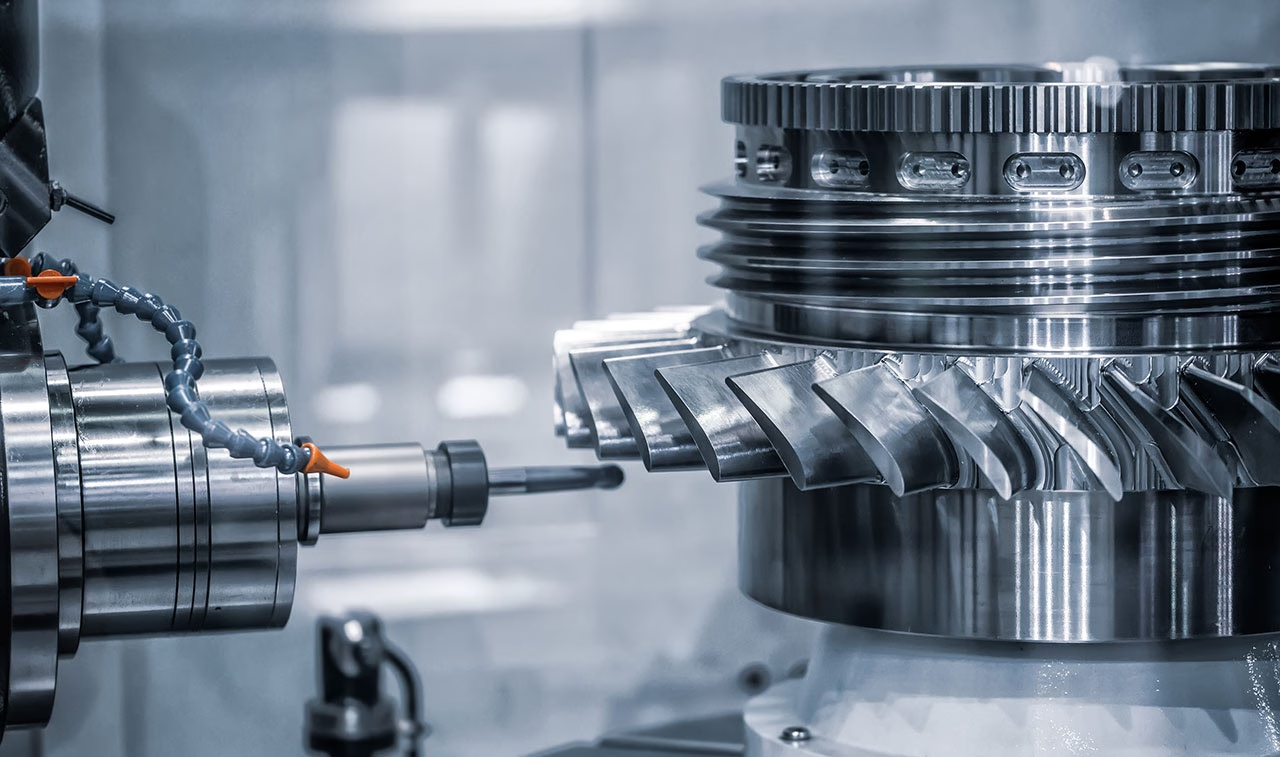
Contoured ducts, angled ports and one-setup parts where every face has to line up.

04

CNC turning

Bushings, sleeves, threaded adapters and spacers from PVC rod and tube, with fine surface finish.

05

Rapid prototyping

Single PVC parts for fit checks and flow tests before you commit to a run.

06

Surface finishing

Bead blasting, tumbling and polishing for PVC, plus laser marking where a part number is needed.

Capability

PVC machining scope

Numbers we hold to on plastic work.

ItemRangeNote
General tolerance±0.005 mmOn rigid PVC, features over 10 mm
Standard finishRa 0.8–1.6 μmAs-machined PVC wall
Fine finishRa 0.2–0.8 μmOn request, turned and bored faces
Maximum part size4,000 × 400 × 150 mmLong-bed 3-axis travel
ThreadsM3 and upCoarse pitch holds better in PVC
Inspection100% before shipmentReports on request
Why GreatLight

Plastic work handled by people who machine it daily

Founded in 2011, 3 wholly-owned plants, 150 technicians.

15Y

Plastic machining since 2011

Fifteen years of polymer work runs alongside our metal lines, so PVC is a routine setup rather than an experiment.

127

Machines to route the job

16 simultaneous 5-axis centers, 12 four-axis mills, 27 three-axis machines and 16 mill-turn centers. The right machine gets the PVC job.

4,000

Millimeters of travel

Long PVC covers and duct sections that will not fit a standard table are cut in one setup, which keeps hole positions aligned.

99.99%

Qualification rate

Raw material check, in-process monitoring and final inspection on every PVC order.

12 h

Quote and DFM turnaround

Send a model and we come back with a price and notes on wall thickness, thread choice and stress relief within 12 hours.

1 pc

Starting quantity

From a single prototype to a 10,000+ part run, with the same inspection standard on both.

7,600 m²Manufacturing space
150Technicians on staff
3Wholly-owned plants
< 2%Historical late-delivery rate
Applications

Where machined PVC parts end up

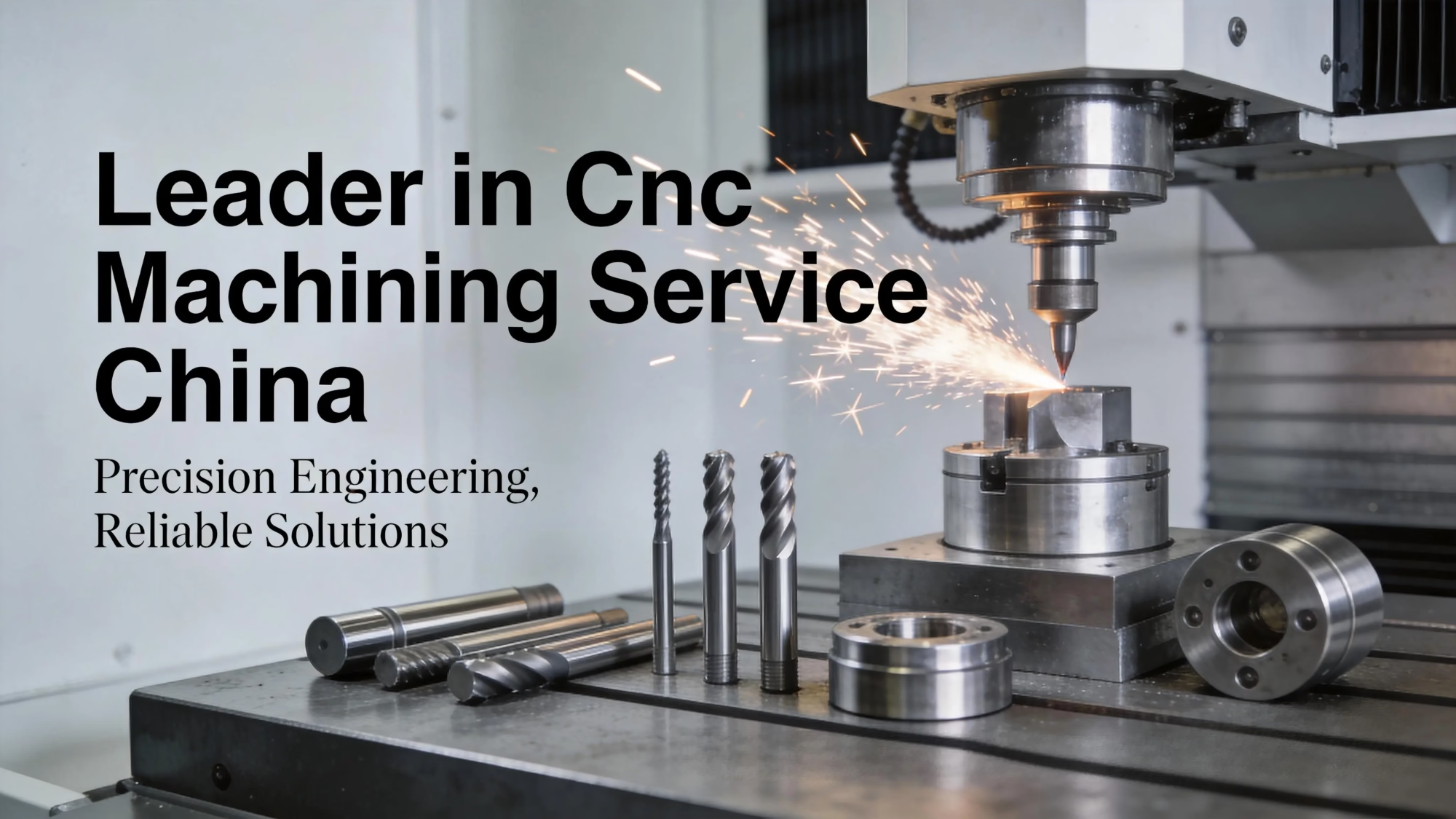
Leader in Cnc Machining Service China

Chemical and fluid handling

Manifold plates, valve bodies and pump housings where acid and alkali resistance is the point. Flatness and gasket grooves matter more than cosmetic finish.

  • ±0.005 mm
  • Ra 0.8–1.6 μm
  • 100% inspected
6011

Electrical insulation parts

Barriers, spacers and mounting plates. The part must not track or deform near a warm component, so grade and wall thickness get checked at DFM.

  • Dielectric PVC
  • Stress-relieved
  • Batch traceable
GreatLight Metal new factory building

Industrial machinery guards

Long clear and rigid PVC covers, often over 1,500 mm. Cut on the long-bed machines so mounting holes stay in line end to end.

  • Up to 4,000 mm
  • One-setup cutting
  • 3–5 day ship
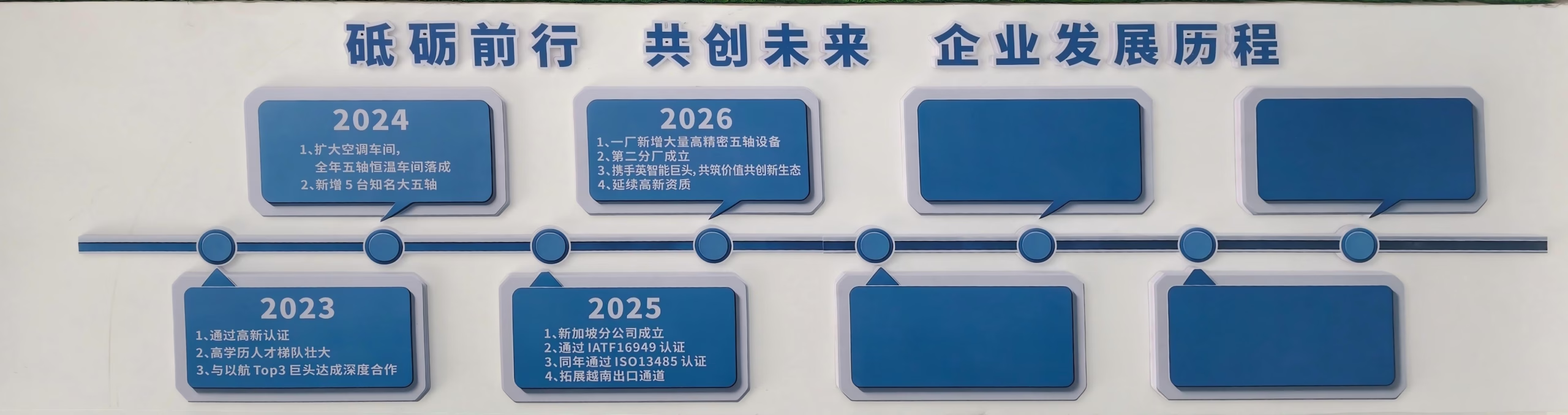
Forge ahead with determination and create the future together.

Water treatment and pool systems

Nozzles, brackets and foam housings that sit in chlorinated water for years. We match the grade to the exposure, not just to the drawing.

  • Chlorine resistant
  • No minimum order
  • NDA on request
FAQs

Questions engineers ask before ordering PVC parts

Can you hold ±0.005 mm on PVC?

Yes, on rigid PVC and on features larger than about 10 mm where the part has been stress-relieved and the wall is thick enough to resist tool pressure.

Thin walls, flexible grades and foam will not hold that band. On those we quote a realistic tolerance at DFM and tell you which features will move.

Why does my PVC part change size after machining?

Extruded and molded stock carries locked-in stress. When you remove material from one side, the balance changes and the part relaxes.

We rough, let the part rest, then finish. If the geometry is very asymmetric, we may also ask for annealed stock before we start.

What tolerance and finish can you reach on PVC?

General machining holds ±0.005 mm, with as-machined surfaces at Ra 1.6–3.2 μm and standard finish at Ra 0.8–1.6 μm.

Turned and bored faces can reach Ra 0.2–0.8 μm when the customer asks for it. Polishing PVC works, but it is a manual step and adds cost.

Can PVC be tapped and threaded?

Yes, from M3 upward. Coarse pitch threads hold far better than fine pitch in PVC, and thread-forming screws work well in the thicker grades.

For structural joints we usually recommend a metal insert or a through-bolt with a washer instead of relying on the plastic thread alone.

Does PVC need to be dried before machining?

PVC is far less moisture-sensitive than nylon or PEEK, and most sheet and rod machines as received.

If stock has been stored in a humid area or the cut shows bubbles and a dull edge, we dry it first. It costs little and removes one variable.

Which is better for my part, rigid PVC or PVC foam?

Rigid PVC gives you strength, a sealing surface and clean threads. PVC structural foam is lighter and machines faster, but the edges stay open and it will not hold a thread well.

If the part carries load or seals against a gasket, use rigid. If it is a housing, sign panel or light frame, foam is the cheaper route.

How do you stop PVC from burning during the cut?

Sharp polished carbide, high rake angle, moderate spindle speed and a feed that keeps the chip thick enough to carry heat away.

We also avoid dwelling in corners and keep the cutter moving. If a design has deep narrow slots, we will flag them at DFM, because they are where burns and broken tools happen.

What do you need to quote a PVC part?

A 3D model or a 2D drawing with tolerances, the quantity, the PVC grade if you have one, and the environment the part will see.

We return a price and a free DFM analysis within 12 hours, and production can start within 24 hours of approval. Uploads stay confidential and an NDA is available on request.

Send the model, get a PVC quote in 12 hours

Upload your drawing and we will come back with price, lead time and DFM notes on grade, walls and threads. One part or ten thousand, same inspection standard.

12-hour quoteFree DFM analysis100% inspectionNo minimum orderNDA on request

Trusted by engineers and manufacturers worldwide

Tesla Ford Motor Company BYD Auto Denso Magna International Boeing Airbus Medtronic KUKA FANUC