GreatLight CNC Machining Factory logo
CNC Machining
Rapid Prototyping
Materials
Industries
News
About GL

Get Instant Quote

EV Structural Castings

The Role of Die Castings in EV Efficiency and Range

Every kilogram of structural mass costs range. Die cast aluminum housings, trays and heat sinks replace welded steel assemblies, hold stiffness where the motor mounts, and pull heat out of power electronics. We cast, then machine to ±0.005 mm.

Aluminum ADC12 / A356Magnesium AZ91D±0.005 mm machiningIATF 16949:2016From one prototype to 10,000+12-hour DFM feedback
die-casting-technology
15 yearsCasting and CNC since 2011
127High-precision CNC machines
±0.005 mmAchievable machining tolerance
99.99%Qualification rate
Where range disappears

Four casting problems that show up as lost kilometers

None of these show up on a datasheet. They show up in range tests and warranty claims.

01

Motor housing machined on a three-axis mill

Bearing bores come out 0.03 mm off true position. The rotor drags, the inverter fights it, and 4–6% of pack energy turns into heat instead of motion. On a 500 km car that is 20–30 km gone before the customer notices.

02

Battery tray welded from 40 stamped pieces

Welds add mass at every joint and create hard points that crack under vibration. A welded tray typically carries 15–25% more steel than a single cast part doing the same job. That mass rides on the chassis for the life of the vehicle.

03

Heat sink with a flat base and cast-in fins

Porosity under the mounting face raises thermal resistance. The IGBT module runs 15–20 °C hotter, the controller derates, and peak torque fades on a long climb. The casting looked fine on the incoming inspection bench.

04

Inverter housing with 0.8 mm wall variation

Thin walls need ribs that add mass; thick walls trap gas. Either way the seal groove is machined after the distortion, so the gasket sits uneven and the enclosure fails the IP67 soak test on the line.

How we approach it

Cast near-net, then machine the faces that carry load and heat

The role die castings play in an EV is set at the drawing stage, not on the bench.

large-die-cast-metal-part-back-19
Mass and stiffness

One cast housing replacing a welded assembly

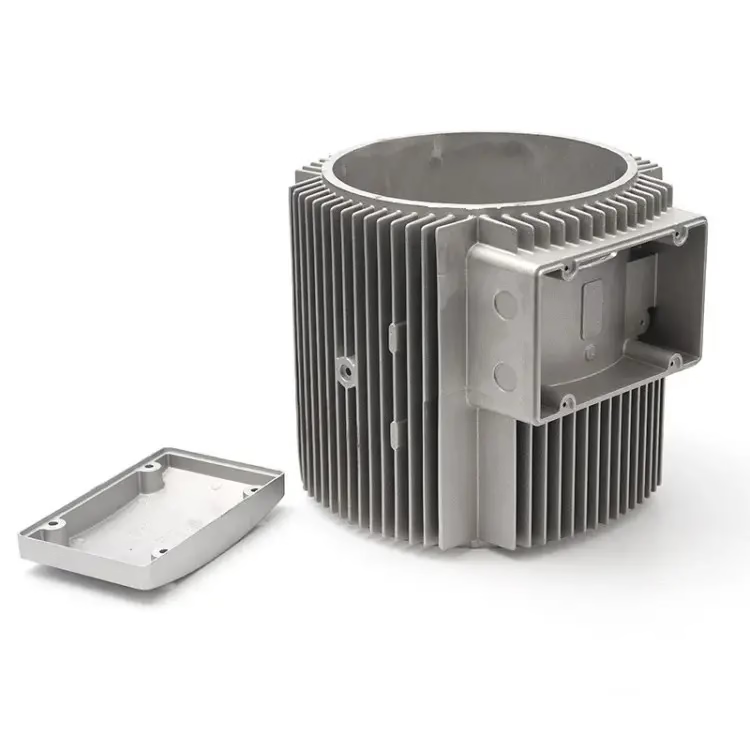
A die cast motor housing consolidates the stator can, end bells, mounting bosses and cooling jacket into one part. Aluminum ADC12 or A356 gives a strength-to-weight ratio that a welded steel assembly cannot match at the same stiffness. Fewer joints means fewer places for vibration to start.

Stiffness matters more than raw strength here. The bearing bore has to stay round under 8 kN of rotor load, or the air gap closes and eddy losses climb. We check wall thickness against the filling simulation before the tool is cut, so ribs land where the bending moment is highest.

  • 1
    Single-piece geometryCuts part count and assembly labor
  • 2
    Rib layout from fill simulationStiffness without extra wall stock
  • 3
    Machined bearing boresRoundness held under load

Get Instant Quote

large-die-cast-metal-part-back-5
Thermal path

Heat sinks and housings that move watts out

Power electronics lose efficiency as junction temperature rises. A die cast heat sink with a machined mounting face and cast fins spreads heat across the whole surface instead of a few contact points. The flatness of that face is what sets the interface resistance.

We machine the mounting face to Ra 0.8–1.6 μm and hold flatness across the footprint. Fins are drafted for release but kept thick enough to carry heat to the tips. If a design needs more surface area than the tool allows, we say so before the tool is cut rather than after.

  • 1
    Machined interface faceLow and repeatable contact resistance
  • 2
    Fins drafted for fillNo cold shuts at the tips
  • 3
    Wall thickness checkedAvoids porosity under the die
Selection guide

Which casting route fits which EV part

Pick by wall thickness, volume and how much machining the interface needs.

PartTypical alloyWall rangeWhy this route
Motor housingA356 / ADC124–8 mmStiffness and a machined bore
Battery tray6061 / ADC123–6 mmLarge footprint, low mass
Inverter housingADC122.5–5 mmThin walls, sealed groove
Heat sinkADC12 / 60632–4 mm finsSurface area and flat face
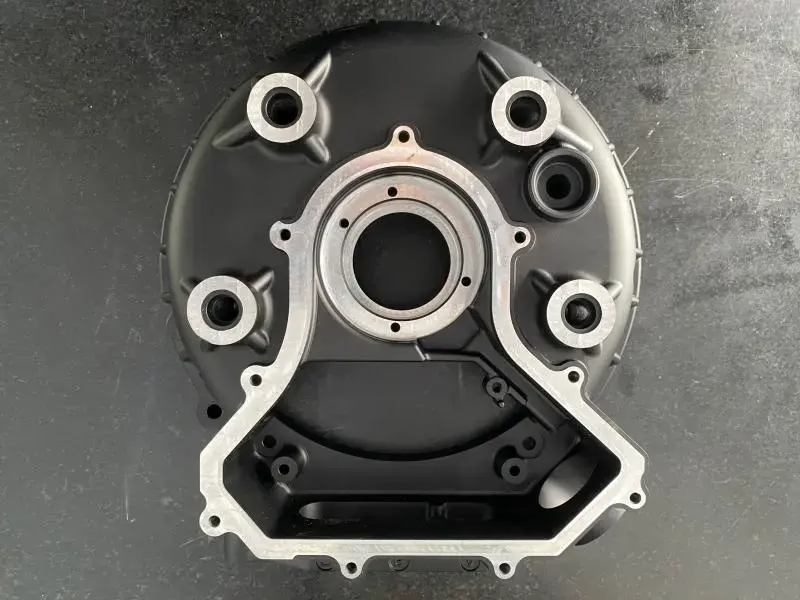
Transmission caseA356 / AZ91D5–10 mmLoad paths and bearing seats
Busbar bracket6101 / C1102–4 mmConductivity plus stiffness
What we run

Casting plus the machining that follows it

One supplier for the cast blank and the finished interface.

01

Metal Die Casting

Aluminum and magnesium castings for housings, trays and brackets. We review wall thickness and draft before tooling.

02

5 Axis CNC Machining

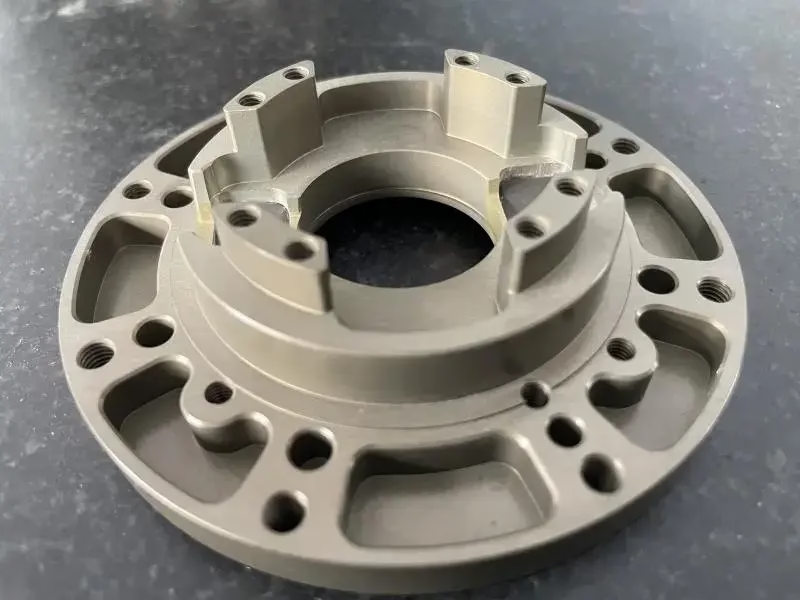
16 simultaneous 5-axis centers cut angled faces, seal grooves and bearing bores in one setup.

03

CNC Milling & Turning

Mill-turn centers finish round features and flat faces without re-fixturing the casting.

04

Rapid Prototyping

Machined or printed prototypes to test fit and thermal path before the die is committed.

05

Part Surface Finishing

Anodizing, chromate conversion, powder coating and bead blasting for EV housings.

06

Vacuum Casting

Low-volume urethane and silicone parts for brackets and covers during development.

Scope

What is included on a casting order

ItemWhat we doWhat you get
DFM reviewWall, draft and gate checkFeedback within 12 hours
ToolingDie design and first articleSample parts for approval
CastingAluminum or magnesiumNear-net blanks
Machining5-axis, mill-turn, 3-axisFinished to ±0.005 mm
FinishingAnodize, plate, coatCorrosion and wear protection
Inspection100% before shipmentReports on request
Why GreatLight

Numbers behind the work

15Y

Casting and machining since 2011

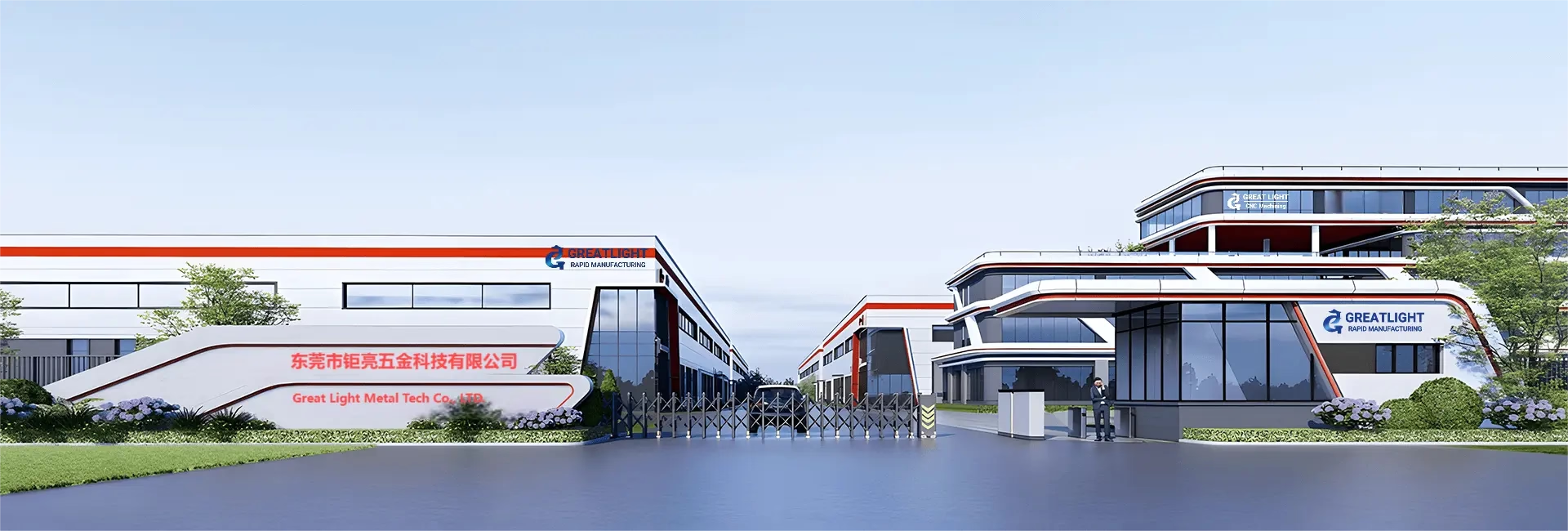
Three wholly-owned plants in Dongguan and Singapore. 7,600 m² of floor space and 150 technicians on the shop floor.

±0.005

Machining tolerance

Held on bearing bores, seal grooves and mounting faces. Imperial equivalent ±0.0002 in.

127

CNC machines

16 simultaneous 5-axis centers, 12 four-axis mills, 27 three-axis machines and 16 mill-turn centers.

4,000 mm

Maximum processing size

Long battery tray and frame sections run on the large-travel machines without splitting the part.

12H

Quote and DFM turnaround

Send a model and we return a quotation plus free DFM analysis within 12 hours.

3–5

Days to ship

Production can start within 24 hours. Parts ship in 3–5 days after release.

7,600 m²Manufacturing space
150Technicians
IATF 16949:2016Automotive quality system
±0.0002 inTolerance in imperial
What the parts have to do

EV casting families and the requirements they carry

6011

Motor and transmission housings

Bearing bores stay round under rotor load so the air gap does not close and eddy losses stay low.

  • ±0.005 mm bore
  • Ra 0.8–1.6 μm
  • IATF 16949
GreatLight Metal new factory building

Battery trays and enclosures

Large cast or hybrid trays with machined mounting pads. Flatness holds across the pack footprint.

  • 4,000 mm travel
  • Seal groove
  • 100% inspection
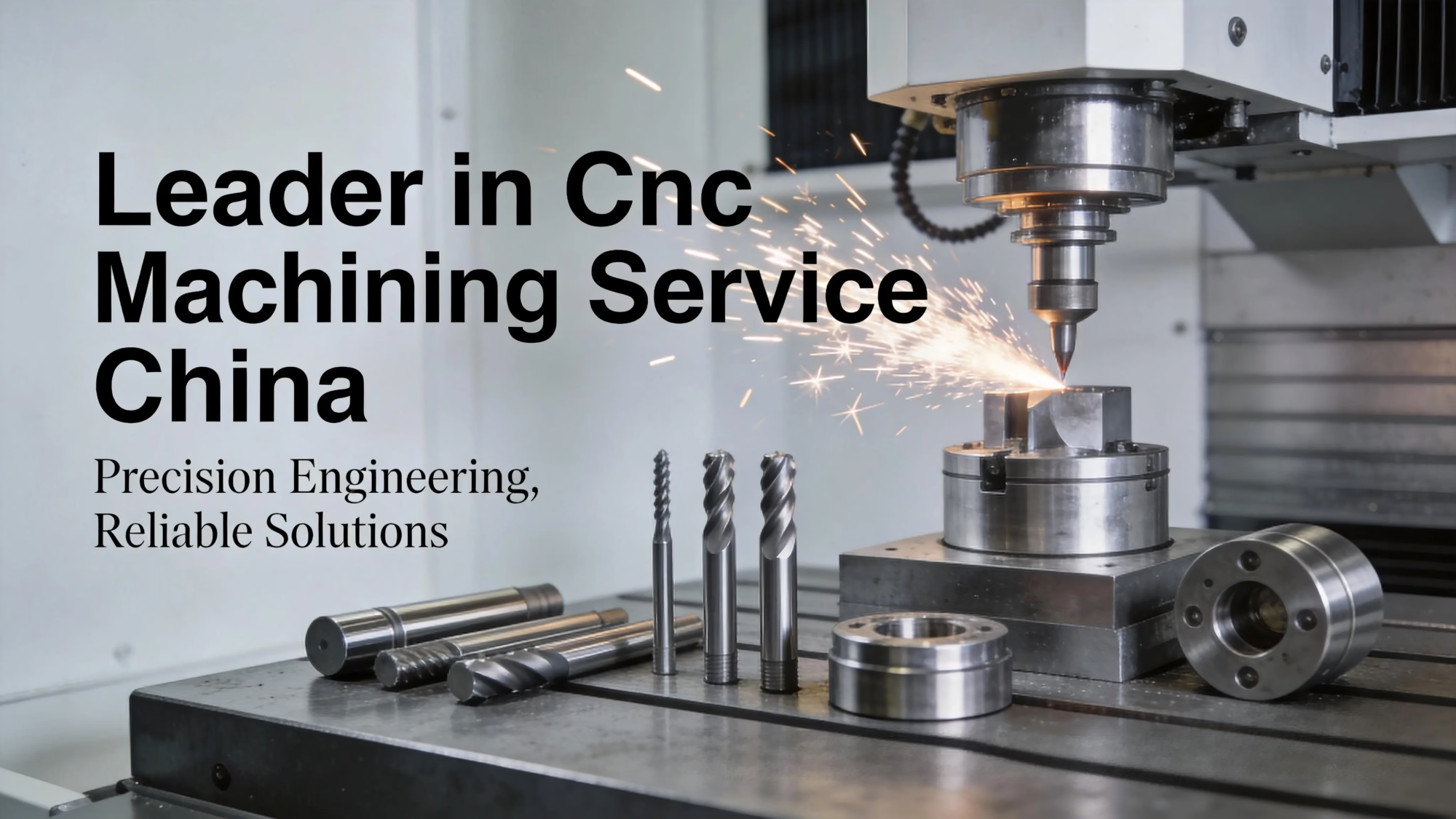
Leader in Cnc Machining Service China

Heat sinks and power modules

Machined mounting faces and cast fins keep junction temperature down so the inverter does not derate.

  • Flat face
  • Drafted fins
  • Ra 0.8–1.6 μm
FAQs

Questions engineers ask before tooling

Does a die cast housing really save mass over a welded steel one?

Yes, at equal stiffness. Aluminum is roughly one third the density of steel, and a single cast part removes the overlap and weld metal at every joint. A welded tray often carries 15–25% more material than a casting doing the same job.

The saving depends on geometry. If a part is a flat plate with no load path, welding is competitive. Casting wins when the part has bosses, ribs and a machined interface.

Which alloy should I specify for a motor housing?

A356 when you need higher strength and better fatigue behavior around bearing seats. ADC12 when the part is thinner-walled and the priority is fill and surface finish.

Both machine well. If the housing sees high cyclic load at the mounts, A356 is the safer default.

How much machining allowance should I leave on the casting?

0.5–1.0 mm on faces that will be machined, and 1.5 mm on bearing bores. That is enough to clean up distortion without cutting into the dense skin.

Leaving 3 mm or more wastes material and can expose subsurface porosity. We flag this in the DFM review.

Can you cast and machine a part in one order?

Yes. The casting and the finishing operations run under one roof, so the blank does not ship out and back. That removes one set of handling marks and one tolerance stack-up.

First article samples go to you for approval before the production run.

What wall thickness is too thin for die casting?

Below 2 mm the metal freezes before it fills long sections, and you get cold shuts. Between 2.5 and 5 mm is the comfortable band for most EV housings.

If a design needs a thinner wall for mass, we look at whether ribs or a different alloy can carry the load instead.

How do you control porosity under a heat sink face?

Gate and overflow placement decides where the last metal solidifies. We put the gate so the mounting face fills early and the biscuit takes the shrinkage.

After machining, the face is inspected for exposed porosity. If a void opens, the part is scrapped rather than patched.

What is the minimum order quantity?

There is none. We run from one prototype to 10,000+ part runs. Tooling cost is the fixed part; the per-part cost falls as volume rises.

For early development, a machined prototype often makes more sense than cutting a die.

Can you work to an NDA on a new EV program?

Yes. Uploads are handled as confidential and an NDA is available on request before you send models.

We are certified to ISO 27001:2022 for information security, alongside ISO 9001:2015 and IATF 16949:2016.

Send an EV casting drawing and get DFM feedback in 12 hours

Upload a STEP file and we return a quotation plus free DFM analysis. Production can start within 24 hours, and every part is inspected before it ships.

12-hour quote100% inspectionFrom one prototype to 10,000+

Trusted by engineers and manufacturers worldwide

Tesla Ford Motor Company BYD Auto Denso Magna International Boeing Airbus Medtronic KUKA FANUC