GreatLight CNC Machining Factory logo
CNC Machining
Rapid Prototyping
Materials
Industries
News
About GL

Get Instant Quote

Threaded connection expertise

Threaded Connection Expertise

A thread is the cheapest feature on a part and the first thing to fail. We machine external and internal threads to a defined class of fit, control the pilot diameter and face that set the joint, and inspect them before the parts ship.

Metric and inch threadsClass of fit controlThread milling on 5-axisPreload and locking featuresGauge and optical checksNo minimum order quantity
CNC Lathe Technical Specifications Terminology
±0.005 mmMachining tolerance
127High-precision CNC machines
15 yearsIn Dongguan since 2011
3–5 daysTypical part shipping
Where joints go wrong

Four failures we are asked to fix

Most thread problems are not thread problems. They are pilot diameter, face flatness, material or plating problems that show up at the joint.

01

Bolts keep coming loose

A joint that loses preload vibrates, frets and then fails. Often the cause is a soft bearing face, a short thread engagement or no locking feature at all. We check engagement length and add nylon patch, threadlocking compound or a mechanical lock when the drawing allows it.

02

Threads strip on assembly

Stripping usually points to the wrong pilot hole, a coarse pitch in thin material, or aluminium threads loaded past their shear area. A change of pitch, an insert, or a switch to steel can add real margin. It costs less than scrapping assembled units.

03

Parts will not screw together

Two good parts, one bad fit. Class of fit is the usual culprit. A 6g external thread and a 6H internal thread have defined limits, and plating adds thickness to both. We machine to the class called out and account for coating build-up.

04

Gauge rejects at incoming

Customers with go/no-go gauges reject parts we thought were fine. Thread form, lead and flank angle all show up at the gauge. We check with the same class of gauge before shipment so the parts pass at your dock, not just ours.

How we hold a thread

Machining the joint, not just the thread

A thread only works when the pilot, the face and the material around it are correct.

CNC Machining Services Online
Thread forms and fit

Pick the form and the class before you cut metal

Triangular threads carry the load in almost every fastener. Metric coarse, metric fine, UNC and UNF cover most work, and we cut all of them on the same machines. Trapezoidal and buttress forms appear on lead screws and jacks where the load runs one direction. Pipe threads need a seal, so the taper and the flank do the work, not the torque.

Class of fit decides whether the parts assemble by hand or by wrench. A 6H internal thread with a 6g external thread is the normal clearance pair. Where a coating is applied after machining, we leave room for the build-up or mask the thread. Plating a tight thread is one of the fastest ways to turn a good part into scrap.

  • 1
    Metric and inch formsM, UNC, UNF, BSP and NPT cut to the drawing.
  • 2
    Class of fit6H/6g, 4H/4h and 2A/2B on request, with coating allowance.
  • 3
    Thread millingFor large diameters, thin walls and threads near a shoulder.

6011
Preload and locking

Control preload so the bolt does not see the fatigue

A tightened bolt should carry the working load as tension, not as bending. Preload comes from torque, and torque depends on friction on the threads and under the head. A rough or plated surface changes that friction and the preload with it. We keep the bearing face flat and the surface finish consistent so the torque-to-preload relationship stays predictable.

Locking is a separate decision. A nylon patch, a prevailing torque nut, a serrated flange or a threadlocking compound each suit different service conditions. Where the joint sees heat or repeated disassembly, we avoid plastic-based locks. Where the joint is permanent, a chemical lock is often enough.

  • 1
    Bearing face flatnessA flat face keeps the preload from dropping after assembly.
  • 2
    Engagement lengthEnough thread engagement to carry the load without stripping.
  • 3
    Locking methodChosen for temperature, vibration and how often the joint opens.
Selection guide

Which thread and locking method fits the job

A short guide to the decisions we make with customers at the drawing stage.

SituationThread choiceLocking method
General steel fastenerMetric coarse or UNCSplit washer or nylon patch
Thin aluminium wallFine pitch or insertPrevailing torque nut
High vibration, serviceableMetric fineSerrated flange nut
Permanent jointMetric coarseThreadlocking compound
Fluid or gas sealNPT or BSP taperSealant on the thread
Lead screw or jackTrapezoidal or buttressNut with backlash control
What we machine

Threaded parts we produce

One shop for the thread, the pilot hole, the mating face and the finish.

01

External threads on shafts

Turned and thread-milled external threads on shafts, studs and fittings, with the pilot diameter and shoulder face cut in the same setup.

02

Internal threads in housings

Tapped and thread-milled internal threads in aluminium, steel, stainless and titanium housings, from M2 up to large bores.

03

Threaded manifolds and blocks

Multi-port blocks with several thread sizes, kept on a common datum so the ports line up after assembly.

04

Bolt circles on flanges

Bolt hole patterns machined on a rotary table or 5-axis machine, with the pitch circle and hole positions held together.

05

Threaded inserts and bosses

Bosses sized for inserts, or holes prepared for heat-set and helical inserts in plastics and soft alloys.

06

Prototype to production

One threaded prototype or a 10,000-part run, machined to the same drawing and the same class of fit.

Scope and limits

What the shop can hold

Limits taken from our machine list, not from a catalogue.

ItemCapabilityNote
Tolerance±0.005 mmOn critical diameters and faces
Surface finishRa 0.8–1.6 μmRa 0.2–0.8 μm on request
Max part size4,000 mmLong shafts and rails
Thread milling5-axis and mill-turnThreads near shoulders and thin walls
Bolt circlesØ400 mm rotary tableIndexed positions in one setup
Inspection100% before shipmentGauge and optical checks
Why engineers send us the joint

Six things that decide the outcome

Data first, adjectives last.

15Y

Threading since 2011

Fifteen years of cutting threads in aluminium, steel, stainless, titanium and plastics, on parts from one-off prototypes to long production runs.

±0.005

Tolerance in millimetres

Critical diameters and mating faces held to ±0.005 mm, so the pilot and the thread agree with each other after assembly.

127

CNC machines on site

Turning, milling, mill-turn and 5-axis capacity in three plants, which keeps the thread and the pilot in the same process.

4,000 mm

Maximum part length

Long threaded shafts, rails and tie rods that most shops cannot hold without repositioning.

12 h

Quote and DFM analysis

A quotation and a free DFM review of your thread callouts within 12 hours of receiving the drawings.

99.99%

Qualification rate

Parts that pass inspection on the first submission, backed by raw material checks and in-process monitoring.

7,600 m²Manufacturing space
150Technicians
3Wholly-owned plants
24 hProduction start
Sector requirements

What each industry asks of a threaded joint

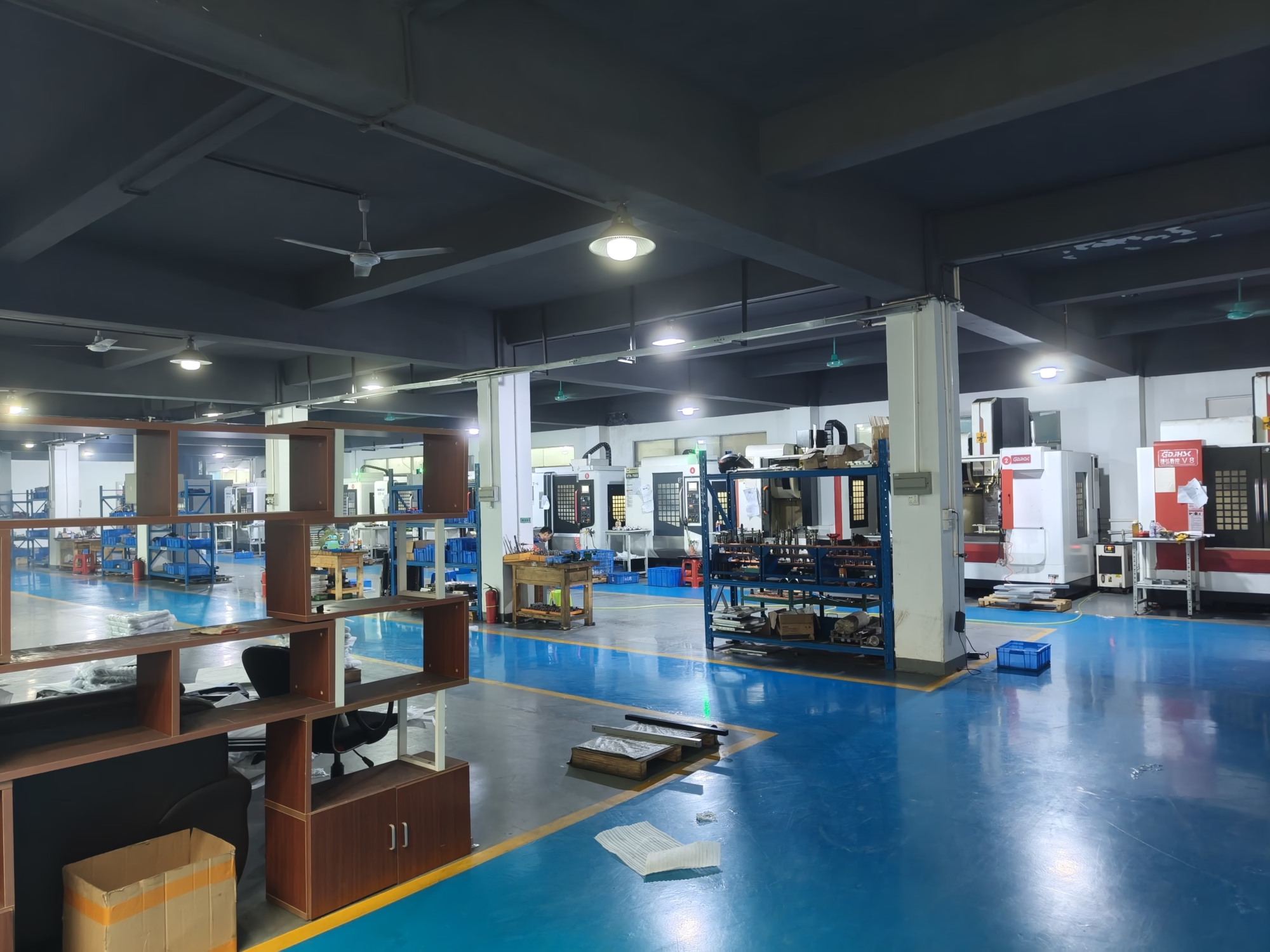
GreatLight Metal new factory building

Aerospace brackets

Light alloy brackets where every gram counts and the bolt circle must line up with the mating frame.

  • ±0.005 mm
  • Class 6H/6g
  • 100% inspection
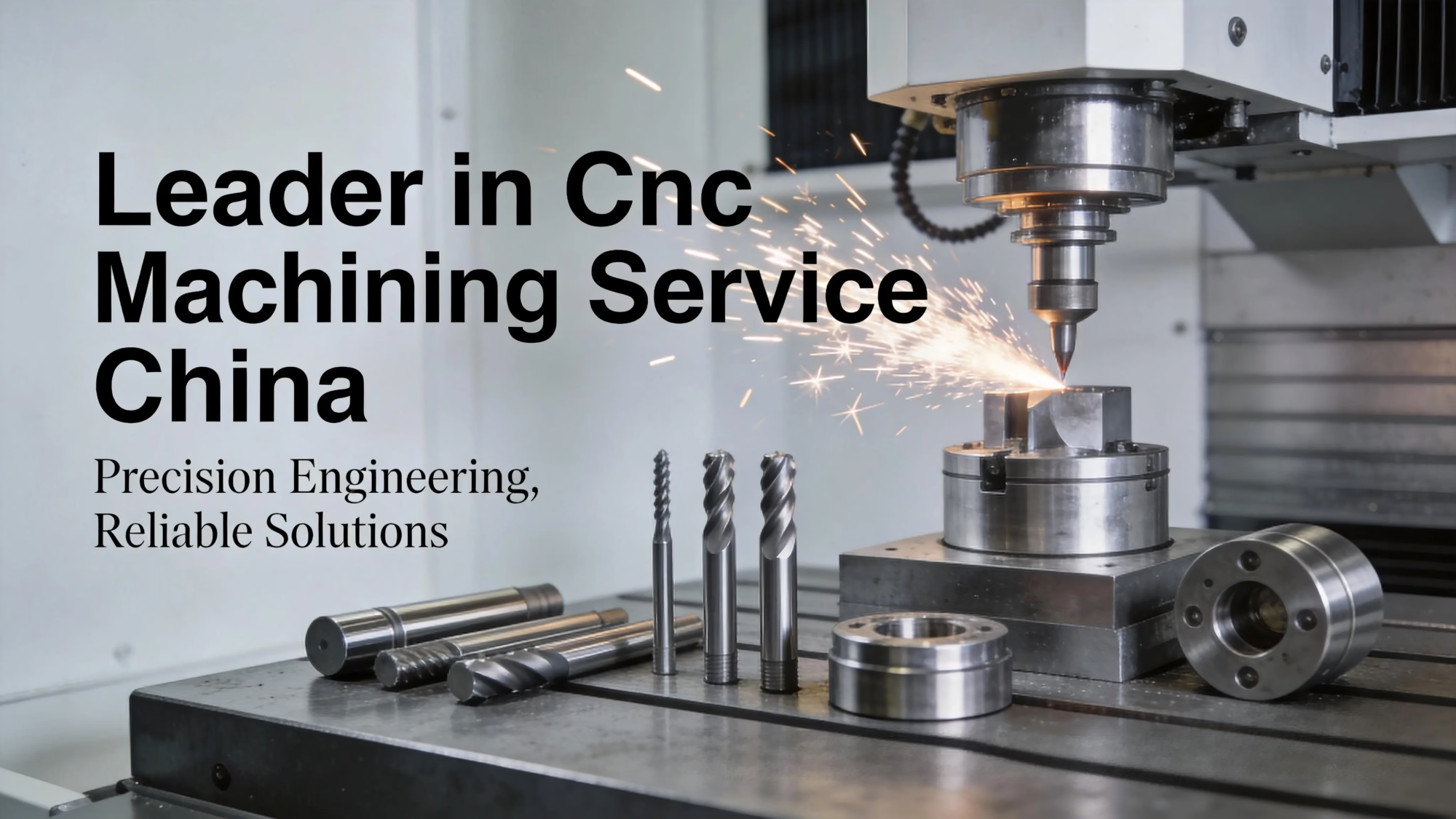
Leader in Cnc Machining Service China

EV and automotive parts

Housings and brackets that see vibration for years and cannot afford a loose fastener.

  • IATF 16949
  • Prevailing torque
  • Ra 0.8–1.6 μm
oplus_262178

Medical instrument bodies

Stainless and titanium bodies with fine threads that must assemble cleanly after passivation.

  • ISO 13485
  • Fine pitch
  • Coating allowance
cnc machining

Industrial machine frames

Long threaded rails and tie rods where the thread runs several hundred millimetres from the datum.

  • 4,000 mm
  • Mill-turn
  • In-process checks
FAQs

Questions engineers ask before ordering

What class of fit do you machine by default?

Unless the drawing says otherwise, we cut a 6H internal thread and a 6g external thread. That is the standard clearance pair for general assembly.

If the joint is coated after machining, we adjust the limits or mask the thread so the finished part still assembles to the intended fit.

How long should a thread engagement be?

A common rule is one times the nominal diameter in steel and around two times in aluminium or plastics. That is a starting point, not a limit.

The real answer depends on the shear area of the weaker material. Send the load case and we will check the engagement against the material you have chosen.

Can you cut threads on a 5-axis machine instead of tapping?

Yes. Thread milling works well for large diameters, thin walls and threads close to a shoulder where a tap cannot reach or would break.

It also lets us correct the pitch diameter on a second pass, which a tap cannot do.

Will plating change the thread fit?

It will if nobody plans for it. Electroless nickel and zinc add thickness to both flanks and the crest, which tightens the fit.

We size the thread before coating or mask it, depending on the finish and the class of fit you need.

What locking method should I specify?

Match it to how often the joint opens and to the temperature. Nylon patches and chemical locks work for serviceable joints at moderate temperature.

For high temperature or repeated disassembly, use a prevailing torque nut or a mechanical lock instead.

How do you check a thread before shipment?

We use go/no-go gauges of the same class called out on the drawing, plus optical checks on form and lead where the gauge alone is not enough.

Inspection is 100% before shipment, and reports are available on request.

Can you help if the thread callout is incomplete?

Yes. Missing pitch, class or coating allowance is common on early drawings. We flag it in the DFM review.

The quotation and the free DFM analysis come back within 12 hours, so the question is usually resolved before you place the order.

Is there a minimum order quantity?

No. We machine from one prototype to runs of 10,000 parts or more.

Uploads are kept secure and confidential, and an NDA is available on request.

Send the drawing and the thread callout

We will review the joint, flag anything missing and quote it within 12 hours.

12-hour quote100% inspectionNo minimum order quantity

Trusted by engineers and manufacturers worldwide

Tesla Ford Motor Company BYD Auto Denso Magna International Boeing Airbus Medtronic KUKA FANUC