
Top OEM Sheet Metal Fabrication Suppliers: How to Tell Them Apart
This guide is for engineers and sourcing managers comparing OEM sheet metal fabrication suppliers. It covers the checks that actually predict part quality: tolerance capability, certification scope, process coverage, quoting detail and first-article practice. Read it before you send an RFQ.
In this article
- 1
- 2
- 3
- 4
- 5
- 6
- 7
What matters most when you shortlist suppliers
How OEM Sheet Metal Fabrication Suppliers Compare on the Criteria That Matter
Use this table to score candidates on the checks that decide whether a part arrives right.
| Criterion | What to ask for | Why it decides the outcome |
|---|---|---|
| Machining tolerance | Written tolerance per feature, e.g. ±0.005 mm | Formed panels are looser than milled pockets; one blanket number hides gaps |
| Process coverage | Sheet metal plus CNC milling, turning, finishing | Brackets and inserts come from the same QC system, not a second shop |
| Certifications | ISO 9001:2015, IATF 16949:2016, ISO 13485:2016, ISO 27001:2022 | Each standard unlocks a different industry and audit requirement |
| Inspection | 100% inspection before shipment, reports on request | Sampling only catches defects after the batch is already packed |
| MOQ and run size | One prototype through 10,000+ parts | A shop tooled only for volume will not quote a one-off enclosure |
| Quote turnaround | Quotation and DFM analysis within 12 hours | Slow quoting usually signals slow engineering support later |
| Production start | Can start within 24 hours of PO | Indicates material stock and machine scheduling, not just sales talk |
| Shipping window | Parts ship in 3–5 days for repeat work | A firm window is easier to audit than a vague range |
Tolerance Capability: What the Number Really Covers
Most supplier pages quote one tolerance figure and leave it there. That number almost always describes machining, not forming. A milled pocket or a turned boss can hold ±0.005 mm on a well-maintained machine. A formed flange on a 2 mm aluminum panel cannot, and no press brake will make it. When you read a tolerance claim from OEM sheet metal fabrication suppliers, ask which process it belongs to.
Bend angle and bend position are the two forming calls that bite hardest. Angle tolerance of ±1° is realistic for a standard air bend. Position tolerance of ±0.2 mm across a formed feature is achievable when the flat pattern is corrected for springback and the tooling radius matches the material. Tighten either one and the shop needs dedicated tooling or a secondary machining pass, which changes both price and lead time.
Hole-to-bend distance matters too. A hole placed closer than roughly 2.5 times the material thickness to a bend line will distort during forming. Good suppliers flag this in DFM review rather than running the part and shipping a deformed hole. If your design has holes near bends, expect a note back within the quote.
The practical test is simple. Send a drawing where one feature needs a tight callout and the rest are general. See whether the supplier separates them in the response. A shop that applies a single tolerance to everything is either over-inspecting or guessing.
Certifications: Match the Standard to Your Industry
A certificate on a website means little until you know its scope. ISO 9001:2015 is the baseline quality management system. It tells you the supplier documents processes, controls nonconforming parts and runs internal audits. That covers general industrial work and most electronics enclosures.
IATF 16949:2016 goes further. It adds process control, defect prevention and supply chain waste reduction requirements that automotive programs expect. If your part goes into a vehicle or an engine assembly, an ISO 9001-only supplier will struggle at the PPAP stage. ISO 13485:2016 serves the same role for medical devices, where traceability and process validation carry more weight.
ISO 27001:2022 covers information security. For OEM buyers this matters when drawings, CAD files and production volumes are sensitive. Ask how uploaded files are stored and who can open them. GreatLight Metal holds all four standards, which is unusual. Many shops hold one.
Certification scope is the detail people skip. A certificate can cover one site and not another. If a supplier runs multiple plants, confirm which site will actually produce your parts and whether that site appears on the certificate.
Process Coverage and the Multi-Part Enclosure Problem
A typical OEM enclosure is not pure sheet metal. It has a formed chassis, machined mounting bosses, threaded inserts, a die-cast or machined heat sink, and maybe a printed internal fixture. Splitting that across four vendors multiplies your administrative load and your risk. Each vendor inspects to its own standard, and nobody owns the assembly fit.
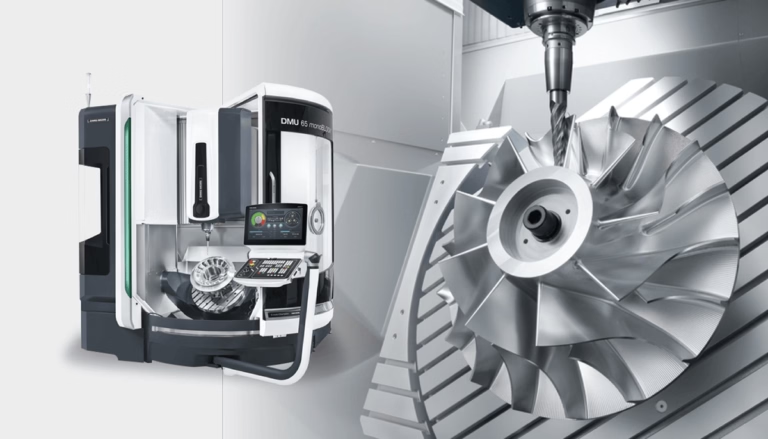
Suppliers with an integrated process chain solve this differently. One factory runs the sheet metal, the CNC milling and turning, the die casting, the 3D printing and the finishing, then inspects the finished assembly against one drawing set. GreatLight Metal operates a 7,600 m² facility in Dongguan with 127 high-precision CNC machines, including 16 simultaneous 5-axis machining centers and a Ø400 mm rotary table.
Integrated coverage also shortens the loop when something is wrong. If a machined boss does not align with a formed hole, the fix happens under one roof instead of a three-way call. That is the real argument for process depth, not a longer service list.
There is a limit. A supplier with deep coverage but weak inspection discipline is worse than a focused shop with good metrology. Coverage is only useful when it sits under one quality system.
Quoting Discipline: Five Things a Good Quote Shows
Quotes from weaker OEM sheet metal fabrication suppliers look like one line and a price. Quotes from better ones read like a short engineering review. You can judge a supplier before you place an order by looking at what the quote contains.
A useful quote names the material grade, not just aluminum or stainless. It states the finish and the standard it meets. It lists hardware and inserts as separate items. It gives a realistic lead time rather than a promise. And it flags anything in the drawing that will cause trouble.
DFM feedback inside the quote is the strongest signal. If a supplier notices that a bend relief is missing, or that a tapped hole sits too close to a formed edge, they are reading the drawing. A supplier who quotes a defective design without comment will build it, and you will pay for the rework.
Confidentiality belongs here too. Ask whether an NDA is available before you send files, and whether uploads are handled as confidential. This is routine for defense, medical and automotive work. A supplier who hesitates on this question is telling you something.
Seven Steps to Shortlist OEM Sheet Metal Fabrication Suppliers
Run these in order. Each step filters candidates before you spend time on samples.
- 11. Write down the real tolerance per featureSeparate machining callouts from forming callouts on your drawing. Mark general tolerances clearly. If one feature needs ±0.005 mm, say so and note that it will be machined, not formed.
- 22. Confirm the certificate and its scopeAsk for the certificate number and the site it covers. For automotive work, confirm IATF 16949:2016. For medical, confirm ISO 13485:2016. Do not accept a logo without scope.
- 33. Send a drawing with one deliberate problemInclude a hole too close to a bend, or a missing bend relief. A supplier who returns DFM notes within the quote is reading your file. Silence is a warning.
- 44. Measure the quote turnaroundGreatLight returns a quotation and free DFM analysis within 12 hours. Use that as a benchmark. Multi-day silence on a simple RFQ usually repeats during production.
- 55. Ask about run-size flexibilityA shop that quotes one prototype and 10,000+ part runs handles both setups. Confirm how tooling and fixtures are stored between the two, or you will pay setup twice.
- 66. Check inspection and reportingAsk what is measured, at which stages, and what report you receive. 100% inspection before shipment with reports on request is the answer you want, not sampling.
- 77. Request the material and finish listConfirm your grade is stocked or sourced: 5052 and 6061 sheet, 304 and 316L stainless, and finishes such as anodizing, powder coating or electroless nickel. Vague answers cost weeks.
Questions Buyers Ask Before Awarding a Sheet Metal Contract
Is a tighter tolerance always better?
No. Tightening a formed feature usually forces dedicated tooling or a secondary machining operation, and both add cost and time.
Reserve ±0.005 mm for machined features that need it. Keep general forming tolerances realistic and state them as general. The supplier then knows where to spend inspection effort.
Do I need IATF 16949 for a non-automotive part?
Not usually. ISO 9001:2015 covers most industrial, robotics and electronics work.
IATF 16949:2016 becomes relevant when your customer's program requires it or your part enters a vehicle assembly. ISO 13485:2016 plays the same role for medical devices.
Can one supplier handle sheet metal and machined parts together?
Yes, if the factory runs both processes under one quality system. That is the case when a supplier also offers CNC milling and turning, die casting and finishing.
This matters for enclosures with machined bosses or inserts, because assembly fit is inspected once against one drawing set.
What order quantity should I expect a supplier to accept?
It varies. Some shops set a minimum that rules out prototypes.
GreatLight has no minimum order quantity and runs from one prototype to 10,000+ part runs. If you are at the prototype stage, confirm this before you invest in a drawing package.
How should confidentiality be handled?
Ask for an NDA before sending drawings, and confirm how uploads are stored.
For sensitive programs this is standard practice, and a supplier with ISO 27001:2022 has a documented information security process behind it.
What lead time is realistic for a first order?
Production can start within 24 hours of a confirmed order, and parts typically ship in 3–5 days for repeat work.
First orders take longer because of DFM review, material sourcing and first-article inspection. Treat the first run as its own schedule.
Send Your Drawing and Get a Quote With DFM Notes
Upload your files and we will return a quotation with free DFM analysis within 12 hours. No minimum order quantity, NDA available on request, and 100% inspection before shipment.
12-hour quoteNo MOQ100% inspectionNDA on request
More from the shop floor
We publish setup notes, tooling trials and inspection data from the factory floor.











