
Which Coolant Used in CNC Machine? 5 Proven Types
Which coolant used in a CNC machine decides tool life, finish, and whether chips clear a deep pocket. This page compares the five coolant families we run at GreatLight, with the materials and operations each one suits. Read it before you sign off a process sheet.
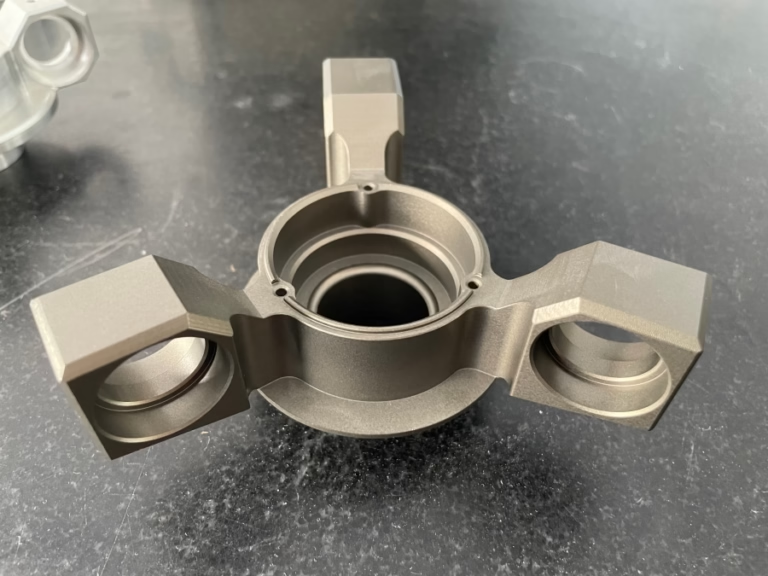
Which coolant used in CNC machine: five families compared
Five families cover most shop-floor work. Match the row to your material and operation, not to habit.
| Coolant type | Cooling strength | Lubrication | Best fit | Main drawback |
|---|---|---|---|---|
| Soluble oil emulsion | High | Medium | Steel and cast iron, general milling | Tramp oil and bacterial growth |
| Semi-synthetic | High | Medium-high | Mixed-material shops, aluminium and steel | Needs concentration control |
| Fully synthetic | High | Low | Aluminium, titanium, tight-tolerance work | Poor extreme-pressure lubrication |
| Neat cutting oil | Low | Very high | Gear hobbing, deep-hole drilling, tapping | Fire risk, mist, part cleaning |
| Air or MQL mist | Low to medium | Medium | Thin plates, composites, near-dry setups | Weak on heavy interrupted cuts |
What coolant actually has to do at the cutting edge
Coolant does three jobs at once. It pulls heat out of the tool and workpiece, it lubricates the contact zone where the chip rubs the rake face, and it flushes chips out of the cut so they do not get re-cut. A fluid that is good at one job is often weak at another, which is why shops keep more than one sump filled.
The heat split matters more than most people think. In aluminium, most heat leaves with the chip, so cooling is easy and lubrication is the harder problem. In titanium and stainless, heat sits at the tool edge, so you need high flow and high pressure to keep the insert below its softening point. Same machine, different fluid.
Chip evacuation is the quiet one. In a 300 mm deep pocket with a 10 mm end mill, a weak flush leaves chips packed at the bottom. The cutter rubs, the finish tears, and the tool breaks on the next pass. Pressure matters here, not just volume. We run through-spindle coolant at 30-70 bar on deep pockets and on small-diameter drills.
No single fluid wins all three jobs. That is the whole reason this comparison exists. Pick the fluid that covers the job your part spends most of its cycle time on, then adjust concentration and pressure to cover the rest.
Water-based coolants versus neat oil: where each one wins
Water-based fluids carry heat away roughly twice as fast as oil. If your operation is high-speed milling with a lot of spindle hours, water is the default. Soluble oil, semi-synthetic, and fully synthetic all fall in this group, and they differ mainly in how much oil is in the mix.
Soluble oil emulsions are the workhorse. A 5-10% concentration in water gives good cooling, decent lubrication, and a low price per litre. They suit steel and cast iron where you are not chasing mirror finishes. The downside is biological: sumps grow bacteria, smell sour, and need aeration or a skimmer to stay usable.
Fully synthetic fluids drop the mineral oil entirely. They run cleaner, resist bacteria better, and leave almost no residue, which matters when a part goes straight to anodising or vacuum brazing. They also work well on aluminium and titanium. What they give up is extreme-pressure lubrication, so heavy tapping in 4140 is not their job.
Neat oil is the other end of the scale. It barely cools, but its lubrication is unmatched. Gear hobbing, deep-hole drilling, and thread tapping in tough alloys are where it earns its keep. It also brings mist, fire risk, and a part that needs degreasing before the next step. Use it when lubrication is the limiting factor and cooling is not.
Matching coolant to material and operation
Aluminium is the easy one in theory and the fussy one in practice. Use a water-based fluid with no active sulphur and a pH between 8.5 and 9.2. High pH attacks the aluminium surface and leaves dark stains that show through clear anodising. For 6061 and 7075 we run semi-synthetic or fully synthetic at 6-8% concentration and keep the sump clean.
Steel and stainless want lubrication as well as cooling. Soluble oil at 8-12% handles most 1018, 1045, and 304 work. For 316L and 17-4PH, raise concentration toward the top of the range and keep pressure up so chips do not weld to the insert. If you are tapping 4140 above M10, a neat oil or an EP-additive fluid will save you broken taps.
Titanium and Inconel are the hard cases. Heat stays at the edge, so high-pressure water-based fluid is the standard answer. Do not use chlorinated fluids on titanium, they can cause stress corrosion cracking later. Keep flow high and never let the cut run dry, even for a second, because a dry rub work-hardens the surface and ruins the next pass.
Plastics and composites change the rules again. POM and ABS swell or discolour with oil-based fluids, so use air blast, MQL, or a low-residue synthetic. Carbon fibre needs dust extraction more than flood coolant, and water can wick into the laminate if you are not careful. Match the fluid to what the material tolerates, not to what the machine prefers.
Concentration, maintenance, and real running cost
Concentration drifts. Water evaporates, fluid does not, so the mix gets richer over a hot week and you lose cooling. Check with a refractometer daily and top up with water, not with fresh concentrate. A 10% mix that reads 14% is costing you money and gumming up the machine.
Sump life depends on what you do to it. Skim tramp oil weekly, aerate or circulate the tank, and keep the pH above 8.5. Most emulsions last 3-6 months before a full change, and fully synthetics often run longer. A sour sump is not just a smell problem, it drops lubrication and can stain parts.
The cheap fluid is rarely the cheap option. A low-cost emulsion that needs changing every two months, causes tool breakage, and leaves residue that fails anodising costs more than a synthetic that runs clean for a year. Track cost per part, not cost per drum.
For medical and aerospace work we also track fluid traceability. ISO 13485:2016 and IATF 16949:2016 audits both ask what fluid touched the part and how it was controlled. Keep records of concentration, pH, and change dates. It is a five-minute job that saves a week of questions later.
The short answer
For aluminium, titanium, and mixed-material high-speed milling, choose a fully synthetic or semi-synthetic water-based fluid. For heavy tapping, gear cutting, and deep-hole work in steel, choose neat oil. If your part is a thin plate or a composite, choose air or MQL and skip the flood.
Common questions about CNC coolant
Can I use the same coolant for aluminium and steel on one machine?
Yes, if you pick a semi-synthetic water-based fluid and control concentration. Run it at 6-8% for aluminium and 8-12% for steel, and keep the pH between 8.5 and 9.2 so the aluminium does not stain.
Do not use a fluid with active sulphur on aluminium. It reacts with the surface and leaves marks that show after anodising.
How often should CNC coolant be replaced?
Most emulsions run 3-6 months before a full change. Fully synthetic fluids often last longer. What kills a sump is tramp oil, low pH, and no aeration, not the calendar.
Skim oil weekly, check concentration daily, and change the charge when the fluid stops holding concentration or starts to smell. A record of pH and concentration makes that call easy.
Are water-based coolants good enough for titanium?
Yes, and they are usually the better choice. Titanium sends heat to the tool edge, so high flow and high pressure matter more than lubrication. Through-spindle coolant at 30-70 bar keeps the insert alive.
Avoid chlorinated fluids on titanium. They can leave residue that leads to stress corrosion cracking in service.
Does coolant choice affect post-processing like anodising?
It does. Oily residue and sulphur additives can cause uneven anodising or plating adhesion failures. Fully synthetic and low-residue fluids rinse cleaner and cut the risk.
If your part goes to anodising, tell the machinist before the job starts. The fluid choice is made at setup, not after.
What happens if the wrong coolant is used?
Short term you see poor finish, short tool life, and chips packed in pockets. Long term you get stained parts, failed plating, and in the worst case a cracked titanium component from chloride residue.
Most of these problems show up as a quality reject, not a machine alarm. That is why the fluid belongs on the process sheet.
Can GreatLight help choose coolant for a custom project?
Yes. Send the drawing, material, and tolerance and we will come back with the fluid family, concentration range, and pressure we would run. We machine aluminium, stainless, steel, titanium, copper, and plastics across 127 CNC machines.
If the part needs a specific fluid for a downstream process, say so in the RFQ and we will build it into the setup.
Send your drawing, get a coolant-aware quote
Tell us the material and tolerance and we will quote the process, including the fluid we would run. DFM feedback and quotation within 12 hours.
12-hour quote100% inspectionNo minimum order quantity
More machining notes from the shop floor
We publish setup notes, tooling trials and inspection data from the factory floor.











