
01
The build needs a tolerance the printer cannot hold
A mating bore and a shaft both come off the machine out of spec. Sanding and shimming follow. We machine those features after printing so the fit works on first assembly.
We build functional prototypes and low-volume parts in plastic and metal. FDM, SLS, SLA and DMLS, then CNC finishing when the fit or finish needs machining tolerances.
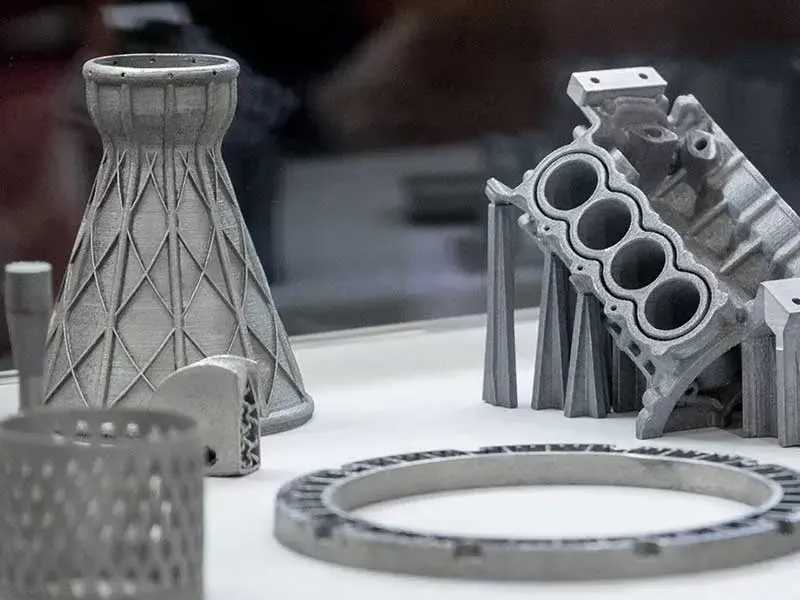
A mating bore and a shaft both come off the machine out of spec. Sanding and shimming follow. We machine those features after printing so the fit works on first assembly.
Visible stepping on a housing makes a working prototype look unfinished. Bead blasting, tumbling or a light skim cut removes the texture without changing the geometry.
A bracket cracks under load or a part softens near a heat source. Material choice matters more than print resolution here; we match resin, nylon or metal to the working conditions.
You get printed parts with no path to finishing or machining. We run print, CNC and surface finishing in the same plant, so the part arrives ready to use.
Print the shape, then bring the critical features to tolerance.
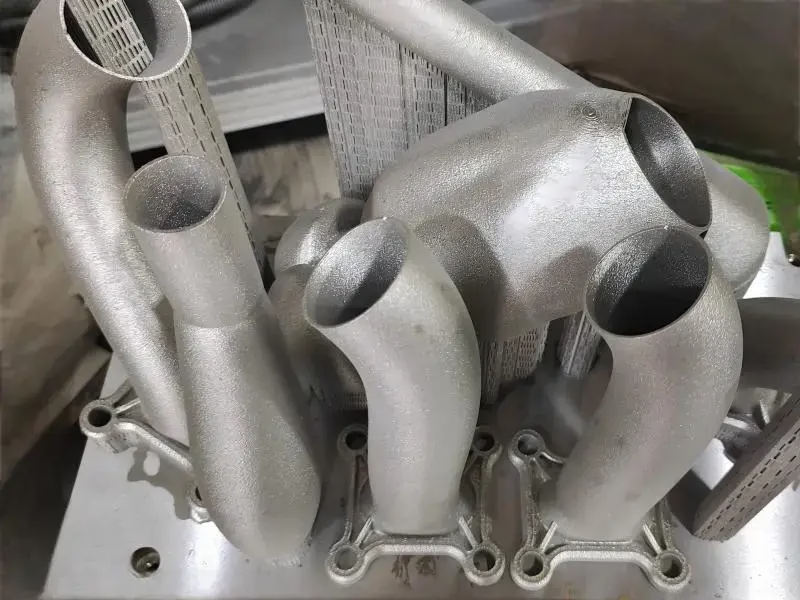
Resolution is not the first question. Ask what the part has to survive: a fit check, a drop test, a heat cycle or a full production run. FDM covers large brackets and enclosures in ABS or PC at low cost per part. SLS gives nylon parts with no support marks and good strength in any direction. SLA holds fine detail for small features and smooth surfaces. DMLS builds metal parts in titanium and Inconel when the geometry cannot be milled.
We quote one process, not four, when the job does not need them. If a part has three critical bores, printing the body and machining those bores is usually cheaper than printing the whole part in metal.
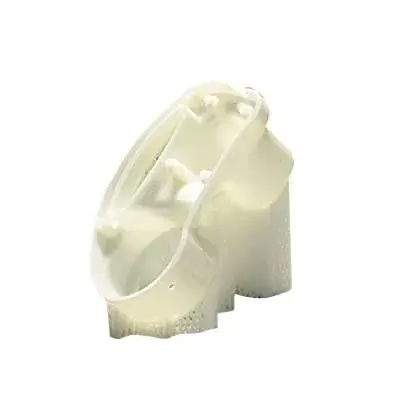
A printed part is close, not accurate. Faces that bolt to something else, bores that take a bearing and threads that carry load all need a cut. Our 127 CNC machines take printed blanks and bring those features to ±0.005 mm. The printed body keeps the shape that would be expensive to mill; the machined features keep the fit.
This matters most in the transition from prototype to production. The same geometry that was printed for a fit check can be machined from 6061 or 17-4PH for the pilot run, so the drawing does not change.
Use this to narrow the choice before you send files.
| Process | Typical use | Hold on fine detail | Watch out for |
|---|---|---|---|
| FDM | Enclosures, brackets, jigs | Moderate | Visible layer lines, weak in Z |
| SLS | Snap fits, duct covers, ducts | Good | Grainy surface, needs blasting |
| SLA | Small features, smooth housings | High | Brittle under impact, UV aging |
| DMLS | Metal ducts, manifolds, brackets | High | Higher cost, support removal |
| Print + CNC | Parts with critical fits | High on machined faces | Two setups, plan datum early |
ABS, PC, PETG and filled filament for large parts and shop fixtures. Good starting point when cost per part drives the decision.
Nylon 12 and glass-filled nylon. No support marks, strength in all directions, works for functional testing.
Fine feature resin for small parts and smooth surfaces. Detail where an FDM nozzle cannot reach.
Titanium, Inconel and stainless builds for dense metal parts with internal channels.
5-axis and mill-turn work on printed blanks. Datum faces, bores, threads and seal faces.
Bead blasting, tumbling, anodizing, plating and laser marking to match the final look.
| Item | Included | Notes |
|---|---|---|
| Build size | Up to 4,000 mm on CNC finishing | Print envelope depends on process |
| Materials | 30+ plastics and metals | ABS, PC, PA, PEEK, Ti-6Al-4V, Inconel |
| Tolerance | ±0.005 mm on machined features | As-printed tolerance is wider |
| Surface finish | Ra 0.8–1.6 μm on cut faces | As-printed texture varies by process |
| Order size | One part to 10,000+ | No minimum order quantity |
| Inspection | 100% before shipment | Reports on request |
Started as a CNC shop. That is why we treat printed parts as blanks that still need a cut, not as finished goods.
16 simultaneous 5-axis centers, 12 four-axis mills and 16 mill-turn centers for post-print work.
Send a model and a drawing. You get a price and a written note on wall thickness, draft and datum choices.
ISO 9001, IATF 16949, ISO 13485 and ISO 27001. Your files stay confidential; NDA on request.
Raw material check, in-process monitoring and final inspection before anything ships.
Historical figure across production orders. Production can start within 24 hours of a released order.
Requirement: clean surfaces, traceable resin, tight lid fit.
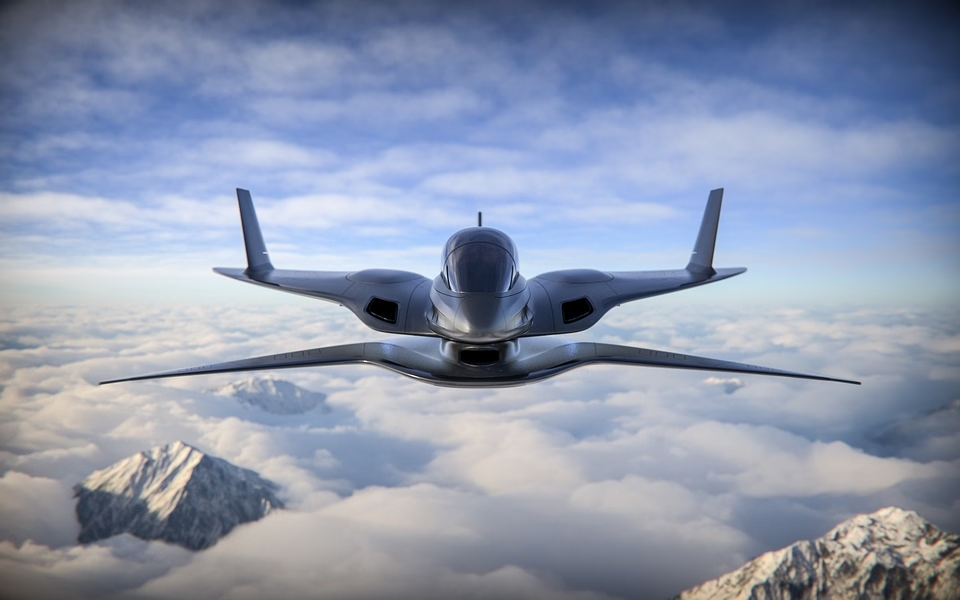
Requirement: survive vibration and heat near the engine bay.
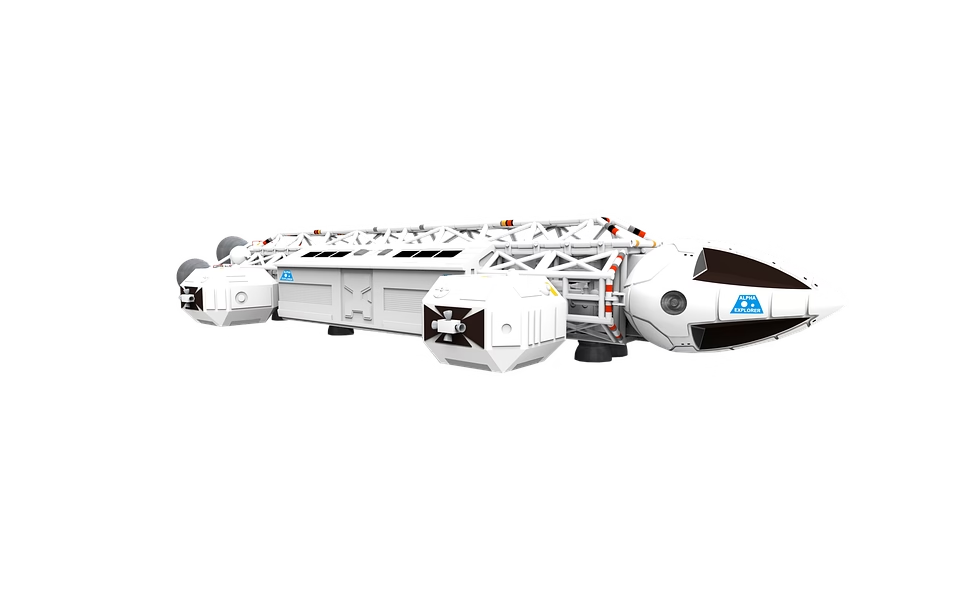
Requirement: flat lid, controlled wall thickness, no layer lines on the face.

Requirement: internal channels that milling cannot reach, dense walls.
Print when the geometry is complex, the quantity is low, or the design is still moving. Internal channels, lattice sections and organic shapes are cheap to print and expensive to mill.
Machine when the part has tight tolerances, threads under load, or a surface finish spec. For a part that needs both, we print the body and machine the critical features.
As-printed dimensions vary by process and part size. FDM and SLS parts hold roughly ±0.3 mm on small features, and less on long spans.
After CNC finishing, machined faces and bores hold ±0.005 mm. If a dimension matters for assembly, put it on a machined feature.
SLS for parts that take load or need strength in every direction. No supports, so no marks on hidden faces.
SLA for small features and smooth surfaces, such as display models or fine-texture housings. It is more brittle, so avoid it for impact parts.
Plastic prints take bead blasting, tumbling, painting and laser marking. Anodizing and plating apply to metal parts, including DMLS builds.
Laser marking needs a minimum character height of 1.5 mm to stay legible after finishing.
STEP or STL for the model, plus a 2D drawing for anything with a tolerance, thread or finish callout.
Mark datum faces on the drawing. That single note often removes an extra setup.
No minimum. One prototype or 10,000+ parts, quoted the same way.
For runs above a few hundred, we usually compare printing against machining or casting and tell you which one is cheaper.
Quote and DFM analysis within 12 hours. Production can start within 24 hours of a released order.
Typical parts ship in 3–5 days. Complex metal builds or finishing steps take longer, and we say so in the quote.
Uploads stay confidential and are handled under ISO 27001 controls. We can sign an NDA before you send files.
Files are used for your job only. No public case studies or galleries without written approval.
Upload your STEP file and drawing. We reply within 12 hours with pricing, a process recommendation and any changes worth making before the build.
12-hour quote100% inspectionNo minimum order quantityNDA on request
Trusted by engineers and manufacturers worldwide










Upload your 3D model or 2D drawing and get a quotation with a free DFM analysis. Maximum processing size 4,000 mm.
CNC Metals 13 grades
CNC Plastics 10 grades
Machines & processes 12 options
Surface & post-processing 10 options
Material: not selected Machine: not selected Post-process: not selected
Fill in this short form and we'll open WhatsApp with your message ready to send. We only use these details to reply to you.
Nothing is sent until you press send inside WhatsApp.