GreatLight CNC Machining Factory logo
CNC Machining
Rapid Prototyping
Materials
Industries
News
About GL

Get Instant Quote

Aluminum finishing

Aluminum Metal Coatings

Anodize, plating and powder coat on machined aluminum parts. We machine to ±0.005 mm, control coating buildup, and mask what must stay conductive.

Type I / II / III anodizeClear, colour, hardcoatConductive maskingRa 0.8–1.6 μmNo minimum order
aluminum-alloy-cnc-processing-2
±0.005 mmMachining tolerance on aluminum parts
8+Aluminum alloys in stock, 6061 to 7075
12 hrsQuote and free DFM analysis
100%Inspection before shipment
Where it goes wrong

Coating problems that show up after assembly

Most coating failures are decided before the part ever enters the tank. These are the ones we see repeatedly.

01

Threads and bores no longer fit

Anodize grows the surface. A 25 μm hardcoat layer adds roughly 25 μm per side, so a Ø6 H7 bore shrinks to about Ø5.95 mm. The pin will not enter. This is a drawing problem, not a tank problem: the shop has to offset the bore before machining or mask it during anodize.

02

The black dye comes out purple or streaky

Alloy chemistry drives dye response. 6061 and 6063 take black evenly. 7075 and 2024 go bronze or muddy brown in the same bath, because of copper and zinc content. If the drawing calls for black on 7075, either accept the colour shift or switch the alloy.

03

Unsealed anodize stains in handling

The oxide layer is porous by nature. Fingerprints, coolant residue and cutting oil wick into open pores and stay there. Parts that travel through a second machining step or a wash line need sealing unless the finish callout says otherwise.

04

The ground path disappears

Anodized aluminum is an insulator. A chassis that needs to bond to a PCB ground plane through its mounting face will read open circuit once the whole part is coated. That face needs masking, or a conductive finish instead.

How we handle it

Specify the finish, then machine around it

Coating is a dimensional feature. We treat it like one.

aluminum-alloy-industrial-control-chassis-sheet-metal-processing
Anodizing

Three anodize types, three different jobs

Chromic anodize builds the thinnest layer. It is the right call for tight-tolerance parts and for assemblies where fatigue life matters, because the thin film cracks less under load.

Sulfuric anodize is the general-purpose choice: cosmetic covers, enclosures, brackets. Hardcoat anodize gives a dense, wear-resistant surface for sliding contacts and wear plates, but the layer is thick enough to move dimensions, so bores and threads need planning.

  • 1
    Thin filmChromic anodize for tolerance-critical parts
  • 2
    CosmeticSulfuric anodize for covers and enclosures
  • 3
    Wear surfaceHardcoat for sliding and abrasive contact

Get Instant Quote

custom-sheet-metal-fabrication-services1
Plating and coating

When anodize is the wrong answer

Electroless nickel goes on evenly, including inside bores and on complex geometry, and it stays conductive. For RF housings and parts that need solderability, that combination beats anodize outright.

Powder coating covers more area per dollar on large enclosures and gives colour without a dye bath. Black oxide is a thin conversion layer for tooling and fixtures where appearance matters less than corrosion resistance.

  • 1
    ConductiveElectroless nickel for ground paths and solder joints
  • 2
    Large partsPowder coat for enclosures and frames
  • 3
    ToolingBlack oxide for fixtures and jigs

Talk to an Engineer

Selection guide

Pick a coating by what the part has to do

Thickness figures are typical ranges for machined aluminum parts.

CoatingTypical thicknessBest forWatch out for
Chromic anodize0.5–8 μmTight tolerances, fatigue-criticalLimited colour range
Sulfuric anodize2–25 μmCovers, enclosures, bracketsPorous until sealed
Hardcoat anodize13–115 μmWear plates, sliding surfacesMoves bore and thread sizes
Electroless nickel5–25 μmGround paths, solderable facesNot for cosmetic black
Powder coat50–100 μmLarge frames and enclosuresThick buildup at edges
Black oxide1–3 μmFixtures, tooling, jigsMinimal corrosion protection
What we run

Machining and finishing under one roof

Aluminum parts move from machine to finish without a broker in between.

01

5-axis CNC machining

Sixteen simultaneous 5-axis centers cut contoured aluminum housings, impellers and brackets in one setup, so coating-critical faces stay aligned.

02

CNC milling and turning

Milling and mill-turn centers handle prismatic and round aluminum parts, including the thread and bore offsets that anodize will consume.

03

Sheet metal fabrication

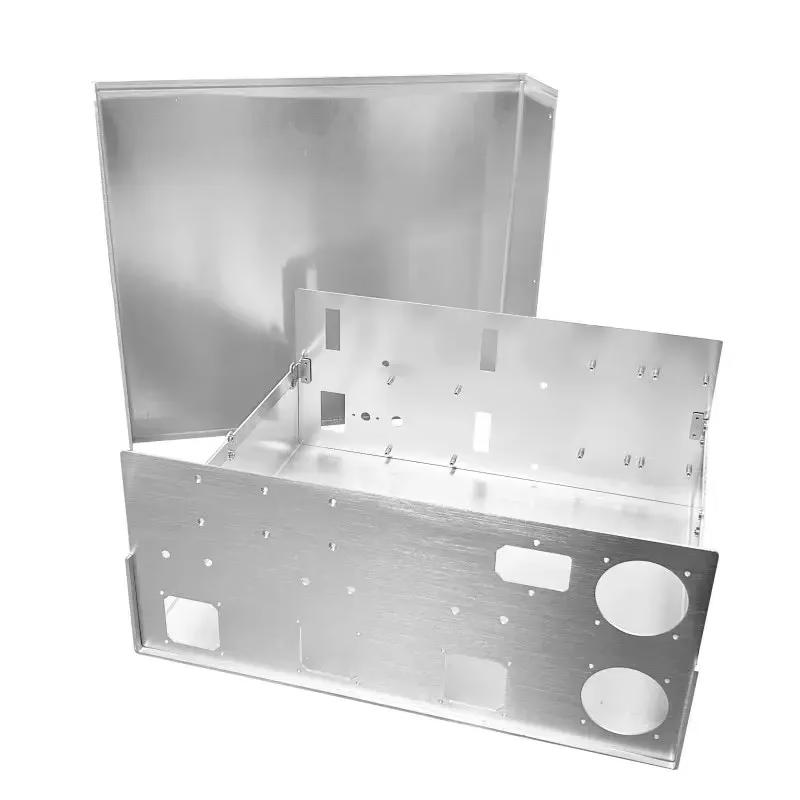
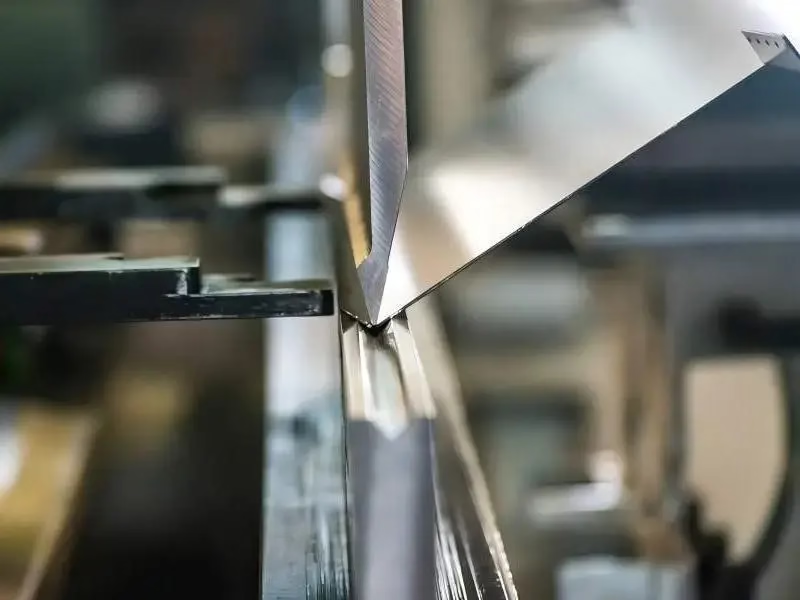
Formed aluminum enclosures and chassis, ready for powder coat or anodize, with bend radii set for the coating thickness.

04

Die casting

ADC12 and aluminum alloy castings for larger housings, finished to the same surface specification as machined parts.

05

Surface finishing

Anodizing, electroless nickel, zinc, silver and gold plating, powder coating, black oxide, blasting, brushing and laser marking.

06

Rapid prototyping

Single prototypes through production runs of 10,000+ parts, with no minimum order quantity on either end.

Scope

Capability at a glance

Figures apply to aluminum and mixed-alloy work.

ItemRange
Maximum part size4,000 mm
Machining tolerance±0.005 mm (±0.0002 in)
As-machined finishRa 1.6–3.2 μm
Fine finishRa 0.2–0.8 μm
Laser marking1.5 mm minimum character height
Order quantityOne prototype to 10,000+ parts
Why GreatLight

Built for parts where the finish is a dimension

15Y

Finishing experience

Fifteen years quoting anodize and plating on machined aluminum, including the masking and offset work that keeps assemblies fitting.

127

CNC machines

Sixteen simultaneous 5-axis centers, twelve four-axis mills, twenty-seven three-axis machines and sixteen mill-turn centers.

±0.005

Aluminum tolerance

Held on coating-critical features so the anodize layer lands where the drawing expects it, not where the tank decides.

99.99%

Qualification rate

Raw material check, in-process monitoring and final inspection. Reports available on request.

12 hrs

Quote turnaround

Quotation and free DFM analysis within twelve hours. Production can start within twenty-four hours.

0

Minimum order

No minimum order quantity. One prototype part and a 10,000-piece run go through the same process control.

7,600 m²Manufacturing space
3Wholly-owned plants
150Technicians
2%Historical late-delivery rate, under
Applications

What these coatings are asked to do

aluminum-vs-stainless-steel-cnc-lathing-machining-service

Opto-mechanical housings

Black anodize with masked mounting faces. The requirement is a matte, non-reflective surface that still passes a ground continuity check.

  • Black sulfuric anodize
  • Masked ground pads
  • Ø tolerance held
Aluminum-machining-for-automotive-engine-parts

Automotive and EV brackets

Hardcoat on wear faces, clear anodize elsewhere. Sealing and salt-spray expectations come from the vehicle program, not from us.

  • Hardcoat wear face
  • IATF 16949 process
  • Sealed anodize
large-die-cast-metal-part-back-19

Industrial control chassis

Powder coated enclosure with an electroless nickel grounding boss. Large flat panels stay within flatness after the bake.

  • Powder coat
  • Conductive boss
  • 4,000 mm envelope
FAQs

Questions engineers ask before releasing a finish callout

How much does anodize change my dimensions?

The oxide grows into the aluminum and out of it at roughly the same rate, so a 25 μm layer adds about 12 to 13 μm per side above the original surface, and the same below it.

For a bore, plan on roughly 25 μm of diameter loss. If the fit is H7, we offset the bore in the program or mask it, and we tell you which before the part is cut.

Should I mask threads that will be anodized?

Mask them if the fastener must run freely to the bottom of the thread, or if the thread carries current. Anodized threads gall and change pitch diameter.

For threads that are only lightly loaded and never disassembled, leaving them coated is usually fine and cheaper.

Will 7075 anodize to the same black as 6061?

No. Copper and zinc in 7075 shift the dye response toward bronze or brown in a standard black bath.

If the colour must match across a mixed 6061 and 7075 assembly, either use a dye system qualified for both alloys or keep the visible parts on 6061.

Does anodizing always need sealing?

Sealing closes the pores and stops staining, finger marks and coolant residue from soaking in. It also reduces the dye bleed that shows up on humid days.

Skip it only when the drawing calls for an unsealed surface, typically when the part will be bonded or painted afterward and the shop needs a keyable surface.

Can I get corrosion protection and electrical continuity on the same part?

Yes, with masking. We cover the contact faces before anodize so the oxide never forms there, then leave those faces bare or plate them with electroless nickel.

The alternative is to skip anodize entirely and use electroless nickel across the whole part, which is conductive everywhere.

What surface finish should I call out before coating?

Ra 0.8–1.6 μm is a sensible default for cosmetic anodized aluminum. It hides tool marks and takes dye evenly.

A mirror polish before anodize shows every scratch and is not worth the cost unless the part is a visible trim piece.

Do you finish parts you did not machine?

We can, but we inspect incoming parts first. Castings with porosity, or parts with unknown alloy, often fail in the tank and the cost is already sunk.

When the alloy is unknown, we run a small test coupon before committing the batch.

How do I get a quote that includes the finish?

Send the 3D model and a 2D drawing with the finish callout, including any masking notes. Quotation and DFM feedback come back within twelve hours.

If the finish is undecided, say what the part has to survive and we will propose a coating and note the trade-offs.

Send the drawing, get the finish callout back

Upload your model and we will return a quote with the coating, thickness and masking plan within 12 hours.

12-hour quote100% inspectionNo minimum orderNDA on request

Trusted by engineers and manufacturers worldwide

Tesla Ford Motor Company BYD Auto Denso Magna International Boeing Airbus Medtronic KUKA FANUC