GreatLight CNC Machining Factory logo
CNC Machining
Rapid Prototyping
Materials
Industries
News
About GL

Get Instant Quote

Metal Materials Guide

Metal Materials for CNC Machining

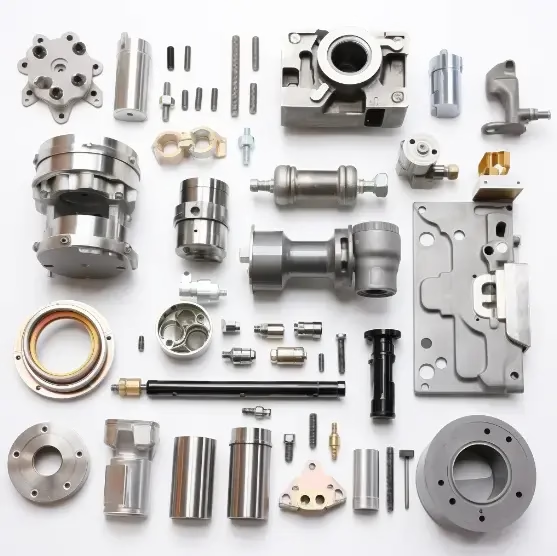
Pick the grade that survives your application, then machine it. We run 127 CNC machines across aluminum, stainless, titanium, steel, copper and Inconel, holding ±0.005 mm and inspecting every part before it ships.

6061-T6 to Inconel±0.005 mm5-axisNo MOQ
cnc-machining-metal
127High-precision CNC machines
±0.005 mmAchievable tolerance
15 yearsMachining since 2011
99.99%Qualification rate
Where metal projects go wrong

Four failures we see on incoming drawings

01

The grade was picked for price, not for the environment

A 6061 bracket goes onto a marine deck and pits within a season. Aluminum is fine until chloride and water meet it. The material choice has to start from the service environment, not the stock list.

02

Thin walls move after machining

A stainless housing with 0.8 mm walls gets roughed out in one pass and bows 0.15 mm by final inspection. Residual stress releases when you remove metal. Sequence and stock allowance decide whether the part stays flat.

03

Threads and bores fail at assembly

Titanium galls, stainless work-hardens, and a reamed bore drifts out of tolerance. These are cutting-parameter problems, not design problems. Wrong speeds and feeds scrap a part that was geometrically correct.

04

Drawings arrive without finish or inspection callouts

Ra, anodize type, and which dimensions are critical get left to the shop. Then the first article passes and the production lot does not, because nobody agreed on what to measure.

How we work

Match the alloy to the load, then machine to the number

Two decisions drive every metal part: which grade, and which process holds the tolerance.

aluminum-alloy-industrial-control-chassis-sheet-metal-processing
Material selection

Ferrous or non-ferrous tells you half the story

Ferrous metals contain iron: carbon steel, alloy steel, tool steel, stainless, Inconel. They give you stiffness and wear resistance, and they will rust or oxidize unless the grade or the coating says otherwise. Non-ferrous grades, aluminum, copper, brass, titanium, magnesium, skip the iron. They are lighter, conduct heat and current well, and generally cut faster.

We keep the common grades in stock and machine the rest on order. Aluminum 6061-T6 and 7075 for structural work, 5052 and 5083 where formability or corrosion matters. Stainless 303 for free machining, 304 and 316L for corrosion, 17-4PH when you need strength plus corrosion resistance. Titanium Ti-6Al-4V for low weight with high strength. Inconel when the part runs hot.

  • 1
    Strength-to-weightTitanium and aluminum win where mass is the constraint.
  • 2
    Corrosion316L, 17-4PH and titanium resist chloride; mild steel does not.
  • 3
    TemperatureInconel and titanium hold properties where aluminum softens.
  • 4
    Cost per partMild steel and brass machine cheap; titanium and Inconel do not.

Get Instant Quote

metal-3d-printing-1801
Process selection

Machining, sheet metal, or printing depends on geometry and volume

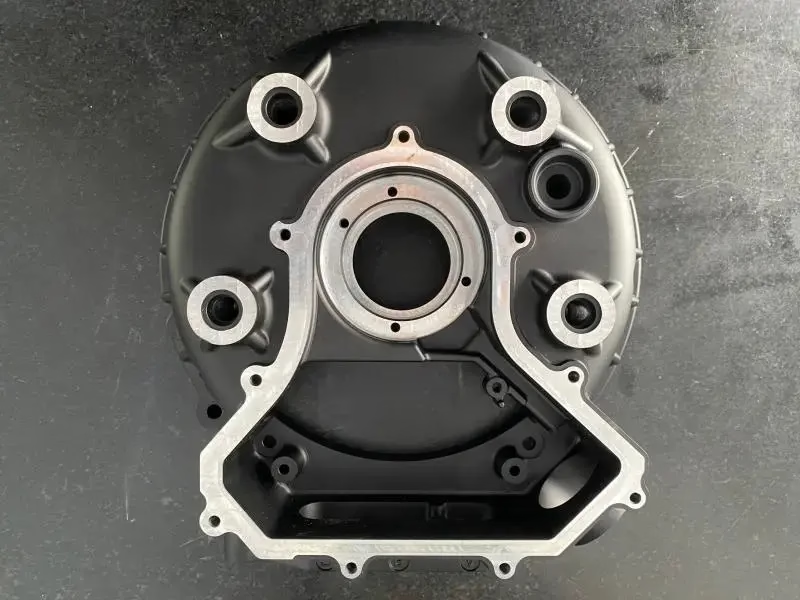
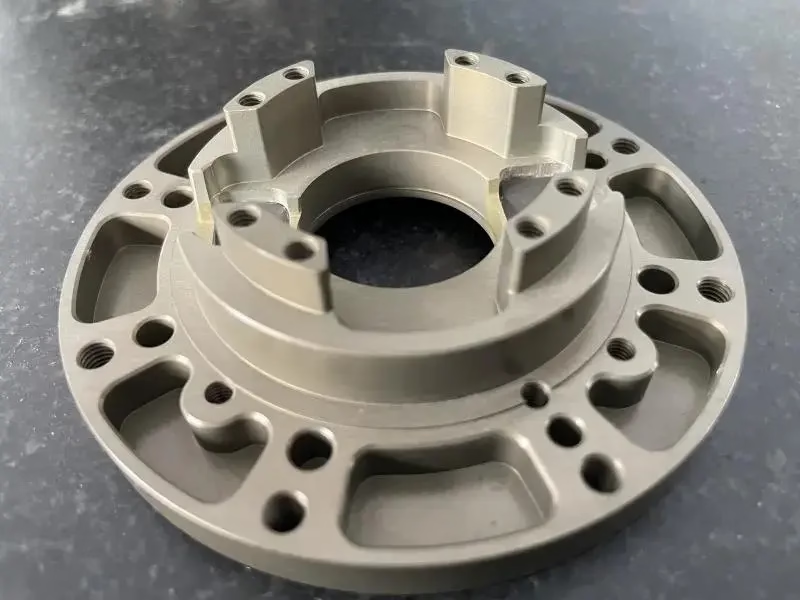
CNC machining removes metal from solid stock. It suits tight tolerances, complex 3D forms, threads, bores and pockets, and it needs no tooling. One prototype and ten thousand parts use the same program, so there is no jump in setup cost between them.

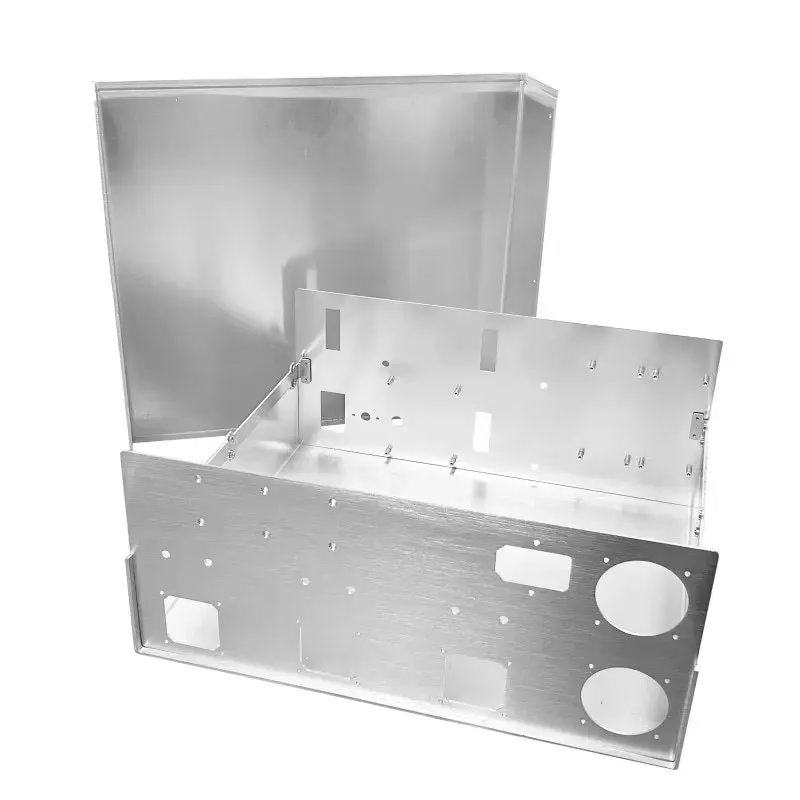
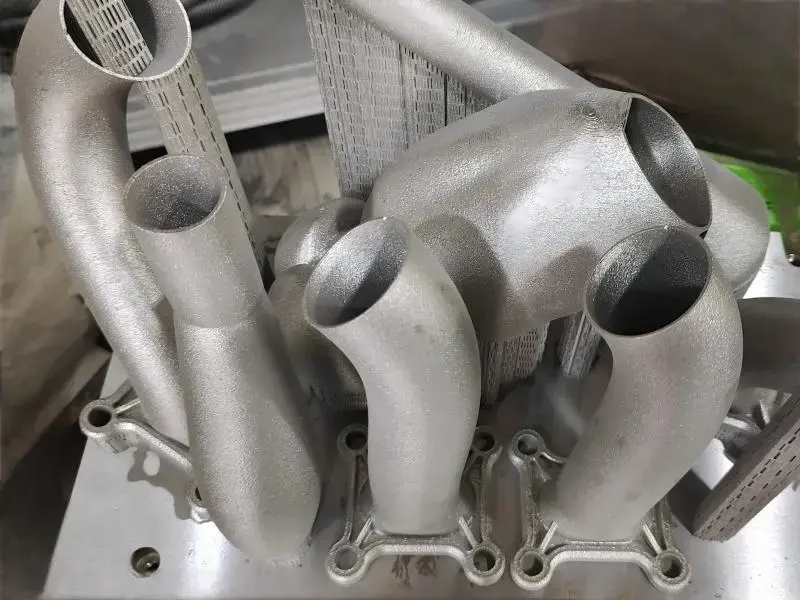
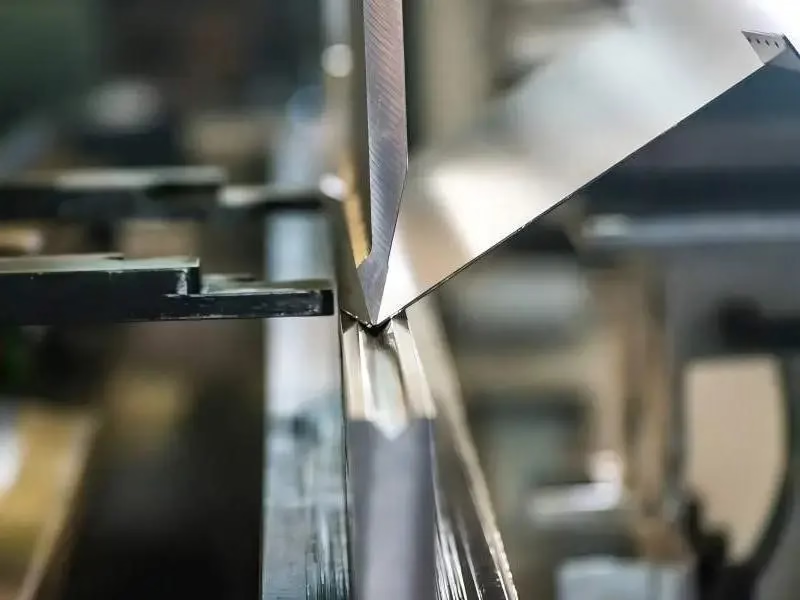
Sheet metal fabrication bends and forms flat stock. It is the cheaper route for enclosures, brackets and chassis with uniform wall thickness, and it scales well past a few hundred units. Metal 3D printing builds the part layer by layer, which is what you use for internal channels and lattice structures that no cutter can reach. It is slower per part, so it fits low volumes and geometries that cannot be milled.

  • 1
    CNC machiningTight tolerances, complex forms, no tooling cost.
  • 2
    Sheet metalEnclosures and brackets, cheap at volume.
  • 3
    Metal 3D printingInternal channels and lattices, low volume.

Request a Sample Part

Grade quick reference

Which metal for which job

Starting points only. The final call depends on your load case, environment and finish.

MaterialTypical useWatch out for
Aluminum 6061-T6Brackets, housings, fixturesSoftens above 150 °C, needs coating outdoors
Aluminum 7075Aerospace structures, high-stress partsPoor weldability, higher cost
Stainless 303Shafts, fittings, high-volume turningLower corrosion resistance than 304
Stainless 316LMedical, marine, food equipmentWork-hardens, slower to cut
17-4PH (SUS630)Valve bodies, pump parts, toolingNeeds heat treatment for full strength
Titanium Ti-6Al-4VAerospace, implants, racingGalls easily, low thermal conductivity
Mild steel 1018Plates, jigs, welded framesRusts without plating or paint
Alloy steel 4140Shafts, gears, high-load partsHard to machine after hardening
InconelExhaust, turbine, high-temperature partsVery slow cutting, high tool wear
Brass C36000Fittings, connectors, valvesNot for high-strength structural use
Copper C110Busbars, heat sinks, RF partsGums up tooling without correct feeds
Magnesium AZ31BLightweight housings, bracketsFlammable chips, needs special handling
InvarPrecision instruments, optical mountsExpensive, limited stock sizes
Capabilities

What we can do with your metal parts

01

5-Axis CNC Machining

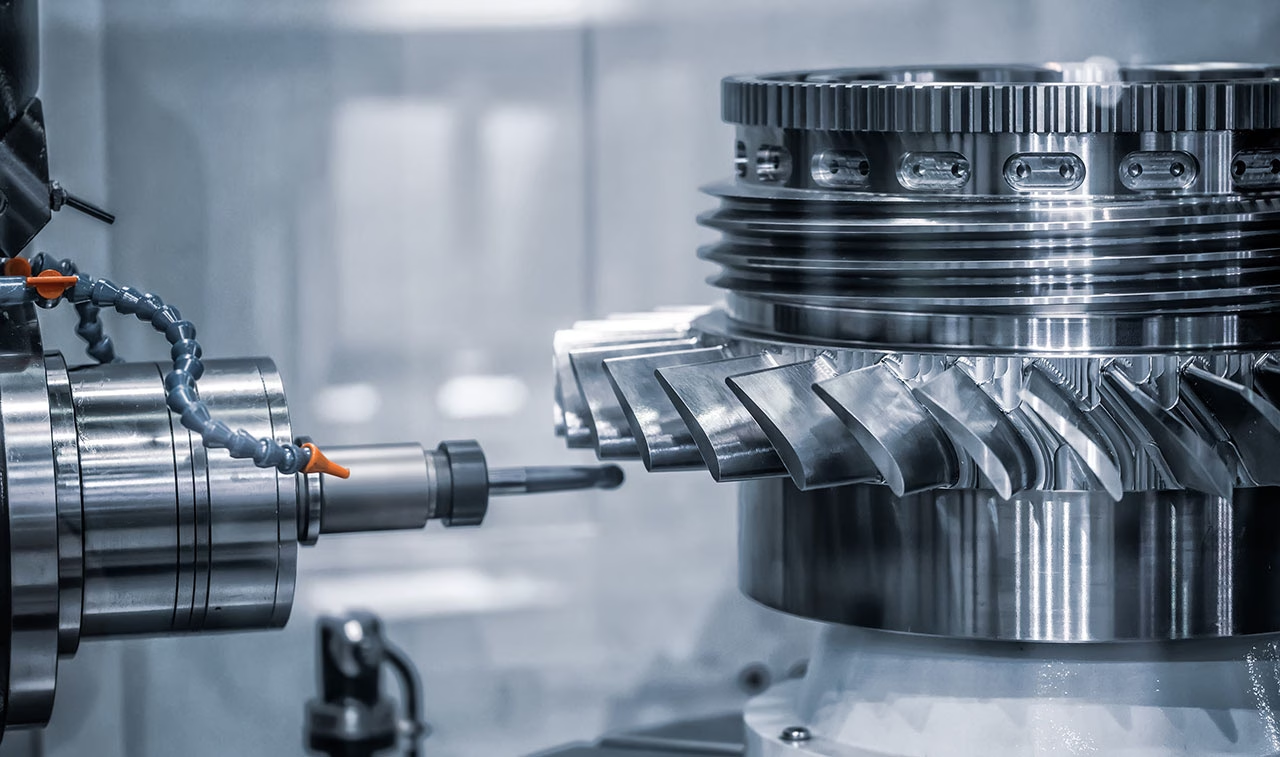
16 simultaneous 5-axis centers cut complex contours in one setup, which removes the repositioning error that shows up when a part is flipped between operations.

02

3 and 4-Axis CNC Machining

27 three-axis and 12 four-axis mills handle prismatic parts, plates and housings where 5-axis would only add cost.

03

CNC Milling and Turning

16 mill-turn centers combine turning and milling, so shafts with cross-holes and flats come off one machine.

04

Sheet Metal Fabrication

Laser cutting, bending and forming for enclosures and chassis, with the flat pattern checked before the first cut.

05

Metal 3D Printing

Layer-by-layer builds for internal channels and lattice parts that cannot be reached by a cutter.

06

Die Casting and Surface Finishing

Casting for larger volumes, plus anodizing, plating, powder coating, bead blasting and laser marking in house.

Machine and process range

Sizes, tolerances and finishes we quote

ItemRangeNotes
Maximum part size4,000 mmLargest travel 4,000 × 400 × 150 mm
Standard milling envelope750 × 1,150 × 550 mmAlso 600 × 600 × 600 mm
Compact machining500 × 500 × 450 mmAnd 500 × 310 × 200 mm
Achievable tolerance±0.005 mm±0.0002 in on critical features
Fine surface finishRa 0.2–0.8 μmGround or polished surfaces
Standard machined finishRa 1.6–3.2 μmAs-machined default
Rotary capacityØ400 mm tableFor 4-axis and 5-axis work
Inspection100% before shipmentReports on request
Why GreatLight

Numbers behind the parts

15Y

Machining metal since 2011

Three wholly-owned plants and 7,600 m² of floor space in Dongguan, plus a factory in Singapore. Long enough to have seen which grade choices fail in the field.

±0.005 mm

Tolerance we hold, not just quote

Checked on the machine and again at final inspection. If a feature cannot hold ±0.005 mm, we say so before cutting.

12 h

Quote and free DFM analysis

Send a STEP file and a drawing. You get pricing plus a manufacturability note on wall thickness, tolerances and features we would change.

24 h

Production start

Once the drawing is locked and material is confirmed, machining can begin the next working day. Parts usually ship in 3–5 days.

1 pc

No minimum order quantity

One prototype or a 10,000+ part run. Same program, same fixtures, no tooling step in between.

4

Quality systems in place

ISO 9001:2015, IATF 16949:2016, ISO 13485:2016 and ISO 27001:2022 cover general, automotive, medical and information security work.

150Technicians on staff
3Wholly-owned plants
7,600 m²Manufacturing space
<2%Historical late-delivery rate
Industry requirements

What each sector asks of a metal part

large-die-cast-metal-part-back-19

Medical devices

Stainless 316L and titanium, passivated, with traceable material and documented inspection.

  • ISO 13485:2016
  • 316L / Ti-6Al-4V
  • 100% inspection
large-die-cast-metal-part-back-5

Aerospace and defense

Aluminum 7075 and titanium structural parts, thin walls, controlled distortion, full dimensional reports.

  • ±0.005 mm
  • 5-axis
  • Material certs
custom-sheet-metal-fabrication-services1

Automotive and EV

Battery housings, brackets and busbars in aluminum and copper, with IATF process control.

  • IATF 16949:2016
  • Al / Cu
  • 3–5 day ships
CNC Lathe Technical Specifications Terminology

Robotics and industrial machinery

Joints, housings and mounts where stiffness and repeatable fit decide whether the assembly moves cleanly.

  • Mill-turn
  • Ra 0.8–1.6 μm
  • No MOQ
FAQs

Material and process questions we answer daily

How do I choose between aluminum 6061 and 7075?

6061-T6 is the default for brackets, housings and fixtures. It machines well, welds, anodizes cleanly and costs less. Use it unless you have a specific reason not to.

7075 has roughly double the yield strength, so it fits high-stress structural parts and aerospace work. It costs more and does not weld well. If your part is stiffness-limited rather than strength-limited, 6061 with a thicker section is often the better answer.

When should I specify stainless 316L instead of 304?

When the part sees chloride: marine, medical, food processing, or anything washed with saline. 316L adds molybdenum, which resists pitting where 304 will not.

For dry indoor use with no chemical exposure, 304 does the same job for less. Both work-harden, so plan for slower cutting and more tool wear than aluminum.

Is titanium worth the cost for my part?

Titanium Ti-6Al-4V gives high strength at about 60% of the density of steel, plus corrosion resistance without coating. Aerospace, implants and racing parts justify it.

It is not a general-purpose upgrade. It galls, conducts heat poorly, and machines several times slower than aluminum. If weight is not the constraint, stainless or alloy steel will cost less and hold the same tolerances.

What wall thickness can you machine in stainless?

As a working rule, keep unsupported walls at 1 mm or thicker. Below that, residual stress and cutting forces tend to move the part, and holding ±0.005 mm becomes a fixture problem rather than a cutting problem.

If the design needs thinner walls, send the drawing. We will tell you whether the geometry is machinable and what support or stress relief it needs.

How do I get a flat surface on a large plate?

Rough the part, let it relax, then finish. Removing metal releases stress, so a plate roughed and finished in one pass will not stay flat.

For plates up to 4,000 mm we use the large-travel machines and can add a stress-relief step between operations. Flatness callouts should be on the drawing so they get measured.

Which finishes can you apply to aluminum?

Anodizing in clear, color, hardcoat and conductive types, plus powder coating, bead blasting, brushing, polishing, electroless nickel, zinc, silver and gold plating. Laser marking is available with a minimum character height of 1.5 mm.

The finish and the alloy interact. Hardcoat anodize builds a thicker oxide layer and changes dimensions, so specify it before we set the pre-plate size.

Do you work from a 3D file alone?

We prefer a STEP file plus a 2D drawing. The model defines geometry; the drawing carries tolerances, surface finish, thread class and which dimensions are critical.

If you only have a model, send it. We will flag the features where the tolerance assumption needs confirming before quoting.

Can you keep my design confidential?

Yes. Uploads are secure and confidential, and we sign an NDA on request before reviewing files.

Our information security management follows ISO 27001:2022, which covers how drawings and customer data are stored and accessed.

Send your metal part and get a quote in 12 hours

Upload a STEP file and drawing. You get pricing, a free DFM note, and a clear answer on grade and process. No minimum order quantity, from one part up.

12-hour quote100% inspectionNo MOQNDA on request

Trusted by engineers and manufacturers worldwide

Tesla Ford Motor Company BYD Auto Denso Magna International Boeing Airbus Medtronic KUKA FANUC