GreatLight CNC Machining Factory logo
CNC Machining
Rapid Prototyping
Materials
Industries
News
About GL

Get Instant Quote

Brass Alloys · CNC Milling & Turning

Brass CNC Machining

We machine C27400, C28000 and C36000 brass into valve bodies, fittings, bushings and electrical contacts. Free DFM analysis with your quote in 12 hours, tight tolerance work held at ±0.005 mm, and 100% inspection before the parts leave the floor.

C27400 / C28000 / C36000±0.005 mmRa 0.2–0.8 μmNo minimum order quantity3–5 day shippingNDA on request
CNC Lathe Technical Specifications Terminology
127High-precision CNC machines
±0.005 mmAchievable tolerance
15 yearsMachining brass and copper
99.99%Qualification rate
Where brass jobs go wrong

Four brass problems that show up on the receiving dock

Brass is easy to cut. It is not easy to cut consistently. These are the failures we see most often when a buyer moves a brass part to a new shop.

01

Galling and torn threads on leaded brass

C36000 turns freely, so some shops push the feed and skip the right coolant. Threads come out torn, minor diameter drifts, and the mating nut will not start by hand. The part passes a visual check and fails at assembly.

02

Burrs left in cross-drilled holes

Brass burrs are soft and easy to roll over instead of cut. A shop that deburrs by hand only at the bench leaves a lip inside a Ø3 mm cross hole. The valve spool sticks, or a wire will not pass. Nobody finds it until the leak test.

03

Dimensional drift across a 5,000-part run

Brass expands with heat from the cut. Run a batch on a warm afternoon without in-process checks and the last 500 pieces sit outside the ±0.05 mm band the drawing calls for. You eat the rework or the scrap.

04

Wrong alloy substituted for the drawing

C36000 is not C27400. A free-machining leaded grade is not acceptable in a potable water fitting. When the certificate of conformance does not match the callout, the whole shipment is quarantined and the schedule slips.

How we cut brass

A brass process built around the alloy you specify

Leaded grades, non-leaded grades and the ones in between each want a different tool, speed and coolant. We set the process to the alloy, not to the calendar.

CNC Machining Services Online
Alloy behavior

Free-machining grades, cut at the right speed

C36000 is the reference point for machinability. It machines at 100 on the free-cutting scale, throws short chips, and takes a deep cut without loading the tool. That speed only helps if the spindle matches it and the coolant reaches the shear zone.

Non-leaded grades such as C27400 and C28000 are tougher and gummier. They need sharper edges, higher rake angles and a feed that gets under the work-hardened skin. On a fitting with a fine thread, that difference decides whether the part gauges.

  • 1
    C36000Leaded free-machining brass for valves, nuts and high-volume turned parts.
  • 2
    C27400 / C28000Non-leaded grades for potable water and marine fittings.
  • 3
    C110 / C101Copper for busbars and contacts when conductivity matters more than finish.

Get Instant Quote

Leader in Cnc Machining Service China
Tooling and setup

Mill-turn and 5-axis for one-setup brass parts

A brass valve body usually has a turned bore, a cross port, a mounting face and a thread. Move that between three machines and the datum shifts each time. We run those parts on mill-turn centers and 5-axis machines so most of the geometry comes off in one setup.

For a brass part up to 4,000 mm long, the large-travel machines take it in one pass. Smaller electrical contacts and bushings run on the compact cells, where a Ø400 mm rotary table keeps position repeatable across a long batch.

  • 1
    16 mill-turn centersTurn, mill and drill brass without re-chucking.
  • 2
    16 simultaneous 5-axis centersAngled ports and contoured faces in one setup.
  • 3
    4,000 × 400 × 150 mmLargest travel for long brass manifolds and rails.

Talk to an Engineer

Grade selection

Brass grades and what they are actually for

Pick the grade from the service condition first, then the machinability.

GradeTypical useWhere it stops working
C36000Valves, nuts, high-volume turned partsPotable water and marine service; lead content
C27400Radiator cores, fittings, general hardwareFine threads and thin walls; gummier chip
C28000Pipe fittings, marine hardware, heat exchangersHigh-speed production runs; tool wear
C110 / C101Busbars, contacts, electrical hardwareStructural loads; it is soft and gummy
Beryllium copperSpring contacts, non-sparking toolsCost and dust control during machining
What we run

Brass work we take on

One shop for the turned blank, the milled features and the finish.

01

CNC Turning

Valve bodies, bushings, fittings and nuts on mill-turn and lathe cells. Threads rolled or cut to the class the drawing states.

02

CNC Milling

Flats, cross ports, keyways and mounting faces on brass housings, with 3-axis, 4-axis and 5-axis capacity.

03

5-Axis Machining

Angled ports and contoured passages on brass manifolds, machined in one setup to hold datum position.

04

Rapid Prototyping

One-off brass prototypes for fit checks before the tooling or the casting pattern is committed.

05

Surface Finishing

Brushed, polished, tumbled, plated and laser-marked brass. Minimum character height 1.5 mm for marking.

06

Inspection and Reports

Raw material check, in-process monitoring and final inspection. Dimensional and material reports on request.

Scope

What a brass CNC machining order includes

Standard on every order. Nothing here is an add-on.

ItemWhat you get
Quote and DFMFree analysis within 12 hours, with feature-level notes
Order sizeFrom one prototype to 10,000+ part runs, no minimum
Tolerance±0.005 mm on critical features where the process allows
FinishRa 1.6–3.2 μm as machined, down to Ra 0.2–0.8 μm on request
Inspection100% before shipment, reports on request
ConfidentialitySecure uploads, NDA available on request
Why GreatLight

Six reasons brass buyers stay

Fifteen years on copper alloys, in three plants we own and run.

15Y

Copper alloy experience

We have machined brass since 2011. Chip control, coolant choice and tool wear on leaded and non-leaded grades are settled practice here, not a new experiment.

±0.005

Tolerance we hold

Critical brass features hold ±0.005 mm. The process plan and the in-process checks are set up to that number from the first article.

127

Machines under one roof

Milling, turning, mill-turn and 5-axis in the same plants. No shipping brass between vendors and losing the datum.

99.99%

Qualification rate

Raw material check, in-process monitoring, final inspection. 100% of parts are inspected before shipment.

12h

Quote turnaround

Quotation and free DFM analysis within 12 hours. Production can start within 24 hours of release.

24h

Production start

Material on the shelf and a settled process plan mean the first chip comes off quickly after you approve.

7,600 m²Manufacturing space
150Technicians on staff
3Wholly-owned plants
3–5 daysTypical shipping window
Sectors and parts

Brass parts by industry, and what each one has to pass

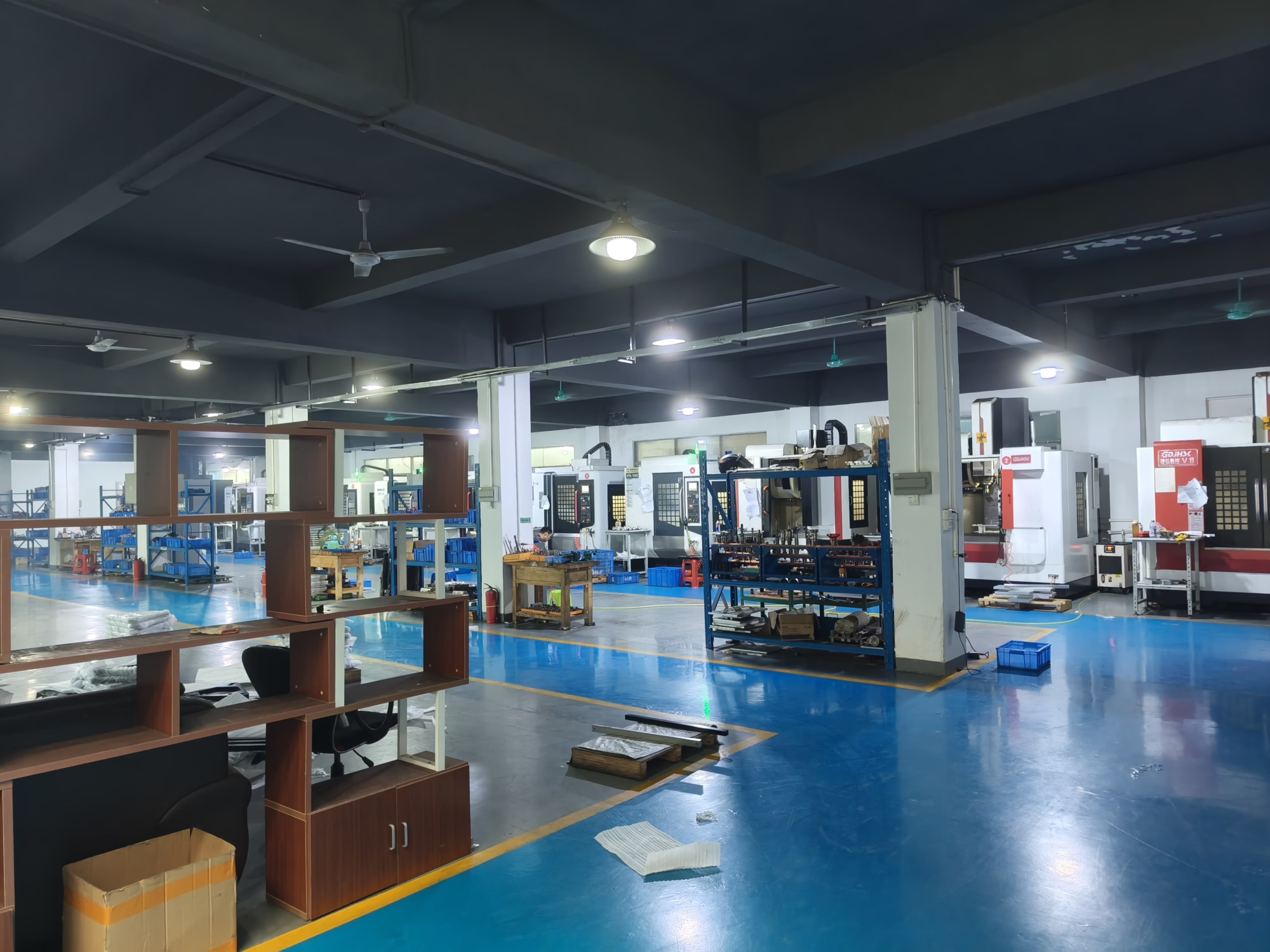
GreatLight Metal new factory building

Plumbing and valves

Non-leaded grade, fine thread gauging and a leak-tight seat on every body.

  • C27400
  • ±0.005 mm
  • 100% inspected
6011

Electrical and electronics

Conductivity first, then flatness on contact faces and burr-free edges.

  • C110 copper
  • Ra 0.8–1.6 μm
  • Deburred
oplus_262178

Marine hardware

Corrosion allowance and wall thickness held on fittings exposed to salt spray.

  • C28000
  • Wall thickness held
  • Cert on request
cnc machining

Industrial machinery

Bushings and wear plates with a bore that stays round across the batch.

  • C36000
  • Ø400 mm rotary table
  • Batch repeatable
FAQs

Brass CNC machining questions we get

Which brass grade should I put on the drawing?

Start with the service condition. If the part touches potable water or sits in a marine environment, leaded C36000 is usually out and C27400 or C28000 is in. If it is a high-volume turned part with no water contact, C36000 gives you the best chip control and the longest tool life.

If you are unsure, send the drawing and the end use. We will tell you which grade machines well for that geometry and which one will fight you.

Can you machine brass to ±0.005 mm?

Yes, on critical features where the geometry and the setup allow it. Brass is thermally active, so the tolerance depends on how the part is held, how much heat the cut puts in, and whether the measurement is taken at a stable temperature.

On long thin-wall parts, we will tell you up front which features can hold that band and which ones need a different callout.

Do you machine lead-free brass?

Yes. We run non-leaded grades such as C27400 and C28000 alongside the free-machining leaded grades. They machine differently: tougher chips, more tool wear, and a greater tendency to smear if the feed is too light.

Tell us the compliance requirement at quoting stage so the process plan is set to the right alloy from the first article.

What surface finish can you hold on brass?

As machined, brass comes off at roughly Ra 1.6–3.2 μm. With the right tool and finishing pass we hold Ra 0.8–1.6 μm, and Ra 0.2–0.8 μm on features that need it.

Brass also takes brushing, tumbling and polishing well. If the finish is cosmetic, say so, because the tool path changes.

How do you handle burrs on cross-drilled brass holes?

We deburr in the cycle where the geometry allows it, then finish by hand on holes that a tool cannot reach. A soft brass burr will fold over instead of breaking off, so it gets checked on the bench rather than assumed gone.

On valve and fluid parts, we look inside the cross holes before the part goes to inspection.

What is the smallest order you take?

There is no minimum order quantity. We run one prototype and we run 10,000+ part runs on the same floor.

For a single brass prototype, the setup cost is the bigger number. That is why we quote the DFM notes with it, so you can fix a feature before you commit to a batch.

How fast can you ship brass parts?

Quotation and free DFM analysis come back within 12 hours. Production can start within 24 hours of release, and parts typically ship in 3–5 days.

The number moves with quantity, finish and whether the material is on the shelf. We will state the date on the quote, not after.

Can you laser-mark brass parts?

Yes. Laser marking and engraving are available, with a minimum character height of 1.5 mm.

Brass takes a dark, readable mark without extra coating. Send the marking file with the drawing so it is placed in the right orientation.

Send the brass drawing and get a quote in 12 hours

Upload your files and we will come back with a price and free DFM analysis. No minimum order quantity, and your files stay confidential.

12-hour quote100% inspectionNo minimum order quantityNDA on request

Trusted by engineers and manufacturers worldwide

Tesla Ford Motor Company BYD Auto Denso Magna International Boeing Airbus Medtronic KUKA FANUC