
Brother TC-S2A: 7 Essential Tips to Maximize CNC Machining Efficiency
The TC-S2A is a BT30 drill-tap center built for fast, light cuts on small parts. This guide covers the seven settings that decide whether you get that speed or fight it. Written for process engineers and shop leads running aluminum, brass, plastics and light steel work.
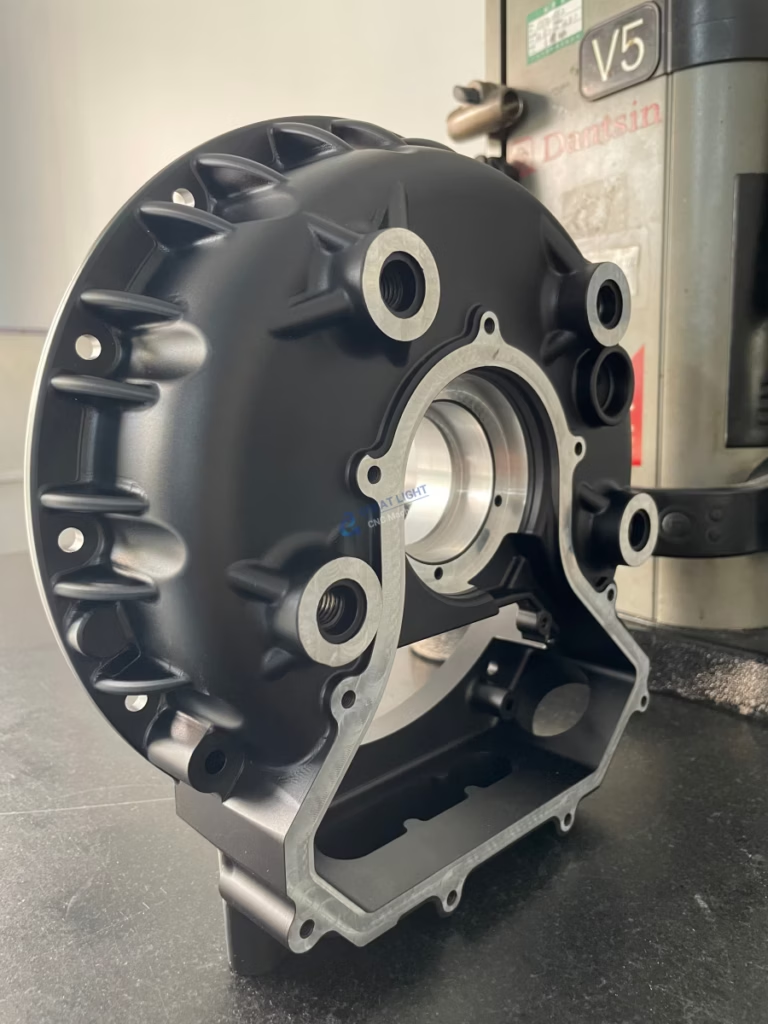
What the TC-S2A Is Actually Good At
Speed over torque. Understand that trade and the other six tips fall into place.
Speed Over Power: Work Inside the Torque Curve
The Brother TC-S2A is a sprinter. Its BT30 spindle spins fast and accelerates fast, but it does not carry the torque of a BT40 or BT50 machine. If you program it like a heavy mill, you will stall the spindle, chip tools and lose the cycle time you were trying to save. The machine rewards light radial engagement and high rpm, not deep, wide cuts.
Think about the torque curve before you pick a cutter. A 12 mm end mill at 40% radial engagement in 6061 will bog the spindle down on a deep slot. The same part cut with a 6 mm tool at 8% radial engagement and a 1.5 × D axial depth runs cooler and often finishes the slot faster, because the servo never has to slow down.
Where the TC-S2A stops making sense is roughing large steel blocks or boring deep holes in 4140. That work belongs on a 40-taper or 50-taper machine. If your part fits in a 300 mm envelope and the material is aluminum, brass, copper, plastics or light stainless, the Brother will beat a bigger machine on cycle time almost every run.
- 1Good fitAluminum and plastics, parts under 300 mm, thousands of pieces
- 2Poor fitDeep steel slots, heavy stock removal, large-diameter boring
- 3Sweet spotHigh rpm, light radial stepover, fast tool changes
Tooling Strategy for a BT30 Spindle
Tooling decides how much of the spindle you can use. A heavy shell mill or a long, unbalanced holder adds mass the spindle has to accelerate and stop at every tool change. On a fast machine that cost shows up twice: once in spindle load, once in cycle time. Keep holders short, keep them balanced, and keep the tool assembly as light as the job allows.
High-helix end mills with a polished flute are the default for aluminum on this machine. A 3-flute design clears chips well and still leaves a decent floor finish. For finishing passes, a 2-flute or 3-flute tool at high rpm with a small radial stepover gives you Ra 0.8–1.6 μm on most aluminum alloys without a separate polish step.
Check runout at the tool tip, not at the holder. A holder that reads 0.005 mm TIR at the gauge line can read 0.02 mm at a 60 mm gauge length. On small cutters that error shows up as uneven flute wear and a tapered wall.
Do not reach for a big cutter to save a tool change. On this spindle, a smaller tool at higher rpm with a trochoidal path usually wins.
- 1HolderShort gauge length, balanced for the rpm you run
- 2Aluminum3-flute high-helix, polished flutes, air or mist blast
- 3FinishingSmall radial stepover, high rpm, light depth of cut
Use the Control: Synchronized Tapping and Fast Tool Changes
Synchronized tapping is one of the reasons shops buy this machine. The spindle and Z axis are electronically linked, so the tap follows the lead without a floating holder. Rigid tapping at 4,000–6,000 rpm in aluminum is realistic, and thread depth repeatability is good enough that you can tap after milling in the same setup.
Two things break that. First, a dull tap or a mismatched pitch. Second, a hole that is undersized or full of chips. Tap drill diameter matters more here than on a slow machine because the tap is moving fast and has less time to recover. Check the drill size against the tap chart and blow the hole clear before the tap enters.
Program the safe Z level per operation, not one global height. A single high plane adds seconds to every tool change. Set the clearance just above the tallest feature on the part. On a 30-tool program that change alone can cut a minute or more from the cycle.
Fast tool changes only help if the tools are already in the right order. Group operations by tool, not by feature, when the geometry allows it.
- 1Rigid tapSynchronized spindle and Z, no floating holder needed
- 2CheckTap drill size and hole clearance before the tap enters
- 3Z planeSet clearance per operation, just above the part
Quick Setup Reference for the TC-S2A
Starting points for aluminum and light materials. Adjust to your holder and coolant.
| Parameter | Conservative | Productive |
|---|---|---|
| Radial engagement | 15–20% of Ø | 5–10% of Ø |
| Axial depth of cut | 0.5 × D | 1.5–2 × D |
| Spindle speed (6061) | 8,000 rpm | 12,000–16,000 rpm |
| Finishing stepover | 0.3 mm | 0.1–0.15 mm |
| Rigid tap speed | 1,500 rpm | 4,000–6,000 rpm |
| Tool change plane | +50 mm above part | +5–10 mm above part |
Workholding: Less Setup, More Rigidity
A fast machine loses its advantage if the operator spends 20 minutes loading each part. For small aluminum parts, a dedicated fixture plate with pre-set stops and a pneumatic clamp pays back within a few hundred pieces. The plate goes on once, the part drops in, and the cycle starts.
Rigidity is the other half. A part held only in a vise with 40 mm of it hanging in the air will chatter long before the tool is at its limit. Support the part close to the cutting zone and keep the overhang short. If a feature must be cut at height, add a jack or a secondary support under it.
For thin walls, consider a sacrificial backing plate or a low-melt fixturing compound. Both add a step, but both let you take a real cut instead of a series of spring passes.
Zero-point systems are worth the cost on this class of machine. Repeatable clamping position means fewer touches off and less scrap from setup error.
- 1Fixture platePre-set stops and clamps, part drops in and runs
- 2SupportKeep overhang short, add jacks under tall features
- 3Thin wallsBacking plate or low-melt compound beats spring passes
Coolant and Chip Management
Chips are the main cause of a broken tool on a fast machine. At 12,000 rpm the cutter makes a lot of them in a short time, and a recut chip will damage the edge in seconds. Air blast or minimum quantity lubrication handles most aluminum jobs on a TC-S2A, and both keep the work area visible.
Flood coolant still has a place in deep pockets and in stainless or titanium. Aim the nozzles at the cut, not at the part in general. A stream that misses the engagement zone does nothing for tool life.
Chip evacuation through the table slots needs attention. If the conveyor or auger backs up, chips pile up under the fixture and get pulled back into the cut. Check the chip path at the start of every shift, not at the end of the week.
For aluminum, keep the air on during the tool change. A chip sitting on the taper face will throw off runout and can mark the spindle taper over time.
- 1AluminumAir blast or MQL, keep the cut zone visible
- 2Steel and stainlessFlood coolant aimed at the engagement zone
- 3Every shiftCheck conveyor and chip path for backup
Simulation and Program Checking
Simulation catches the errors that cost the most: a wrong work offset, a tool that rapids into the fixture, a missing clearance plane. Run the full program in the CAM simulation with the actual holder and fixture models, not just the tool. Holder collisions are common on a compact machine where the spindle nose sits close to the table.
Verify the post processor output against the machine. A post that is close but not exact will produce a program that runs, but with extra moves or a wrong Z clearance. Compare a known-good program from your own machine against the new post output before you run it.
Dry run the first part with a single block and a raised Z offset. It takes a few minutes and it saves the spindle. On high-speed machines the cost of a crash is not just the tool; it can be the taper, the spindle bearings and a week of downtime.
Keep the simulation model of the fixture up to date. An old model gives false confidence.
- 1SimulateInclude holder and fixture, not just the cutter
- 2VerifyCompare post output against a known-good program
- 3First partSingle block with a raised Z offset before the real cut
Maintenance and Process Records
The TC-S2A holds its accuracy when the basics are kept up. Daily: check way lube level, air pressure and the chip path. Weekly: clean the tool changer and check the taper for chips or marks. Monthly: check backlash and repeatability on a test cut, and look at the spindle for any change in noise or runout.
Taper condition matters more on a BT30 spindle than on a bigger machine. A small nick or a chip embedded in the taper face will show up as runout at the tool tip and as poor finish on the part. Wipe the taper before every tool change and inspect it under light.
Keep a record of each setup: tool list, offsets, program number, material lot and inspection results. When a job comes back six months later, that record is the difference between a two-hour setup and a full day of trial cuts. It also makes it easier to see when a machine has drifted.
Spindle runout trends are worth tracking. If the same tool reads 0.008 mm today and read 0.004 mm three months ago, something changed. Find it before it shows up in a rejected lot.
- 1DailyWay lube, air pressure, chip path
- 2WeeklyClean tool changer, inspect taper face
- 3Per setupTool list, offsets, program number, inspection data
Common Questions
Can the Brother TC-S2A cut steel?
Yes, for light work. It handles 1018, 1045 and light stainless with small cutters, modest depths and flood coolant. It is not the right machine for heavy stock removal in 4140 or for deep bores in tool steel.
If most of your work is steel, a 40-taper machine will give you better tool life and fewer spindle stalls.
What tolerance can I hold on a TC-S2A?
On a well-maintained machine, ±0.005 mm is achievable on small aluminum and brass parts with the right fixture and a controlled temperature.
Holding that on a long part or in a hot shop is a different problem. Check the machine's repeatability on a test cut before you quote the tolerance.
Is rigid tapping safe at high rpm?
On aluminum and brass, yes. Synchronized tapping at 4,000–6,000 rpm is normal on this machine.
Use a sharp tap, the correct tap drill, and clear the hole of chips first. A dull tap at high rpm breaks fast.
Why does the finish look worse than the simulation predicts?
Usually runout at the tool tip, a worn taper, or a chip being recut. Check TIR at the tip, not at the holder, and inspect the taper face.
Tool overhang and fixture rigidity are the next things to check. A part that moves a few micrometers will show it in the surface.
Should I use air blast or flood coolant?
Air blast or MQL for aluminum, plastics and most brass jobs. It keeps chips clear and the cut visible.
Flood coolant for stainless, titanium and deep pockets where the chips need to be pushed out.
How often should offsets and backlash be checked?
Monthly for a machine running two shifts, or after any crash or unusual noise.
Track spindle runout at the same time. A slow drift is easier to fix than a sudden failure.
Send Your Drawings, Get a Process Plan
We run high-speed machining cells for small precision parts and quote with a free DFM review within 12 hours.
12-hour quote±0.005 mm100% inspection









