
Cheap CNC Machining: Where the Cost Actually Comes From
This guide is for engineers and buyers who need low-cost CNC parts without losing tolerance or traceability. We break down the cost drivers you can change, the ones you cannot, and how to read a quote sheet from an overseas shop.
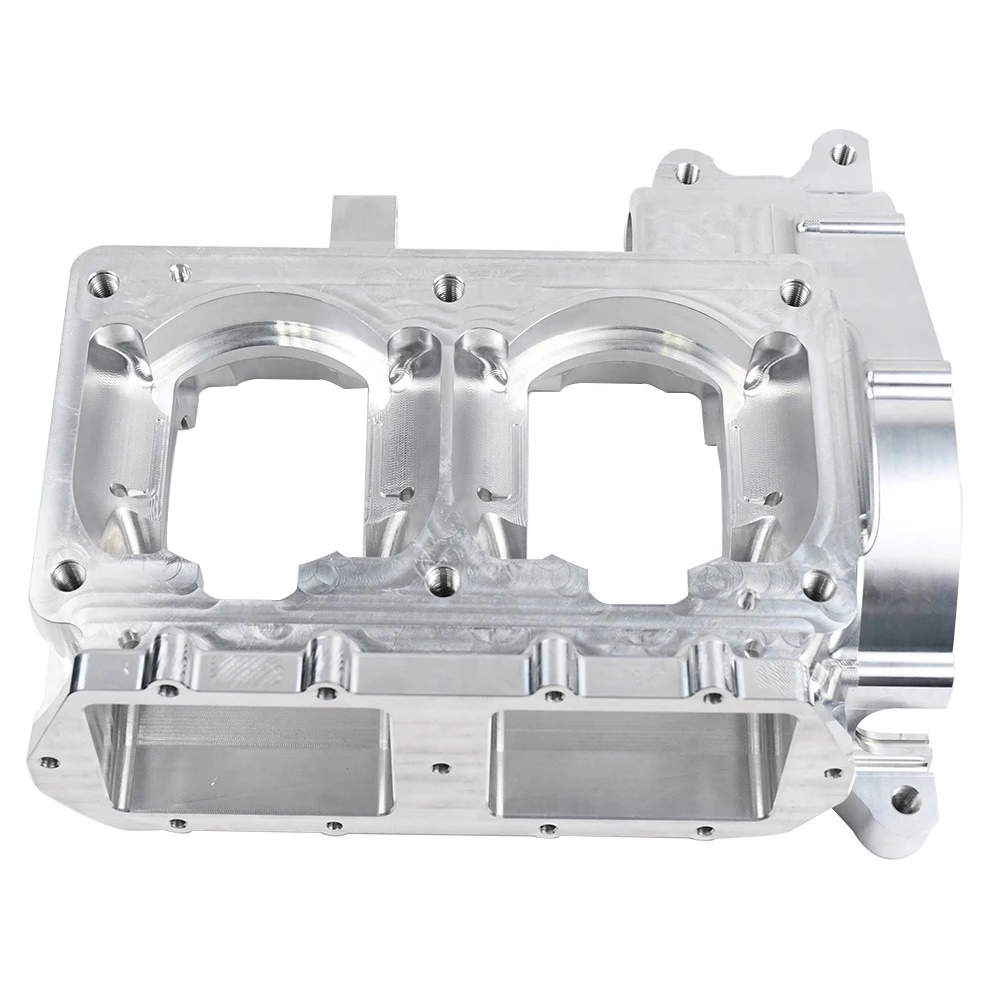
What Cheap CNC Machining Really Means
Cheap does not mean low quality. It means the process plan matches the part, and nobody pays for operations the drawing never asked for.
The Five Things That Move a CNC Price
Every quote you receive is built from five inputs: stock removal, fixturing, tolerance, finish, and order quantity. Change any one and the price moves. Ignore them and you pay for capacity you did not need.
Stock removal is the big one. A part cut from near-net bar stock costs less than the same geometry carved out of a solid block. Deep pockets, tall thin walls, and features that need long reach tools all add time. On a 5-axis center we can often finish five faces in one setup, which removes several fixtures and their error stack.
Tolerance is the second lever. Most cheap CNC machining jobs sit comfortably at ±0.05 mm. When you call out ±0.005 mm across the whole drawing, the shop has to slow down, add spring passes, and inspect more often. Apply tight tolerance only to the features that function, not to every dimension.
Finish and quantity work together. As-machined surfaces at Ra 1.6–3.2 μm need no extra operation. A decorative anodized face might need bead blasting first. Quantity spreads setup and programming across more parts, but only when the design stays fixed between runs.
- 1GeometryShallow open shapes machine fastest; deep cavities need long tools and slower feeds.
- 2ToleranceTighten only the mating features, leave the rest at general tolerance.
- 3Setup countEach extra fixture adds alignment error and labor time.
- 4VolumeFixed design plus higher quantity is the cheapest per-part path.
Pick Material for the Job, Not the Catalog
Material price and machinability pull in opposite directions. Aluminum 6061 cuts fast and stays cheap in bar form. Stainless 316 machines slower, wears tools faster, and costs more per kilogram. Titanium TC4 (Ti-6Al-4V) sits at the far end: low thermal conductivity, high tool wear, and a price that reflects both.
For most brackets, housings, and covers, 6061-T6 is the default answer. It holds ±0.005 mm on critical bores, anodizes cleanly, and is stocked in many sizes. Switch to 7075 only when you need the higher yield strength, because it cuts slower and costs roughly double the stock price.
Plastics can be the cheapest route for low-stress parts. POM and ABS machine quickly and need no finishing. PEEK is the exception: it is expensive stock and slow to cut. If a plastic part only needs to look right, consider 3D printing instead of machining.
Exotic alloys like Inconel or magnesium AZ31B are available, but plan the budget around them. Inconel eats carbide inserts and needs rigid setups. Magnesium is light and fast to cut but requires careful chip handling.
Typical Tolerance and Finish by Application
Use this as a starting point when you write the drawing. The shop will confirm what the process can hold.
| Application | Tolerance | Surface finish | Notes |
|---|---|---|---|
| General brackets, covers | ±0.05 mm | Ra 1.6–3.2 μm | As-machined is usually enough |
| Mating bores, bearing seats | ±0.005 mm | Ra 0.8–1.6 μm | Tighten only these features |
| Sealing faces, optical mounts | ±0.005 mm | Ra 0.2–0.8 μm | May need lapping or fine boring |
| Cosmetic anodized panels | ±0.05 mm | Ra 0.8–1.6 μm | Bead blast before anodizing |
| Prototype fit checks | ±0.1 mm | Ra 1.6–3.2 μm | Fastest and cheapest tier |
How to Compare Quotes Without Getting Burned
A low number means nothing if the quote sheet hides what is included. Ask for a line-item breakdown: material, machining time, setup, finishing, and inspection. If a supplier will not show that, you cannot tell whether the price is genuinely cheap or just missing an operation.
Check the process capability behind the number. A shop running 16 simultaneous 5-axis centers and 127 high-precision machines can quote complex geometry differently than a job shop with two mills. Capacity matters most when your design has undercuts, deep pockets, or five-sided features.
Look at the inspection plan. Cheap parts that fail incoming inspection are the most expensive parts you will buy. We inspect 100% of parts before shipment and can supply reports on request. For regulated work, the relevant certificates are ISO 9001:2015, IATF 16949:2016, ISO 13485:2016, and ISO 27001:2022.
Confirm the logistics side before you commit. Our quotation and free DFM analysis come back within 12 hours, production can start within 24 hours, and parts ship in 3–5 days. There is no minimum order quantity, so a single prototype and a 10,000+ part run both go through the same process.
- 1Line itemsInsist on material, machining, setup, finish, and inspection as separate lines.
- 2Machine fitMatch the shop's spindle and axis count to your part geometry.
- 3InspectionAsk what is measured, how often, and what report you receive.
- 4ConfidentialityUploads stay secure; an NDA is available on request.
Design Changes That Cut Cost Without Hurting Function
Most cost is locked in before the first chip is cut. A few drawing edits can remove an entire operation. Relax general tolerance to ±0.1 mm and keep only the functional features tight. That single change often drops the price more than switching suppliers.
Add a corner radius wherever an internal pocket meets a wall. Sharp internal corners need a smaller tool, slower feed, and sometimes EDM. A radius equal to the cutter radius lets the tool run at full speed. The same logic applies to pocket depth: keep depth under three times the tool diameter when you can.
Avoid unnecessary surface finish calls. Specify Ra 0.8–1.6 μm only where a seal, bearing, or sliding contact needs it. Cosmetic surfaces can stay as-machined and get bead blasted before anodizing. Laser marking needs a minimum character height of 1.5 mm, so do not call out 0.8 mm text that will not resolve.
Send the model for a DFM review early. We return a free DFM analysis with the quote within 12 hours. Finding a tool-access problem at that stage costs nothing. Finding it after the first article is machined costs a week.
Questions Engineers Ask About Low-Cost CNC Work
Is cheap CNC machining reliable enough for production parts?
It depends on the process plan, not the price. A shop that matches tolerance and finish to function can hold ±0.005 mm on the features that matter.
Ask for the inspection plan and any relevant certificates. We work to ISO 9001:2015, IATF 16949:2016, ISO 13485:2016, and ISO 27001:2022, and inspect 100% of parts before shipment.
What is the minimum order quantity?
There is no minimum order quantity. We run from one prototype to 10,000+ part runs on the same process.
A single part still carries setup and programming cost, so the per-piece price is higher. If the design is stable, ordering more parts lowers the unit price.
How fast can I get parts?
Quotation and free DFM analysis come back within 12 hours. Production can start within 24 hours after you approve the quote.
Standard parts ship in 3–5 days. Complex geometry or special finishing may add time, and we will state that in the quote.
Which materials keep the cost lowest?
Aluminum 6061-T6 is usually the cheapest balance of price, machinability, and strength. Plastics like POM and ABS cut fast and need no finishing.
Stainless 316, titanium TC4, and Inconel cost more in both stock and machine time. Specify them only when corrosion resistance or strength requires it.
Can you hold ±0.005 mm across a whole part?
Holding that tolerance everywhere is possible but expensive. The practical approach is to apply ±0.005 mm to functional features and keep the rest at general tolerance.
We confirm which features need the tight band during the DFM review, before machining starts.
How do you protect my design data?
Uploads are secure and confidential, and we can sign an NDA on request.
Our ISO 27001:2022 certification covers information security management, which matters when your drawings contain proprietary geometry.
Send Your Drawing, Get a Costed Quote
Upload your CAD files and we will return a line-item quote with a free DFM analysis within 12 hours.
12-hour quoteNo MOQ±0.005 mm100% inspection









