
01
Three setups, three tolerance stacks
Every clamp and re-fixture adds a new datum. Position error creeps in on bolt circles and bores, and the drawing stack no longer matches the part. One setup on five axes removes most of that stack.
One setup, five sides, fewer re-fixtures. We run 16 five-axis machining centers for aluminum, titanium and steel parts, from a single prototype to 10,000+ pieces, with ±0.005 mm held on the features that matter.
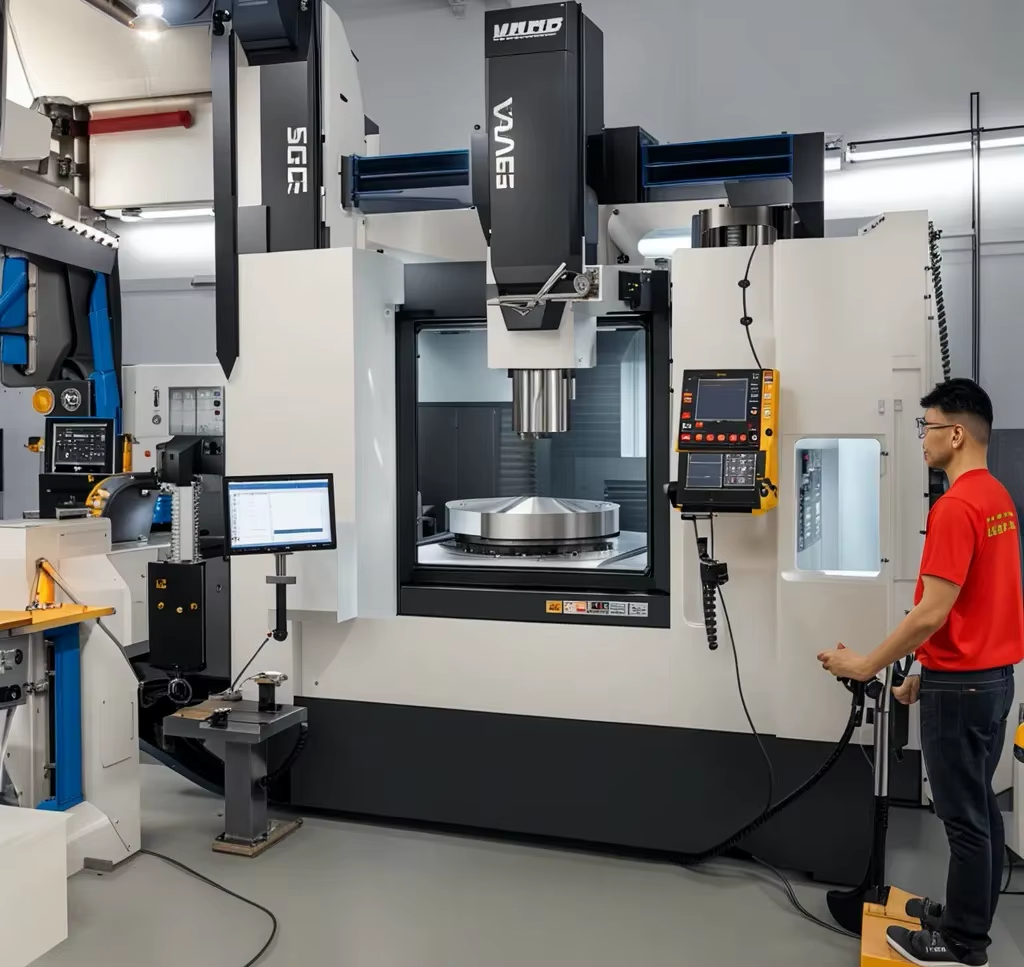
Every clamp and re-fixture adds a new datum. Position error creeps in on bolt circles and bores, and the drawing stack no longer matches the part. One setup on five axes removes most of that stack.
A 1.0 mm wall cut with a long tool at full radial engagement pushes away from the cutter. The part measures fine on the machine and springs out of tolerance once the vise opens.
Angled ports, side pockets and contoured bosses need the tool axis tilted. If the shop only has 3-axis mills, those features become a second operation or get redesigned.
A drawing sits in an inbox for a week while the RFQ window closes. We return a quote and a DFM note within 12 hours, and production can start within 24 hours of approval.
Tilting the table and the spindle keeps the part still while the tool reaches the features that matter.
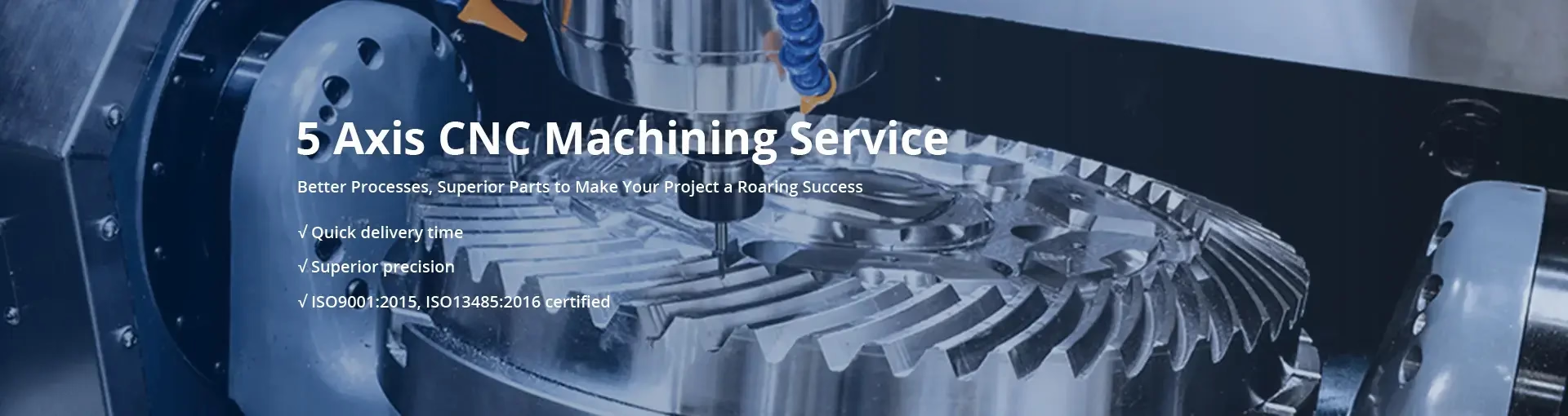
In simultaneous 5-axis cutting, the rotary axes move while the tool is in the cut. That lets a Ø12 mm carbide end mill follow a contoured surface at a constant lead angle instead of stepping across it in passes. Surface scars from pass-to-pass overlap drop, and a ball-nose tool can stay in a single orientation through a whole sweep.
For a part with angled ports on four sides, the alternative on a 3-axis mill is four setups and four datums. Each new clamp is another chance to lose 0.02 mm. On our five-axis centers, the same part comes off one fixture with the bores and the mounting face sharing one datum. We hold ±0.005 mm on those relationships, and the first article report shows it.
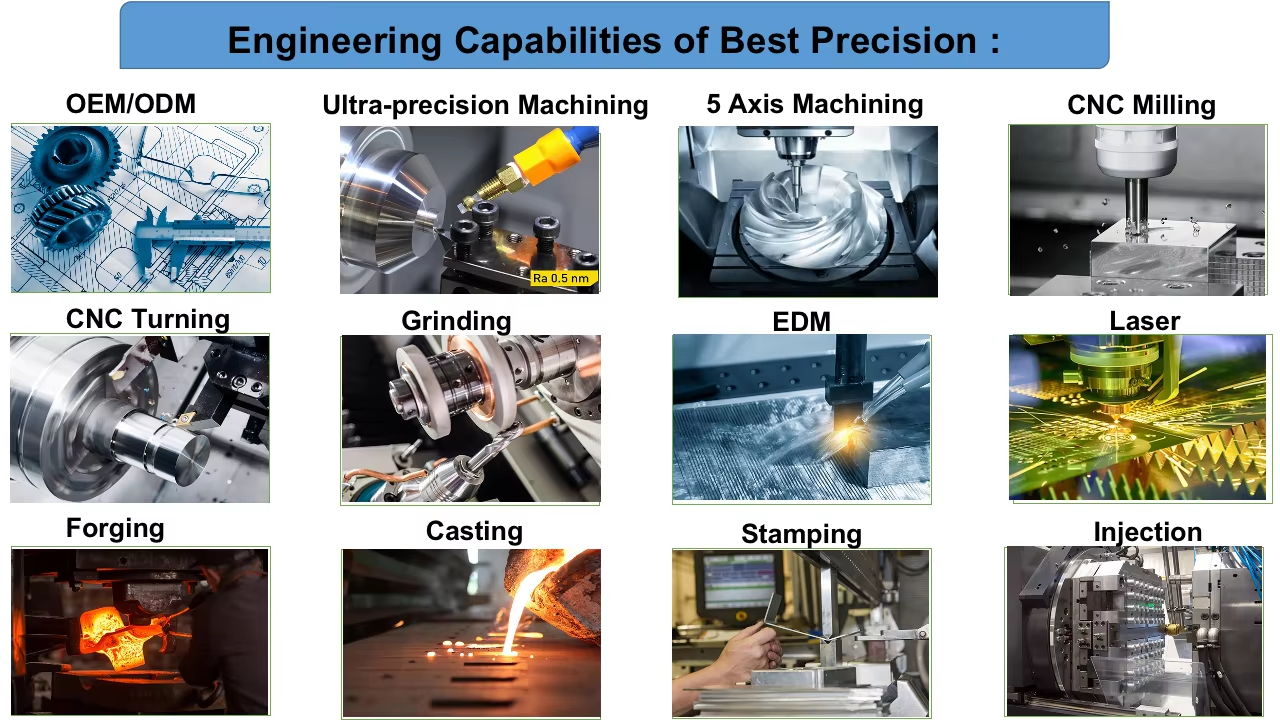
Aluminum 6061-T6 and 7075 machine cleanly at high spindle speed, and they are the usual choice for brackets, heat sinks and robot arm links. Titanium TC4 (Ti-6Al-4V) and Inconel cut hotter and slower, so we program lower surface speed and heavier coolant. Stainless 304 and 17-4PH sit between the two. Wall thickness, thread depth and corner radii all drive the setup more than the material name does.
Machining is only half the part. Anodizing in clear, color or hardcoat, electroless nickel, black oxide, bead blasting and laser marking all run through the same shop. Laser marking holds a minimum character height of 1.5 mm, which matters if you need a part number or a traceability code on a small boss. One supplier for cutting and finishing means one set of inspection records.
| Part feature | Best setup | Why |
|---|---|---|
| Angled ports on 3+ faces | Simultaneous 5-axis | One datum, no re-fixture |
| Deep cavity, straight walls | 3-axis or 3+2 | Rigid tool, short overhang |
| Turned body with milled flats | Mill-turn center | One chuck, no second op |
| Thin 0.8 mm wall panel | 5-axis, light radial step | Tilted tool lowers cutting force |
| 4,000 mm long extrusion | Large gantry platform | Travel covers the full length |
Simultaneous 5-axis milling for contoured, angled and multi-face parts. 16 centers, up to Ø400 mm rotary table swing.
Rotary table work for cylindrical parts with milled slots, flats and cross holes. 12 machines on the floor.
Straight-walled pockets, plates and fixtures where a rigid short tool beats a tilted one. 27 machines.
16 mill-turn centers handle turned bodies with milled features in one chuck, so runout stays inside one datum.
Single pieces machined from billet for fit checks and design review, no minimum order quantity.
Anodizing, plating, powder coating, bead blasting, polishing and laser marking, in-house or managed.
| Item | Range | Notes |
|---|---|---|
| Tolerance | ±0.005 mm (±0.0002 in) | On critical features |
| Surface finish | Ra 0.2–3.2 μm | Ra 0.2–0.8 μm on request |
| Max part length | 4,000 mm | Large gantry platform |
| Rotary table | Ø400 mm | 5-axis trunnion swing |
| Materials | Aluminum, stainless, steel, titanium, brass, PEEK | Full list on the materials page |
| Inspection | 100% before shipment | Reports on request |
Fifteen years of production work, three wholly-owned plants and 150 technicians across Dongguan and Singapore.
Simultaneous 5-axis capacity, plus 12 four-axis mills, 27 three-axis machines and 16 mill-turn centers.
Held on bores, bolt circles and mating faces, checked on the CMM and reported per feature.
Raw material check, in-process monitoring and final inspection before anything leaves the floor.
A quote and a free DFM analysis come back within 12 hours of receiving your files.
From one prototype to 10,000+ piece runs on the same program and the same fixture.
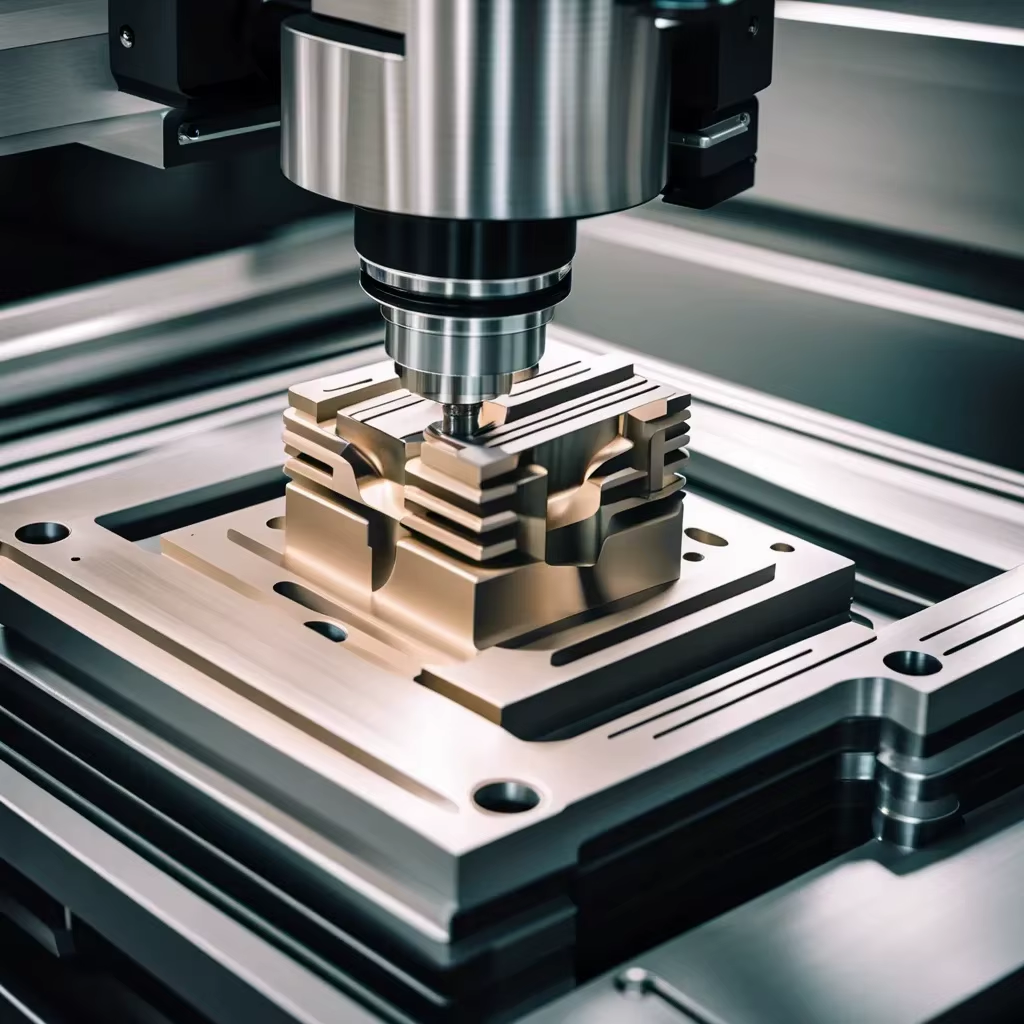
Arm joints and end-effector brackets need bore-to-face squareness and mounting hole position held together, so the joint does not bind at the end of its travel.
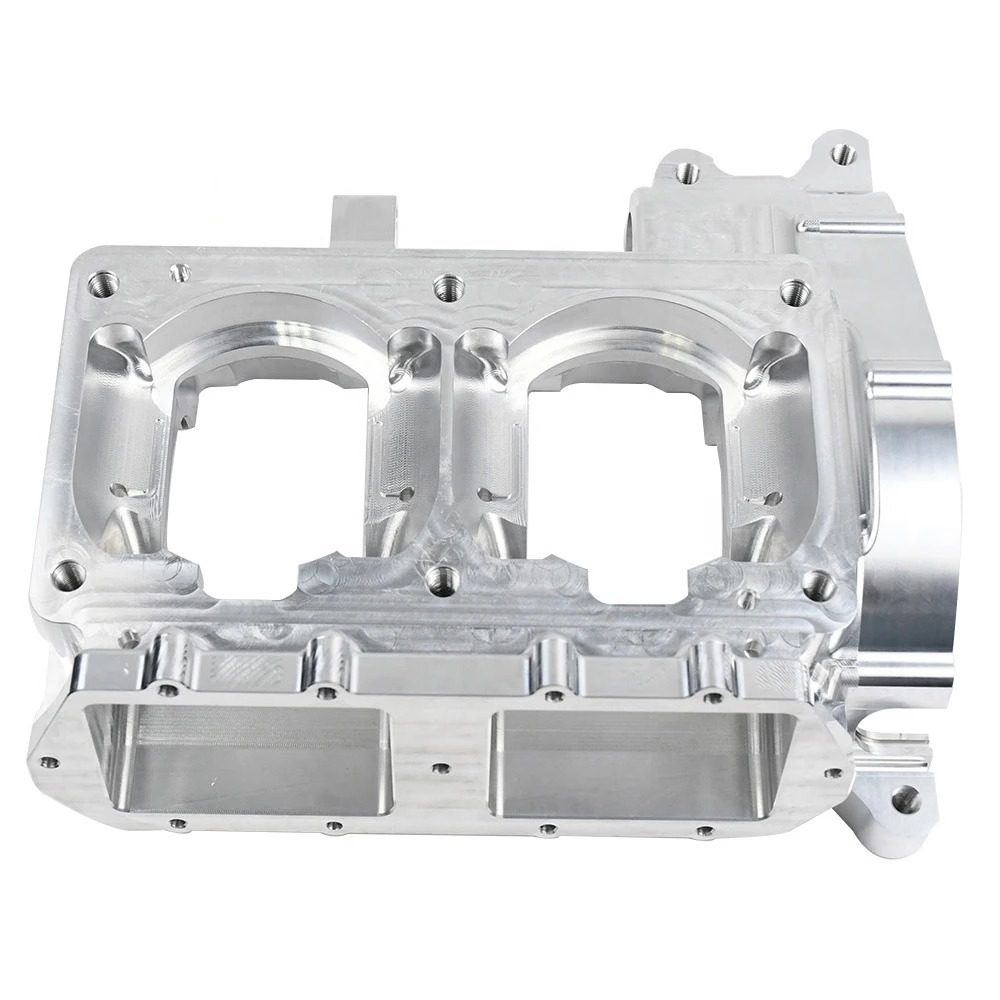
Housings, covers and brackets where wall thickness and flatness both matter. IATF 16949:2016 process control covers the documentation side.
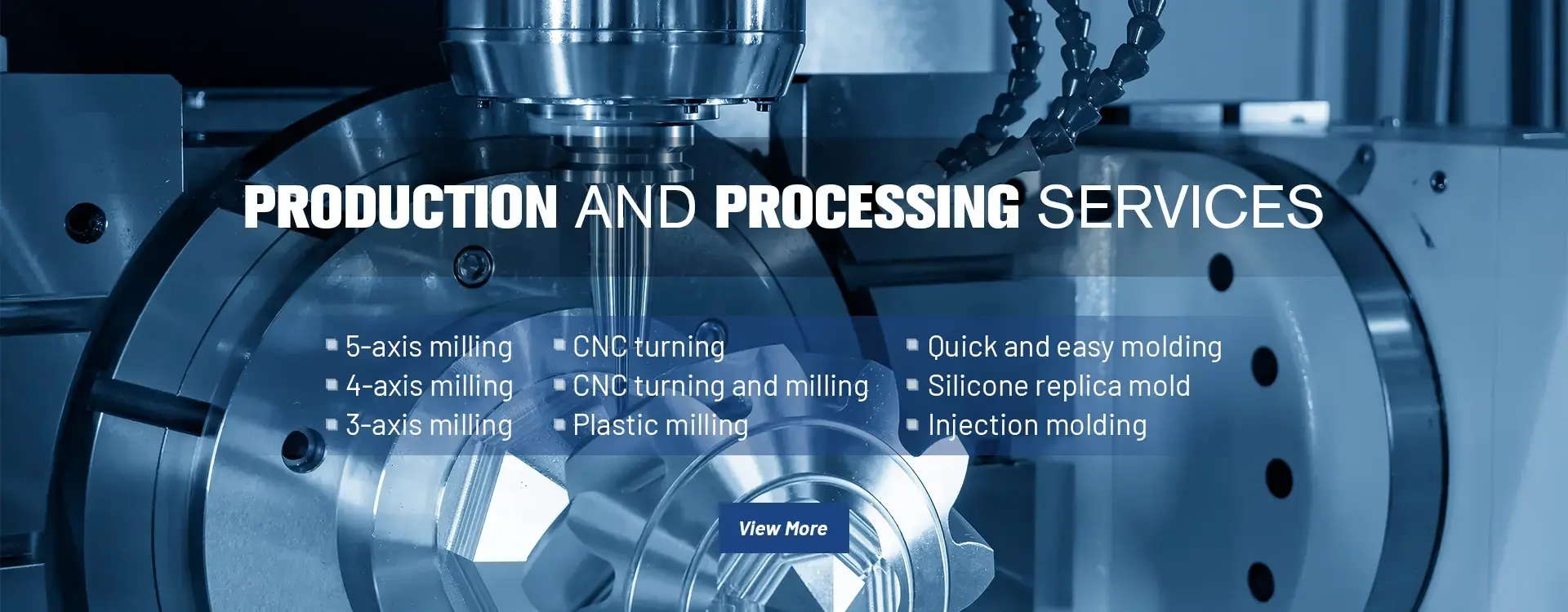
Manifolds and multi-port bodies with angled ports on several faces, where one datum keeps port-to-port position consistent across the batch.
Parts moving from prototype to volume keep the same program, fixture and inspection plan, so the tenth piece matches the first article.
Go five-axis when a part has features on three or more faces, angled ports, or contoured surfaces that a straight tool cannot reach without a second setup. The gain is not speed, it is datum control and fewer clamps.
Stay on 3-axis for straight-walled pockets and plates. A short, rigid tool in a fixed spindle cuts deeper and faster than a tilted one, and the setup cost is lower.
That tolerance is achievable on critical features such as bores, bolt circles and mating faces, and we report them per feature on the inspection sheet.
It is not a blanket number for every dimension. Thin walls, long unsupported sections and deep holes have their own practical limits, and we flag those in the DFM note before cutting starts.
Maximum processing size is 4,000 mm. Our large platform travels 4,000 × 400 × 150 mm, and the medium machines cover 750 × 1,150 × 550 mm and 600 × 600 × 600 mm.
Compact work runs on 500 × 500 × 450 mm and 500 × 310 × 200 mm machines. Five-axis work uses a Ø400 mm rotary table, so check the swing against your part envelope.
Aluminum 6061-T6, 7075 and 6082 are the most common, followed by stainless 304, 316L and 17-4PH. Titanium TC4 (Ti-6Al-4V) and Inconel run regularly for higher-temperature parts.
We also cut brass C36000, beryllium copper, magnesium AZ31B and engineering plastics including POM, PEEK and carbon fibre.
Quote and free DFM analysis come back within 12 hours. Production can start within 24 hours of drawing approval and material availability.
Parts typically ship in 3–5 days. The historical late-delivery probability is below 2%, and we do not quote a date we cannot hold.
No minimum order quantity. We machine from one prototype to 10,000+ piece runs on the same program.
Prototypes and production parts share the fixture design, so the geometry does not shift when the order scales up.
Uploads are secure and confidential. We can sign an NDA before you send files, and the agreement covers drawings, models and any part geometry we see.
If you would rather start with a sample, we can machine a test part from your model and return the inspection report with it.
Every order gets 100% inspection before shipment, covering raw material check, in-process monitoring and final inspection.
Inspection reports are available on request. Tell us which features you want reported and we will list them on the sheet.
Upload your STEP file or 2D drawing. You get a price, a DFM note and a lead time, with no minimum order quantity and an NDA on request.
12-hour quote + DFM100% inspectionNo minimum order quantityNDA on request
Trusted by engineers and manufacturers worldwide










Upload your 3D model or 2D drawing and get a quotation with a free DFM analysis. Maximum processing size 4,000 mm.
CNC Metals 13 grades
CNC Plastics 10 grades
Machines & processes 12 options
Surface & post-processing 10 options
Material: not selected Machine: not selected Post-process: not selected
Fill in this short form and we'll open WhatsApp with your message ready to send. We only use these details to reply to you.
Nothing is sent until you press send inside WhatsApp.