
01
The material spec changed after quoting
A part quoted in 6061 aluminum gets switched to 7075 for strength. The original tool path and feeds no longer apply, so cycle time rises and the price you approved is gone.
We machine aluminum, stainless, titanium, steel, copper, brass and Inconel on 127 high-precision CNC machines. Quote and DFM analysis in 12 hours, tolerances to ±0.005 mm, and no minimum order quantity.
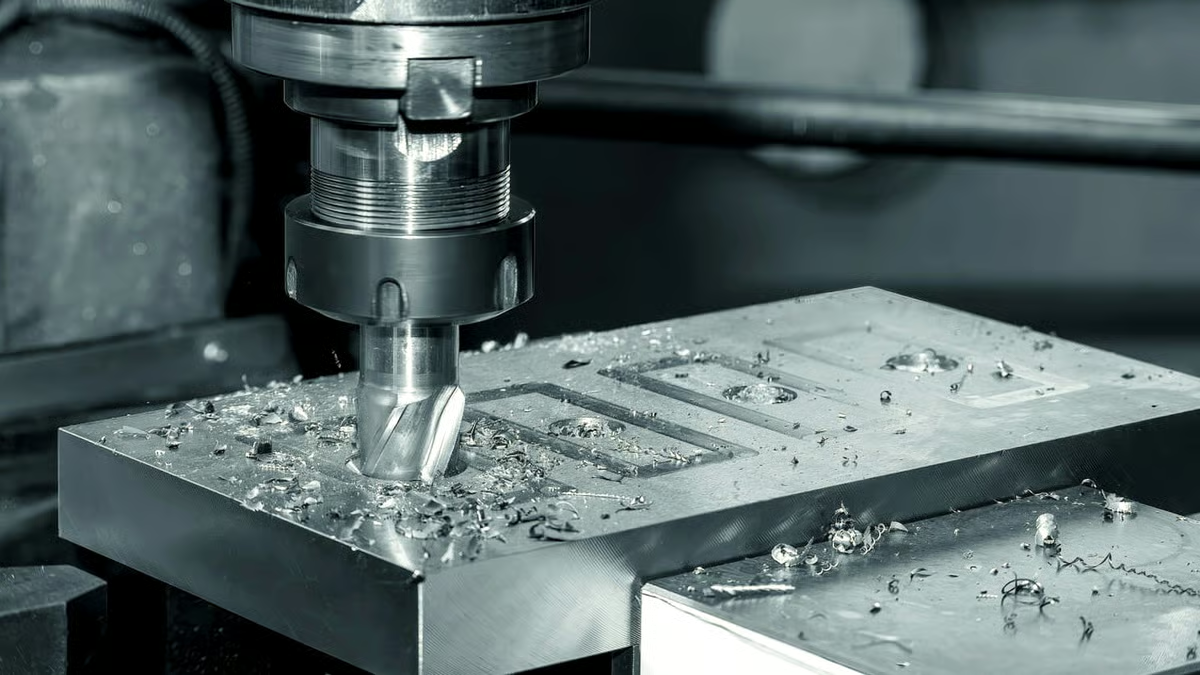
These are the failures we see most often when shops pick an alloy by habit instead of by application.
A part quoted in 6061 aluminum gets switched to 7075 for strength. The original tool path and feeds no longer apply, so cycle time rises and the price you approved is gone.
Inconel and titanium cut slowly. A shop that quoted them like mild steel will run out of spindle hours, and your delivery date slips by weeks while the machine sits at half speed.
Aluminum and stainless parts with walls under 1 mm move during and after cutting. Without stress relief and in-process checks, the finished parts bow past the tolerance band.
Hardcoat anodizing or bead blasting adds steps, masking and handling. If those steps are not quoted up front, the invoice changes and the parts sit waiting at the finisher.
The right cutting strategy depends on the metal, not on a generic machining template.
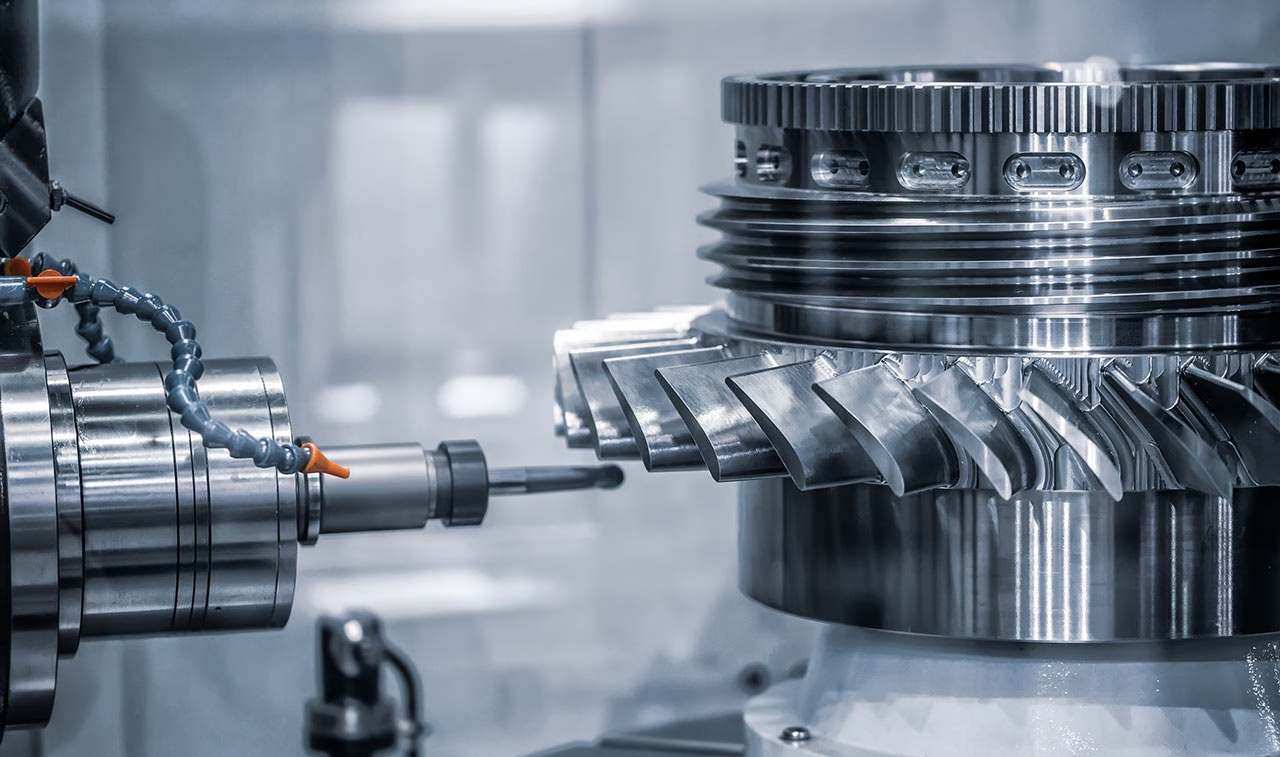
Aluminum 6061, 2024, 5052, 6082 and 7075 cut fast and hold tight tolerances, which makes them the default for housings and brackets. Stainless 303, 304, 316L and 17-4PH bring corrosion resistance but work-harden, so we slow the surface speed and take deeper passes to stay under the hardened layer.
Titanium TA2 and TC4 resist corrosion and heat but conduct heat poorly. Heat concentrates at the cutting edge, so we use high-pressure coolant and sharp carbide to keep the tool alive. Inconel and magnesium each need their own feeds, fixturing and chip control.
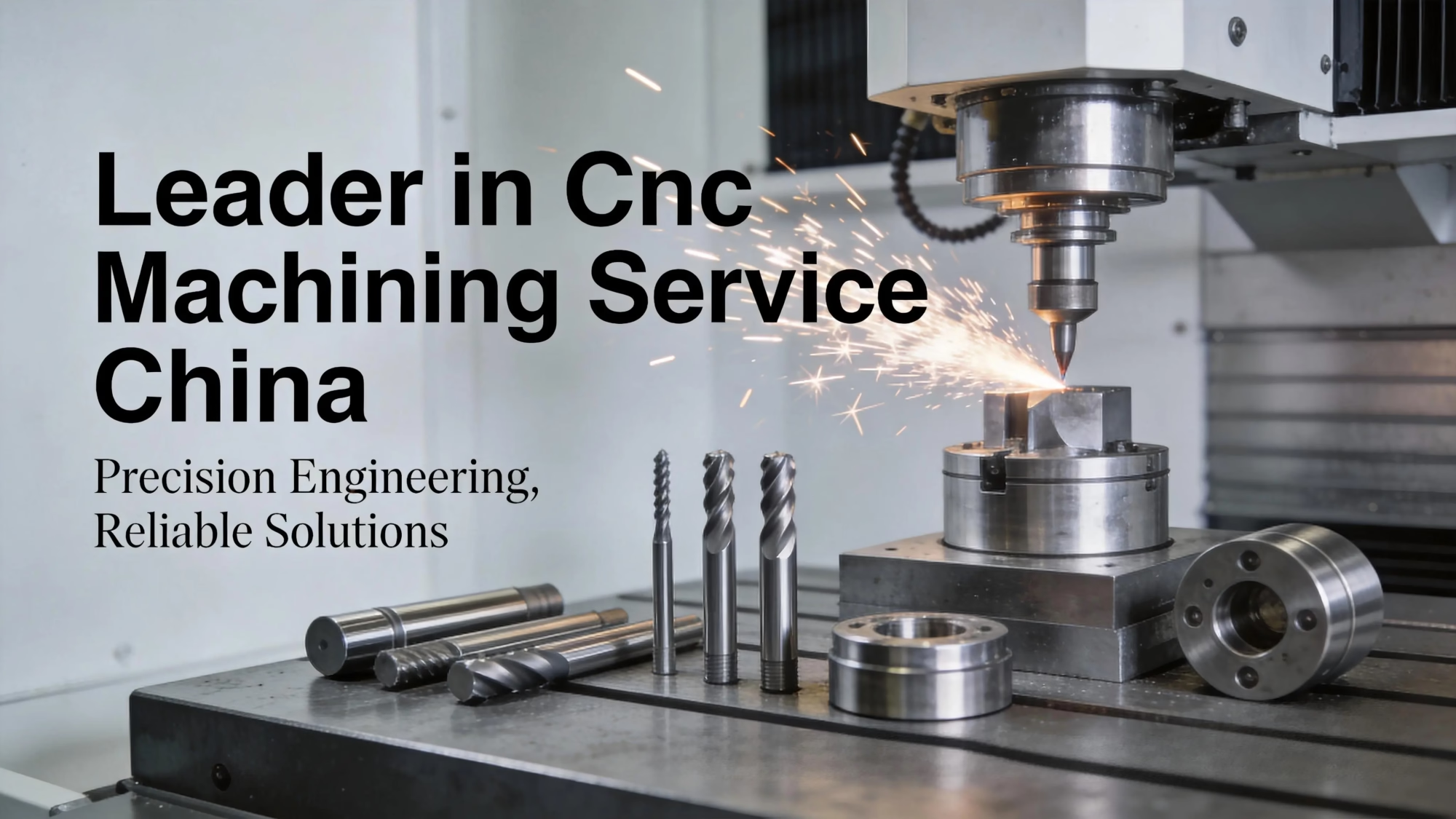
Every extra setup adds a datum error. On complex metal parts we use 16 simultaneous 5-axis centers and 16 mill-turn centers to cut five faces in one clamping. That keeps hole-to-hole position tight and removes the flip-and-reclamp step that causes mismatch.
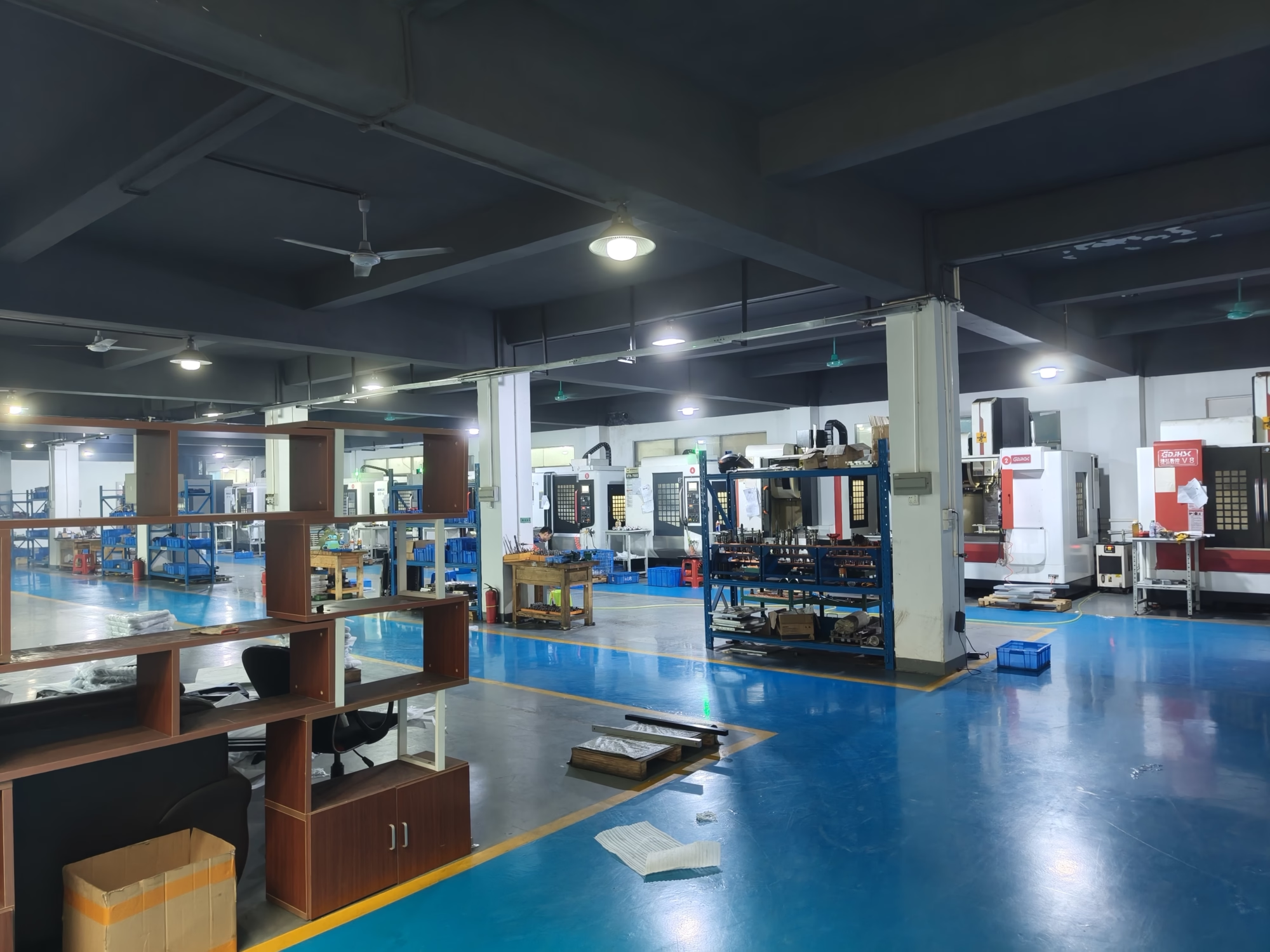
For long parts we run travel up to 4,000 mm. Smaller work goes on 750 × 1,150 × 550 mm or 500 × 500 × 450 mm machines, with a Ø400 mm rotary table for parts that need angular features. All 127 machines are under one roof, so a job does not wait on outside capacity.
Use this as a starting filter. The final call depends on load, environment and finish.
| Metal | Typical Grades | Best For |
|---|---|---|
| Aluminum | 6061-T6, 7075, 6082 | Housings, brackets, heat sinks |
| Stainless | 303, 304, 316L, 17-4PH | Corrosion and medical parts |
| Titanium | TA2, TC4 (Ti-6Al-4V) | Aerospace, high strength-to-weight |
| Mild / alloy steel | 1018, 1045, 4140, 4340 | Shafts, gears, structural parts |
| Copper / brass | C110, C36000, beryllium copper | Conductors, RF and contacts |
| Inconel | Precipitation-hardening grades | Gas turbine and high-heat parts |
One supplier from raw bar to finished, inspected metal parts.
Sixteen simultaneous 5-axis centers cut contoured and multi-face metal parts in one setup, holding position without re-clamping.
Milling, turning and mill-turn work on 27 three-axis, 12 four-axis and 16 mill-turn machines for round and prismatic parts.
Prototype metal parts from one piece, with DFM feedback before cutting so the design is machinable at volume.
Anodizing, plating, powder coating, black oxide, bead blasting and laser marking, managed in-house and at qualified finishers.
Enclosures and frames in sheet metal, plus die casting for aluminum ADC12 parts when machining alone is too slow.
Raw material check, in-process monitoring and 100% final inspection, with dimensional reports on request before shipment.
Numbers you can design to.
| Parameter | Range | Notes |
|---|---|---|
| Tolerance | ±0.005 mm (±0.0002 in) | On critical features, checked in process |
| Surface finish | Ra 0.2–3.2 μm | Fine finishes need extra passes |
| Maximum part size | 4,000 mm | Long rails on large-travel machines |
| Rotary work | Ø400 mm table | Angular features on 5-axis |
| Order quantity | 1 to 10,000+ parts | Prototype and production on same line |
| Lead time | Ship in 3–5 days | After drawing and DFM sign-off |
We are a metal shop. The equipment and the inspection plan are set up around it.
Fifteen years on aluminum, stainless, steel, titanium and nickel alloys. Three wholly-owned plants, 150 technicians.
16 five-axis, 12 four-axis, 27 three-axis and 16 mill-turn centers. No waiting on outside capacity.
±0.005 mm on critical features, with 100% inspection before shipment and reports when you need them.
Send a drawing and get a price plus manufacturability notes. Production can start within 24 hours.
From a single prototype to a 10,000+ part run. The setup and inspection plan scales with the volume.
ISO 9001:2015, IATF 16949:2016, ISO 13485:2016 and ISO 27001:2022 cover quality, automotive, medical and data.
Titanium and Inconel brackets and housings where weight and heat resistance decide the alloy.

Aluminum and alloy steel parts that must repeat across thousands of cycles without setup drift.
316L and titanium components with clean surfaces and documented material traceability.
Long steel rails and shafts machined in one pass up to 4,000 mm, then measured before shipment.
6061-T6 is the default when you need machinability, weldability and a clean anodized finish. It holds tolerance well and cuts fast.
7075 is stronger but less weldable and costs more. Choose it when the part carries real load or needs high fatigue resistance. Send the drawing and we will flag the trade-off before quoting.
Yes on critical features, but cycle time is much longer. Titanium and Inconel resist heat, so the cutting edge stays hot and tools wear faster.
We adjust feeds, use high-pressure coolant and take more finishing passes. That is why a titanium part costs more than the same geometry in aluminum.
303 contains sulfur for easy chip breaking, so it machines cleanly and is good for shafts, fittings and general hardware.
316L has molybdenum for chloride resistance and is the usual choice for medical, food and marine exposure. It work-hardens, so the cutting strategy changes.
It depends on depth. A Ø1 mm hole is routine in aluminum at shallow depth; in stainless or titanium the same hole needs a pilot and a rigid setup.
Laser marking characters should be at least 1.5 mm tall to stay readable after finishing. Send the drawing and we will tell you which features need a note.
Anodizing in clear, color, hardcoat or conductive types for aluminum. Electroless nickel, zinc, silver and gold plating for conductivity and wear.
Powder coating and black oxide for appearance and corrosion. Bead blasting, tumbling, brushing and polishing control the surface before those steps.
Yes. There is no minimum order quantity, so a single prototype and a 10,000+ part run both fit the same process.
The difference is the setup and inspection plan. For one part we check the drawing and cut; for volume we add fixtures, in-process gauging and sampling.
Quotation and DFM analysis come back within 12 hours. Production can start within 24 hours after you approve the drawing.
Typical parts ship in 3–5 days. Hard alloys and heavy finishing add time, and we will state that in the quote rather than after the fact.
Uploads are kept secure and confidential. An NDA is available on request before you send files.
Our ISO 27001:2022 certification covers information security, and customer drawings are not shared outside the project team.
Upload your file and we will return a quote with DFM notes, alloy suggestions and a finish plan within 12 hours.
12-hour quote100% inspectionNo minimum orderNDA on request
Trusted by engineers and manufacturers worldwide










Upload your 3D model or 2D drawing and get a quotation with a free DFM analysis. Maximum processing size 4,000 mm.
CNC Metals 13 grades
CNC Plastics 10 grades
Machines & processes 12 options
Surface & post-processing 10 options
Material: not selected Machine: not selected Post-process: not selected
Fill in this short form and we'll open WhatsApp with your message ready to send. We only use these details to reply to you.
Nothing is sent until you press send inside WhatsApp.