
01
The part prints, then warps off the plate
Long thin sections and full-plate builds cool unevenly. The job scrapes off the recoater or bows 0.5 mm across a 100 mm face. You pay for powder and machine time and get nothing usable.
Laser powder bed fusion in aluminum, stainless steel, titanium and copper. We review your geometry first, then tell you whether printing or CNC machining gives the better part.
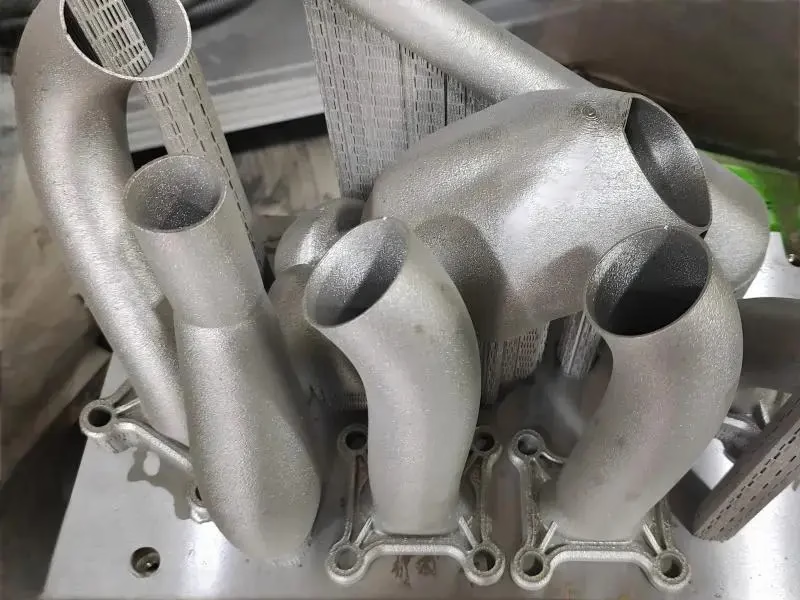
Most metal printing problems are decided before the build starts, in the model and the orientation.
Long thin sections and full-plate builds cool unevenly. The job scrapes off the recoater or bows 0.5 mm across a 100 mm face. You pay for powder and machine time and get nothing usable.
Downfacing surfaces need support. Cut it away and the witness marks sit right on a sealing face or a bearing bore. Now the part needs finishing that was never in the plan or the budget.
As-built laser powder bed fusion lands around ±0.1 mm on a good day, and worse on tall thin walls. A bore that must hold ±0.005 mm will not come off the plate at that size. Engineers who expect as-built fits end up reworking every part.
A model goes out for pricing and sits for a week while someone asks what alloy, what orientation, what post-processing. Powder cost and machine time cannot be estimated without those answers, so nothing moves.
Additive handles the internal channels. Subtractive handles the interfaces.
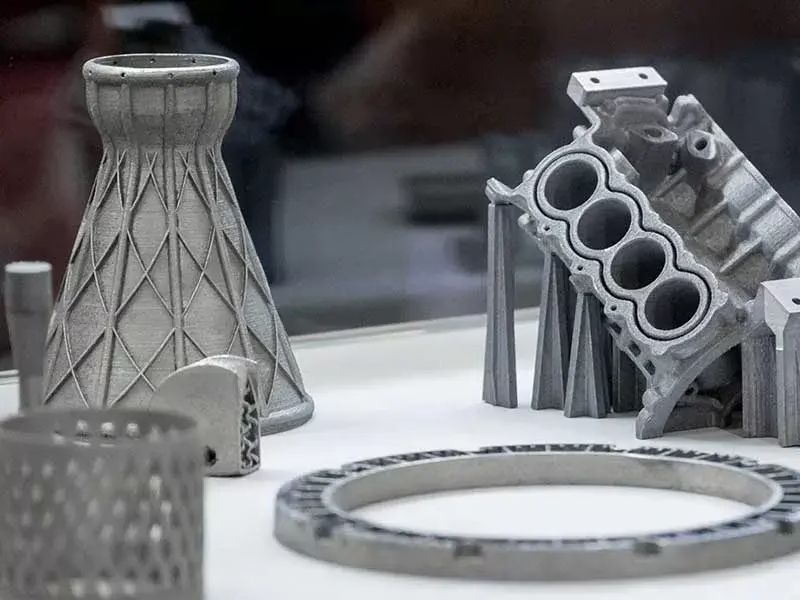
Every file gets a manufacturability pass before pricing. We check wall thickness, overhang angles, trapped powder volumes and the faces you actually need to hold tolerance on. If a part will not survive the build, we say so and suggest a change instead of printing a failed job.
That review takes hours, not days. Quotation and a free DFM analysis come back within 12 hours, and production can start within 24 hours once the drawing is agreed.
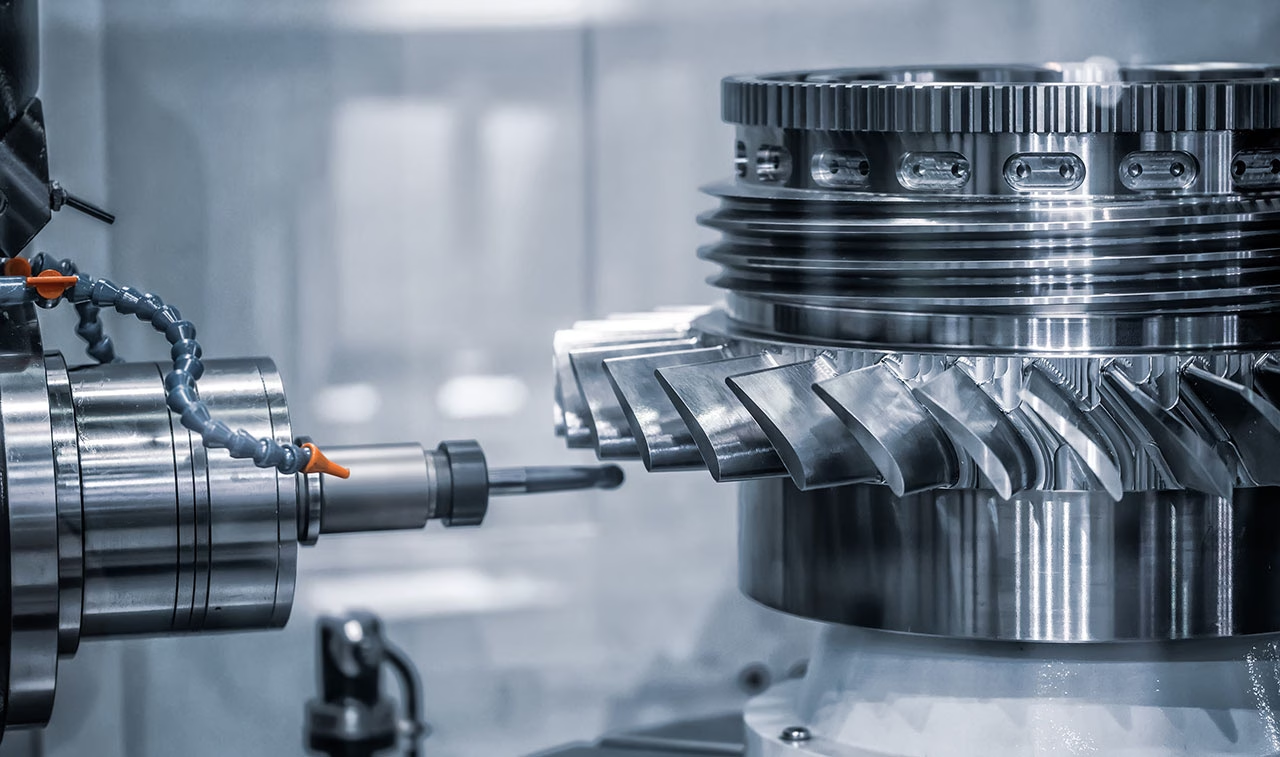
A printed boss comes off the plate with a skin that is rough and slightly oversized. We leave 0.3–0.5 mm on any face that has to mate, then take it down on a 5-axis center. Bores, bearing seats, o-ring grooves and threaded ports end up at ±0.005 mm with a finish between Ra 0.8 and 1.6 μm.
This is how printed metal parts become usable hardware rather than display models. The same shop that prints the part also machines it, so there is no shipping a half-finished component between suppliers and no argument about who owns the tolerance.
Start from the service condition, not the alloy name.
| Alloy | Typical use | Watch out for |
|---|---|---|
| Aluminum (AlSi10Mg, 6061) | Housings, brackets, heat sinks, drone frames | Low hardness; wear faces need inserts |
| Stainless 316L / 17-4PH | Manifolds, pump parts, food and medical hardware | 316L is soft; 17-4PH needs a heat treat step |
| Titanium Ti-6Al-4V (TC4) | Aerospace brackets, implants, lightweight arms | Cost per part; poor thermal conductivity in machining |
| Copper C110 / CuCrZr | Heat exchangers, induction coils, busbars | High reflectivity makes laser melting slow |
| Brass C36000 | Electrical contacts, fittings, instrument parts | Not a standard powder alloy; often better cast or machined |
Additive is one route. The rest of the shop covers what it cannot do.
Laser powder bed fusion in aluminum, stainless, titanium and copper alloys, with support removal and stress relief included in the route.
Sixteen simultaneous 5-axis centers machine printed near-net shapes and solid billet alike, up to 4,000 mm.
Milling and mill-turn centers produce round parts, threads and bores that printing cannot hold on its own.
One-off housings and brackets in days, so a design can be tested before tooling money is spent.
When the printed prototype proves out and annual volume climbs, casting takes over the housing.
Anodizing, plating, black oxide, bead blasting and laser marking finish the printed and machined surfaces.
| Item | Range |
|---|---|
| Build alloys | Aluminum, stainless 316L / 17-4PH, titanium TC4, copper |
| As-built tolerance | Around ±0.1 mm, geometry dependent |
| Post-machined tolerance | ±0.005 mm (±0.0002 in) |
| Surface finish after machining | Ra 0.8–1.6 μm high, Ra 0.2–0.8 μm fine |
| Maximum machining size | 4,000 mm |
| Order quantity | One prototype to 10,000+ parts |
Fifteen years of cutting and forming metal, with additive added to the same quality system.
Printed near-net shapes get machined to ±0.005 mm on the faces that carry the fit.
Sixteen simultaneous 5-axis centers, twelve four-axis mills, sixteen mill-turn centers.
Every part is inspected before shipment, with reports available on request.
A manufacturability review and price come back within 12 hours.
No minimum. A single prototype and a 10,000-part run use the same route.
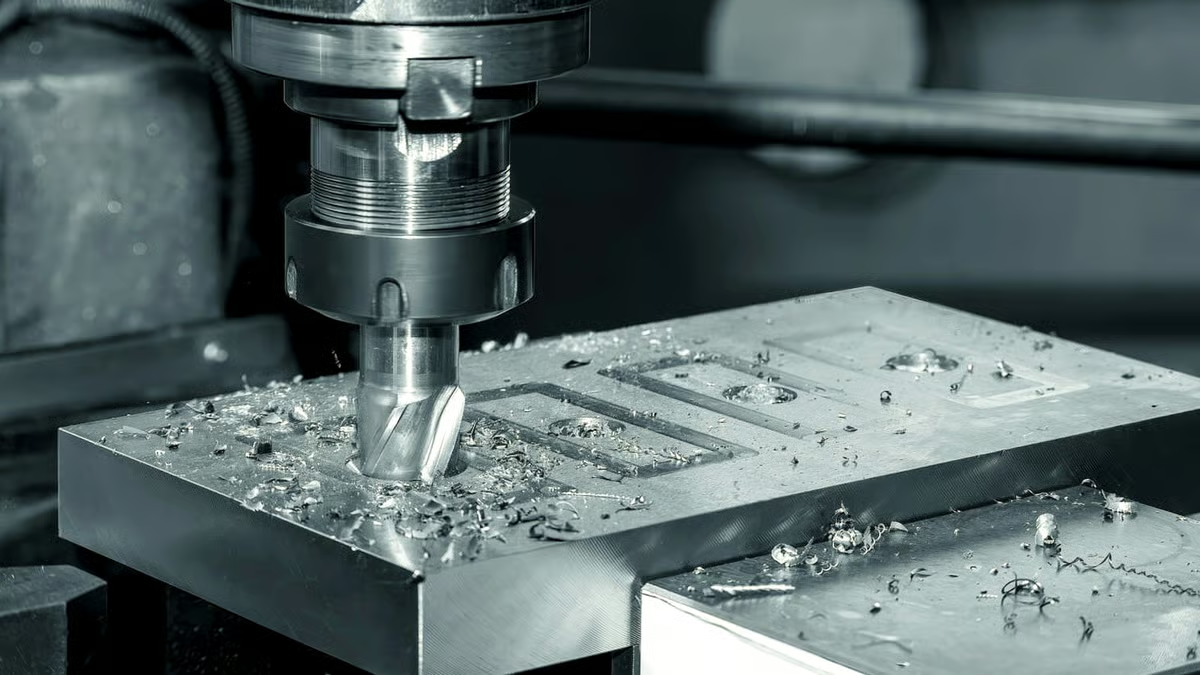
Lightweight geometry with internal ribs that would need many setups to machine from solid.

Copper and aluminum bodies with channels that cannot be reached by a cutter.
Stainless manifolds and brackets for test rigs, printed then machined at the ports.
As-built laser powder bed fusion lands around ±0.1 mm on simple geometry, and it drifts on tall thin walls or long unsupported spans. That is fine for covers and brackets. It is not fine for a bearing bore or a sealing face.
When a feature carries a fit, we leave stock on it and machine it afterward. Those faces come out at ±0.005 mm with a finish between Ra 0.8 and 1.6 μm.
Print when the geometry has internal channels, lattice structure or organic ribs that a cutter cannot reach. Printing also wins when the part would need five or more setups from solid, because each setup adds fixturing cost and stack-up error.
Machine when the part is mostly prismatic, when the lot size is high, or when you need a specific wrought alloy that is not sold as powder. A printed part that is then fully machined is usually the most expensive way to make a simple block.
We run aluminum, stainless 316L and 17-4PH, titanium TC4 and copper grades. Aluminum covers housings and heat sinks. Stainless covers manifolds and pump hardware. Titanium is for weight-critical brackets. Copper is for thermal work.
Brass is a poor fit for laser melting. It is better cast or machined, and C36000 machines fast on a lathe. If your drawing calls for a brass fitting, we will say so rather than force it into a printer.
Overhanging faces need support, and removing it leaves witness marks. If that face is cosmetic or sealing, the marks matter.
We orient the part so critical faces point up or sit vertical, which keeps support off them. Where a downfacing sealing face is unavoidable, we leave stock and machine it after the build.
Anodizing in clear, color, hardcoat or conductive versions. Electroless nickel, zinc, silver and gold plating. Powder coating and black oxide. Bead blasting, tumbling, brushing and polishing.
Laser marking and engraving are available with a minimum character height of 1.5 mm. Finishing choices depend on the alloy, so we confirm the sequence before the parts reach the line.
Yes. The same shop prints the near-net shape and machines the critical features, so both operations sit under one inspection record. That avoids the usual argument when a printed blank arrives at a machinist and does not clean up.
Mixed orders are common on prototypes, where a housing is printed and its shaft is turned from bar stock.
Uploads are secure and confidential. We can work under an NDA on request, and the agreement is available before any file is shared.
We hold ISO 27001:2022 for information security, alongside ISO 9001:2015, IATF 16949:2016 and ISO 13485:2016.
Quotation and a free DFM analysis come back within 12 hours. Production can start within 24 hours after the drawing is agreed. Parts ship in 3–5 days.
That covers standard alloys and routing. Heat treat steps and special powder orders add time, and we flag that in the quote rather than after the fact.
Upload a STEP file and we will tell you whether metal printing or CNC machining makes the better part, with a price and a DFM note inside 12 hours.
12-hour quote100% inspectionNo minimum order quantity
Trusted by engineers and manufacturers worldwide










Upload your 3D model or 2D drawing and get a quotation with a free DFM analysis. Maximum processing size 4,000 mm.
CNC Metals 13 grades
CNC Plastics 10 grades
Machines & processes 12 options
Surface & post-processing 10 options
Material: not selected Machine: not selected Post-process: not selected
Fill in this short form and we'll open WhatsApp with your message ready to send. We only use these details to reply to you.
Nothing is sent until you press send inside WhatsApp.