
CNC Machining PEEK
PEEK sits between engineering plastics and metals, and it machines with habits borrowed from both. This page covers how the material behaves at the cutter, where the process wins or loses, and what to specify so the drawing matches the part.
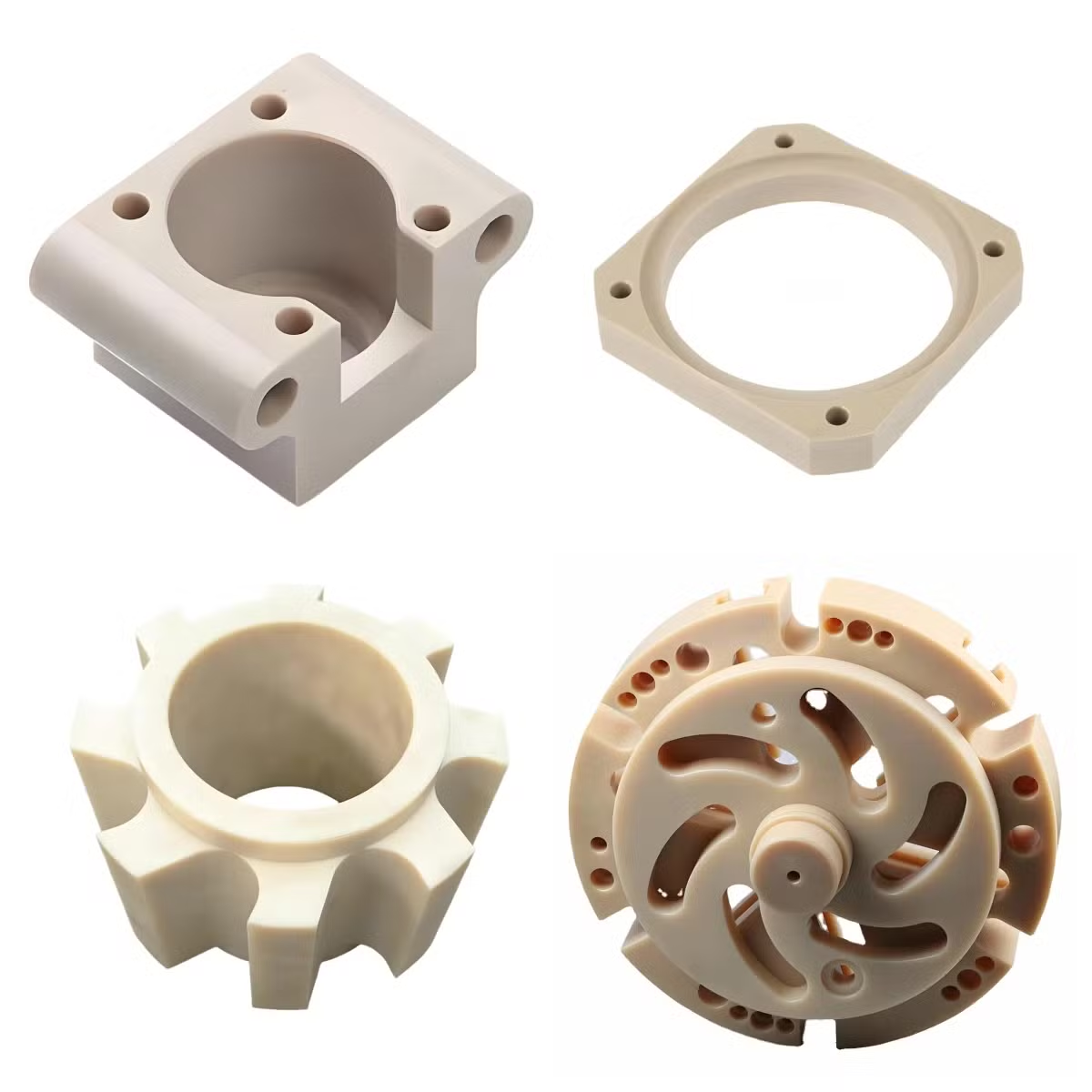
Why PEEK Machines Differently From Other Plastics
PEEK is a semi-crystalline polymer with a glass transition around 143 °C and a melting point near 343 °C. Below the glass transition it stays stiff and strong; above it, modulus drops fast. That window is narrow compared with POM or PA, and it shapes every cutting decision on the shop floor.
The material is also a poor conductor of heat. Cutting heat has nowhere to go, so it collects at the tool tip and in the chip. Local temperatures can climb well past the glass transition even when the bulk part still feels cool to the touch.
The practical result: PEEK cuts more like a soft metal than like a conventional plastic. Feeds stay moderate, depths stay shallow, and coolant or a strong air blast is standard rather than optional. Operators who run it like POM get chatter, smeared flanks and a scrapped first article.
- 1Semi-crystallineMelting near 343 °C, glass transition near 143 °C.
- 2Low thermal conductivityHeat stays at the cutting edge instead of leaving with the part.
- 3Abrasive fillersCarbon and glass fiber grades wear carbide quickly.
Speeds, Feeds and Tool Geometry That Hold Size
For unfilled PEEK, carbide tools with a sharp positive rake and polished flutes work best. A two- or three-flute end mill leaves more room for chip evacuation than a four-flute tool. Surface speeds usually land between 150 and 300 m/min, and feed per tooth between 0.05 and 0.15 mm.
On glass-filled or carbon-filled grades, drop the surface speed by half. The fibers act like a grinding medium, and edge wear shows up within a few minutes of cut time. Polycrystalline diamond tools cost more up front but hold size across a long run.
Never let the tool dwell in the cut. Pausing in the material rubs the surface, generates localized heat and leaves a dull mark that no finishing pass fully removes. Keep the cutter moving, even during entry and exit.
- 1Unfilled PEEK150–300 m/min, 0.05–0.15 mm per tooth.
- 2Filled gradesHalf the surface speed; PCD edges last longer.
- 3Flute countTwo or three flutes for chip clearance.
Heat, Stress Relief and Dimensional Drift
Extruded PEEK bar carries residual stress from the extrusion process. When a machining pass removes material from one side, the balance changes and the part moves. Thin walls, long slots and open rings show this most clearly.
The usual fix is a stress-relief anneal before the finishing passes. A roughing pass leaves 0.5 to 1.0 mm of stock, the part is annealed, then the finishing pass brings it to size. For a larger part that needs ±0.005 mm, this two-stage route is standard.
Cooling matters just as much. Flood coolant keeps the bulk temperature stable and carries chips away from the cut. A strong air blast is acceptable on small features where coolant would push a thin wall. What does not work is dry cutting a deep pocket and hoping the part stays flat.
- 1Rough, anneal, finishLeave 0.5–1.0 mm stock before the final pass.
- 2Thin wallsSupport from both sides to limit deflection.
- 3CoolantFlood or high-pressure air keeps the cut stable.
When CNC Machining PEEK Beats Molding or Printing
Injection molding makes sense when the part geometry is stable, the volume is high and tooling cost spreads across thousands of units. CNC machining fits the opposite case: prototypes, bridge tooling, low and mid volumes, and any geometry with undercuts, deep pockets or tight tolerances that would need complex mold action.
Additive printing of PEEK exists, but the layer lines and the void content are hard to control. For a seal face, a bearing surface or an implant housing, machined stock is easier to qualify. We machine from certified bar and document the lot.
Machining also lets engineers change the design between iterations without cutting a new mold. For a semiconductor wafer carrier or a sterilizable surgical instrument, that speed matters more than unit cost in the early rounds.
- 1Choose machiningPrototypes, low volume, tight tolerance, complex features.
- 2Choose moldingHigh volume with stable geometry and simple parting.
- 3CertificationMachined bar keeps the lot traceable for audits.
Where PEEK Machining Costs Come From
Bar stock drives the bill more than cycle time does. Unfilled PEEK bar costs several times what aluminum costs per kilogram, so a generous roughing allowance turns into real money in the scrap bin. Program the roughing pass to leave only the stock the finishing pass needs.
Tool wear is the second line item. Filled grades dull edges quickly, and a dull edge rubs instead of cutting, which raises heat and scrapped parts. Budget for tool changes and watch the surface finish as an early warning.
Fixturing is the third. Soft jaws or a dedicated fixture protect the part from clamp marks and hold thin sections flat. The extra setup hour is cheaper than a re-run after a bowed part fails inspection.
- 1Bar costKeep roughing stock at 0.5–1.0 mm, not more.
- 2Tool lifeFilled grades wear edges fast; track cut time per edge.
- 3FixtureSoft jaws protect surfaces and control flatness.
PEEK Machining Parameters by Grade
Starting points for a first article; adjust to the machine and fixture.
| Grade | Surface speed | Feed per tooth | Tooling note |
|---|---|---|---|
| Unfilled PEEK | 150–300 m/min | 0.05–0.15 mm | Sharp carbide, 2–3 flutes |
| 30% glass filled | 80–150 m/min | 0.04–0.10 mm | PCD or coated carbide |
| 30% carbon filled | 80–150 m/min | 0.04–0.10 mm | PCD, watch edge wear |
| PEEK with PTFE | 150–250 m/min | 0.05–0.12 mm | Sharper rake, lower feed |
| Medical grade | 150–300 m/min | 0.05–0.15 mm | Dedicated tooling, clean setup |
Pick Based on the Part, Not the Material Name
For tight tolerance, low volume and complex geometry, machine PEEK from stress-relieved bar. For simple, high-volume geometry where tooling cost amortizes, mold it. Mixing the two in one program rarely pays off.
PEEK Machining Questions
Can PEEK hold ±0.005 mm?
Yes, on stable geometry with a stress-relieved blank and a finishing pass under controlled temperature.
Thin walls and long unsupported sections are the usual limit, not the material itself.
Does PEEK need annealing before machining?
Extruded bar benefits from a stress-relief anneal before finishing. Without it, the part can move after the last cut.
For simple, thick parts the gain is smaller, but the anneal costs little compared with a scrapped batch.
Why does my PEEK part come out dull or smeared?
Heat is the usual cause. Too high a surface speed, too low a feed, or a dwell in the cut all raise the local temperature.
Reduce speed, increase feed per tooth, and keep the cutter moving through entry and exit.
Is coolant required for PEEK?
Flood coolant is the safest default. It controls bulk temperature and flushes chips out of pockets.
A high-pressure air blast works on small features where coolant would deflect a thin wall.
Which grades are hardest to machine?
Carbon and glass filled grades wear tool edges fastest. Expect shorter tool life and tighter monitoring.
Unfilled and medical grades cut more predictably, though they still need sharp tooling.
Can PEEK parts be sterilized after machining?
PEEK withstands common sterilization routes including steam autoclave and gamma. Machined surfaces take the process well when the finish is controlled.
Specify the sterilization method on the drawing so the finishing pass matches the requirement.
Send Your PEEK Drawing for Review
Upload a STEP file and we return a quotation with a free DFM analysis within 12 hours. No minimum order quantity, from one prototype to 10,000+ parts.
12-hour quoteNo minimum order100% inspection
More From the Shop Floor
We publish setup notes, tooling trials and inspection data from the factory floor.











