GreatLight CNC Machining Factory logo
CNC Machining
Rapid Prototyping
Materials
Industries
News
About GL

Get Instant Quote

PEEK Machining

PEEK Machining Service

We machine PEEK parts for engineers who cannot tolerate swelling, outgassing or a failed seal. Tight tolerances, clean handling and documented inspection from our Dongguan and Singapore plants.

Unfilled and filled PEEK±0.005 mm toleranceISO 13485:2016No minimum order quantity
oplus_262178
15 yearsMachining plastics and metals
127High-precision CNC machines
±0.005 mmAchievable tolerance
3–5 daysTypical part shipping
Failure modes

Where PEEK parts go wrong

Most failures start before the first cut. These are the four we see most often.

01

Does your seal groove measure oversize after a week on the shelf?

PEEK absorbs moisture slowly. A part cut with heavy coolant and no stress relief can move after it leaves the machine. The seal then leaks at pressure, and nobody finds out until the assembly is tested. Drying and stress relief before the finish pass fix most of this.
02

Are you scrapping parts because the material cost more than the machining?

PEEK stock runs well above aluminum or acetal. One wrong toolpath, one tool that rubs instead of cuts, and you lose a blank worth more than the labor. We program conservative feeds for the first article and confirm dimensions before running the rest.

03

Do your parts need to pass a cleanliness spec, not just a dimensional one?

Medical and semiconductor customers ask for low extractables and no embedded chips. Cutting with the wrong coolant or blending the surface traps contamination in the pores. We keep PEEK on separate tooling and clean the parts before packing.

04

Did a supplier quote PEEK and then deliver something that machines like nylon?

Filled grades and unfilled grades behave differently. A shop that treats every polymer the same will burn the edges on 30% glass-filled PEEK and cut the unfilled grade too slowly. We ask which grade you specified before quoting.

Our approach

Machining PEEK as a material, not a generic plastic

Two things decide whether a PEEK part works: how the material is held and how the cutter engages it.

CNC Lathe Technical Specifications Terminology
Material behavior

Thermal expansion drives the tolerance call

Unfilled PEEK expands roughly three times as fast as aluminum with temperature. A groove measured at 20 °C will read differently at 60 °C in service. Before we quote a tolerance, we ask the operating temperature and whether the drawing was dimensioned at room temperature.

For most parts we hold ±0.005 mm on critical features and note which dimensions are functional, so inspection focuses where it matters.

  • 1
    Grade firstUnfilled, 30% glass-filled and carbon-filled PEEK machine at different speeds and feeds.
  • 2
    Drying before cuttingMoisture in the blank causes dimensional drift and surface porosity.
  • 3
    Sharp toolingDull edges rub the material and leave a smear instead of a cut.

Get Instant Quote

CNC Machining Services Online
Process control

Fixturing and finishing decide the surface

PEEK is soft enough to compress under a clamp and stiff enough to spring back when you release it. We use soft jaws or vacuum fixturing on thin walls, and take light finish passes so the part does not relax after the last cut.

Where a spec calls for low particle shedding, we finish with sharp carbide and avoid aggressive tumbling that would embed media in the surface.

  • 1
    Light clampingHeavy jaw pressure deforms thin-wall bushings and seal rings.
  • 2
    Controlled coolantCoolant choice affects moisture uptake and cleaning effort later.
  • 3
    Inspection on the machineCMM checks on critical diameters before the part leaves the spindle.
Selection

Which grade fits which job

This is a starting point, not a substitute for your material spec.

GradeBest forWatch out for
Unfilled PEEKSeals, bushings, insulatorsHighest thermal expansion
30% glass-filledStructural brackets, wear partsAbrasive to tooling, burrs
30% carbon-filledStiff, low-creep partsConductive, not for insulation
Medical gradeImplant and instrument partsRequires documented handling
Semiconductor gradeWafer handling, fluid partsLow extractables needed
Food gradePump and valve componentsCleaning validation applies
What we run

PEEK machining services

One shop for the operations your part needs, from first article to production.

01

5-axis CNC machining

Complex PEEK geometry in one setup. 16 simultaneous 5-axis centers handle contoured seals and angled ports without re-fixturing.

02

CNC turning

Bushings, sleeves and seal rings turned to diameter and face runout. Mill-turn centers cut cross holes without a second operation.

03

3-axis and 4-axis milling

Plates, manifolds and housings. 27 three-axis and 12 four-axis machines cover simple profiles at volume.

04

Rapid prototyping

One-off PEEK prototypes to test fit and chemical compatibility before you commit to a production run.

05

Surface finishing

Bead blasting, brushing and polishing where the spec allows. We avoid processes that embed media in PEEK.

06

Inspection and documentation

100% inspection before shipment. Raw material check, in-process monitoring and final reports on request.

Capability

Machine and tolerance range

Numbers from our current equipment list.

ItemRange
Achievable tolerance±0.005 mm (±0.0002 in)
Fine finishRa 0.2–0.8 μm
Standard finishRa 0.8–1.6 μm
Maximum part size4,000 mm
Rotary tableØ400 mm
Order quantityOne prototype to 10,000+ parts
Why GreatLight

Built for polymer work

The equipment matters less than how it is used on PEEK.

15Y

Machining since 2011

Fifteen years of cutting engineering plastics and metals in Dongguan, with a second plant in Singapore.

127

CNC machines under one roof

Sixteen simultaneous 5-axis centers, twelve four-axis mills, twenty-seven three-axis machines and sixteen mill-turn centers.

±0.005 mm

Tolerance we hold

Held on critical features after we agree which dimensions are functional and which are reference.

12 h

Quote and DFM feedback

Quotation and a free DFM analysis within 12 hours of receiving a usable drawing.

99.99%

Qualification rate

Parts that pass inspection on the first submission, backed by 100% inspection before shipment.

1 pc

No minimum order quantity

We run a single prototype or a 10,000-part batch on the same process and inspection plan.

7,600 m²Manufacturing space
150Technicians on staff
3Wholly-owned plants
<2%Historical late-delivery rate
Where PEEK parts go

Industries and what they require

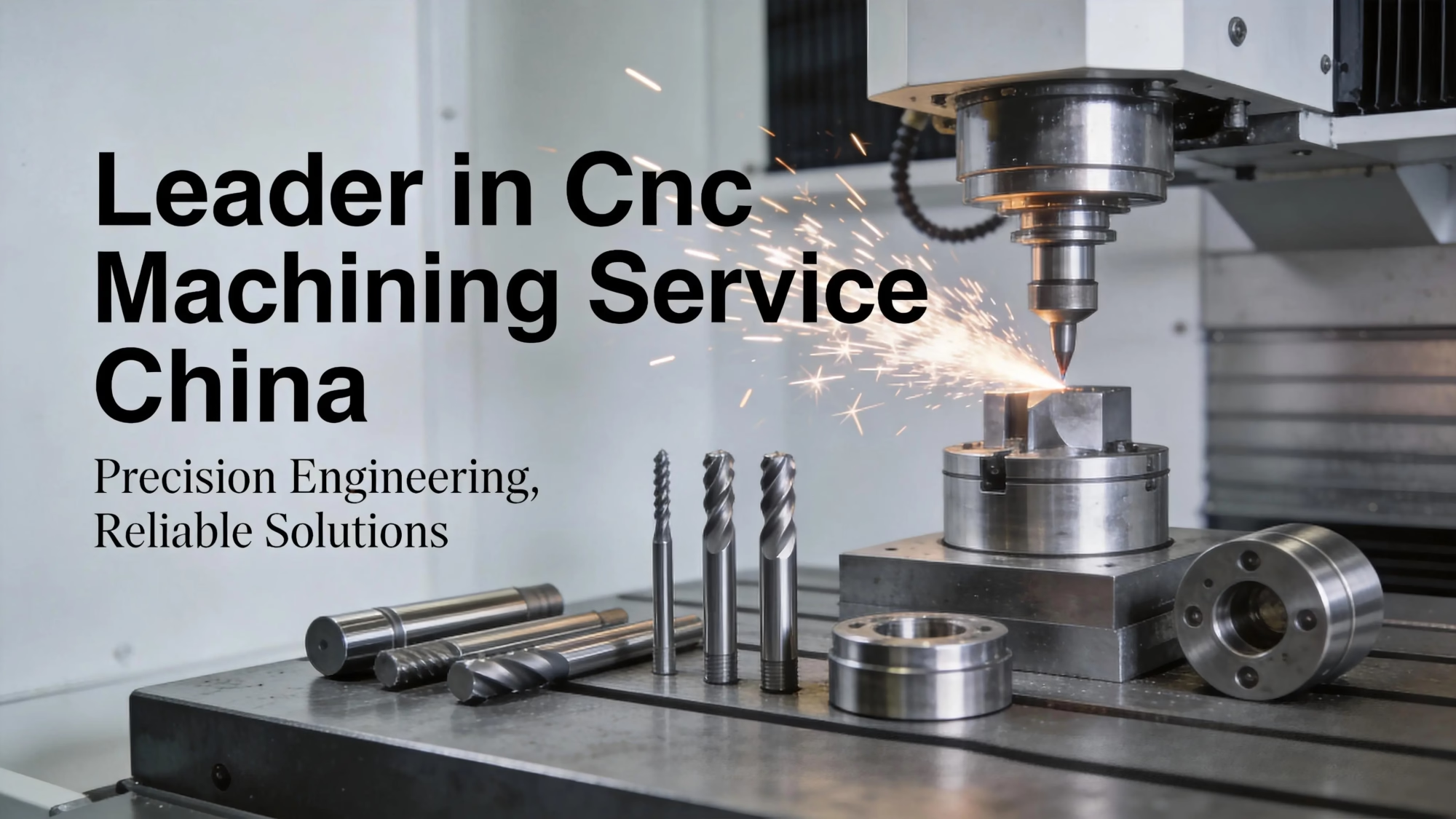
Leader in Cnc Machining Service China

Medical devices

Instrument housings and implant-grade components. The spec asks for documented material traceability and clean handling.

  • ISO 13485:2016
  • Clean handling
  • Traceable lots
6011

Semiconductor equipment

Wafer-contact and fluid-path parts. The spec asks for low extractables and no embedded media.

  • Ra 0.2–0.8 μm
  • No media blast
  • 100% inspection
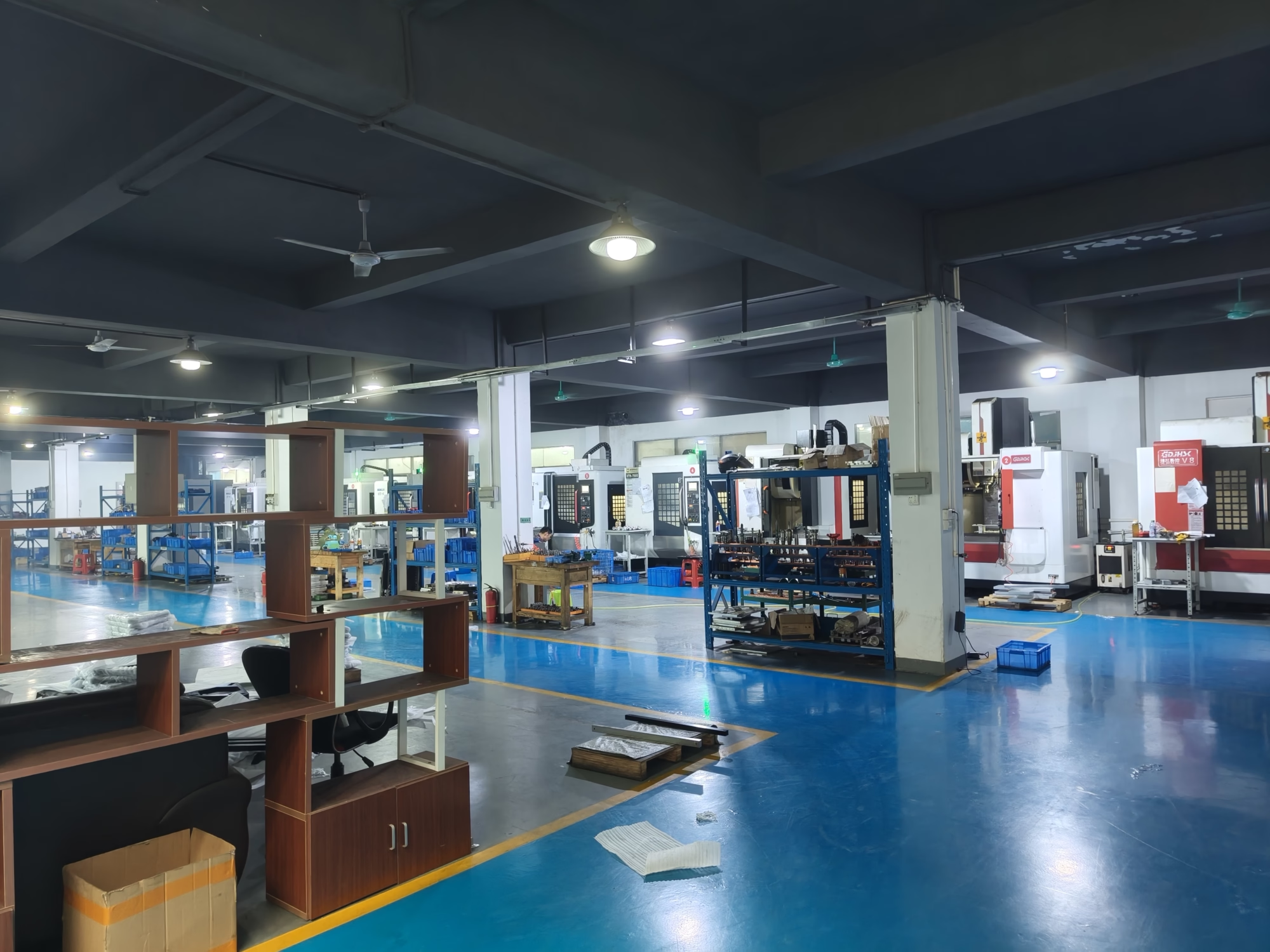
GreatLight Metal new factory building

Aerospace and defense

Bushings and insulators where weight and chemical resistance both matter. The spec asks for repeatable dimensions across batches.

  • ±0.005 mm
  • Batch repeatability
  • AS9100-class controls
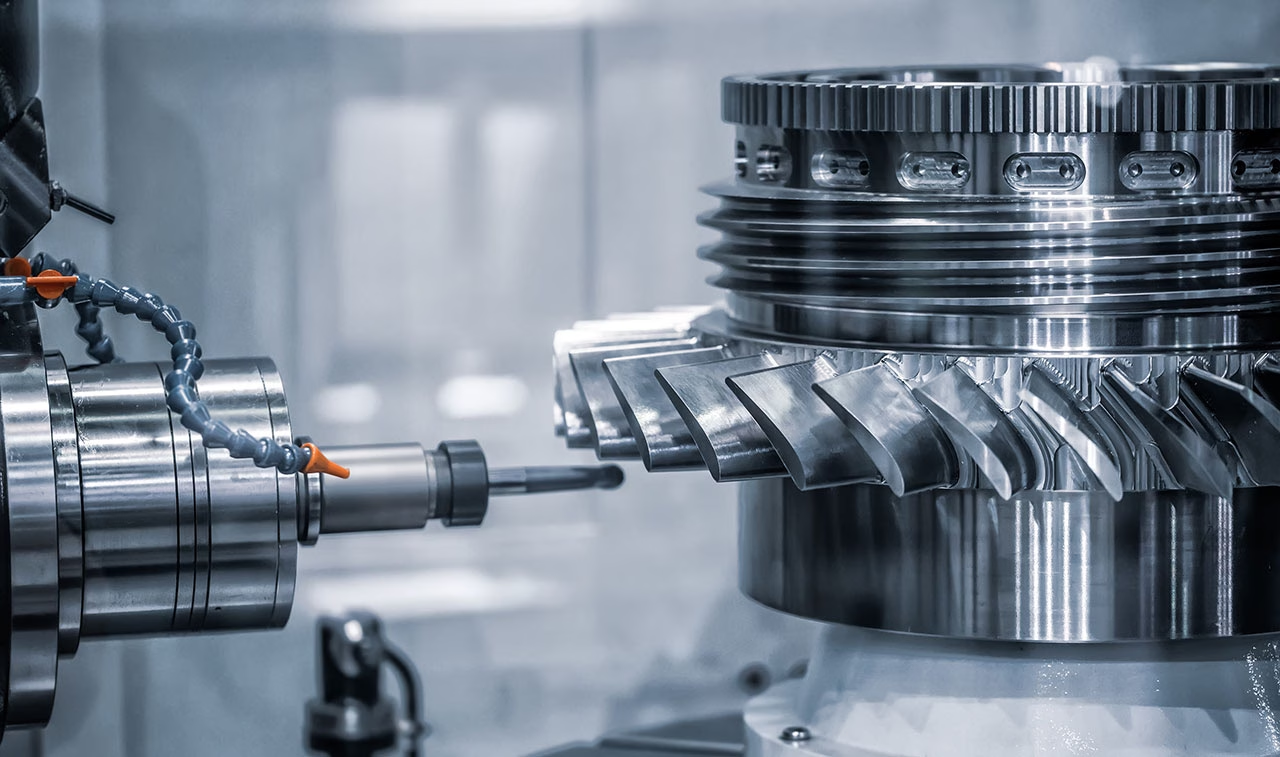
cnc machining

Automotive and EV

Seal rings and wear components in drivetrain assemblies. The spec asks for PPAP documentation and stable processes at volume.

  • IATF 16949:2016
  • PPAP documentation
  • Volume runs
FAQs

Questions engineers ask before quoting

What is PEEK and why machine it instead of molding it?

PEEK is a semi-crystalline thermoplastic in the polyaryletherketone family. It holds strength at high temperature, resists acids, bases and most solvents, and burns with low smoke and low toxicity.

Molding makes sense at high volume with simple geometry. Machining makes sense for prototypes, low to mid volume, tight tolerances and features a mold cannot pull, such as undercuts and deep cross holes.

Which tolerance can you actually hold on PEEK?

We hold ±0.005 mm on critical features when the part geometry and wall thickness allow it. Thin walls and large unsupported spans will move, so we agree on which dimensions are functional before cutting.

Because PEEK expands about three times as much as aluminum, we also need the temperature at which the part will be measured and used.

Does PEEK absorb moisture, and does that affect my dimensions?

Yes. Unfilled PEEK takes on a small amount of moisture over time, and the part grows slightly. In a seal groove or a press fit, that movement can change the fit.

We dry blanks before machining and, where the application is sensitive, cut to a target that accounts for service conditions rather than room-temperature numbers alone.

Can you machine filled grades like glass-filled or carbon-filled PEEK?

Yes. Filled grades are more abrasive to tooling, so we adjust speeds, feeds and tool material. Glass-filled PEEK also burrs more, which changes how we plan the finish pass.

Tell us the exact grade and supplier if you have one. The difference between unfilled and 30% glass-filled is large enough to change the whole program.

What surface finish can you produce on PEEK parts?

We reach Ra 0.8–1.6 μm as a standard machined finish, and Ra 0.2–0.8 μm on fine-finish features. The practical limit depends on the geometry and the grade.

For medical and semiconductor parts, we avoid bead blasting and tumbling because the media can lodge in the surface. Sharp cutting tools and light finish passes leave a cleaner surface.

How do you keep PEEK parts clean for medical or semiconductor use?

PEEK runs on tooling that is kept separate from metal work, and we clean parts before packing. Coolant choice is made with the cleanliness spec in mind, not just tool life.

We operate under ISO 13485:2016 and ISO 9001:2015 and can supply inspection reports on request. Uploads are kept confidential and an NDA is available if you need one.

What is the lead time and minimum order quantity?

Quotation and a free DFM analysis come back within 12 hours. Production can start within 24 hours of approval, and parts typically ship in 3–5 days.

There is no minimum order quantity. We run one prototype or a run of 10,000+ parts on the same process plan.

What information do you need to quote a PEEK part?

Send a 3D model or a dimensioned 2D drawing, the PEEK grade, the quantity and any cleanliness or documentation requirements. If you know the operating temperature and chemical exposure, include those too.

If a dimension is functional rather than reference, say so. That single note often decides whether the part passes inspection.

Send your PEEK drawing for a quote

Upload a model or print and we will come back with a price, a DFM note and a lead time.

12-hour quote100% inspectionNo minimum order quantityNDA on request

Trusted by engineers and manufacturers worldwide

Tesla Ford Motor Company BYD Auto Denso Magna International Boeing Airbus Medtronic KUKA FANUC