GreatLight CNC Machining Factory logo
CNC Machining
Rapid Prototyping
Materials
Industries
News
About GL

Get Instant Quote

EV and automotive prototyping

Developing Rapid Prototypes for EV Production

Prototype parts for commercial EV platforms, from a single bracket to a pilot build of eight variants. We machine, cast and print them, and DFM feedback plus a quote come back within 12 hours.

±0.005 mm tolerance3–5 day shippingNo minimum orderIATF 16949:2016
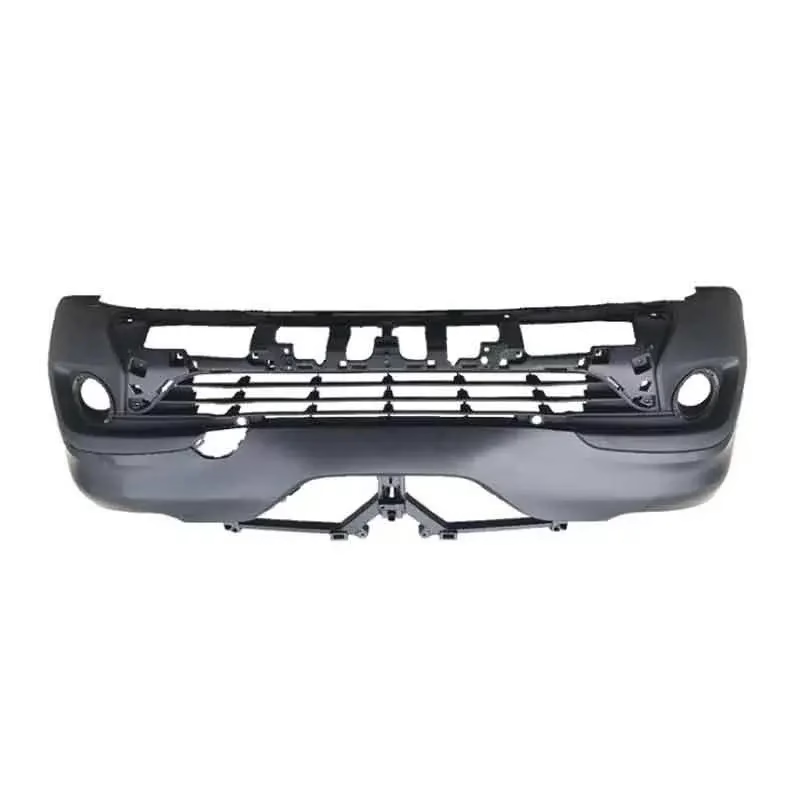
Automotive-front-bumper-plastic-rapid-prototyping-jpg
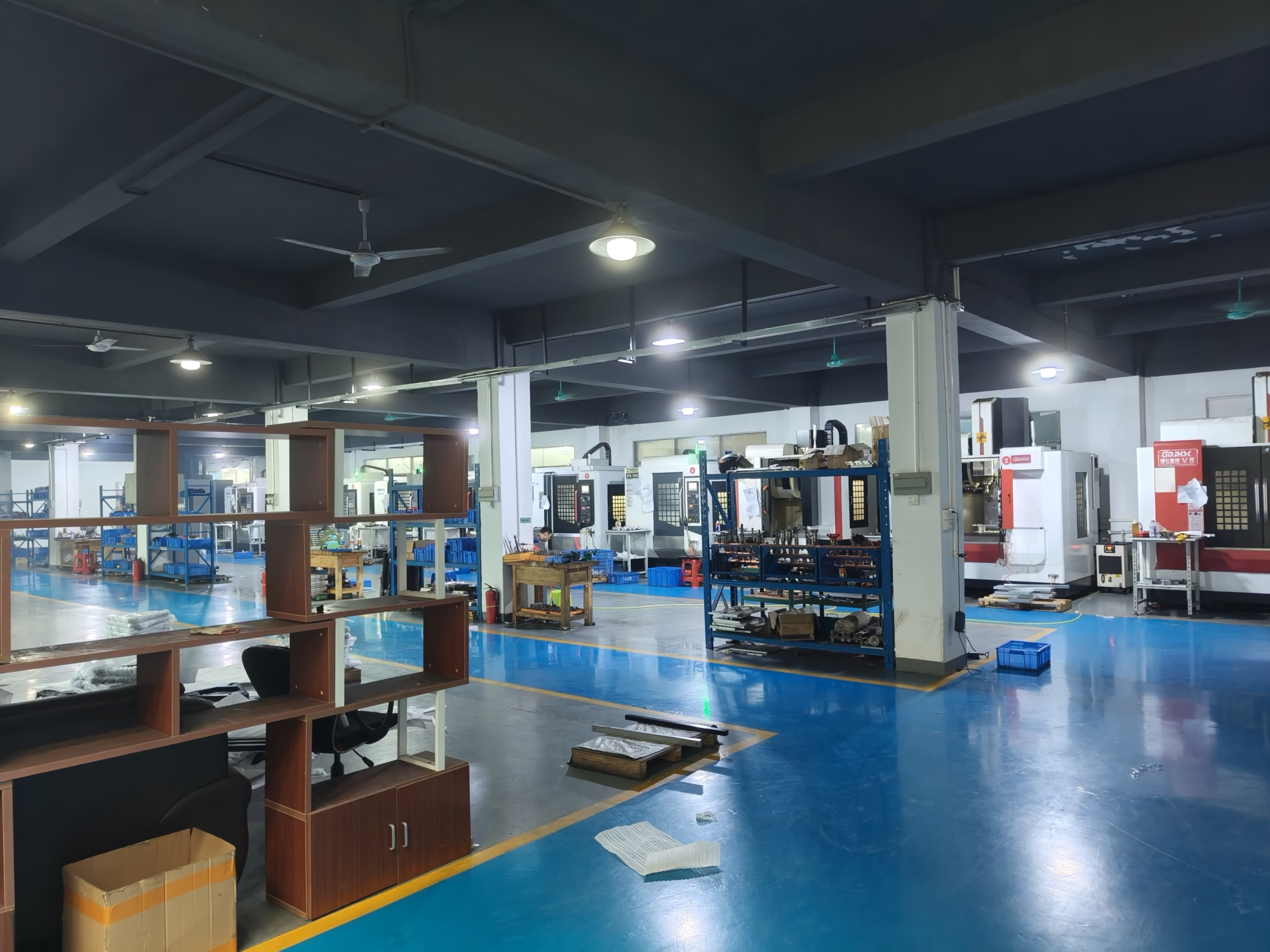
127High-precision CNC machines
16Simultaneous 5-axis centers
±0.005 mmAchievable tolerance
3–5 daysTypical part shipping
Where prototype schedules break

Four ways a pilot build slips a week

01

Tooling is not ready, the build is

Die cast and forging tools take months. The pilot vehicle is scheduled before the first production-intent part exists, so the build waits on steel that has not been cut yet. One late bracket holds an entire chassis.

02

The quote takes longer than the part

Sending an RFQ to five shops and waiting four days for pricing burns the float you built into the schedule. By the time the PO is issued, the assembly line already has people standing around it.

03

Machining capacity is booked out

Shops running production work push prototype jobs to the back of the queue. A 20-piece order sits behind a 5,000-piece order, and the parts you need this week arrive next month.

04

Parts arrive, then do not fit

A prototype machined to a loose drawing tolerance can miss the datum stack. Hole positions drift, brackets need hand rework, and the build team spends a weekend with a die grinder instead of assembling.

How we close the gap

A prototype route that does not wait for tooling

Machine, print or cast the pilot parts first. Move to production tooling once the design stops changing.

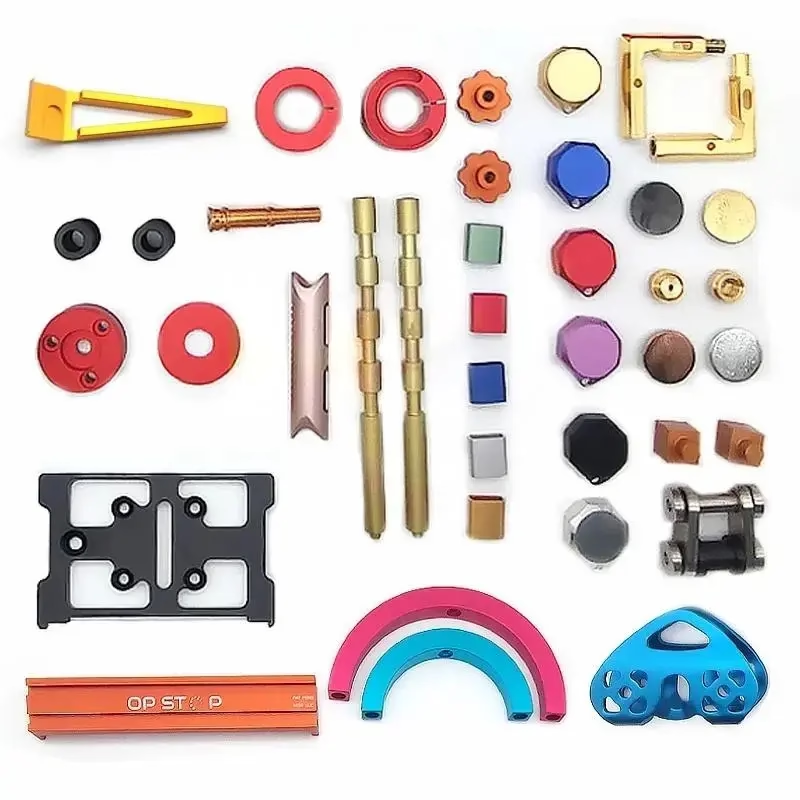
precision-custom-machining-solutions-from-prototype-to-production
Machining first

Cut the pilot parts from billet while the dies are still being cut

For structural brackets, motor mounts, suspension links, battery tray supports and chassis nodes, we machine from solid. That removes the die-cast tool from the critical path. You get real geometry, real material and real strength for the pilot vehicle, and the tool can be ordered in parallel.

Five-axis work handles the pockets, ribs and draft that a casting would have, without splitting the part into three setups. Dimensions land at ±0.005 mm on critical features, and a 4,000 mm maximum processing size covers long frame members.

  • 1
    16 simultaneous 5-axis centersUndercuts, deep pockets and drafted walls in one setup.
  • 2
    Aluminium 6061-T6, 7075, ADC12Cast-equivalent alloys so the pilot part behaves like the production part.
  • 3
    Anodizing and hardcoatCosmetic and wear surfaces finished to the same spec as the build vehicle.

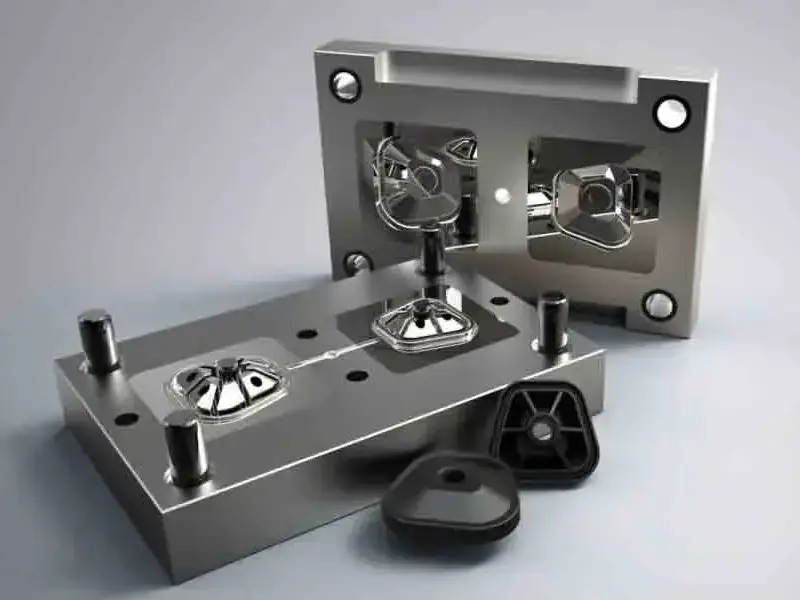
rapid-tooling-services-1
Bridge and low-volume tooling

When 30 parts are needed and the die is months away

Between a machined prototype and a hard die there is a gap. Vacuum casting and rapid tooling fill it. A silicone or soft tool pulls 20 to 50 urethane parts with the colour, texture and wall thickness of the production piece, which is enough for a pilot fleet and for fit checks on the line.

For metal parts in that same window we use gravity and low-pressure die casting in aluminium. Tool lead time is measured in weeks, not months, and the tool can be modified or re-cut if the design moves. That keeps pilot builds moving without committing to a production die that may be obsolete by the time it is finished.

The choice is not permanent. Parts made this way become the reference for the hard tool, so the casting house works from a proven design.

  • 1
    Vacuum casting20–50 urethane parts per soft tool, production-like finish.
  • 2
    Bridge die castingAluminium tools in weeks, not months, for pilot quantities.
  • 3
    Design still movingTool inserts can be re-cut when the geometry changes.
Choosing a route

Match the process to the quantity and the deadline

RouteBest forWatch out for
CNC from billet1–100 parts, tight toleranceHigher unit cost than casting
Vacuum casting20–50 cosmetic or fit partsNot for structural loads
Bridge die castingPilot volumes in aluminiumTool still needs weeks
3D printingForm and fit in daysAnisotropic, weak in tension
Hard die casting10,000+ parts per yearLong tool lead, high commitment
What we run in-house

Six processes under one roof

01

Rapid Prototyping

Machined, printed or cast prototype parts with DFM notes on the first review. One piece or a pilot batch.

02

5 Axis CNC Machining

Complex geometry in one setup. 16 simultaneous 5-axis centers for brackets, housings and structural nodes.

03

CNC Milling & Turning

Shafts, bushings, fittings and turned parts with milled features. 16 mill-turn centers for parts that need both.

04

Vacuum Casting

Urethane parts from a silicone tool for cosmetic, fit and pilot-fleet builds in 20–50 piece runs.

05

Custom 3D Printing

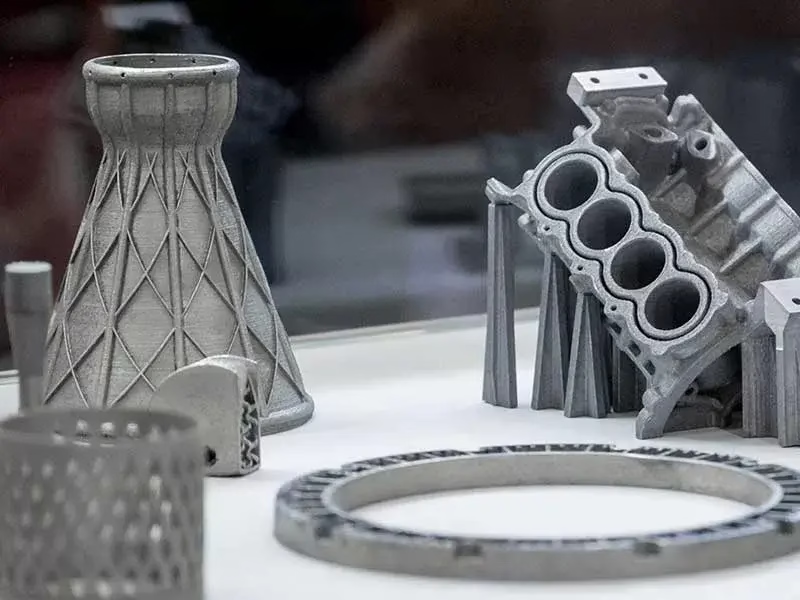
Form and fit checks in ABS, PC, PA and PEEK where the deadline is days away and load is not critical.

06

Metal Die Casting

Gravity and low-pressure aluminium castings for pilot volumes, plus hard dies for production programs.

Scope at a glance

Tolerance, size and materials

ItemCapability
Tolerance±0.005 mm (±0.0002 in)
Surface finishRa 0.2–0.8 μm fine, Ra 0.8–1.6 μm high
Maximum part size4,000 mm
Large travel4,000 × 400 × 150 mm
Medium travel750 × 1,150 × 550 mm
Compact travel500 × 500 × 450 mm
Aluminium6061-T6, 7075, 2024, 5083, 6082, ADC12
Steel1018, 1045, 4130, 4140, 4340, A36
Stainless303, 304, 316L, 17-4PH (SUS630)
Titanium and specialTC4 (Ti-6Al-4V), Inconel, AZ31B, AZ91D
PlasticsABS, PC, POM, PA, PEEK, carbon fibre
Inspection100% before shipment, reports on request
Why engineers send us the pilot build

Numbers we can be held to

12 h

Quote and DFM review

Drawings go in, a price and a manufacturability note come back within 12 hours. Production can start within 24 hours of approval.

±0.005 mm

Tolerance on critical features

Held on datum-controlled features, not on every surface. We tell you which ones can run looser and why.

99.99%

Qualification rate

Raw material check, in-process monitoring and final inspection. Anything out of spec is caught before it ships.

1

Minimum order quantity

One prototype or 10,000+ parts. No tooling amortization forced onto a single bracket.

3

Plants, one quality system

Dongguan plus a Singapore facility, all under ISO 9001:2015 and IATF 16949:2016.

<2%

Historical late-delivery rate

Parts ship in 3–5 days on standard work. We flag schedule risk at quoting, not after the fact.

15 yearsIn business since 2011
7,600 m²Manufacturing space
150Technicians on staff
3Wholly-owned plants
What the work looks like

Part families and what they have to meet

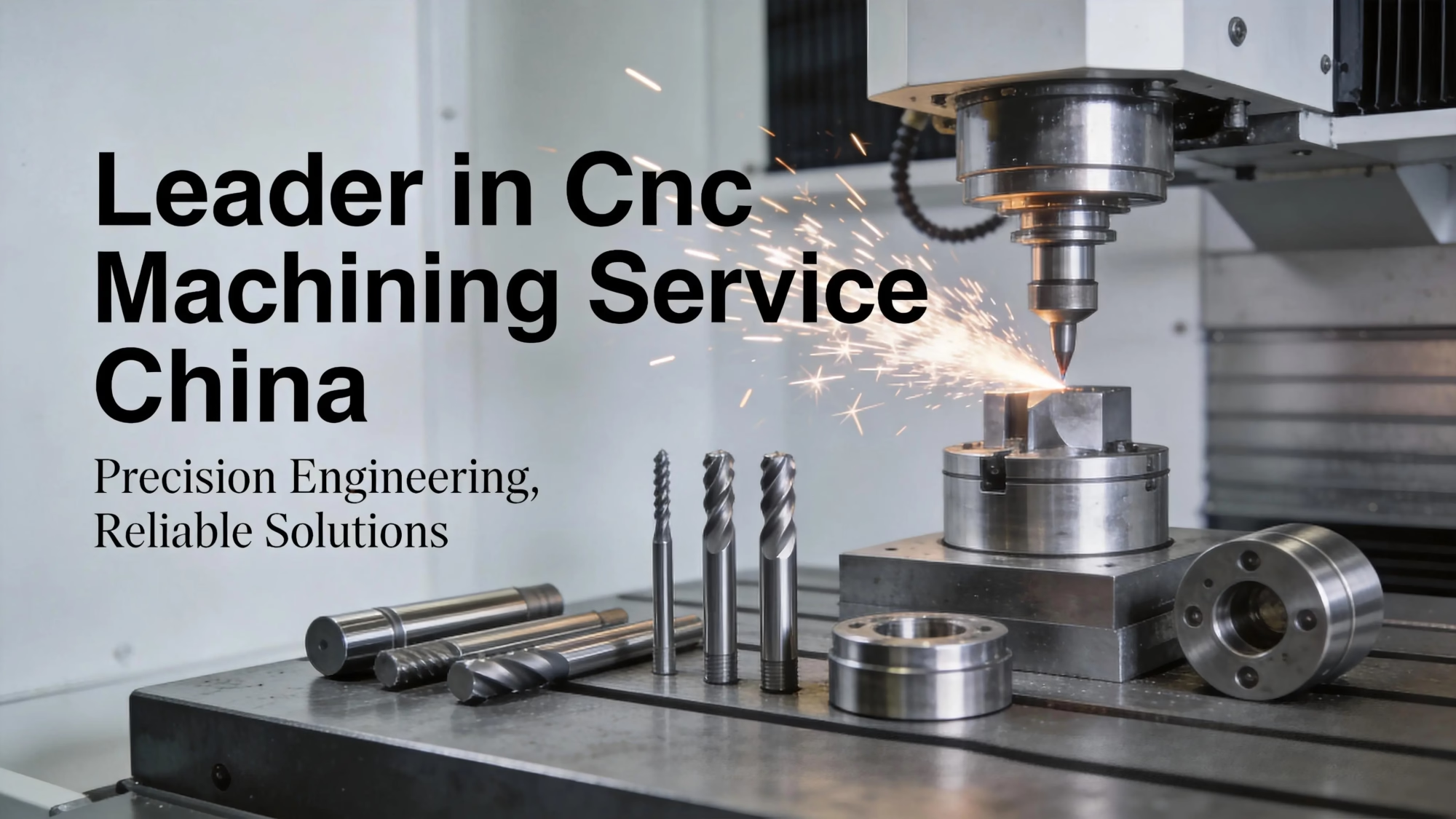
Leader in Cnc Machining Service China

Structural brackets and nodes

Machined from 6061-T6 and 7075 while the production die is still being cut. IATF 16949:2016 process control applies to prototype runs too, so the pilot part and the production part share a traceable route.

  • ±0.005 mm
  • IATF 16949
  • 1 pc to 10,000+
oplus_262178

Housings and enclosures

Electronics enclosures and motor housings where the sealing face and hole pattern decide fit. Five-axis work keeps the mating surfaces in one setup instead of three.

  • 16 5-axis centers
  • Ra 0.8–1.6 μm
  • 100% inspection
medical-devices-rapid-prototyping

Turned fittings and bushings

Shafts, bushings and hydraulic fittings held on diameter and concentricity. Mill-turn centers complete both operations without re-chucking the part.

  • Ø400 mm table
  • ±0.0002 in
  • 3–5 day shipping
Rapid-3D-Printing-Services-jpg

Form-and-fit checks

Printed ducts, covers and clips for the first assembly. Fast enough to test a change between design reviews, and honest about where the material is not load-bearing.

  • No minimum order
  • ABS, PC, PA, PEEK
  • DFM in 12 hours
FAQs

Questions we get from EV design teams

How fast can you quote and start a prototype job?

Quotation and a free DFM analysis come back within 12 hours of receiving a 3D file and drawing. If the geometry is clean, production can start within 24 hours of approval.

Parts ship in 3–5 days on standard work. If your geometry needs a fixture or a custom tool, we tell you at quoting and give you a revised date rather than a surprise later.

Can you machine parts from cast aluminium so the prototype behaves like the production part?

Yes. We machine ADC12 and A356-equivalent aluminium as billet stock, plus 6061-T6, 7075 and 6082 for structural parts. The alloy choice matters more than the process for stiffness and weight.

For a cast part, the real difference is wall thickness and draft. We can reproduce the drafted walls and ribs by machining, so the pilot part fits the same space as the eventual casting.

When should we use machining instead of a die casting for a pilot build?

Use machining when the quantity is under about 100 parts, when the design is still moving, or when the die lead time blocks the build. Machining removes tooling from the critical path entirely.

Move to die casting when the geometry is frozen and annual volume is in the thousands. At that point the tool cost amortizes and the per-part price drops. We run both, so we can tell you where the crossover sits for your part.

What tolerance can you hold on a prototype?

±0.005 mm (±0.0002 in) on critical, datum-controlled features. We do not claim that on every surface of every part, because it is not needed and it costs money.

Send the drawing with your functional dimensions marked. We will tell you which features need the tight tolerance and which can run at Ra 1.6–3.2 μm as-machined.

How do you handle drawings and confidentiality?

Uploads are secure and confidential. We sign an NDA on request, and the agreement covers files, tooling and part geometry.

Access to production files is limited to the people quoting and running the job. We do not use customer parts or drawings in marketing material without written permission.

Can you finish prototype parts to the same spec as production?

Yes. Anodizing in clear, colour, hardcoat or conductive, electroless nickel, zinc, silver and gold plating, powder coating, black oxide, bead blasting, brushing and polishing.

Laser marking is available with a minimum character height of 1.5 mm. If your pilot vehicle needs a marked part number, that can be on the first article.

What happens if the design changes between the pilot build and production?

Bridge tooling is built so inserts can be re-cut or replaced. That is the main reason to use soft or bridge tooling at pilot stage instead of committing to a hard die.

For machined prototypes, a revision usually means a new program and a new set of parts. We keep the setup data, so re-cutting a revised part is faster than the first run.

Do you work from a 3D file only, or do you need a 2D drawing?

A STEP file alone is enough to quote. A 2D drawing helps when tolerances, datums or surface finish matter, because those are not always in the model.

If you only have a model, we flag the features where tolerance is ambiguous and ask before cutting metal. That avoids a rework cycle later.

Send the pilot parts you are waiting on

Upload a STEP file and a drawing. You get a price and a DFM review within 12 hours, and one prototype is enough to start.

12-hour quote100% inspectionNo minimum orderNDA on request

Trusted by engineers and manufacturers worldwide

Tesla Ford Motor Company BYD Auto Denso Magna International Boeing Airbus Medtronic KUKA FANUC