
Do CNC Machines Use Locktite?
Short answer: yes, but not on every fastener. Machine builders and rebuild shops use anaerobic threadlockers on specific joints where vibration, oil mist, or thermal cycling would otherwise loosen a bolt. This page explains the mechanism, the joints that benefit, the joints that should stay dry, and how to pick a grade from real thread sizes and service temperatures.
In this article
- 1
- 2
- 3
- 4
- 5
- 6
Why anaerobic threadlockers work on machine tools
Anaerobic threadlockers cure when air is excluded and metal is present. Once a bolt is torqued into a blind or through hole, the liquid fills the micro-gaps between the threads. Copper and iron ions from the metal surface start the reaction, and the absence of oxygen inside the joint lets the polymer chain grow. A few hours later the thread flanks are locked with a cured resin.
This matters on a CNC machine because the joints see dynamic load, not static load. A spindle housing bolt on a mill-turning center can see thousands of small load reversals per hour. Plain torque alone relies on friction, and friction fades as the joint settles, as coolant works into the thread, or as the casting relaxes after the first thermal cycle.
The cured resin keeps the preload in place by filling the clearance. It also seals the thread against coolant and cutting fluid, which is why threadlockers double as a light sealant in flood-coolant machines. A dry bolt in an oily pocket loses preload faster than a locked one.
Do not expect a threadlocker to fix a joint that was designed wrong. If the bolt is too small, the flange too thin, or the load path eccentric, no grade will hold. Threadlocking is a retention aid, not a structural repair. Get the joint geometry and torque right first.
- 1Cure needs metal contactZinc-plated and stainless steel cure more slowly than bare steel.
- 2Oxygen inhibits cureOpen threads or partially filled holes may stay wet for days.
- 3Oil changes strengthMost grades tolerate light oil films, but heavy grease blocks cure.
Where CNC machines use Locktite and where they should not
Machine builders apply threadlocker on semi-permanent joints. Think spindle cartridge retaining screws, ball screw nut mounting bolts, linear rail clamp bolts, coupling set screws, and the small fasteners inside a tool changer. These joints rarely come apart during normal operation, and they see vibration. That is exactly the profile an anaerobic grade is made for.
Adjustment points are the opposite case. A gib strip, a backlash adjuster, a preload nut, or a tailstock clamp screw may need to move during setup. Medium-strength grades stay removable with hand tools on fasteners up to about M10. High-strength grades need heat, so they belong only where the joint is genuinely permanent.
Fasteners that carry high tensile load in a critical safety path deserve a second look. A spindle drawbar, a lifting eye bolt, or a pallet clamp bolt that holds a heavy fixture should follow the machine builder's torque specification. Adding threadlocker can change the friction coefficient, so the torque you set may no longer match the preload the design assumed.
One more boundary: threadlocker is not a substitute for a proper locking feature. Where a mechanical lock exists, such as a castellated nut with a split pin or a tab washer, use it. Threadlocker is best seen as an addition, not a replacement for geometry that already works.
- 1Good fitBlind holes, vibration, small screws, no planned disassembly.
- 2Poor fitAdjustment screws, oil-gallery plugs, high-tensile safety joints.
- 3Never use onPlastic threads and oxygen lines without a compatible grade.
How much to apply and how to torque it
Clean the thread first. Cutting fluid and way oil leave a film that slows cure and drops final strength. A quick wipe with a solvent and a dry air blow is enough for most shop work. Let the solvent flash off before assembly; trapped solvent acts like a release agent.
Apply a bead around the thread about one turn in from the lead, or a drop into the bottom of a blind hole. For a blind hole, use about half the volume of the thread engagement. Excess liquid that cannot cure stays wet and can push a hydraulic lock on a blind hole, so the bolt feels tight before it is seated.
Reuse the machine builder's torque value unless you have a reason to change it. Threadlocker lubricates during assembly, so the same torque can produce a slightly higher preload. On a critical joint, cut the dry torque value by about 10–20% and check the result, or follow the threadlocker manufacturer's table. Do not guess on spindle and axis joints.
Cure time depends on grade, gap, metal, and temperature. A steel M8 bolt at 22 °C usually reaches handling strength in 20–30 minutes and full strength in 24 hours. Cold shops below 15 °C slow the reaction; a primer or a warmer parts bin helps. Wait the full cure before running a finishing pass on a re-assembled axis.
When you remove a high-strength joint, heat the fastener head, not the casting. A 230–250 °C heat gun for a few minutes softens the resin so the bolt breaks free with normal tools. Overheating a hardened bolt or a bearing nearby is the main risk.
If you are assembling a fixture for a long production run, a medium-strength grade on the clamp bolts is usually the right call. It survives thousands of cycles and still comes apart with a hex key when the fixture is retired.
- 1Blind holesUse less liquid, avoid hydraulic lock.
- 2TorqueReduce dry value by about 10–20% on critical joints.
- 3CureFull strength in about 24 hours at room temperature.
When the machined part itself needs a threadlocking feature
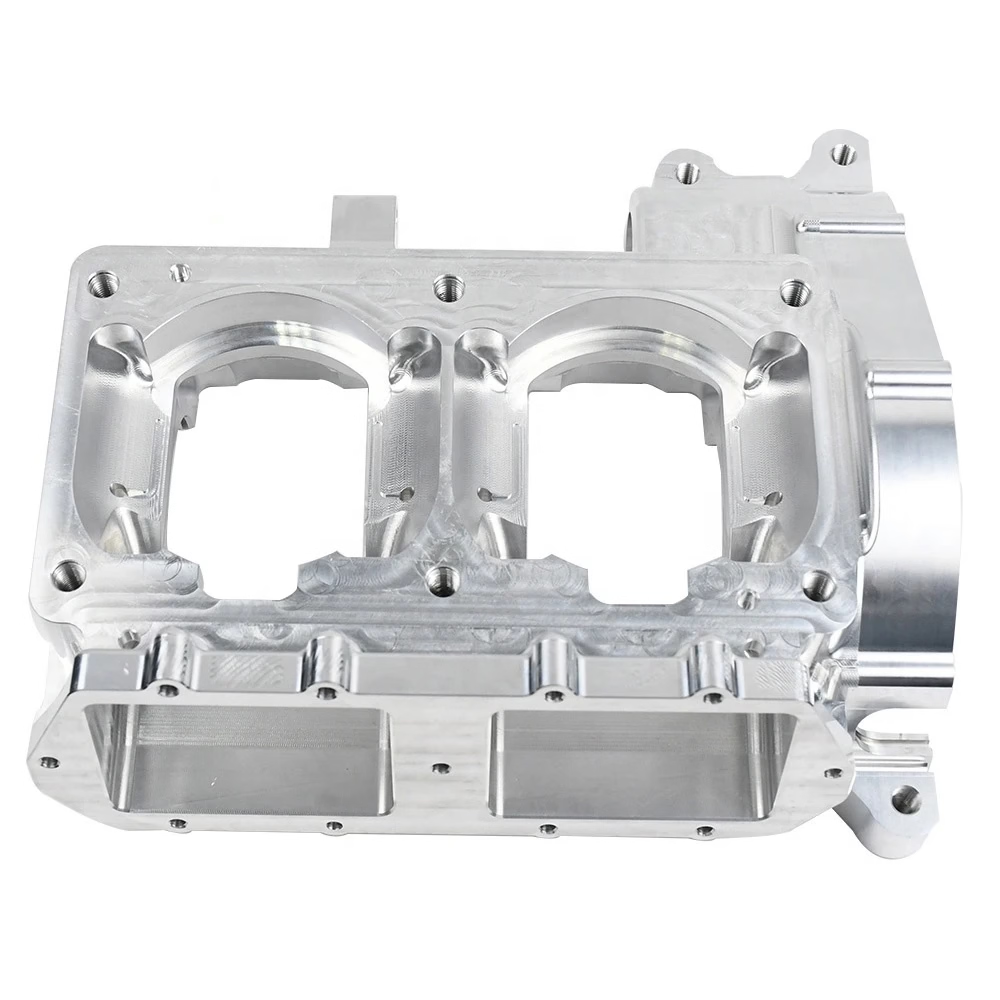
Threadlocker is an assembly aid, but the part geometry decides whether the joint can work at all. A tapped hole that is too shallow, a thread that is out of square to the seating face, or a counterbore that is too small all reduce the contact area the resin can fill. This is why we inspect thread depth, pitch diameter, and perpendicularity on any part that will carry a locked joint.
Our shop machines threaded components on 127 high-precision CNC machines, including 16 simultaneous 5-axis machining centers and 16 mill-turn centers. Tolerances hold to ±0.005 mm, and thread inspection is part of the 100% check before shipment. If a thread must mate with a specific fastener class, tell us the class and we will cut to it.
Material choice matters too. Stainless steel threads cure threadlocker more slowly than carbon steel because the surface is less active. Aluminum threads cure well but are softer, so galling and cross-threading are bigger risks than strength. Titanium and Inconel parts often need a primer to reach full cure in a reasonable time.
If the part runs in a coolant-heavy environment, we can specify a surface finish that helps the seal. A fine turned thread at Ra 0.8–1.6 μm holds a resin film better than a rough one. For parts that will never be disassembled, we can also machine a mechanical stake or a set screw flat instead of relying on chemistry alone.
We work from one prototype to 10,000+ part runs with no minimum order quantity. Uploads stay confidential, and an NDA is available on request. Quotation and free DFM analysis come back within 12 hours, and production can start within 24 hours.
- 1Check thread depthShallow threads reduce the locked contact area.
- 2Watch stainlessSlower cure; use a primer when cycle time matters.
- 3Say the classGive us the fastener class and we cut to match.
Common mistakes that cause a locked joint to fail
The most common mistake is too much liquid. A puddle at the bottom of a blind hole cannot cure and can crack a thin casting when the bolt is torqued. More is not stronger. Aim for enough to fill the thread engagement, not the whole hole.
The second is skipping the clean step. Coolant with tramp oil, or a fresh tapping fluid, can leave a film that cuts final strength in half. A solvent wipe costs a few seconds per bolt and is the cheapest reliability step in the shop.
The third is using high-strength grade on a fastener that will be adjusted. A preload nut locked with a permanent grade turns a ten-minute setup change into an hour of heating and cleanup. Match the grade to the service plan, not to the fastener size.
Finally, do not mix threadlocker with a worn thread. If the nut spins on by hand with visible play, the joint has lost its interference and the resin cannot bridge that gap. Repair the thread, use a thread insert, or replace the fastener. Chemistry will not recover a stripped thread.
A written assembly note on the drawing helps more than a shelf of extra bottles. State the grade, the clean step, the torque, and the cure time. Anyone who rebuilds that axis later will thank you.
- 1Too much liquidHydraulic lock and cracked castings.
- 2Dirty threadsOil films can halve final strength.
- 3Wrong gradePermanent resin on an adjustment screw.
Threadlocker strength grades and where they belong
Strength classes follow the common low, medium, and high groupings used by most anaerobic brands.
| Class | Holding strength | Typical CNC use | Removal |
|---|---|---|---|
| Low | Light | M3–M5 cover screws, set screws | Hand tools |
| Medium | Moderate | Rail clamps, bracket bolts, M6–M12 | Hand tools |
| Medium-high | Strong | Ball screw nut bolts up to M16 | Hand tools plus heat |
| High | Very strong | Studs, bearing retainers, permanent fits | Local heat 230–250 °C |
| Sealant type | Low, fills gaps | Pipe plugs, pneumatic fittings | Hand tools plus heat |
The verdict for machine builders and rebuild shops
Use a medium-strength anaerobic threadlocker on semi-permanent joints such as rail clamps, ball screw nut bolts, and cover screws; keep adjustment screws, high-tensile safety joints, and plastic threads dry or use the builder's specified method. If the joint will be adjusted, pick hand-tool removal. If it will never move, a high-strength grade with heat removal is fine.
Threadlocker questions engineers ask
Does threadlocker change the torque I should apply?
It can. A liquid threadlocker lubricates the thread during assembly, so the same wrench torque can produce a slightly higher preload than a dry joint. On critical joints, reduce the dry torque value by about 10–20% or follow the threadlocker maker's table.
For non-critical cover screws and brackets, the standard torque value is usually fine. The joint that matters is the one carrying axis load or spindle preload. Do not treat all fasteners the same.
Can I use threadlocker on stainless steel fasteners in a CNC machine?
Yes, but expect a slower cure. Stainless steel is less chemically active than carbon steel, so the anaerobic reaction starts later. In a shop at 22 °C, full strength may take longer than the 24 hours typical for plain steel.
An activator or primer brings the cure time back in line. That matters when you need to run the machine the same day. Clean the threads first; stainless is also more prone to galling, so a light lubricant under the head still helps.
How do I take apart a joint locked with a high-strength grade?
Apply local heat to the fastener head with a heat gun, typically 230–250 °C for a few minutes. The cured resin softens and the bolt breaks free with normal hand tools.
Do not heat the casting or a nearby bearing if you can avoid it. Shield sensitive parts with a wet rag or heat sink. Once apart, clean the old resin from both threads with a wire brush and solvent before reassembly.
Is threadlocker a replacement for a locking washer or a split pin?
No. Where a mechanical lock exists, keep it. A tab washer, a castellated nut with a split pin, or a nylon insert nut all work by geometry and do not depend on cure time or surface chemistry.
Threadlocker adds security on top of those features and seals the thread against coolant. It is an addition, not a swap.
Will threadlocker hold a fastener that is already loose in its thread?
No. If the nut spins on by hand with visible play, the thread has lost its interference fit. The resin fills micro-gaps measured in tens of microns, not a worn thread profile.
Repair options are a thread insert, an oversized fastener, or a new part. A locking compound on a stripped thread is a temporary fix at best and usually fails under load.
Do I need threadlocker on every bolt in a fixture?
No. Clamp bolts and locating pins that see vibration benefit. Bolts that are adjusted every setup should stay dry or use a low-strength grade.
A practical rule: if the bolt is touched during a normal setup change, keep it removable with hand tools. If it is set once and left for months, a medium-strength grade is a good default.
Need threaded parts that hold a locked joint?
Send us the drawing with the thread class, material, and any locking requirement. We return a quotation and free DFM analysis within 12 hours, and production can start within 24 hours.
±0.005 mm tolerance100% inspectionNo minimum order quantity
More from the shop floor
We publish setup notes, tooling trials and inspection data from the factory floor.











