GreatLight CNC Machining Factory logo
CNC Machining
Rapid Prototyping
Materials
Industries
News
About GL

Get Instant Quote

Gear Manufacturing

Gear Manufacturing

Hobbing, milling, grinding and 5-axis machining of spur, helical, bevel and internal gears. We machine blanks from bar or forging, cut the teeth and hold the bore, face and pitch data in one setup.

±0.005 mmModule 0.5–8No MOQISO 9001 / IATF 1694915 years
CNC Lathe Technical Specifications Terminology
127High-precision CNC machines
16Simultaneous 5-axis centers
±0.005 mmAchievable gear tolerance
3–5 daysTypical production lead time
Common problems

Where gear projects go wrong

Most failures trace back to the blank, the setup or the tooth data. Not the machine.

01

Bore and pitch circle run out of alignment

When the bore is turned on one machine and the teeth are cut on another, the runout stacks. A 0.02 mm offset at the bore shows up as noise and uneven wear across the face width. Turning and cutting the same blank in one fixtured setup removes that stack.

02

Tooth profile drifts after heat treatment

Case hardening moves the flanks. If grinding stock is not planned into the blank, the gear comes back distorted and the backlash is wrong. We leave 0.1–0.3 mm on the flanks and grind after hardening to restore the profile.

03

No way to inspect the tooth data

A gear that measures well on the OD can still have the wrong lead or profile. Without a chart you are guessing. We supply inspection reports on request so your engineer can check pitch, runout and profile against the drawing.

04

Prototype cost blocks the first run

Hobbing a one-off gear is not expensive. Cutting a mold or a die for a design that may change is. We cut prototypes from bar stock with no minimum order quantity, so you can test the fit before committing to tooling.

Our approach

Cut the teeth and the datum in one setup

The blank, the setup and the tooth data decide whether the gear runs quiet.

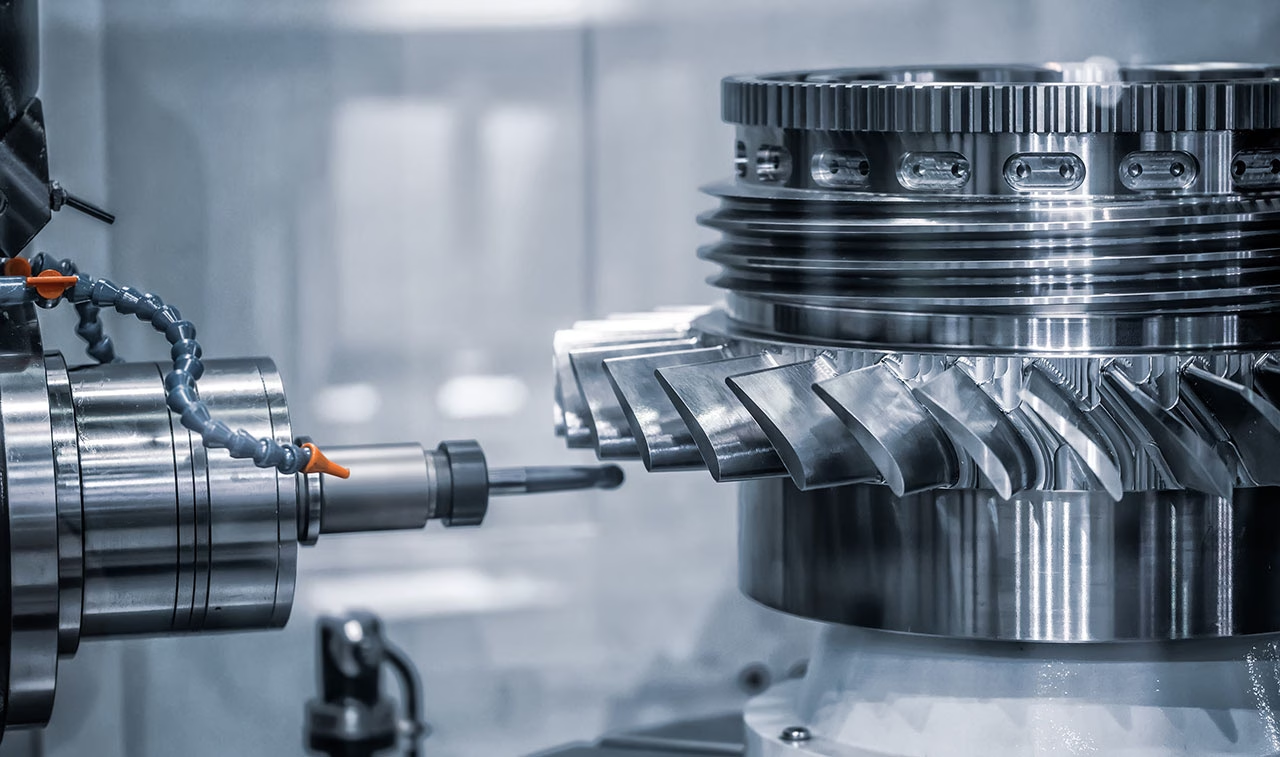
manufacturing-applications1
Machining method

Hobbing, milling and grinding on the same floor

Hobbing is the fast way to cut spur and helical teeth. One hob, one pass, and the tooth spacing comes from the lead of the hob rather than from a dividing head. For module 0.5 to 8 gears we hob on a CNC hobbing machine, then deburr and, if the drawing calls for it, grind the flanks.

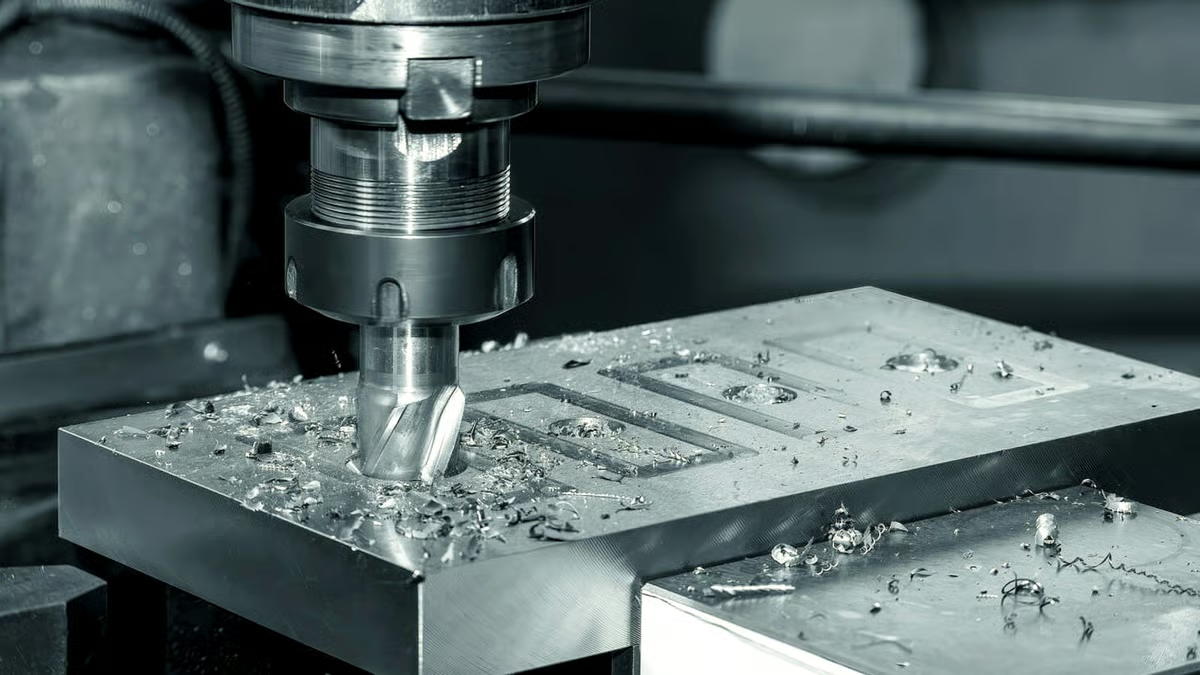
Not every gear shape works with a hob. Internal teeth, bevel teeth and gears with a shoulder too close to the face need form milling or 5-axis machining instead. We pick the method from the geometry, not from what is free that week.

  • 1
    HobbingSpur and helical teeth, module 0.5–8, fast for small and medium batches.
  • 2
    Form millingLarge modules, shoulders, and shapes a hob cannot reach.
  • 3
    GrindingAfter hardening, to restore profile and hold the tolerance band.

Get Instant Quote

CNC Machining Services Online
Tolerance control

The datum is set before the first tooth is cut

A gear is only as good as the bore it spins on. We turn the bore, face and any shoulder in one operation, then cut teeth with the part still referenced to that bore. That way the pitch circle runs true to the shaft, and you do not need to correct for runout on assembly.

For tight assemblies we hold ±0.005 mm on critical diameters and control tooth-to-tooth spacing on the machine. Surface finish on the flanks sits around Ra 0.8–1.6 μm after grinding, which is the range that keeps contact noise down in a running gearbox.

  • 1
    One-setup datumBore and teeth share the same reference, so runout does not stack.
  • 2
    Grind after hardeningStock left on the flanks so heat treatment distortion can be removed.
  • 3
    Reports on requestPitch, runout and profile data supplied with the parts.
Selection guide

Which gear process fits which part

Pick the process from the geometry, the load and the batch size.

ProcessBest forWatch out for
HobbingSpur and helical teeth, module 0.5–8Cannot cut internal or bevel teeth
Form millingLarge modules, shoulders, odd profilesSlower per tooth than hobbing
5-axis machiningBevel, internal, complex flank formsHigher cycle time on simple gears
GrindingHardened gears, tight profile bandsNeeds stock left on the flanks
Casting / forgingHigh-volume blanks before machiningTooling cost only pays off at volume
What we do

Gear and motion part services

One shop for the blank, the teeth and the finish.

01

Spur and helical gears

Hobbed or milled from bar, with the bore turned in the same setup. Module 0.5 to 8, in steel, stainless and aluminium.

02

Bevel and internal gears

Cut on 5-axis centers when a hob cannot reach the flanks. Good for right-angle drives and ring gears.

03

Gear grinding

After hardening, to bring the profile back inside the tolerance band and set the flank finish.

04

Shafts and gear blanks

Turning, milling and slotting of the mating parts, so the gear and shaft fit without hand work.

05

Racks and pinions

Straight and helical racks cut to length, with the mounting holes drilled in the same setup.

06

Surface finishing

Black oxide, electroless nickel, anodizing and bead blasting for wear and corrosion resistance.

Capacity

Gear manufacturing capacity at a glance

Numbers from our Dongguan and Singapore plants.

ParameterRangeNotes
Module0.5–8Smaller or larger on review
Max part size4,000 mmMaximum processing size
Tolerance±0.005 mm±0.0002 in on critical features
Flank finishRa 0.8–1.6 μmAfter grinding
Batch size1 to 10,000+No minimum order quantity
Lead time3–5 daysAfter production start
Why GreatLight

What decides a gear quote

Data, not adjectives.

15Y

15 years in machining

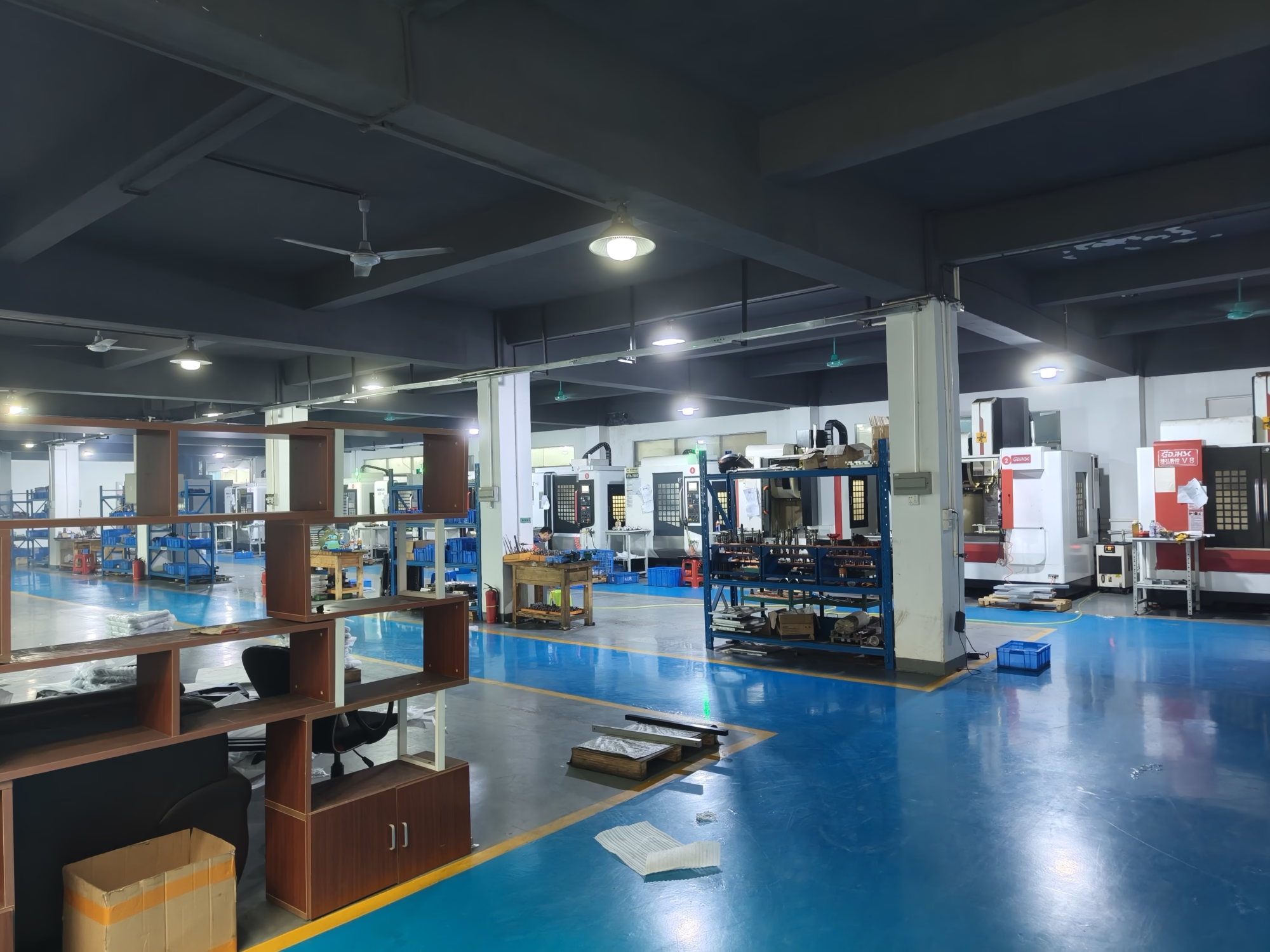
Founded in 2011. Three wholly-owned plants, 7,600 m² of floor space and 150 technicians on the gear and motion parts line.

127

127 CNC machines

16 simultaneous 5-axis centers, 12 four-axis mills, 27 three-axis machines and 16 mill-turn centers under one quality system.

±0.005 mm

Tolerance to ±0.005 mm

Held on critical diameters and bore features. Flank finish to Ra 0.2–0.8 μm when the drawing calls for it.

12 h

Quote in 12 hours

Quotation and free DFM analysis within 12 hours of receiving a drawing. Production can start within 24 hours.

99.99%

Qualification rate

100% inspection before shipment, with raw material checks, in-process monitoring and final inspection. Reports on request.

<2%

Late-delivery history

Historical late-delivery probability below 2%. We plan grinding and hardening steps into the schedule instead of after it.

7,600 m²Manufacturing space
150Technicians
4ISO and IATF certifications
0Minimum order quantity
Where gears go

Industry requirements and what we deliver

automotive-prototyping-manufacturing

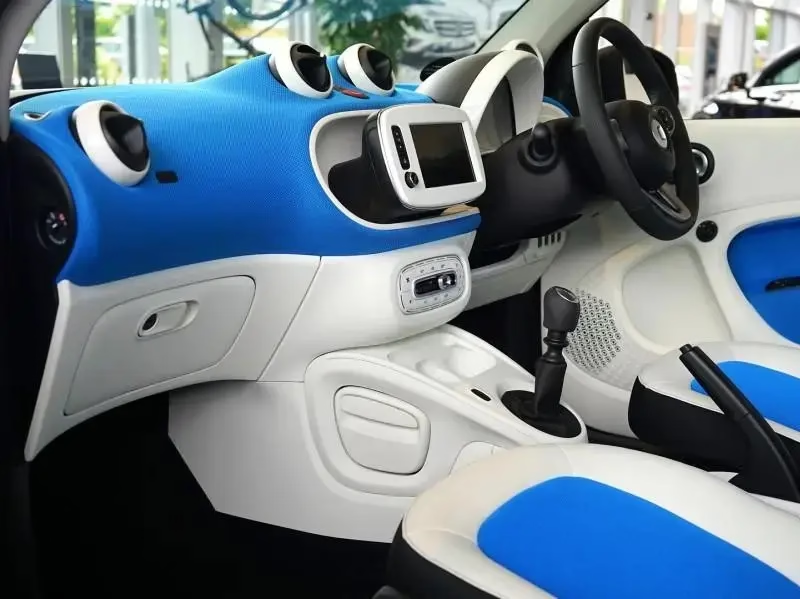
Automotive and EV

Transmission and drive gears that have to run quiet at speed. IATF 16949:2016 process control, profile ground after hardening.

  • IATF 16949
  • Ra 0.8–1.6 μm
  • ±0.005 mm
oplus_262178

Robotics and automation

Planetary and harmonic drive parts where backlash decides positioning accuracy. Bore and teeth cut in one setup.

  • Low backlash
  • One-setup datum
  • 1 to 10,000+
6011

Industrial machinery

Racks, pinions and large spur gears up to 4,000 mm. Form milling for modules a hob cannot reach.

  • 4,000 mm max
  • Form milling
  • 3–5 days
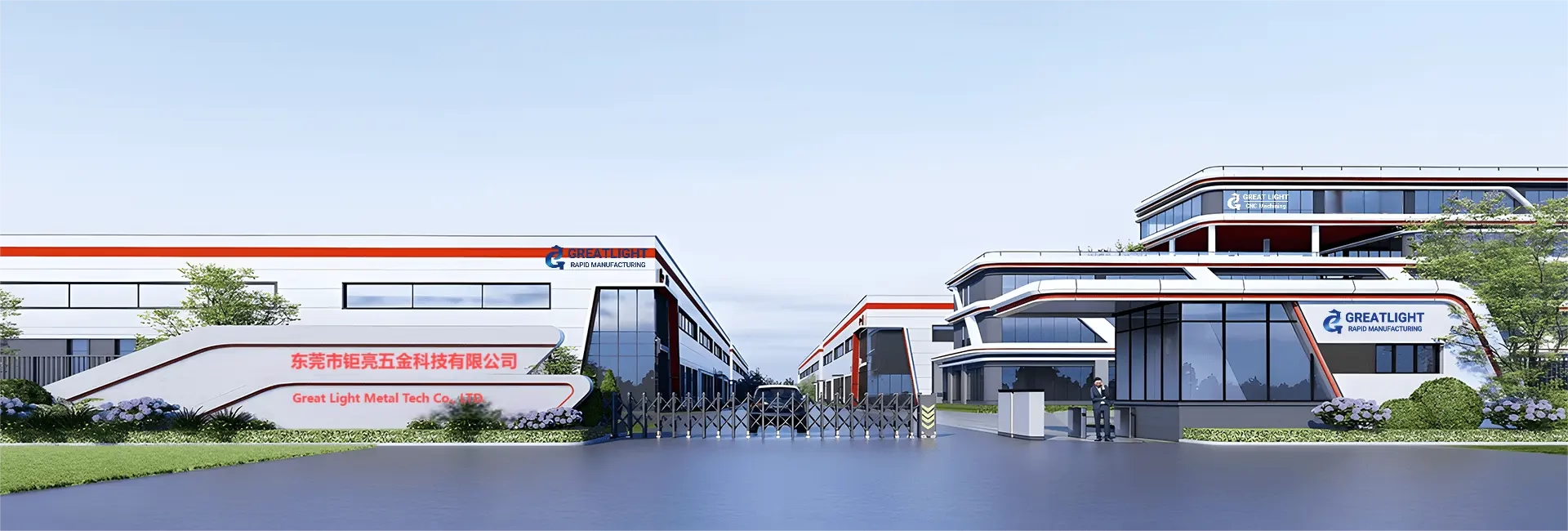
GreatLight Metal new factory building

Medical and electronics

Small precision gears in stainless and titanium. ISO 13485:2016 controls, clean deburring, inspection reports on request.

  • ISO 13485
  • Deburred
  • 100% inspected
FAQs

Questions we get on gear jobs

What information do you need to quote a gear?

A drawing with module, number of teeth, pressure angle, helix angle and the tolerance band on the bore and flanks. If the drawing is incomplete, send what you have and the mating part.

We run a free DFM analysis within 12 hours and flag anything that will be hard to cut or measure before the quote goes out.

Which gear types can you machine?

Spur, helical, bevel, internal, racks and pinions, in module 0.5 to 8. Larger modules are possible on review.

Simple spur and helical gears are hobbed. Bevel, internal and complex flank forms are cut on 5-axis centers.

Do you harden and grind gears?

We plan hardening into the routing and leave 0.1–0.3 mm of stock on the flanks so the distortion can be ground out afterwards.

Grinding after heat treatment is what restores the profile and sets the finish to Ra 0.8–1.6 μm. Cutting the teeth and skipping the grind only works on soft gears.

How tight can you hold the bore and runout?

±0.005 mm on critical diameters, with the bore and teeth sharing the same datum so runout does not stack.

If your assembly needs tighter than that, tell us the fit and we will say whether it is realistic in the material you picked.

What is the minimum order quantity?

No minimum. We cut one-off prototypes and runs over 10,000 parts on the same line.

For a single gear the cost is mostly setup and programming time, so a prototype is cheap. Tooling only makes sense once the design is frozen.

Which materials do you cut gears in?

Steel 1045, 4140, 4340 and tool steel, stainless 303, 304, 316, 17-4PH and 440C, aluminium 6061 and 7075, plus titanium TC4 and plastics such as POM and PEEK.

The material decides the cutting speed and whether hardening is worth it. A plastic gear will not hold the same profile band as a ground steel one.

How do you inspect a gear before it ships?

Raw material check on arrival, in-process monitoring during cutting and grinding, and 100% inspection before shipment.

Pitch, runout and profile reports are available on request. If you need a first article report, ask for it at the quote stage so it is planned into the schedule.

Can you keep our design confidential?

Uploads are secure and confidential, and we sign an NDA on request before drawings are shared.

Gear drawings usually carry the whole transmission layout, so this is standard practice for us rather than an exception.

Send a gear drawing, get a quote in 12 hours

Upload the drawing and the mating part. We run a free DFM analysis, then quote the blank, the teeth and the finish as one job.

12-hour quote100% inspectionNo MOQ

Trusted by engineers and manufacturers worldwide

Tesla Ford Motor Company BYD Auto Denso Magna International Boeing Airbus Medtronic KUKA FANUC