GreatLight CNC Machining Factory logo
CNC Machining
Rapid Prototyping
Materials
Industries
News
About GL

Get Instant Quote

Plastic CNC Machining

HDPE CNC Machining

We machine HDPE sheet, rod and plate into chemically resistant liners, insulators and wear parts. Tight tolerances hold when blanks are stress relieved and cutters are kept sharp.

HDPE sheet, rod and plate±0.005 mm toleranceFood-contact and medical gradesNo minimum order quantityFree DFM in 12 hoursISO 9001:2015
cnc-machining-hdpe
±0.005 mmAchievable machining tolerance
4,000 mmMaximum part length we cut
12 hoursQuote and free DFM analysis
100%Inspection before shipment
Where HDPE goes wrong

Four failures we see on HDPE prints

Most HDPE problems start before the first cut.

01

Do your parts bow after machining?

HDPE sheet is extruded under pressure, so the skin and the core cool at different rates. Cut a long liner in one pass and the stress releases. The part bows, bolt holes no longer line up, and the assembly has to be reworked or scrapped.

02

Are your holes closing up on the pin?

This material has a high coefficient of thermal expansion. A hole bored to a nominal size shrinks as the part cools, and an interference fit that worked on the bench seizes on the line. Bushing and pin fits need to be sized for the material, not for the drawing.

03

Is the surface tearing instead of cutting?

HDPE is soft and gummy. A dull cutter rubs rather than shears, so the edge frays and the chip melts back onto the wall. A sealed face becomes a leak path. Sharp tooling and climb milling solve it; running the spindle faster does not.

04

Does the part cost more than the metal version?

Engineers switch to plastic for corrosion resistance, then find that thin walls deflect under clamping and the cycle takes three times longer than expected. The savings disappear. Ribbing, support fixtures and correct feeds keep the price in line.

How we cut it

Machining HDPE without the warping

Blanks are stress relieved, cut at controlled feeds, and checked before they leave the floor.

CNC Lathe Technical Specifications Terminology
Blanks and setup

Stress-relieved blanks and low-clamp fixtures

Extruded HDPE plate carries locked-in stress. We rough the profile, let the part relax, then take the finishing passes. For long liners and tank walls we rough on both faces before finishing so the material moves evenly.

Clamping pressure matters as much as the cutter. Soft jaws and vacuum fixtures spread the load across a wide face, so a 12 mm wall does not dent where the vise closed on it.

  • 1
    Rough, relax, finishTwo-stage cutting for parts over 300 mm
  • 2
    Soft jaws and vacuum platesClamp force spread over a wide area
  • 3
    Blanks squared firstFaces referenced before any profile cut

Get Instant Quote

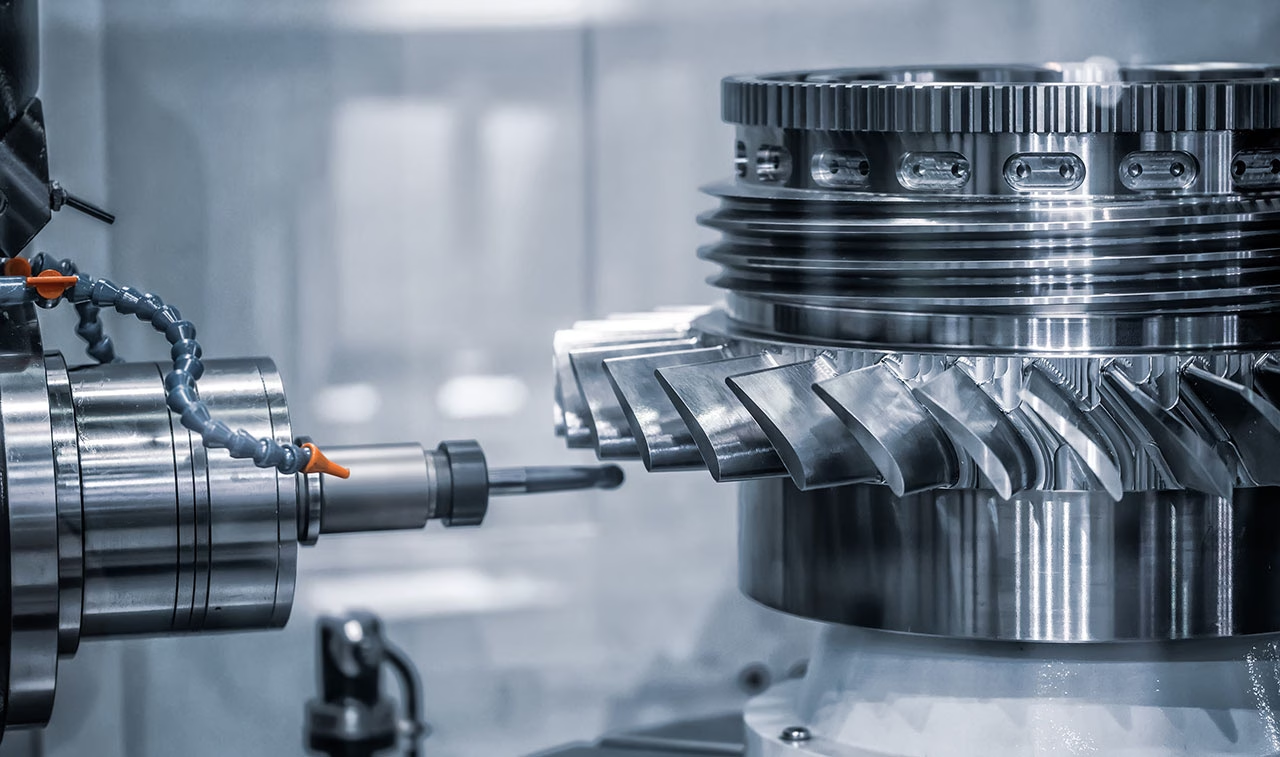
cnc machining
Cutting strategy

Sharp tooling, high rake, and air blast

Polyethylene cuts cleanly when the tool shears instead of pushes. We run polished flutes with high rake angles, keep the chip load high enough to leave the cutting zone, and blow the chips clear with air rather than flood coolant.

Coolant is where most shops go wrong. HDPE absorbs almost nothing, so fluid sits in the chip and later bleeds out of a supposedly clean part. Dry cutting with air blast keeps the part dry and the edge clean.

  • 1
    Polished high-rake cuttersShear the material instead of rubbing it
  • 2
    Air blast, no flood coolantNo fluid absorption, no bleed-out later
  • 3
    Documented feeds and speedsRepeatable on the second and tenth run
Fit and function

When HDPE is the right call

A short comparison against the materials customers usually weigh it against.

RequirementHDPEStainless 316LPOM (acetal)
Chemical resistanceStrong acids and bases, most solventsGood, but chlorides pit itPoor against strong acids
Electrical insulationVery high, low moisture uptakeConductiveGood, but absorbs moisture
Wear under sliding loadLow, deforms under loadExcellentExcellent, best of the three
Weight0.95 g/cm³, floats8.0 g/cm³1.41 g/cm³
Cost per partLow material costHigh material and tool wearMid-range
Best forTanks, liners, insulators, guidesPressure and heat serviceGears, bushings, precision cams
What we make

Parts we cut from HDPE

One shop for plastic and metal, so you can compare both before committing.

01

Tank liners and covers

Machined and drilled liner plates, manway covers, baffles and overflow weirs for chemical dosing and plating tanks.

02

Insulating plates and spacers

Busbar supports, terminal blocks and standoff plates where dielectric strength and low moisture uptake matter more than stiffness.

03

Wear strips and guides

Chain guides, conveyor wear strips, star wheels and rail liners. Low friction, and no sparking against metal contact.

04

Manifolds and fluid blocks

Drilled and tapped fluid routing blocks for water treatment and lab equipment, with port layouts checked against the assembly.

05

Food and medical grade parts

Cutters, chute liners, trays and handling fixtures in food-contact and medical grades. No coolant contamination on the surface.

06

Prototype and bridge parts

Functional prototypes and short runs before a mold is cut, so the geometry can be tested under real chemical exposure.

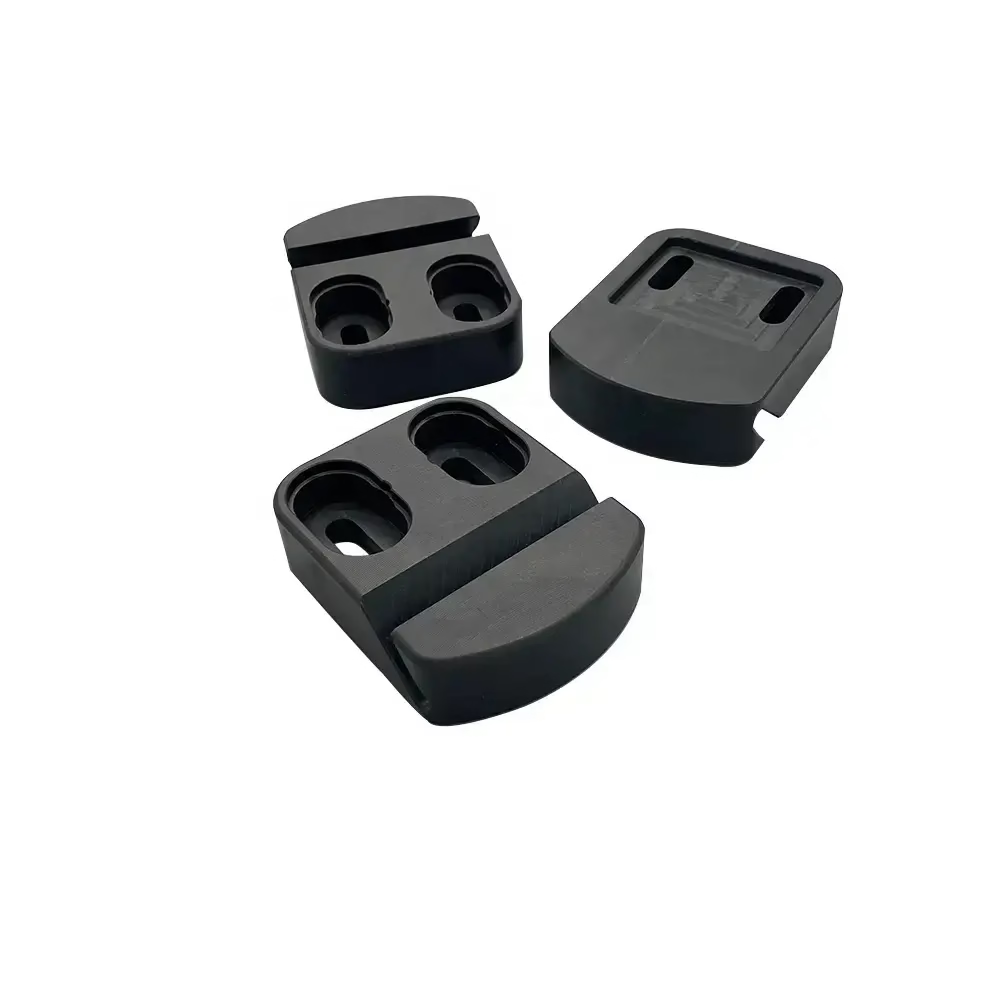
Capability

HDPE machining capacity

Numbers we can hold on plastic parts, not just on aluminum.

ItemCapabilityNotes
Tolerance±0.005 mmOn critical bores and faces
As-machined finishRa 1.6–3.2 μmTypical for HDPE
Fine finishRa 0.2–0.8 μmWhere sealing faces need it
Maximum part length4,000 mmSheet and plate work
Largest cutting travel4,000 × 400 × 150 mmLong liners in one setup
Stock formsSheet, rod, plateThickness to 100 mm and above
Order sizeOne part to 10,000+No minimum order quantity
Inspection100% before shipmentReports on request
Why GreatLight

What you get on an HDPE job

Fifteen years of plastic and metal work, in three plants.

15Y

Fifteen years in business

Founded in 2011, with 150 technicians across three wholly-owned plants and 7,600 m² of floor space in Dongguan and Singapore.

±0.005

Tight tolerance on plastic

Bores, faces and mating surfaces held to ±0.005 mm on 127 high-precision machines, including 16 simultaneous 5-axis centers.

12H

Quote and DFM in 12 hours

Send the model and drawing. You get pricing and a free manufacturability review the same working day.

24H

Production starts in 24 hours

Once the drawing is signed off, cutting starts within a day. Parts normally ship in 3–5 days.

4,000

Long parts in one setup

A 4,000 × 400 × 150 mm cutting envelope handles full tank liners without splitting the part into sections.

100%

Inspection before shipment

Raw material check, in-process monitoring and final inspection on every lot, with dimensional reports on request.

7,600 m²Manufacturing space
127High-precision CNC machines
150Technicians on staff
99.99%Qualification rate
Where it ships

HDPE parts by industry

Leader in Cnc Machining Service China

Chemical and water treatment

Liner plates, baffles and dosing manifolds that resist acids and chlorides.

  • ±0.005 mm
  • Ra 1.6–3.2 μm
  • 100% inspection
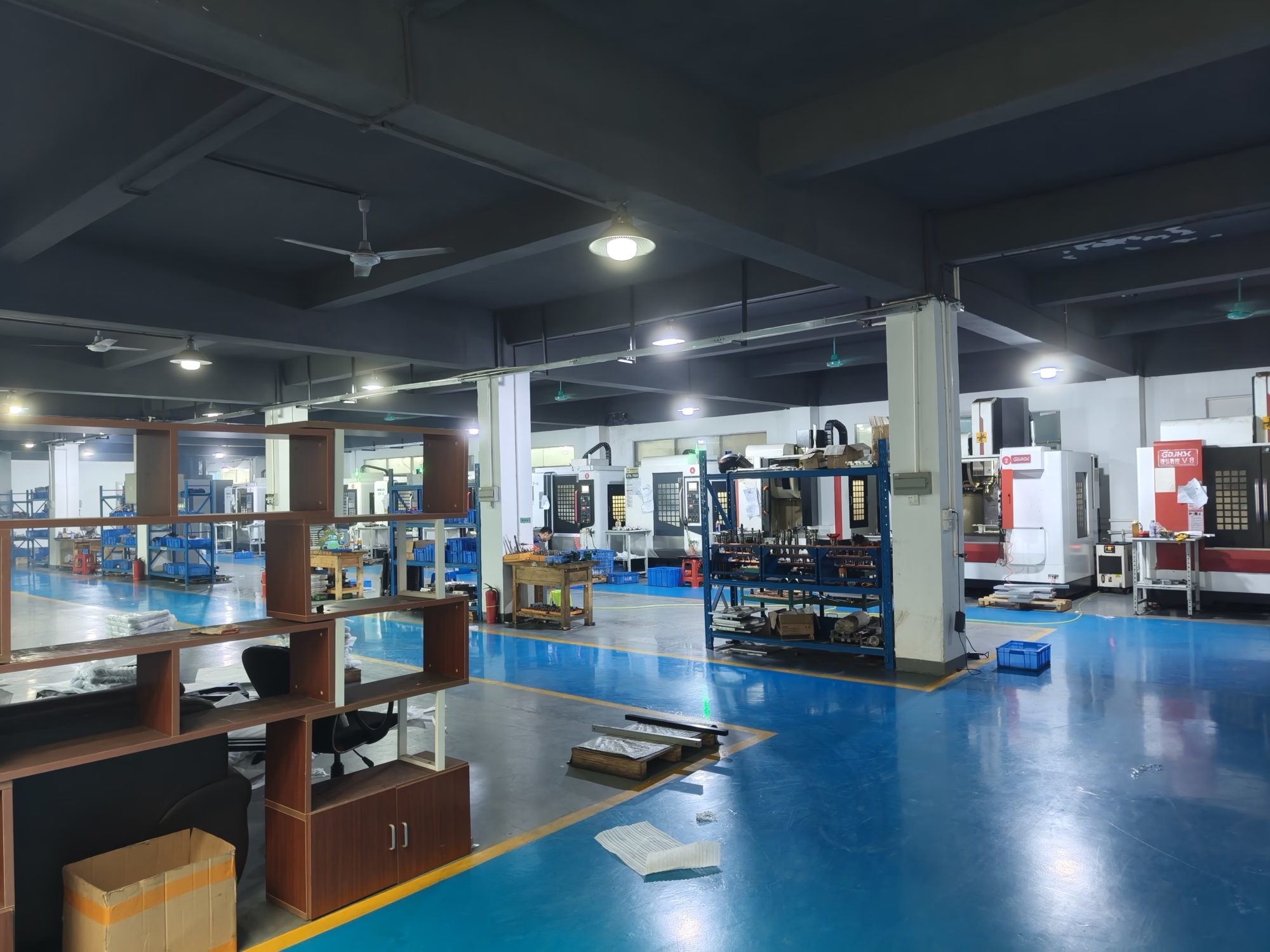
GreatLight Metal new factory building

Electronics and power

Insulating plates and busbar spacers with low moisture uptake.

  • Dielectric grade
  • Drilled and tapped
  • No coolant residue
oplus_262178

Food handling equipment

Chute liners, trays and guide rails in food-contact grades.

  • Food-contact grade
  • Dry cut
  • Deburred edges
cnc machining

Industrial machinery

Wear strips and chain guides that run against steel without galling.

  • Low friction
  • Long wear strips
  • Batch repeatability
FAQs

HDPE machining questions

What tolerance can you actually hold on HDPE?

We work to ±0.005 mm on bores, faces and mating surfaces. That figure applies to the cut, not to the part over the next month.

HDPE moves with temperature. A part measured at 20 °C and installed at 60 °C will not measure the same. Tell us the service temperature and we size the fit for that condition.

Why does my HDPE part change size after it leaves the machine?

Two reasons. The blank still had internal stress and released it during cutting, or the part is sitting in a warmer room than where it was measured.

We rough, let the part relax, then finish. For long parts we rough both faces first. That removes most of the movement before the final cut.

Can you machine HDPE without coolant?

Yes, and we prefer it. We cut dry with an air blast to clear chips.

HDPE absorbs very little fluid, so anything that does get in sits there and bleeds out later. On a food or medical part that is a contamination risk, and on a sealed face it becomes a leak path.

What is the largest HDPE part you can make?

Up to 4,000 mm long, with a cutting travel of 4,000 × 400 × 150 mm on our large machines.

For anything bigger we look at whether the part can be made in sections and joined, or whether a different process fits better. We will say so if it does.

When should I pick HDPE instead of POM or stainless?

Pick it for chemical resistance, electrical insulation and low weight. It handles strong acids and bases that attack stainless, and it does not conduct.

Do not pick it for sliding wear under load or for hot service. POM takes wear far better, and stainless holds up where the temperature climbs.

Do you machine food-contact and medical grades of HDPE?

Yes. We machine food-contact and medical grades, keep them dry, and deburr every edge.

Work on medical parts runs under ISO 13485:2016. Tell us the grade on the drawing and we will confirm stock before quoting.

Can I order a single prototype?

Yes. There is no minimum order quantity, from one prototype to runs of 10,000 or more.

Most plastics projects start as one or two parts to test the fit, then move to a larger batch once the geometry is settled.

How do you handle my drawing and files?

Uploads stay secure and confidential. We can sign an NDA on request before you send anything.

Files go only to the engineers quoting and programming the job. Nothing is shared outside the company.

Send us your HDPE drawing

Upload the model and drawing. You get a price and a free manufacturability review within 12 hours, with no minimum order quantity.

12-hour quote100% inspectionNo MOQNDA on request

Trusted by engineers and manufacturers worldwide

Tesla Ford Motor Company BYD Auto Denso Magna International Boeing Airbus Medtronic KUKA FANUC