
High CNC Plastic Machining Services: A Supplier Selection Guide
This guide is for design and sourcing engineers choosing a supplier for high cnc plastic machining services. It covers the five checks that separate a capable shop from a reseller, plus the numbers you should ask for before sending a purchase order.
In this article
- 1
- 2
- 3
- 4
- 5
- 6
- 7
- 8
High CNC plastic machining services: key takeaways
Supplier types for high cnc plastic machining services
Use this table to sort quotes before you read the price. The lowest number is rarely the lowest total cost.
| Supplier type | Typical strength | Where it fails | Best fit |
|---|---|---|---|
| Plastic-only job shop | Deep feeds and speeds for POM, PC, PEEK | Limited 5-axis capacity for complex geometry | Simple turned bushings, insulators, wear pads |
| Metal shop adding plastics | Strong metrology and multi-axis equipment | Cutting data copied from aluminium, burnt edges | Housings and brackets with tight metal-like tolerances |
| Broker or network platform | Fast quoting, wide supplier pool | No control over process, no single point of traceability | Early cost estimates, not production release |
| Integrated manufacturer | In-house 5-axis, inspection, and finishing | Requires more upfront DFM conversation | Medical, aerospace, EV parts needing one owner |
Pick the shop that answers process questions
If a supplier can name the grade, the axis count, the inspection instrument and the certificate scope before you ask twice, the price is the only thing left to negotiate. If they cannot, the low quote is the risk.
Material knowledge is the first filter
Engineering plastics are not a single family. POM (Delrin) cuts clean and holds ±0.05 mm easily, but it absorbs almost no moisture and can chip at thin walls. PEEK needs sharp tooling and higher spindle speeds because it conducts heat poorly and galls if the chip load drops too low. Polycarbonate machines like a soft metal but stress-crazes if you clamp it hard. A supplier that treats all plastics the same will fail on the second or third material you send.
Ask the shop which polymers they run weekly, not which ones they list. Anyone can buy a sheet of PEEK. The useful answer names the grade, the supplier, and the typical stock removal per pass. For carbon-fibre-filled nylon, tool wear is the bottleneck; for PTFE, workholding is. These are different problems and they need different process plans.
Moisture is the quiet failure mode. PA and POM absorb water from the air, and a part machined from wet stock can shrink after shipment and miss the tolerance band. A competent shop dries or conditions stock before the first cut and records the batch. If your drawing is ±0.02 mm on a nylon part, ask how they handle hygroscopic growth. No answer means no control.
- 1PEEK and PEIHigh temperature, high cost. Needs sharp carbide and air blast, not flood coolant.
- 2POM and PAGood machinability, but moisture and clamping stress drive scrap.
- 3PC and PMMAOptical or transparent parts demand stress-free cutting and gentle fixturing.
- 4Filled gradesCarbon or glass fill raises stiffness and tool wear by a large margin.
Tolerance claims need an inspection method attached
±0.005 mm is achievable in plastics, but not everywhere on the part. It is realistic on a bore diameter in a rigid PEEK housing measured on a coordinate measuring machine at a controlled 20 °C. It is not realistic across a 300 mm unsupported wall in soft polypropylene, where thermal expansion alone moves the dimension more than the tolerance. A good supplier separates the features that can hold the number from the ones that cannot, and says so before quoting.
The second question is measurement. Plastics deflect under contact probing, so a CMM with low touch force or a vision system gives a different answer than a micrometer squeezed by hand. Ask which instrument will be used on the critical dimension and whether the report lists it. We inspect 100% of parts before shipment and can attach raw material checks, in-process readings and final reports on request.
Surface finish matters as much as size. As-machined plastic typically lands at Ra 1.6–3.2 μm. Fine finishing can reach Ra 0.2–0.8 μm, but on plastics the limit is often the material, not the tool. POM polishes well; filled nylons do not, because the fibres tear out. If your drawing calls for a mirror finish on a glass-filled part, expect a conversation, not a pass.
- 1Rigid featuresShort bores, bosses and pockets can hold ±0.005 mm in PEEK or POM.
- 2Long spansWide thin walls move with temperature and clamping; expect looser bands.
- 3Contact vs opticalDeflection during probing can fake a pass or a fail on soft polymers.
Machine capacity decides which geometries get quoted
Plastic parts are usually lighter than metal parts, which makes people assume they are easier. The opposite is often true. A long glass-filled nylon manifold with undercuts on five faces cannot be reached by a 3-axis mill without multiple fixtures, and each refixture adds error. Simultaneous 5-axis machining cuts those faces in one setup and removes the stack-up. If the shop quotes a 3-axis route on a 5-axis part, the price looks good and the first article will not.
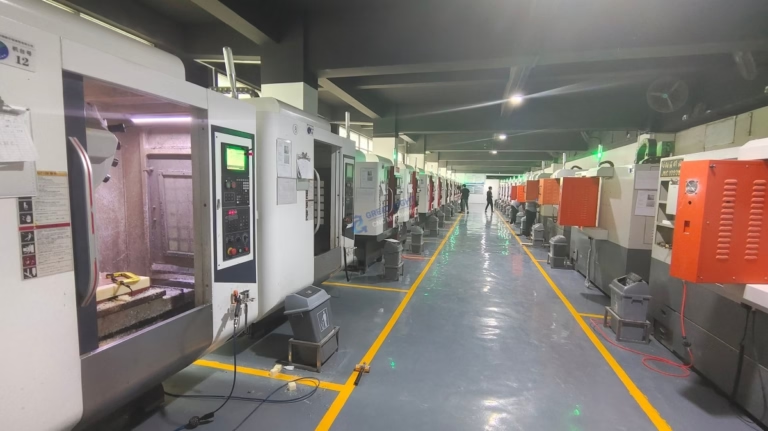
Size matters too. We run 4,000 mm of travel on the largest machines, with common envelopes at 750 × 1,150 × 550 mm and 600 × 600 × 600 mm for mid-size work, and 500 × 500 × 450 mm for compact parts. A Ø400 mm rotary table covers most round plastic housings. When you request a quote, send the bounding box, not just the drawing. A part that fits the envelope in theory may still need a fixture that eats the margin.
Thin walls are the real capacity test. Below 1.5 mm, cutting forces and clamping pressure start to dominate. A shop with air-blast cooling and light finishing passes can hold the wall; a shop that floods coolant and takes heavy roughing cuts will bow it. Ask how they rough and finish thin sections, and whether they use sacrificial backing.
- 1One setup winsSimultaneous 5-axis removes refixture error on multi-face plastic parts.
- 2Send the bounding boxEnvelope fit plus fixture space decides whether the part is quotable.
- 3Thin walls below 1.5 mmLight passes, sharp tools and air blast keep the section straight.
Lead time and MOQ tell you how the shop is organized
A prototype plastic part should move fast. We return a quotation and free DFM analysis within 12 hours, start production within 24 hours, and ship parts in 3–5 days. Those numbers assume the drawing is complete and the material is in stock. If a supplier quotes four weeks for a 20-piece POM run, they are batching your job behind a larger order, and your revision cycle slows down with it.
MOQ is the second signal. There is no minimum order quantity here; runs go from one prototype to 10,000+ parts. That matters because plastic designs change more often than metal ones. You may need one machined housing to check a connector fit on Monday and fifty units on Friday. A supplier who charges a setup fee at every quantity break is not set up for that rhythm.
Beware of the quote that only lists a price. A useful quote states material grade, tolerance assumptions, finish, inspection level and lead time. When one of those is missing, the low number is usually absorbing an assumption you have not agreed to. Ask for the DFM note. If the shop found no issues at all, they probably did not look closely.
- 112-hour quoteIncludes free DFM feedback on geometry, material and tolerance.
- 23–5 day shipmentTypical for prototype and low-volume plastic parts with stock material.
- 3No MOQOne piece to 10,000+; the price structure should not punish small runs.
Certifications and confidentiality for regulated industries
Certificates only help if the scope covers your process. ISO 9001:2015 is the baseline for quality management. IATF 16949:2016 applies to automotive and EV programs and adds traceability and change control. ISO 13485:2016 covers medical device manufacturing. ISO 27001:2022 covers information security, which matters when your CAD files and drawings leave your network. Ask for the certificate scope, not just the certificate number.
For medical and aerospace plastic parts, documentation is part of the deliverable. You may need material certificates, inspection reports and a record of the process route. A supplier who can produce these on request is organized; one who promises them after the PO is gambling. We provide inspection reports on request and run raw material checks, in-process monitoring and final inspection.
Confidentiality is the last check and the easiest to skip. Uploads should be secure and confidential, and an NDA should be available on request without a negotiation. If the shop's quote form is a public email address and the drawing is attached to the first message, your design is already outside your control. Use a portal or a signed agreement before you send the geometry.
- 1ISO 9001:2015Baseline quality system for general industrial plastic parts.
- 2IATF 16949:2016Automotive and EV programs with traceability requirements.
- 3ISO 13485:2016Medical device components and documented process control.
- 4ISO 27001:2022Information security for CAD files, drawings and revision data.
How to screen a plastic machining supplier in five steps
Run these steps before you release a production PO. Each one takes one email or one call.
- 1Send the drawing and the bounding boxInclude material grade, critical dimensions and the finish callout. A supplier who quotes without the bounding box is guessing at the envelope and fixture cost.
- 2Request the DFM note with the priceExpect comments on wall thickness, tolerance feasibility and tool access. A quote with no DFM note usually means no process review happened.
- 3Ask which machine will run the partGet the axis count and the setup count. If the answer is three setups on a 3-axis mill for a five-face part, expect stack-up error.
- 4Confirm the inspection method for the critical dimensionName the instrument and the environment. Plastics deflect, so low-force CMM or vision is often required on soft polymers.
- 5Check lead time, MOQ and certification scope in writingPut the 12-hour quote, the 3–5 day ship window and the no-MOQ statement next to the certificate scope that applies to your industry.
- 6Sign the NDA before you send the full modelKeep uploads secure and confidential. Exchange the agreement before the STEP file leaves your system.
Questions engineers ask before ordering
Can plastic parts really hold ±0.005 mm?
Yes, on the right features. Short bores, bosses and pockets in rigid polymers like PEEK, PEI or POM can hold ±0.005 mm when the shop controls temperature and uses low-force metrology.
Long unsupported walls and soft polymers such as PP or HDPE will not hold that band. Expect a wider tolerance there, and ask the supplier to flag which features are which before you approve the drawing.
Which plastics are the hardest to machine?
Filled grades and PTFE cause the most trouble. Carbon and glass fill wear tools quickly and tear at the surface, so finish suffers. PTFE is soft and moves under clamping pressure, which makes workholding the limiting factor rather than the cutter.
PEEK is not difficult to cut, but it is unforgiving of poor chip evacuation. Heat builds at the edge and the material can gall. Air blast and sharp tooling solve most of it.
Do I need a different supplier for prototypes and production?
Not necessarily, and switching costs time. If the same shop machines the prototype and the production run, the cutting data and fixtures carry over, so the first article matches the samples you approved.
Look for a supplier with no MOQ and a wide quantity range. Runs from one piece to 10,000+ parts on the same process route avoid a second qualification cycle.
What should a plastic machining quote include?
Material grade and supplier, tolerance assumptions, finish callout, inspection level, lead time and quantity breaks. If any of these is missing, the price rests on an assumption you have not seen.
Ask for the DFM note as well. It shows whether the shop reviewed wall thickness, tool access and tolerance feasibility before pricing.
How do certifications affect a plastic machining order?
They set the documentation and traceability you receive. ISO 9001:2015 covers general quality management. IATF 16949:2016 adds automotive traceability. ISO 13485:2016 applies to medical components. ISO 27001:2022 covers how your files are protected.
Match the certificate scope to your industry and ask for the reports you need before the PO, not after.
How fast can a plastic prototype ship?
With stock material and a complete drawing, quotation and DFM analysis come back within 12 hours and production can start within 24 hours. Parts typically ship in 3–5 days.
Exotic grades such as PEEK or PEI may need material ordered in, which adds to the front end. Confirm stock before you commit to a build schedule.
Send your plastic part for a 12-hour quote
Upload the drawing and the bounding box. We return a quotation and free DFM analysis within 12 hours, with the material, tolerance and inspection plan stated up front.
12-hour quoteNo MOQ100% inspectionNDA on request
More plastic machining notes
We publish setup notes, tooling trials and inspection data from the factory floor.











