GreatLight CNC Machining Factory logo
CNC Machining
Rapid Prototyping
Materials
Industries
News
About GL

Get Instant Quote

Process Comparison

How Does This Casting Process Compare to Other Methods?

Where does this casting process beat machining, forging, stamping or powder metallurgy, and where does it lose? We machine castings every day, so the answer comes from part geometry and volume, not from a sales sheet.

±0.005 mm post-machiningNo minimum order quantityISO 9001 / IATF 1694912-hour quote
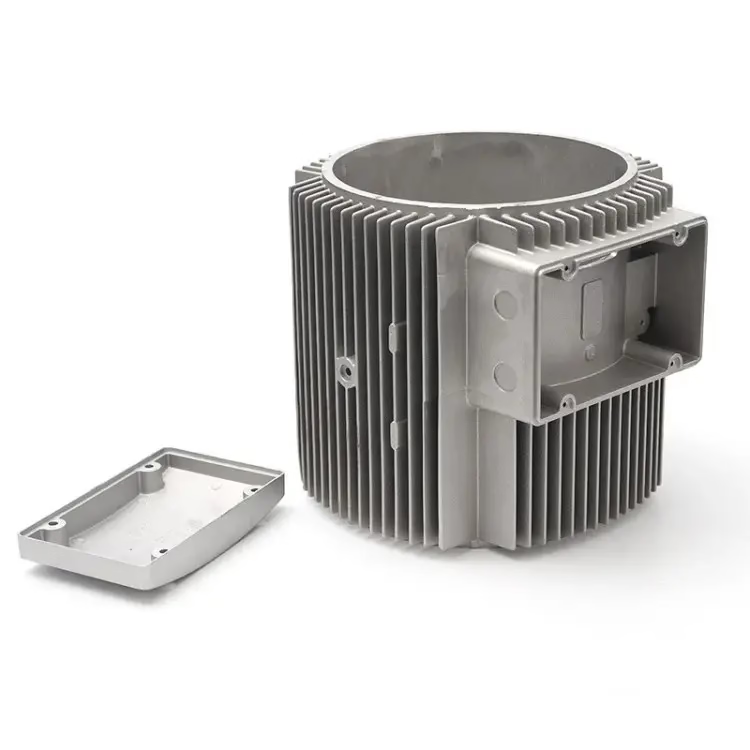
die-casting-technology
15 yearsCasting and CNC finishing since 2011
127High-precision CNC machines
±0.005 mmAchievable on machined features
Ra 0.2–0.8 μmBest surface finish range
Where it goes wrong

Four comparison mistakes that cost real money

Most casting problems are process-selection problems. They surface after tooling is cut.

01

Choosing casting for a part that is really a turning job

A shaft with one groove and a through bore does not need a wax pattern and a shell. You pay for tooling, then pay again for machining every critical feature back to size. Turned bar stock gets there in one setup.

02

Expecting cast tolerances on a bearing seat

As-cast surfaces typically sit far looser than a machined fit. If the drawing calls for a press fit or a sealing face, that face must be machined. Budgeting the machining after the casting quote is how a project goes over.

03

Picking forging for a part with internal passages

Forging improves grain flow, but it cannot form a closed internal channel. If the part needs a cored passage, the choice is casting or joining two pieces. Grain flow does not help you when the geometry is impossible.

04

Quoting stamping dies for a 200-piece run

Stamping dies are cheaper per part at volume, but the die itself is a fixed cost that has to be amortized. At a few hundred pieces the amortized die cost per part dwarfs the casting tooling. Volume decides this one.

How we compare them

Compare on geometry, volume and alloy, in that order

Four questions settle most process decisions before any quote is written.

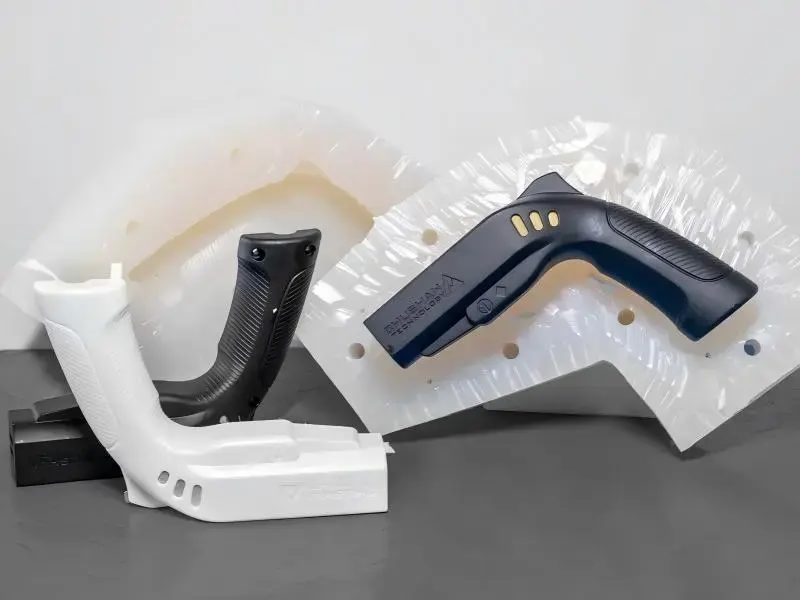
vacuum-casting-services1
Geometry first

Cast when the shape is too complex to cut from solid

Investment casting handles undercuts, internal passages, varying wall thickness and tapered sections that a milling cutter cannot reach. A part that would need five setups and a custom fixture as a machined blank can often come off the casting line near net shape.

That advantage disappears on simple prismatic parts. If the geometry is mostly flat faces and drilled holes, machining from plate is faster and needs no pattern. We tell customers this before they spend money on tooling.

  • 1
    Complex internal channelsCored passages that no cutter can reach from outside.
  • 2
    Thin walls and tapersSections that would deflect or chatter during milling.
  • 3
    Expensive alloysLow material waste matters when the billet price is high.

Talk to an Engineer

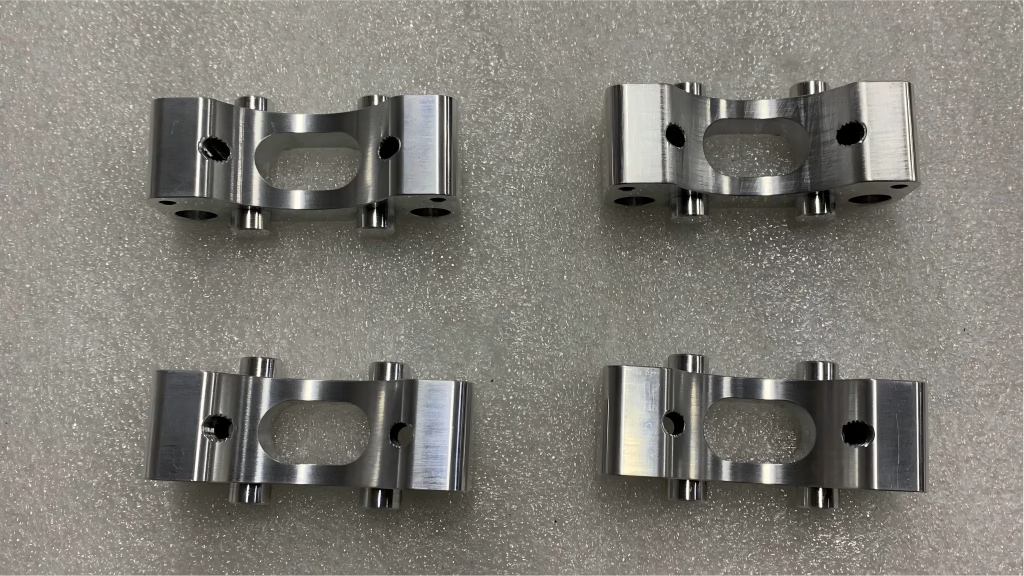
cnc machining
Then volume and alloy

Machining wins on precision, casting wins on material waste

Machining holds the tightest tolerances of any process on this list. We work to ±0.005 mm on critical features and Ra 0.2–0.8 μm on finishes when the part calls for it. Casting alone will not reach that.

The practical route for most cast parts is cast near net shape, then machine only the functional faces. That keeps the geometry benefit of casting and the tolerance benefit of machining, and it cuts the amount of material you pay to remove.

  • 1
    ±0.005 mmTolerance we hold on machined features.
  • 2
    Ra 0.8–1.6 μmStandard machined finish for sealing and bearing faces.
  • 3
    One to 10,000+No minimum order quantity on either route.

Get Instant Quote

Selection table

Investment casting against five competing processes

Relative positions, not absolute limits. Your part geometry can move any row.

ProcessBest fitMain trade-off
Investment castingComplex shapes, internal passages, costly alloysNeeds a pattern; as-cast tolerance is loose
CNC machiningTight tolerance, low to mid volume, simple geometryMaterial waste high on complex shapes
ForgingHigh tensile and fatigue strength, no internal channelsCannot form closed internal passages
StampingHigh volume, thin hard metal, flat or formed sheetDie cost must be amortized over large runs
Die castingHigh volume, non-ferrous, thin wallsHigher tooling cost; suited to long runs
Powder metallurgyHigh volume, simple shapes, low tooling costLimited geometry; lower precision than machining
What we run

Casting plus the finishing processes around it

One supplier for the casting, the machining and the surface treatment.

01

Vacuum Casting

Silicone tooling for prototype and bridge volumes. Good for checking fit and form before hard tooling is cut.

02

Metal Die Casting

Non-ferrous parts at higher volume. Thin walls and good as-cast surface, with higher tooling cost up front.

03

5 Axis CNC Machining

Sixteen simultaneous 5-axis centers for cast features that need to be brought to tolerance in one setup.

04

CNC Milling & Turning

Mill-turn centers for cast parts with cylindrical features that would otherwise need a second operation.

05

Rapid Prototyping

Printed or machined prototypes to validate geometry before committing to a pattern.

06

Part Surface Finishing

Anodizing, plating, powder coating, bead blasting and laser marking on cast and machined parts.

Scope

What a casting and machining order includes

ItemDetail
MaterialsAluminium 6061, 7075, ADC12; stainless 304, 316L, 17-4PH; steel 1045, 4140; titanium TC4; Inconel
Maximum size4,000 mm maximum processing size on the machining side
Tolerance±0.005 mm (±0.0002 in) on machined features
Surface finishRa 1.6–3.2 μm as machined; Ra 0.2–0.8 μm on request
Inspection100% inspection before shipment; reports on request
CertificationsISO 9001:2015, IATF 16949:2016, ISO 13485:2016, ISO 27001:2022
Why GreatLight

What you get when you send us the part

15Y

Casting and machining under one roof

Since 2011. You do not coordinate a foundry and a machine shop separately, which is where most tolerance arguments start.

127

CNC machines for post-cast work

Sixteen simultaneous 5-axis centers, twelve 4-axis mills, twenty-seven 3-axis machines and sixteen mill-turn centers.

12h

Quote and DFM analysis

Quotation and free DFM analysis within 12 hours. We flag a casting-versus-machining mismatch before tooling is cut.

24h

Production start

Production can start within 24 hours of a released order. Parts ship in 3–5 days on the machining side.

99.99%

Qualification rate

Raw material check, in-process monitoring and final inspection. Reports available on request.

0

Minimum order quantity

From one prototype to 10,000+ part runs. Uploads are confidential and an NDA is available on request.

7,600 m²Manufacturing space
150Technicians
3Wholly-owned plants
<2%Historical late-delivery probability
Industry fit

What these industries require, and what we deliver

CNC Machining Services Comparison 2026 Fictiv vs Xometry vs GreatLight

Automotive & EV

Housing and bracket parts where wall thickness varies and machining access is limited. IATF 16949:2016 applies to the process.

  • IATF 16949:2016
  • ±0.005 mm
  • 100% inspection
GreatLight Metal new factory building

Medical Devices

Small stainless and titanium components with internal geometry. Surface finish and traceability drive the process choice.

  • ISO 13485:2016
  • Ra 0.2–0.8 μm
  • 17-4PH / TC4
Leader in Cnc Machining Service China

Aerospace

Low-volume structural parts in costly alloys, where material waste and weight both matter. Cast near net, then machine the interfaces.

  • Low volume
  • Costly alloys
  • 4,000 mm max size
CNC Lathe Technical Specifications Terminology

Robotics & Automation

Joint housings and link arms with cored passages and machined bores. Mill-turn handles the cylindrical features in one setup.

  • 16 mill-turn centers
  • Ø400 mm rotary table
  • 3–5 day ship
FAQs

Questions engineers ask before choosing a process

When is casting a better choice than machining from solid?

When the geometry has internal passages, undercuts or thin tapered walls that a cutter cannot reach without multiple setups and custom fixturing.

When the alloy is expensive, because casting removes far less material than cutting a part from a billet.

Can a casting hold the same tolerance as a machined part?

No. As-cast surfaces are looser than machined fits. If the drawing calls for a press fit, a bearing seat or a sealing face, that feature has to be machined.

On machined features we work to ±0.005 mm and Ra 0.2–0.8 μm. Plan the process as cast plus machined faces, not cast alone.

How does this casting process compare with forging for strength?

Forging gives better grain flow, so tensile and fatigue strength are higher ounce for ounce. Casting is quicker and cheaper to mass produce and generates much less waste.

If the part needs a closed internal channel, forging cannot form it. Strength numbers do not matter when the geometry is not achievable.

Why not just stamp the part instead?

Stamping is faster and the dies last the life of the part, but the die is a fixed cost that must be spread over the run.

At a few hundred pieces that cost per part is high. Stamping suits high-volume, thin, hard metal parts. Casting gives more design freedom on thickness and taper.

How does powder metallurgy fit in?

Powder metallurgy has lower production and tooling cost than investment casting, which makes it good for high-volume simple shapes.

Casting is the better route when the part needs higher precision, more complex geometry, or is produced in low-volume runs.

What about die casting and sand casting?

Die casting gives smooth surfaces and thin walls but the tooling cost is higher, so it fits long production runs.

Sand casting is among the cheapest routes and suits large components where surface finish and tight tolerance are secondary.

Do I need a pattern or die before you can quote?

No. Send the drawing or a 3D file and we return a quotation and free DFM analysis within 12 hours.

If the geometry would be cheaper to machine from solid, we say so before you commit to tooling.

What volumes can you handle?

There is no minimum order quantity. We run from a single prototype to 10,000+ part runs.

Uploads stay confidential and an NDA is available on request.

Send the drawing. We will tell you which process fits.

Quotation and free DFM analysis within 12 hours, with a straight answer on whether casting, machining or another route is cheaper for your part.

12-hour quote100% inspectionNo minimum order quantityNDA on request

Trusted by engineers and manufacturers worldwide

Tesla Ford Motor Company BYD Auto Denso Magna International Boeing Airbus Medtronic KUKA FANUC