GreatLight CNC Machining Factory logo
CNC Machining
Rapid Prototyping
Materials
Industries
News
About GL

Get Instant Quote

Materials Guide

CNC Machining Materials

Pick a grade, not a category. We machine aluminum, stainless, titanium, copper alloys, tool steels and engineering plastics to ±0.005 mm. Tell us the load, environment and finish, and we will tell you whether the material you chose is the one we would run.

6061-T6 · 7075 · 304 · 316LTi-6Al-4V · Inconel · 17-4PHPOM · PEEK · PA · PC±0.005 mm toleranceRa 0.2–0.8 μm finishPrototype to 10,000+ parts
oplus_262178
15 yearsMachining since 2011
127High-precision CNC machines
±0.005 mmAchievable tolerance
99.99%Qualification rate
Where it goes wrong

The material you picked is the tolerance you cannot hold

Most failed first articles are not machining errors. They are material decisions made on a data sheet instead of on a drawing.

01

The alloy is only "aluminum"

Drawing says aluminum, shop buys 6061, and an anodized housing comes back with a blotchy finish. Grade decides strength, corrosion behavior and how the surface takes dye. 7075 machines crisp but welds poorly. 5052 bends without cracking. Naming the grade on the PO removes the guesswork.

02

Tight tolerances on a gummy plastic

POM and PTFE move after the cut. A part held to ±0.005 mm on the machine can drift out of print once it relaxes overnight. For soft polymers we rough, rest, then finish. If your design needs metal-grade tolerance, choose the metal and save the plastic for covers.

03

Stainless that will not cut cleanly

303 turns beautifully. 316L work-hardens under a dull insert and tears at the thread flanks. Choosing 316L for a part that sees no chlorides buys corrosion resistance you paid for twice, in tool wear and in cycle time. Match the grade to the environment, not to habit.

04

Heat and load met after assembly

Inconel and titanium hold strength at temperature but eat tool life. If a bracket only sees 80 °C, 17-4PH in H900 does the job at a fraction of the cost. Reaching for the exotic alloy early moves money from the budget into the chip bin.

How we select

Material selection by function, not by catalog page

Four inputs decide the grade: load path, service temperature, corrosion exposure and the finish the part must show.

CNC Lathe Technical Specifications Terminology
Metals

Match the alloy to the load and the environment

Aluminum covers most of what we run. 6061-T6 is the default for housings, fixtures and brackets because it machines fast and anodizes evenly. 7075-T6 takes higher stress in aerospace and robotics arms. 2024 holds fatigue strength but needs protection against corrosion. 5083 and 5052 stay weldable and formable for sheet and weldments.

Stainless is chosen by environment. 303 for shafts and fittings where chip control matters. 304 for general corrosion resistance. 316L where chlorides or medical cleaning agents are present. 17-4PH (SUS630) when you need 1,100 MPa class strength plus corrosion resistance, and 440C for wear surfaces and bearings.

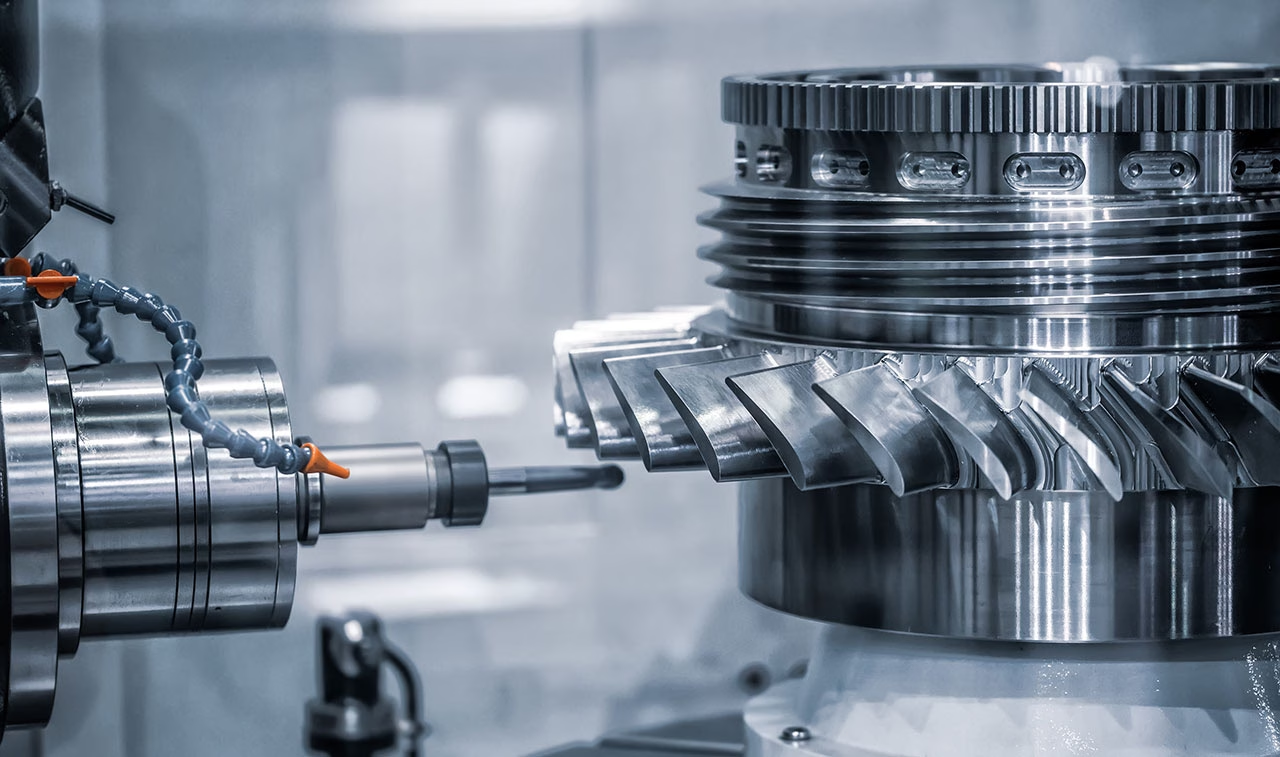
For hot or highly loaded parts we cut Inconel and Ti-6Al-4V (TC4) on the 5-axis centers. Titanium needs slow speeds, high coolant pressure and sharp tooling. Inconel is worse. We quote those jobs with realistic cycle times instead of optimistic ones.

  • 1
    6061-T6 · 7075 · 2024 · 5052 · 5083 · 6082 · ADC12Aluminum grades for housings, brackets, heat sinks and fixtures.
  • 2
    303 · 304 · 316L · 420 · 440C · 17-4PHStainless for corrosion, wear and medical cleaning cycles.
  • 3
    TA2 · TC4 · Inconel · AZ31B · C36000 · beryllium copperTitanium, nickel alloys, magnesium and copper-based grades.

Get Instant Quote

CNC Machining Services Online
Plastics

Plastics win when you need electrical, chemical or weight properties

POM (Delrin) is the workhorse. It holds ±0.05 mm comfortably, machines to a clean edge and slides against metal without lubrication, which is why it shows up in bushings, gears and conveyor parts. It does not like strong acids and it will not take a structural thread under high load.

PEEK and PA bring temperature and toughness. PEEK runs continuously near 250 °C and survives autoclave cycles, so it suits medical and semiconductor fixtures. Nylon absorbs moisture and grows. If a PA part has to hold a tight bore, we machine it dry, let it stabilize and cut the bore last.

PC gives impact resistance and optical clarity for guards and covers. PMMA gives better clarity and polishes to a glass-like finish but cracks under stress if you tap it too close to an edge. ABS and PP cover housings and chemical tanks where cost matters more than precision.

  • 1
    POM · PA · PEEK · PC · PMMA · ABS · PP · HDPE · carbon fibreStock shapes and grades we machine regularly.
  • 2
    Rough, rest, finishSoft polymers are roughed, allowed to relax, then finished to print.
  • 3
    Stress relief mattersDeep pockets and thin walls in PC and PMMA are cut with light passes.

Talk to an Engineer

Selection table

Common grades and where they belong

A short list of the grades we run most, with the reason to pick each one.

GradeBest forWatch out for
6061-T6Housings, brackets, fixturesLower strength than 7075
7075-T6High-stress aerospace and roboticsPoor weldability, costly
304 / 316LCorrosion and medical cleaning316L work-hardens, slower
17-4PH (SUS630)Shafts needing strength plus corrosionNeeds heat treat for full strength
Ti-6Al-4V (TC4)Lightweight structural partsSlow cutting, short tool life
InconelHigh-temperature and hot gas pathsHighest cost per part in this list
POM (Delrin)Bushings, gears, sliding partsPoor acid resistance
PEEKAutoclave and semiconductor fixturesExpensive stock, abrasive to tools
PA (Nylon)Tough covers and wear stripsAbsorbs moisture, grows
PMMA (Acrylic)Clear guards and light pipesStress cracks near tapped holes
Processes

One material decision, six ways to make the part

The grade usually decides the process, and sometimes the process decides the grade.

01

5 Axis CNC Machining

16 simultaneous 5-axis centers for contoured surfaces, undercuts and parts that would need three setups on a 3-axis machine. Aluminum and titanium structural parts benefit most.

02

CNC Milling & Turning

Milling for pockets, slots and flat faces. Turning for shafts, bushings and threaded fittings. 16 mill-turn centers cut both on one machine to hold concentricity.

03

Sheet Metal Fabrication

Laser cutting, bending and forming for 5052, 304 and mild steel enclosures. Material thickness and bend radius decide the design more than the alloy does.

04

Custom 3D Printing

Nylon and resin parts for fit checks and low-run fixtures. Useful when the geometry cannot be milled, or when you need a part before the material ships.

05

Rapid Prototyping

From one prototype to 10,000+ part runs with no minimum order quantity. The same grade you validate is the grade we run in production.

06

Part Surface Finishing

Anodizing, electroless nickel, zinc and gold plating, powder coating, black oxide, bead blasting and laser marking. Finish changes dimension, so we sequence it into the process.

Capability

What we can hold across material families

Numbers below are the working limits we quote against, not laboratory bests.

ItemRangeNotes
Tolerance±0.005 mm (±0.0002 in)On rigid metals, stable setups
Surface finishRa 0.2–0.8 μm fineRa 1.6–3.2 μm as machined
Maximum size4,000 mm4,000 × 400 × 150 mm travel
Rotary workØ400 mmRotary table for cylindrical parts
MetalsAluminum, stainless, steel, titaniumInconel, Invar, magnesium on request
PlasticsPOM, PA, PEEK, PC, PMMA, ABSPP, HDPE, carbon fibre
FinishesAnodize, plating, powder coatLaser marking from 1.5 mm character height
Inspection100% before shipmentReports on request
Why GreatLight

Material decisions backed by machines and paperwork

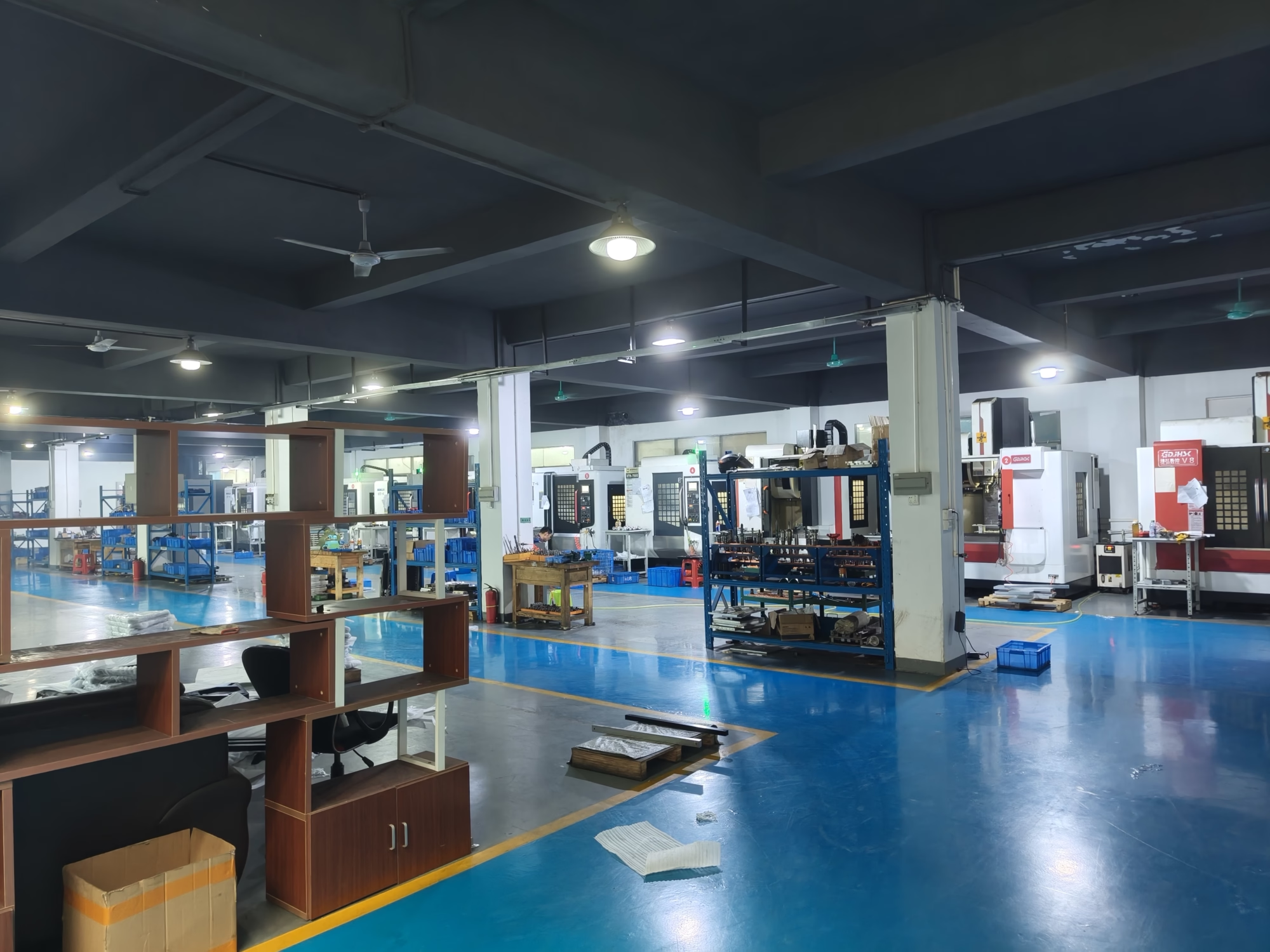
We are a 15-year-old manufacturer in Dongguan with a second plant in Singapore. Three wholly-owned plants, 7,600 m², 150 technicians.

±0.005 mm

Tolerance we quote, not hope for

Rigid metals on stable fixtures hold ±0.005 mm. Soft polymers are quoted with the relaxation allowance built in, so the finished bore is the one on the drawing.

127

Machines across three plants

16 five-axis centers, 12 four-axis mills, 27 three-axis machines and 16 mill-turn centers. Small runs and 10,000+ part runs go through the same equipment.

4,000 mm

Large parts without splicing

Maximum processing size of 4,000 mm handles long rails, frames and weldments. Medium and compact travels cover the rest of the work.

12 hours

Quote and DFM analysis

You get a quotation plus free DFM analysis within 12 hours. Production can start within 24 hours, and parts ship in 3–5 days.

4 certs

ISO 9001, IATF 16949, ISO 13485, ISO 27001

Automotive, medical and information-security systems are audited. Raw material check, in-process monitoring and final inspection run on every order.

0 MOQ

One prototype or ten thousand

There is no minimum order quantity. Uploads stay secure and confidential, and an NDA is available on request before you send the drawing.

7,600 m²Manufacturing space
150Technicians on staff
3Wholly-owned plants
99.99%Qualification rate
Delivered work

What different industries ask of a material

Leader in Cnc Machining Service China

Aerospace brackets

7075-T6 and Ti-6Al-4V brackets with contoured pockets, cut on 5-axis centers.

  • ±0.005 mm
  • Ra 0.8–1.6 μm
  • 100% inspection
6011

Medical instrument housings

316L and PEEK parts for repeated autoclave cycles, finished to a cleanable surface.

  • ISO 13485
  • 316L · PEEK
  • Ra 0.2–0.8 μm
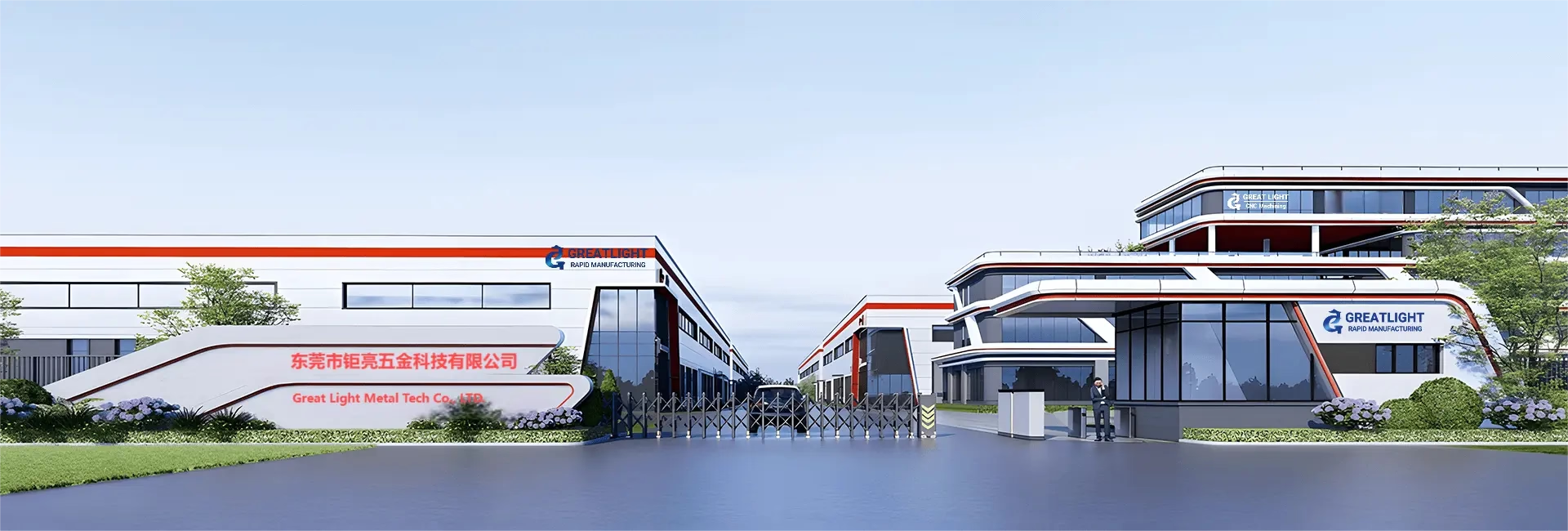
GreatLight Metal new factory building

EV busbars and housings

C110 copper and 6061-T6 conductors with conductive anodizing or plating.

  • IATF 16949
  • C110 · 6061-T6
  • 3–5 day ship
cnc machining

Automation fixtures

POM and 6061 fixture plates that hold position without lubrication on the slide faces.

  • POM · 6061
  • ±0.005 mm
  • No MOQ
FAQs

Material questions engineers ask before ordering

Can you source the exact grade on my drawing?

Yes. Send the drawing with the grade and condition, such as 6061-T6 or 17-4PH in H900. We buy to that specification and keep the mill certificate on file.

If the grade is unavailable or has a long lead time, we will tell you which substitute behaves closest and where it differs. We do not swap grades without your approval.

Which aluminum grade should I default to?

6061-T6 for most housings, brackets and fixtures. It machines quickly, anodizes evenly and holds ±0.005 mm on stable setups.

Move to 7075-T6 when the load path needs higher strength, and to 2024 when fatigue matters. Both cost more and 7075 does not weld well.

When is 316L worth the extra cost over 304?

When the part sees chlorides, salt spray or repeated medical cleaning agents. 316L resists pitting where 304 will not.

In a dry indoor assembly with no chemicals, 304 or even 303 does the same job with better machinability and shorter cycle time.

Can plastics hold the same tolerance as metal?

No, and a drawing that demands it will fail. POM and PEEK move after cutting as internal stress releases and moisture equalizes.

We rough the part, let it rest, then finish. For bores and slots, expect a relaxation allowance in the quote. Thin walls in PC and PMMA are cut with light passes to avoid stress cracking.

How does surface finish change my dimensions?

Anodizing builds a layer on the surface and plating adds thickness on all sides. A hardcoat anodized bore gets smaller; a plated shaft gets larger.

We sequence finishing into the process and machine the pre-finish dimensions so the final part meets print. Mark the finished dimensions on the drawing and we handle the rest.

Do you cut titanium and Inconel in small quantities?

Yes. There is no minimum order quantity, so a single Ti-6Al-4V or Inconel part is fine.

Expect longer cycle times and shorter tool life, which shows up in the quote. Titanium wants slow speeds, high coolant pressure and sharp tooling; Inconel is harder on the tool still.

How do you inspect material before it is cut?

We check the raw material against the certificate on receipt, then monitor dimensions in process and run a final inspection on the finished part.

Every order is inspected 100% before shipment. Inspection reports are available on request, and ISO 9001:2015, IATF 16949:2016, ISO 13485:2016 and ISO 27001:2022 systems sit behind the paperwork.

Can I send a drawing before signing an NDA?

You can, but if the design is sensitive, ask for the NDA first. We will sign it before you upload anything.

Uploads are secure and confidential either way. An NDA is available on request through the contact page.

Send the drawing and the grade, get a quote in 12 hours

Upload your CAD file with the material callout. We will confirm the grade, flag anything that will not hold tolerance in that material, and return a quotation with free DFM analysis.

12-hour quote100% inspectionNo minimum order quantityNDA on request

Trusted by engineers and manufacturers worldwide

Tesla Ford Motor Company BYD Auto Denso Magna International Boeing Airbus Medtronic KUKA FANUC