GreatLight CNC Machining Factory logo
CNC Machining
Rapid Prototyping
Materials
Industries
News
About GL

Get Instant Quote

Material Selection

Sheet Metal Materials

A working guide to choosing aluminum, stainless, copper, brass and steel for custom fabrication. Grade, temper, thickness and finish, matched to the bend radii and loads your part has to survive.

6061-T6304 / 316LC110 copperA36 steelNo minimum order12-hour quote
custom-sheet-metal-fabrication-services1
15 yearsFounded in 2011, Dongguan
3 plantsDongguan and Singapore
±0.005 mmAchievable tolerance
99.99%Qualification rate
Where material choices go wrong

Four failures we see on incoming drawings

01

The part cracks on the first bend

Full-hard temper or a tight bend radius across the grain. 5052-H32 bends; 6061-T6 often needs a larger radius or a relieved bend line. If the drawing asks for R0.5 on 2 mm 6061-T6, the press brake will tell you before we do.

02

Corrosion shows up after six months

304 stainless specified for a marine or wash-down enclosure. Chloride pitting starts at cut edges and weld heat-affected zones. 316L or 316 costs more per kilogram and saves the whole assembly. We flag this at DFM review, not after anodizing.

03

The galvanic pair eats the fastener

Aluminum housing bolted to a stainless bracket with no isolation. Add moisture and the aluminum becomes the anode. Plating the steel, using aluminum hardware, or a barrier washer breaks the circuit. Cheap at design, expensive at field failure.

04

Thickness stated in gauge, not millimetres

Gauge numbers differ between ferrous and non-ferrous standards. 16 ga steel is 1.519 mm; 16 ga aluminum is 1.290 mm. A drawing that says 16 ga without a standard can shift your bend allowance and your bracket height by a few tenths.

How we work

Match the alloy to the forming route, not the other way around

Grade, temper and thickness decide what the brake, laser and welder can hold.

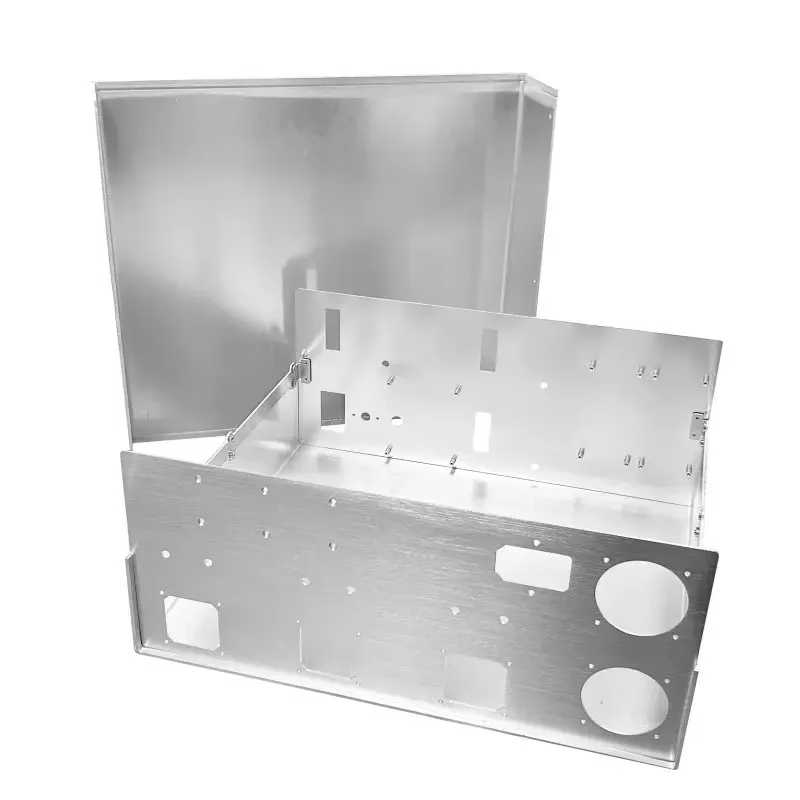
aluminum-alloy-industrial-control-chassis-sheet-metal-processing
Aluminum

6061-T6 for structure, 5052-H32 for forming

Aluminum is the default for enclosures, brackets and chassis because the strength-to-weight ratio is good and the material machines and welds cleanly. We stock 6061, 6061-T6, 2024, 5052, 5083, 6063, 6082, 7075 and ADC12. The choice usually comes down to one question: will the part be bent after machining?

T6 temper gives yield strength near 276 MPa but cracks if you ask for a bend radius under roughly one material thickness. 5052-H32 is softer and takes tight radii without relief, which is why control panels and covers are usually cut from it. 7075 and 2024 are aerospace grades with high strength and poor weldability; they belong on machined ribs, not on welded frames.

  • 1
    6061-T6Structural brackets, machined plates, heat sinks. Bend radius ≥ 1 t.
  • 2
    5052-H32Covers, panels, formed channels. Best bend performance of the common grades.
  • 3
    6082 / 6063Extrusion-friendly, good anodizing response, moderate strength.

Get Instant Quote

greatlight-metal-technology-co-ltd-1
Stainless, copper and brass

When conductivity or corrosion resistance drives the call

Stainless carries at least 10.5% chromium by weight, and that passive layer is what holds up in food equipment, medical housings and outdoor hardware. We run 303, 304, 316, 316L, 420, 430, 431, 440C and 17-4PH. Grade 304 covers most general work. Move to 316L when chlorides or a welded joint in a corrosive environment are in the picture, because the molybdenum addition resists pitting at the heat-affected zone.

Copper and brass are specified for electrical and thermal reasons, not structural ones. C101 and C110 give electrical conductivity above 100% IACS and thermal conductivity near 390 W/m·K, which is why busbars and heat spreaders use them. Brass C36000 machines faster than any other common alloy and takes a bright finish. It is also noticeably heavier than aluminum, so weight budget matters.

Beryllium copper sits between the two: high strength plus good conductivity, used for spring contacts and RF shielding. It requires controlled handling because beryllium dust is a health hazard, so we machine it wet and contain the swarf.

  • 1
    304 / 316LFood, medical, marine. 316L for chloride exposure and welded joints.
  • 2
    C110 copperBusbars, heat spreaders, RF shields. High conductivity, soft, needs care in forming.
  • 3
    C36000 brassConnectors, fittings, decorative hardware. Excellent machinability, golden finish.

GreatLight Metal new factory building
Steel and gauge discipline

Mild steel, alloy steel, and why the gauge callout matters

Mild and alloy steels cover the heavy end of fabrication. We cut and form 1018, 1045, 4130, 4140, 4340, A36 and tool steel. A36 is the workhorse for weldments and structural frames. 4130 and 4140 come in when the part needs higher tensile strength or through-hardening after machining, common in automotive and industrial machinery links.

Gauge is a thickness shorthand that causes real problems. The ferrous gauge standard puts 16 ga at 1.519 mm and 20 ga at 0.912 mm. The non-ferrous standard puts 16 ga at 1.290 mm. Same number, different sheet. When a drawing gives gauge without naming the standard, bend allowance and finished height drift by a few tenths of a millimetre.

Our rule is simple: every drawing gets an explicit thickness in millimetres or inches, and the gauge equivalent if the customer wants it. Laser cutting holds ±0.005 mm on position, so the thickness you specify is the thickness that arrives in the bend deduction table.

  • 1
    A36 / 1018Weldments, frames, general brackets. Easy to weld and form.
  • 2
    4130 / 4140Higher-strength links, shafts and plates. Often heat treated after machining.
  • 3
    Explicit thicknessMillimetres or inches on every drawing. Gauge alone is not a specification.
Selection table

Pick the grade by what the part has to do

Common grades we stock and the jobs they fit.

MaterialTypical gradeUse it whenWatch out for
Aluminum5052-H32Part will be bent after cuttingLower strength than T6
Aluminum6061-T6Structural bracket or machined plateBend radius under 1 t will crack
Stainless304General corrosion resistance, indoorPitting in chloride environments
Stainless316LMarine, medical, welded corrosive jointsHigher cost, slightly lower strength
CopperC110Busbars, heat spreaders, RF shieldsVery soft, dents in handling
BrassC36000Connectors, fittings, decorative partsHeavier than aluminum
SteelA36Weldments and structural framesRusts without coating
Steel4130 / 4140High-strength links and shaftsNeeds heat treatment to reach spec
Fabrication services

What we do with these materials

01

Laser cutting

Fiber laser cuts aluminum, stainless, copper, brass and steel sheet. Position tolerance ±0.005 mm. Copper and brass need higher power, which we account for in nesting and cut speed.

02

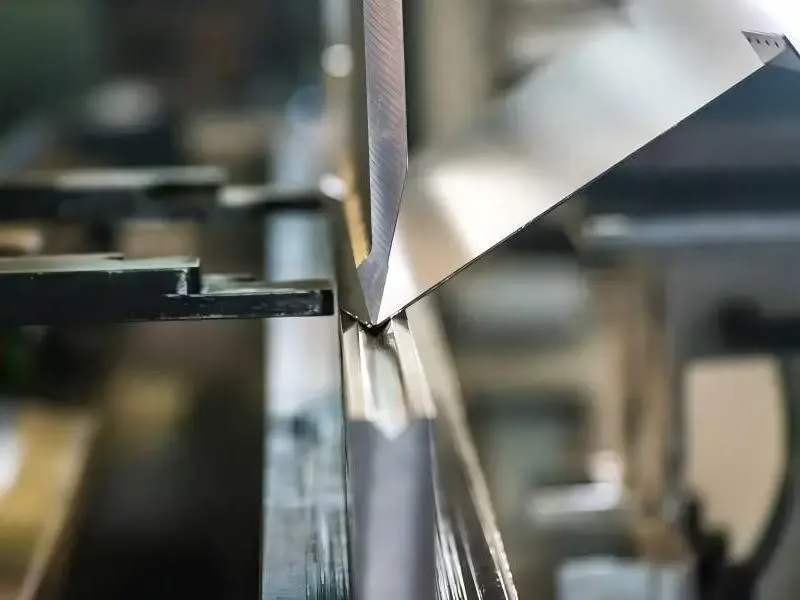
Press brake forming

CNC press brakes with tooling for tight radii and long bends. Bend allowance calculated from the actual measured thickness, not the nominal gauge.

03

Welding and assembly

TIG and MIG for aluminum, stainless and steel. Spot welding and riveting for enclosures. Weld maps agreed before production so the heat-affected zone is planned, not patched.

04

CNC machining

127 high-precision CNC machines including 16 simultaneous 5-axis centers. Machined features, tapped holes and pockets on formed parts come off the same shop floor.

05

Surface finishing

Anodizing, electroless nickel, zinc, silver and gold plating, powder coating, black oxide, bead blasting, brushing and laser marking. Finish is chosen with the alloy, not after it.

06

Inspection and documentation

100% inspection before shipment: raw material check, in-process monitoring, final inspection. Reports on request. Tolerances verified against the drawing you supplied.

Process scope

Thickness and size ranges we run

Practical limits for the materials on this page.

ProcessTypical rangeNotes
Laser cutting0.5–20 mmThicker sections cut on request
Press brake forming0.5–12 mmRadius depends on grade and temper
Max processing size4,000 mm4,000 × 400 × 150 mm travel
Tolerance±0.005 mmPosition, laser cut features
Surface finishRa 0.8–1.6 μmRa 0.2–0.8 μm on request
Volume1 to 10,000+ partsNo minimum order quantity
Why GreatLight

Fifteen years of choosing the right grade

15Y

Since 2011

Fifteen years making custom metal parts in Dongguan. The material knowledge is shop-floor experience, not a catalogue.

12h

Quote and DFM in twelve hours

Send a drawing and we return a quotation with free DFM analysis within 12 hours. Material substitutions are flagged before you commit, not after cutting starts.

24h

Production starts in a day

Once the drawing and material are confirmed, production can start within 24 hours. Parts ship in 3–5 days. Historical late-delivery probability is below 2%.

0

No minimum order

One prototype or a 10,000-part run, same process and same inspection. Material grade stays the same at both ends of the volume range.

ISO

Certified quality system

ISO 9001:2015, IATF 16949:2016, ISO 13485:2016 and ISO 27001:2022. Medical and automotive material traceability available.

NDA

Confidential uploads

Files are stored securely and never shared. NDA available on request before you send the first drawing.

±0.005 mmPosition tolerance
Ra 0.8–1.6 μmStandard machined finish
99.99%Qualification rate
<2%Historical late-delivery rate
Industry requirements

What these materials have to deliver, by sector

cnc-machining-metal

Aerospace

Lightweight structure with tight tolerances. 7075 and 2024 for machined ribs, 6061-T6 for brackets.

  • ±0.005 mm
  • 7075 / 2024
  • Full traceability
large-die-cast-metal-part-back-19

Automotive & EV

Battery enclosures, busbars and structural links. C110 copper for current paths, 4130 for high-strength links.

  • IATF 16949
  • C110 copper
  • 3–5 day ship
CNC Machining Services Online

Medical devices

Housings and instrument frames in 316L or 304, finished for repeated cleaning and disinfection.

  • ISO 13485
  • 316L
  • Passivated finish
CNC Lathe Technical Specifications Terminology

Electronics

Chassis, shields and heat spreaders. Aluminum for weight, copper for thermal and RF paths.

  • 5052-H32
  • Hardcoat anodize
  • Ra 0.8–1.6 μm
FAQs

Questions engineers ask about material selection

Which aluminum grade should I pick for a bent enclosure?

5052-H32 is the safe default. It forms tight radii without cracking and welds well. Use 6061-T6 only if the part carries structural load and the bend radii are at least one material thickness.

If the design needs both a tight bend and high strength, split the part: a 6061-T6 machined frame with a 5052 formed cover. That is usually cheaper than fighting the T6 temper in the brake.

How do I choose between 304 and 316L stainless?

Start with the environment. Indoor, dry, no chlorides: 304 is fine and costs less. Coastal air, wash-down chemicals, saline contact, or any welded joint exposed to chloride: go to 316L.

The molybdenum in 316L slows pitting at the weld heat-affected zone, which is where 304 usually fails first. For medical housings that get repeatedly disinfected, 316L is the usual choice.

Is gauge thickness accurate enough to specify?

Only if you name the standard. Ferrous gauge and non-ferrous gauge give different millimetre values for the same number. 16 ga is 1.519 mm in steel and 1.290 mm in aluminum.

We ask every customer to put an explicit thickness in millimetres or inches on the drawing. If gauge matters for sourcing, add the equivalent in parentheses. That removes the ambiguity from the bend deduction.

When should I use copper or brass instead of aluminum?

When the part moves current or heat. C110 copper gives electrical conductivity above 100% IACS and thermal conductivity near 390 W/m·K, which aluminum does not match. Busbars, heat spreaders and RF shields belong in copper.

Brass C36000 is for connectors, fittings and visible hardware. It machines faster than any other common alloy and takes a bright finish. Both metals are heavier than aluminum, so check the weight budget before switching.

Can you work from a gauge callout on an old drawing?

Yes, but we will confirm the intended standard before cutting. Many legacy drawings were made under a single house standard, so we ask once and record it against the part number.

If the drawing is ambiguous and the part is already in production elsewhere, we measure a sample and work backwards to the thickness that matches. That is faster than guessing and re-cutting.

What surface finishes work with which alloys?

Anodizing suits aluminum: clear, colour, hardcoat and conductive variants. Hardcoat anodize on 6061-T6 gives a wear surface for sliding parts. Stainless and steel take electroless nickel, zinc, black oxide or powder coating.

Copper and brass accept plating, silver and gold included, which is common on contacts. Laser marking needs a minimum character height of 1.5 mm to stay legible after finishing.

Do you handle small runs in exotic grades?

Yes. We stock titanium TA1, TA2 and TC4 (Ti-6Al-4V), Inconel, magnesium AZ31B and AZ91D alongside the common grades. There is no minimum order quantity, so a single prototype is workable.

Exotic grades may need a longer material lead time than the 3–5 day standard ship window. We tell you the material availability in the quotation rather than after the order is placed.

How is material grade verified before shipment?

Every order goes through a raw material check against the mill certificate, then in-process monitoring, then final inspection. That is 100% inspection before shipment, not sampling.

Inspection reports are available on request. For automotive and medical programs we keep material traceability tied to the part number and the production lot.

Send a drawing, get a material recommendation

Upload your files and we return a quotation with free DFM analysis within 12 hours, including grade and finish advice.

12-hour quote100% inspectionNo minimum orderNDA on request

Trusted by engineers and manufacturers worldwide

Tesla Ford Motor Company BYD Auto Denso Magna International Boeing Airbus Medtronic KUKA FANUC