GreatLight CNC Machining Factory logo
CNC Machining
Rapid Prototyping
Materials
Industries
News
About GL

Get Instant Quote

Stamped Housings

Metal Enclosures Stamping

Tooling, stamping and finishing for power and control housings. We quote in 12 hours, run one prototype or 10,000+ parts, and inspect every piece before it ships.

12-hour quoteNo MOQ±0.005 mmISO 9001:2015100% inspection3 plants
aluminum-alloy-industrial-control-chassis-sheet-metal-processing
15 yearsStamping and fabrication since 2011
127High-precision machines in 3 plants
±0.005 mmAchievable tolerance on formed parts
3–5 daysTypical production lead time
What goes wrong

Four ways a stamped enclosure project stalls

These are the failures we get called in to fix.

01

The flat pattern does not match the bend

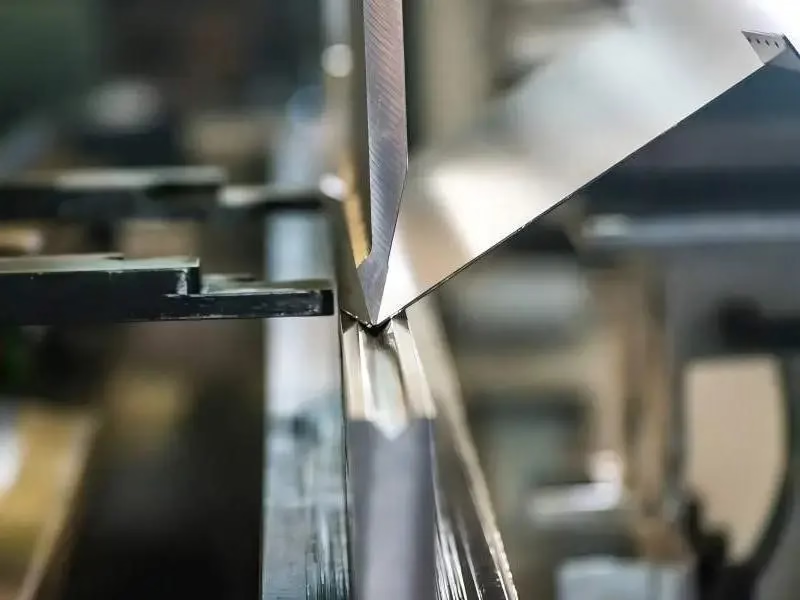
The blank is cut to a nominal size, the press brake uses a different K-factor, and the first article comes off 0.6 mm short on the flange. Now the lid will not close. We run the flat pattern and the bend deduction off one model, so the blank and the tool agree.
02

Pierced holes drift after forming

Holes punched before forming shift when the metal stretches. A connector or PEM insert then misses its mating hole by a few tenths. We plan the hole positions from the formed state, not the flat, and add pilot features where the stretch is largest.

03

The finish shows every tool mark

A brushed or anodized panel hides nothing. Scratches from handling, die marks near the bend line, and a weld seam left proud of the surface all come back as a rejected lot. We deburr, tumble and mask before the finish goes on, and we keep the grain direction consistent across the run.

04

Ten pieces fit, ten thousand do not

A prototype made on the laser and the brake can pass first article. Then the hard tool arrives and the springback is different, the material hardness varies by lot, and the stack-up drifts out of tolerance halfway through the run. We qualify the tool on production material before we release the lot.

How we build it

From flat blank to finished housing

One process chain, one set of tolerances, one inspection record.

custom-sheet-metal-fabrication-services1
Process

Blank, form, pierce — planned as one operation

A stamped housing is only as good as the sequence behind it. We start from the 3D model, decide which features are cut on the flat, which are pierced in the die, and which are added after forming. Holes that sit near a bend get moved or re-sized so the stretch does not pull them out of position.

The flat pattern comes off the same model as the bend deduction, so the blank length and the tool agree. For a first article we run the parts, measure the formed envelope, and adjust the blank before the hard tool is cut.

  • 1
    Progressive and compound diesFor volume runs where cycle time matters.
  • 2
    Press brake formingFor low volume, large panels and prototypes.
  • 3
    Laser and turret blankingFor changes that do not justify a new tool.

Get Instant Quote

cnc-machining-metal
Assembly

Hardware, seams and gaskets that hold up

Enclosures are assemblies, not single parts. PEM nuts, standoffs, hinges and captive screws are pressed or welded in place, and we check the pull-out and torque before the lot is released. Where a seam must be sealed against dust or moisture, we choose the weld or the gasket groove based on the IP target, not on what is easiest to run.

We can leave the housing ready for powder coat or anodize, or mask the mating surfaces so the finish does not close up a thread or a grounding contact. Flatness on a gasket face is checked after finishing, because coating thickness changes the seal.

  • 1
    Press-fit and welded hardwarePEM inserts, standoffs, studs, hinge points.
  • 2
    Welded or folded seamsRuns, spot welds and continuous seams for sealing.
  • 3
    Masking before finishThreads, grounding pads and gasket faces stay clean.

Talk to an Engineer

Selection

Which process fits your housing

Same drawing, different volumes and tolerance needs.

MethodBest forWatch out for
Progressive die stamping10,000+ parts, stable designTool cost and lead time up front
Compound die stampingFlat parts with tight hole patternsLimited forming in one hit
Press brake forming1–500 parts, large panelsOperator skill drives repeatability
Laser blank + brakePrototypes and design changesNo hard tool, so hole position is free
Deep drawn housingSeamless cans and coversDraw ratio limits the depth per hit
Stamped + CNC hybridTight bores and machined facesTwo setups, plan the datums
What we run

Services around a stamped enclosure

One supplier for the shell and everything that bolts to it.

01

Metal enclosures stamping

Progressive, compound and brake-formed housings in aluminum, stainless and steel. Blanks cut, formed, pierced and deburred under one process plan.

02

Sheet metal fabrication

Laser cutting, press brake work, welding and hardware insertion for panels, brackets and chassis that sit next to the stamped shell.

03

CNC machining

Tight bores, counterbores, threaded ports and machined sealing faces added to the formed part on 3-axis, 4-axis and 5-axis centers.

04

Surface finishing

Anodizing, powder coating, electroless nickel, zinc plating, bead blasting and laser marking. Minimum character height 1.5 mm for marked panels.

05

Rapid prototyping

Laser-cut and brake-formed samples so the fit and the look can be checked before the hard tool is committed.

06

Assembly and packing

Hardware pressed, gaskets fitted, parts wrapped, bagged and boxed. Wooden crates for heavy housings.

Scope

Materials and finishing we handle

Standard stock, verified by mill certificate on request.

CategoryOptions
Aluminum6061, 6061-T6, 5052, 5083, 6063, 6082, 2024, 7075, ADC12
Stainless steel303, 304, 316, 316L, 420, 430, 431, 440C, 17-4PH
Carbon and alloy steel1018, 1045, 4130, 4140, 4340, A36, tool steel
Copper and brassC101, C103, C110, beryllium copper, C27400, C28000, C36000
Titanium and specialTA1, TA2, TC4, Inconel, magnesium AZ31B, AZ91D
FinishingAnodize, powder coat, black oxide, nickel, zinc, silver, gold
MarkingLaser marking and engraving, minimum character height 1.5 mm
Inspection100% before shipment, raw material, in-process and final
Why GreatLight

What you get on the shop floor

15Y

Fifteen years of forming

Stamping and fabrication since 2011, across three wholly-owned plants in Dongguan and Singapore.

±0.005

Tolerance we hold

±0.005 mm (±0.0002 in) on machined and formed features, checked against the drawing.

12h

Quote and DFM in 12 hours

Upload the model and we return a price with a free DFM note on thin walls, tight radii and hole placement.

24h

Production starts in 24 hours

Once the drawing and material are confirmed, the first operation can begin the next day.

99.99%

Qualification rate

Measured across incoming material, in-process checks and final inspection before shipment.

0

Minimum order quantity

From a single prototype to 10,000+ part runs on the same drawing.

7,600 m²Manufacturing space
150Technicians and engineers
127High-precision machines
4ISO certifications held
Where it runs

Housings we build and the checks behind them

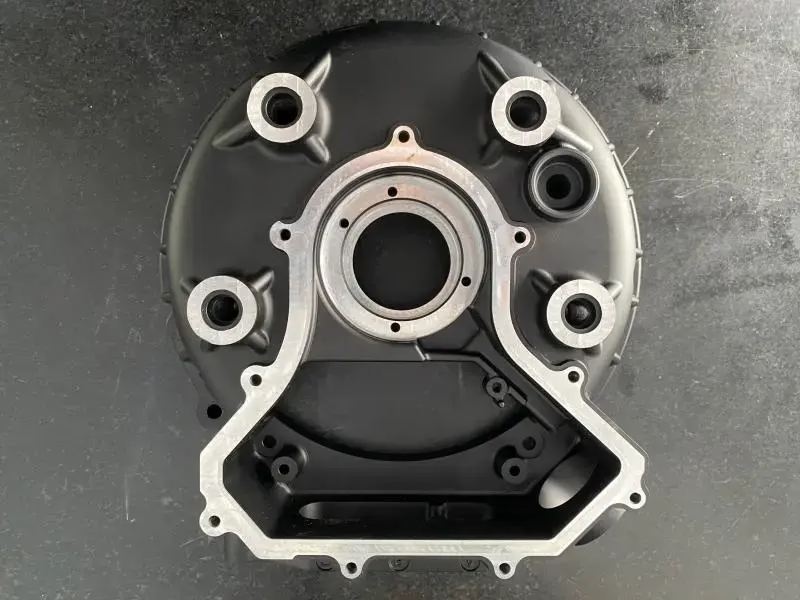
large-die-cast-metal-part-back-19

Power supply enclosures

Ventilated covers and mounting flanges, flatness checked after coating.

  • ±0.005 mm
  • 100% inspection
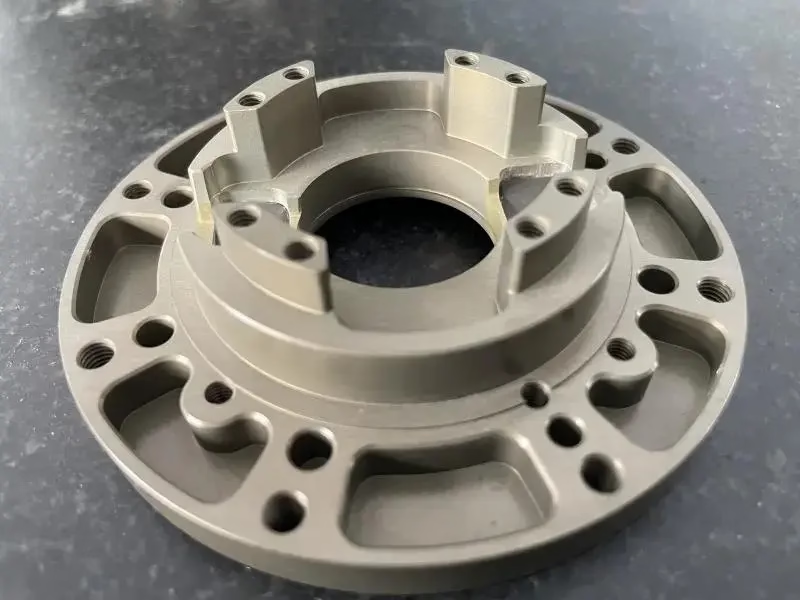
large-die-cast-metal-part-back-5

Control and instrument cases

Pierced connector cutouts held to the mating panel, hardware pressed before finish.

  • 3–5 days
  • No MOQ
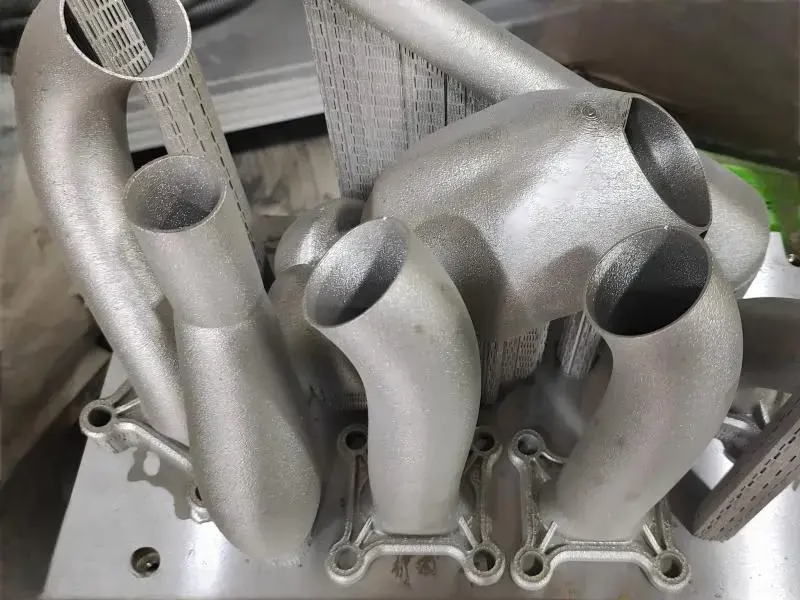
metal-3d-printing-1801

Electronics chassis

Folded panels with masked grounding pads and clean thread runs after anodize.

  • Ra 0.8–1.6 μm
  • ISO 9001:2015
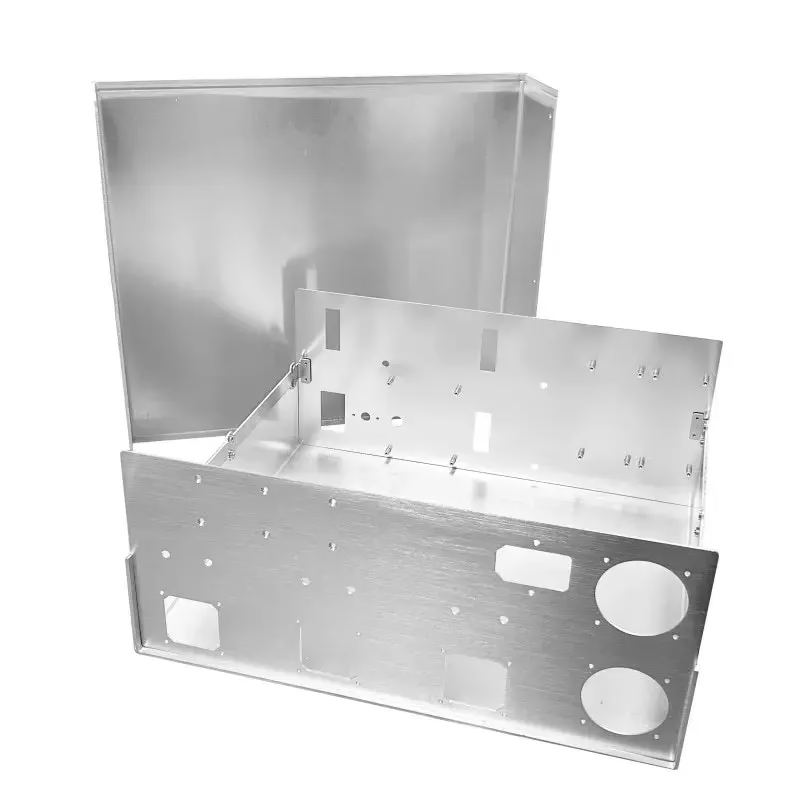
6011

Industrial machinery guards

Large formed panels, brake-formed at low volume, die-stamped when the run justifies it.

  • 4,000 mm max size
  • IATF 16949
FAQs

Questions engineers ask before releasing a tool

When does a stamped enclosure make more sense than a machined one?

When the part is a thin-wall shell with bends, flanges and cutouts, and the wall does not need to carry a tight bore. Stamping wins on cycle time once the volume passes a few thousand pieces.

If the housing has a precision bore, a sealing groove or a face that must be flat within a few microns, we machine those features after forming instead of trying to hold them in the die.

How do you decide the flat pattern and bend allowance?

We take the K-factor from the material, thickness and the tool radius we intend to use, then run a first article and measure the formed envelope. The blank is adjusted from that measurement before the hard tool is cut.

For production runs we keep the same material lot where possible, because hardness variation between lots is the main cause of springback drift.

What tolerance can you hold on a formed housing?

±0.005 mm (±0.0002 in) is achievable on critical features such as hole position, bore diameter and machined faces. General formed dimensions are usually held to the drawing tolerance for the panel size.

Tolerance on a long flange or a large panel is influenced by material springback and by how the part is supported during measurement. We agree the datum and the inspection method before the first article.

Can you add threads, inserts and hinges to the stamped part?

Yes. PEM nuts, standoffs, studs and hinge points are pressed or welded in place. We check pull-out and torque values before the lot is released.

Threads and grounding contacts are masked before anodizing or coating so the finish does not change the fit or the electrical path.

How do you handle a design that may not form cleanly?

We review the model during quoting and send a free DFM note within 12 hours. Typical points are a bend radius smaller than the material thickness, a hole too close to a bend line, or a deep draw that needs more than one hit.

We suggest a change and explain the cost or tool impact. Whether you adopt it is your call; we will quote the design as drawn too.

What is the smallest and largest housing you can run?

We process up to 4,000 mm on the largest machine travel, which covers large cabinet panels and guards. Small instrument housings down to a few centimeters are handled on the same shop floor.

For very small parts the limiting factor is usually the die, not the press, so the tool design is where we spend the review time.

How are stamped housings packed for export?

Standard packing is paper wrap, bubble bag and carton box, which is enough to protect most parts in transit. Heavy or large housings go into wooden crates.

We can ship by DHL, UPS, TNT or FedEx, by air or by sea, or hand the lot to your own forwarder.

Do you sign an NDA before we send drawings?

Yes. Uploads are treated as confidential and an NDA is available on request before any file is shared.

We hold ISO 27001:2022 for information security, alongside ISO 9001:2015, IATF 16949:2016 and ISO 13485:2016.

Send the model, get a stamped enclosure quote

Upload your drawing and we return a price with a free DFM note within 12 hours. No minimum order quantity, and every part is inspected before it ships.

12-hour quote100% inspectionNo MOQNDA on request

Trusted by engineers and manufacturers worldwide

Tesla Ford Motor Company BYD Auto Denso Magna International Boeing Airbus Medtronic KUKA FANUC