
01
Galling and built-up edge
The material is soft and gummy. Run it with a positive rake tool and you still get weld-on at the edge. Once that happens, surface finish drops and the operator keeps chasing the dimension.
Commercially pure nickel turned into shafts, sleeves, terminals and valve parts. Run on 16 mill-turn centers with ±0.005 mm tolerance and full material traceability.
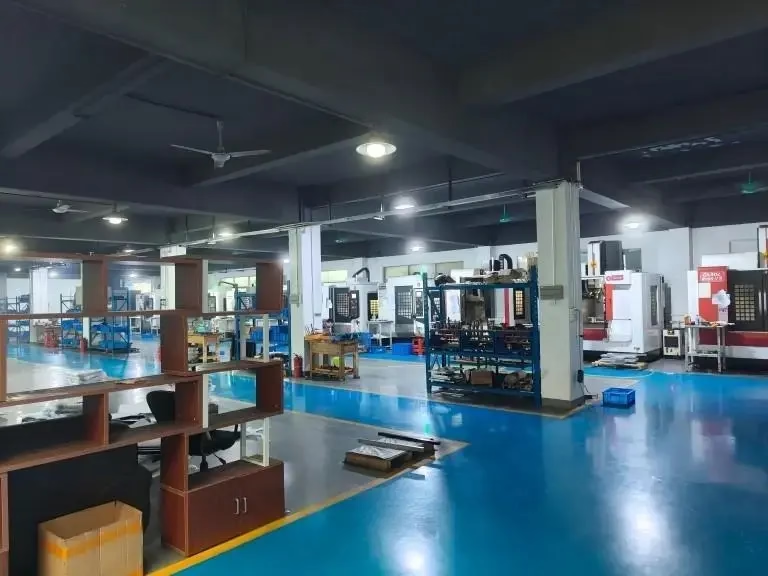
Four failure patterns we see from shops that treat N02200 like stainless 304.
The material is soft and gummy. Run it with a positive rake tool and you still get weld-on at the edge. Once that happens, surface finish drops and the operator keeps chasing the dimension.
Low thermal conductivity means the heat has nowhere to go but the tool and the part. Without flood coolant aimed at the insert, edges break down early and the bore grows as the part heats up.
Sleeves and thin-wall rings move when the chuck releases them. If the shop roughs and finishes in one pass, bores come back oval and the assembly will not seat.
Chemical and food equipment buyers need heat-number traceability. A shop that buys on price alone cannot hand you a certificate of conformance tied to the bar.
Tooling, coolant and inspection set up around the material, not around the machine's default recipe.
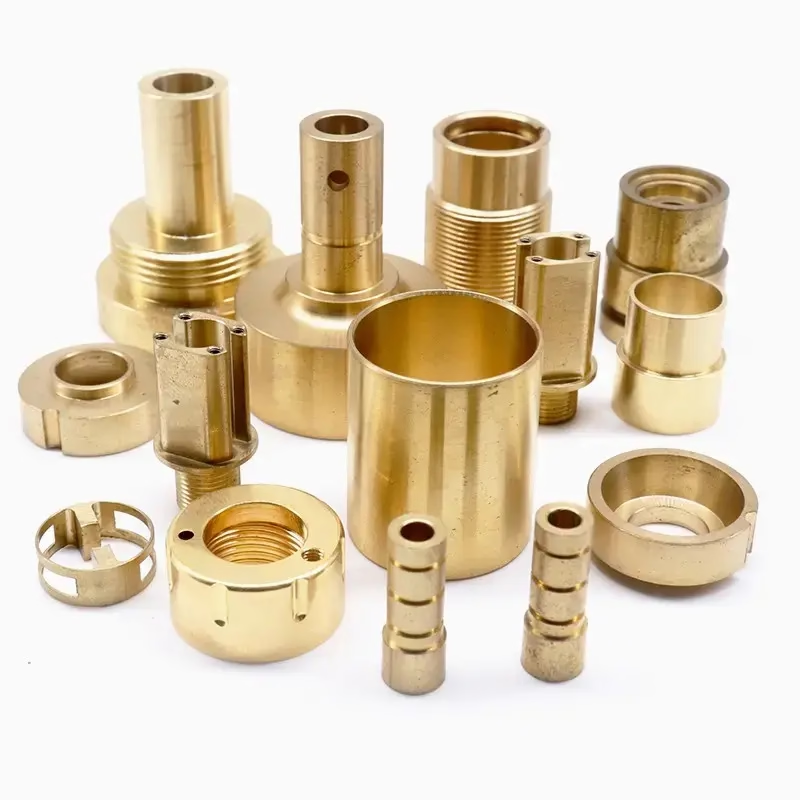
N02200 work-hardens slowly but galls fast, so we cut under the skin. Carbide inserts with a sharp, uncoated edge and a light hone go in at moderate speed with a deep, constant feed. No dwelling, no spring passes.
High-pressure flood coolant goes straight at the insert tip. That keeps heat out of the part and stops chips from welding back on. For long shafts we use a steady rest and turn between centers so the part stays straight.
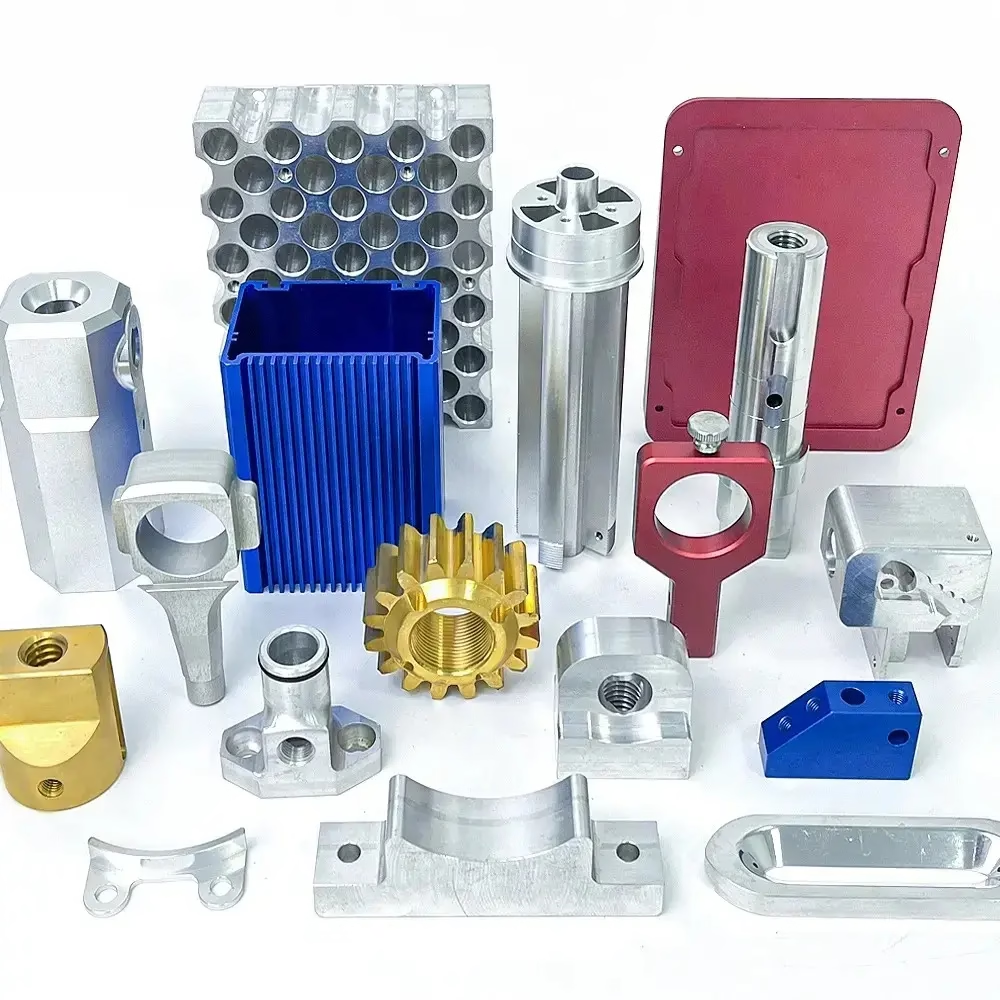
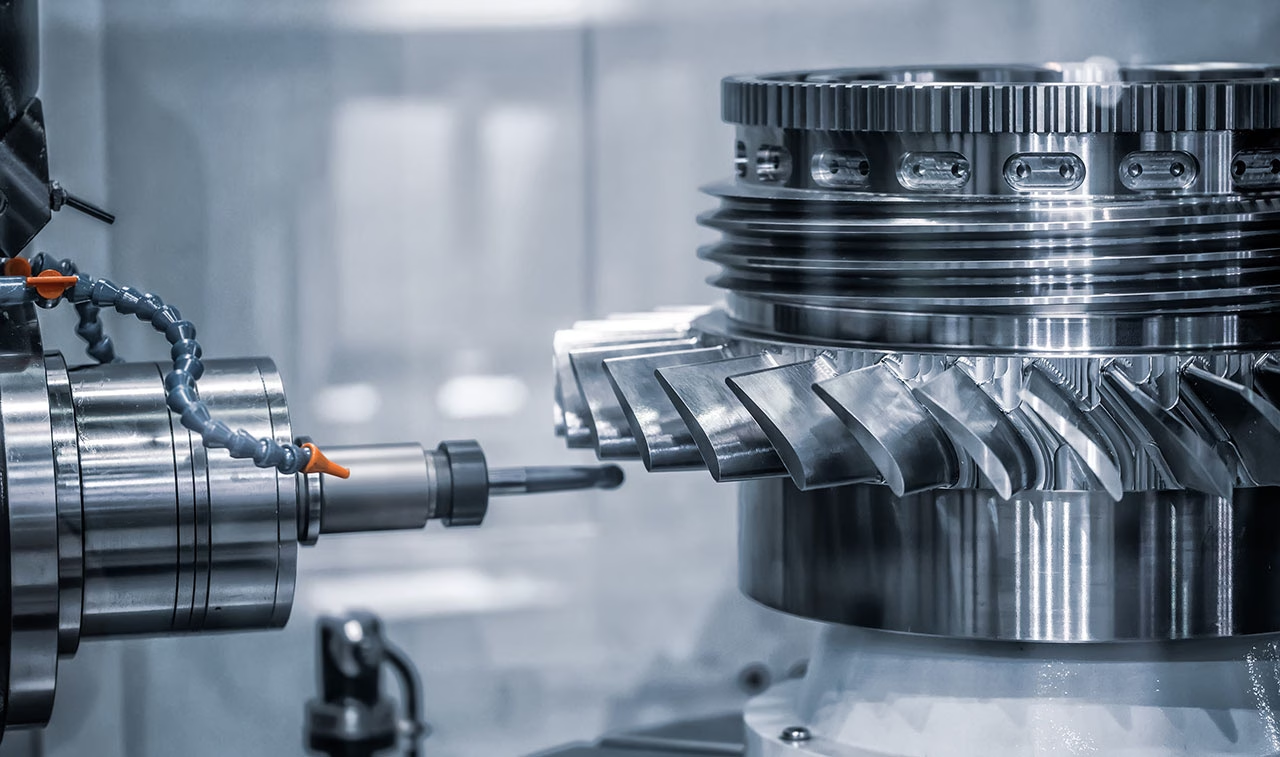
Many nickel parts are more than a turned profile. A terminal has flats and a tapped cross-hole. A valve body has a hex and an angled port. On our 16 mill-turn centers, the part stays in one chucking and the sub-spindle does the back side.
That matters because every re-chucking on soft nickel risks a burr or a jaw mark. One setup also holds concentricity between a bore and an OD, which is what usually drives the assembly fit.
A quick comparison against the two alloys buyers usually weigh against it.
| Property | Nickel 200 (N02200) | Stainless 316L | Nickel 201 (N02201) |
|---|---|---|---|
| Corrosion in caustic | Excellent | Moderate | Excellent |
| Magnetic behaviour | Ferromagnetic | Non-magnetic | Non-magnetic |
| Machinability | Gummy, needs sharp tools | Better chip control | Slightly better than 200 |
| Typical use | Chemical, electronic, food | General corrosion | Parts above 315 °C |
| Cost | Higher than 316L | Baseline | Higher than 200 |
Turning is usually the first op, not the last one.
Shafts, sleeves, bushings, fittings and terminals up to Ø400 mm on the rotary table. One chucking for cross-holes and flats.
For nickel bodies with angled ports or contoured profiles. 16 simultaneous 5-axis centers, travel up to 4,000 × 400 × 150 mm.
One-off nickel prototypes to check fit and thread engagement before you commit to a run. No minimum order quantity.
Bead blasting, tumbling, brushing and polishing. Plating options include electroless nickel when the part needs a harder skin.
100% inspection before shipment. Raw material check, in-process monitoring, final inspection, with reports on request.
Sub-assembly, thread protection, individual bagging and labeled cartons so parts arrive ready for your line.
Numbers below are what we quote against, not what we hope for.
| Item | Range | Note |
|---|---|---|
| Tolerance | ±0.005 mm (±0.0002 in) | On critical diameters and bores |
| Surface finish | Ra 0.2–0.8 μm | Fine finish on sealing faces |
| Standard finish | Ra 0.8–1.6 μm | Default turned surface |
| Max turned length | 4,000 mm | With steady rest support |
| Rotary table | Ø400 mm | For mill-turn cross features |
| Run size | 1 to 10,000+ | No minimum order quantity |
| Delivery | 3–5 days | After material and drawing release |
| Quote turnaround | 12 hours | Includes free DFM analysis |
Six things that decide whether a turned nickel part passes incoming inspection.
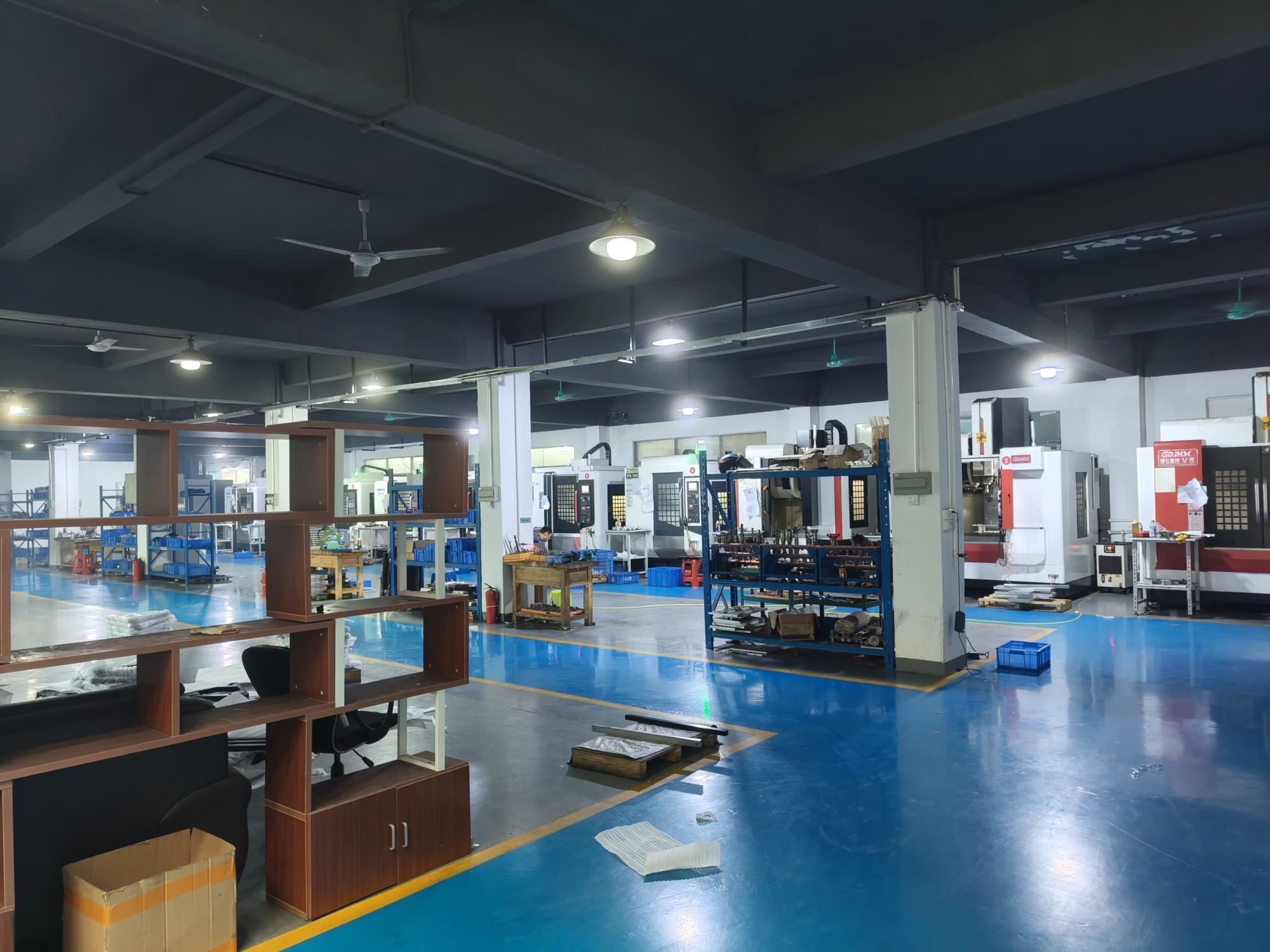
Three wholly-owned plants in Dongguan and Singapore, 7,600 m² of floor space and 150 technicians on the machines.
Held on critical diameters and bores, verified with calibrated instruments before the part leaves the floor.
Including 16 simultaneous 5-axis centers, 12 four-axis mills and 16 mill-turn centers for nickel profiles.
Send a STEP file and a drawing. You get a price and a manufacturability note within 12 hours.
Backed by 100% inspection before shipment: incoming bar check, in-process monitoring, final dimensional report.
ISO 9001:2015, IATF 16949:2016, ISO 13485:2016 and ISO 27001:2022 cover the plants that would run your order.
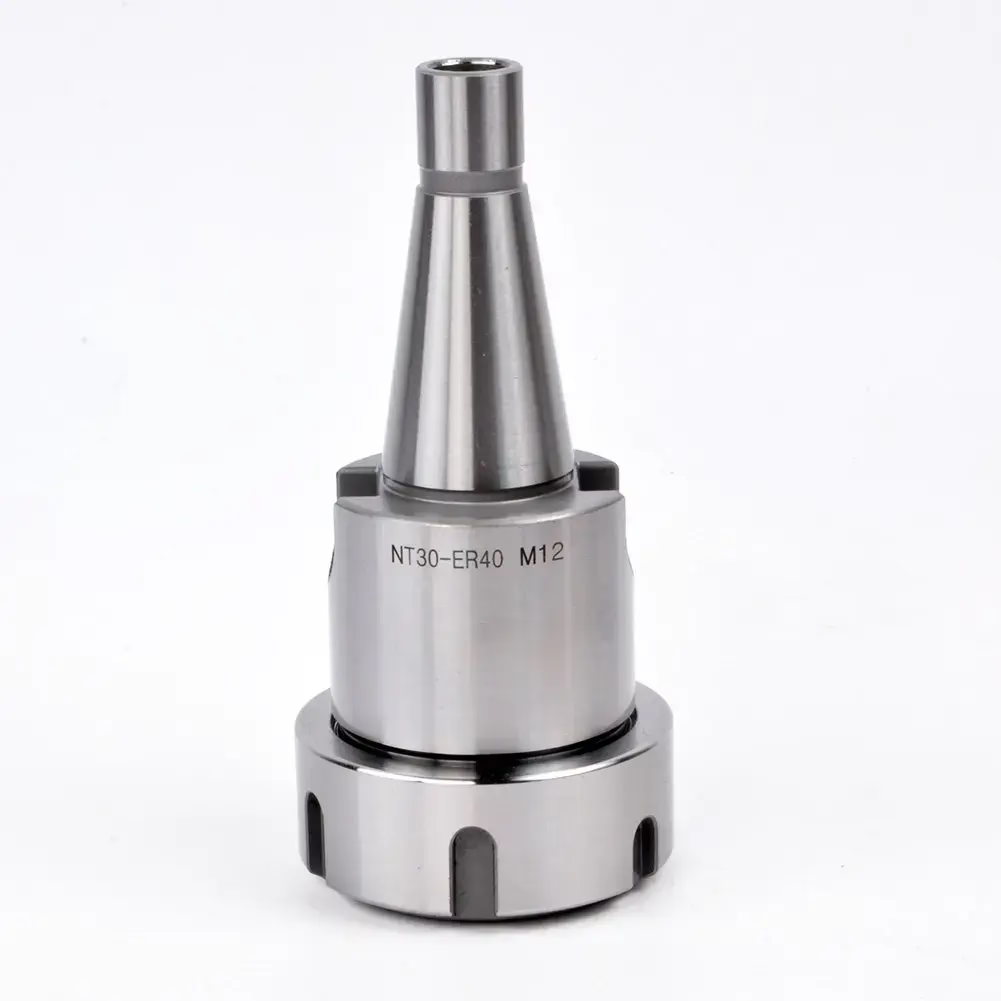
Caustic handling parts where 316L corrodes too fast. Buyers check heat-number traceability and sealing-face finish.

Terminals, anodes and current-carrying components. Conductivity and clean threads matter more than cosmetic finish.
Valve stems and fittings that must resist caustic washdown and stay free of crevices for clean-in-place.
Wear sleeves and bushings running against aggressive media. Fit and roundness drive the reorder, not price.
The deciding factor is usually caustic and chloride service. 316L stress-cracks in hot caustic; commercially pure nickel does not. If your media is neutral or mildly acidic, 316L is cheaper and machines better.
The second factor is magnetic behaviour. N02200 is ferromagnetic, so keep it out of applications that need a non-magnetic part.
Above roughly 315 °C, standard N02200 can graphitize and lose ductility. Nickel 201 keeps the low carbon content that avoids this, so it is the safer choice for high-temperature service.
Below that temperature the two alloys behave almost the same on the lathe. We can quote either from the same drawing.
Ra 0.8–1.6 μm is our standard turned finish. Where a face seals against a gasket or an O-ring, we can work down to Ra 0.2–0.8 μm.
Gummy materials scratch easily, so very fine finishes come from a controlled finishing pass, not from polishing after the fact.
We rough with stock left on, let the part cool, then finish. Soft jaws or a collet spread the clamping load instead of three points of a hard chuck.
For walls under 2 mm we sometimes finish on a mandrel. It costs a little more setup time and saves the part.
Yes. Mill certificates trace the bar back to its heat number, and we issue a certificate of conformance with the shipment. Inspection reports are available on request.
If your quality system needs a specific report format, send it with the RFQ and we will confirm it before quoting.
Quotation and DFM analysis come back within 12 hours. Production can start within 24 hours once drawing and material are released.
Turned parts typically ship in 3–5 days. Longer if the bar size is not in stock or if a plating step is involved.
No. We run from a single prototype to 10,000+ part runs. The setup cost is spread differently at each end, which is why one-off pricing looks different from a 5,000-piece price.
Prototype parts are a normal order for us, not a favor.
Uploads are secure and confidential. We can sign an NDA before you send files, and we do not share customer drawings or part photos.
If you need the tooling or fixtures quarantined from other jobs, say so in the RFQ.
Upload a STEP file and a 2D drawing. You get pricing, a DFM note and a lead time, not a sales call.
12-hour quote100% inspectionNo minimum order quantity
Trusted by engineers and manufacturers worldwide










Upload your 3D model or 2D drawing and get a quotation with a free DFM analysis. Maximum processing size 4,000 mm.
CNC Metals 13 grades
CNC Plastics 10 grades
Machines & processes 12 options
Surface & post-processing 10 options
Material: not selected Machine: not selected Post-process: not selected
Fill in this short form and we'll open WhatsApp with your message ready to send. We only use these details to reply to you.
Nothing is sent until you press send inside WhatsApp.