
01
Skip stitches at speed
The needle bar bore drifts oval by a few microns, so the needle sits off-center at 5,000 stitches per minute. Operators lower the speed to hide it. Throughput drops, and the root cause stays in the part.
Needle bars, feed dogs, loopers, thread take-up levers and cam plates, cut from stainless, aluminum, brass or tool steel. We hold ±0.005 mm on the fits that decide whether a stitch lands straight.
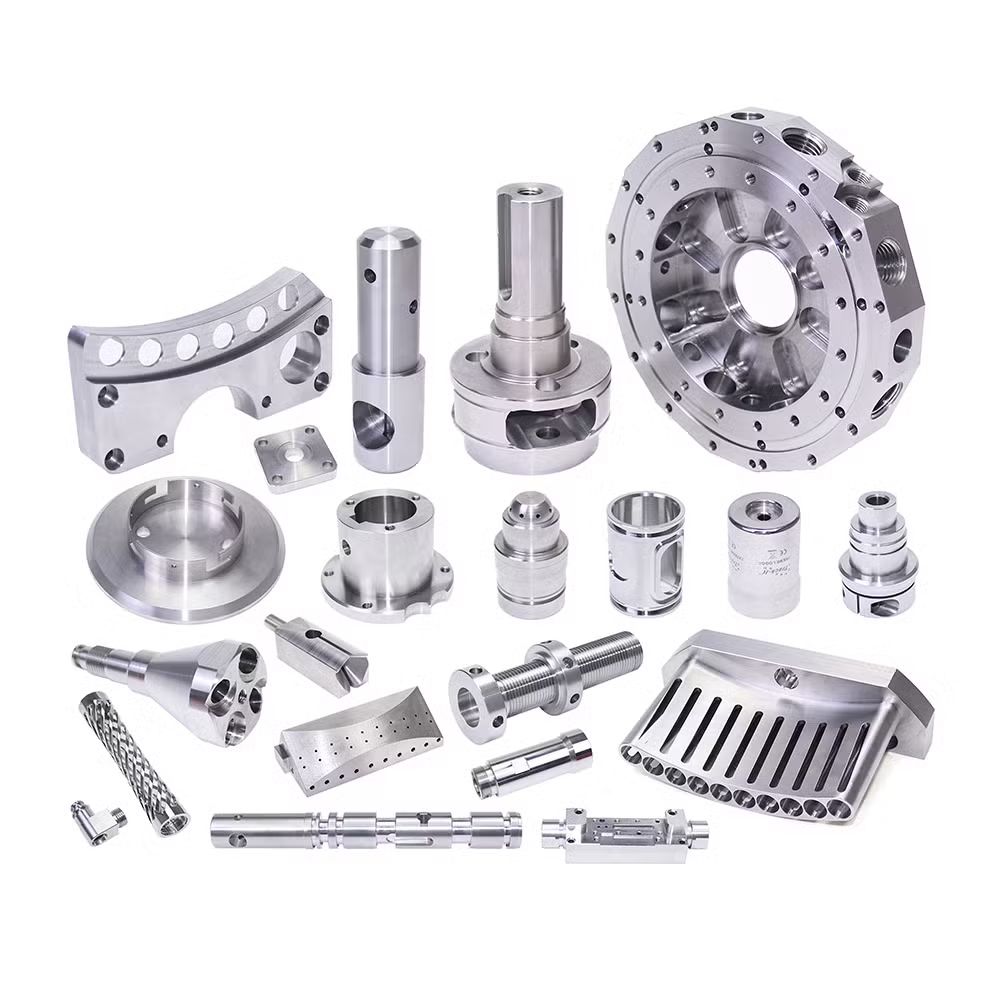
Most stitching defects are not a setting problem. They are a geometry problem.
The needle bar bore drifts oval by a few microns, so the needle sits off-center at 5,000 stitches per minute. Operators lower the speed to hide it. Throughput drops, and the root cause stays in the part.
Feed dog teeth machined on a worn fixture come out with a pitch error of 0.05 mm. Every seam runs long or short by a millimeter or two, and the operator keeps adjusting tension to compensate for a machining error.
Looper holders ground without a matched reference face sit a few tenths off after assembly. Timing shifts, the hook misses the thread, and the machine needs re-timing every shift instead of every service interval.
A supplier ships a batch that passes first assembly. The second batch is dimensionally different because the setup changed. Spare parts no longer interchange, and the service team carries two versions of everything.
Each stitching machine part gets its own process plan, fixture and inspection points.
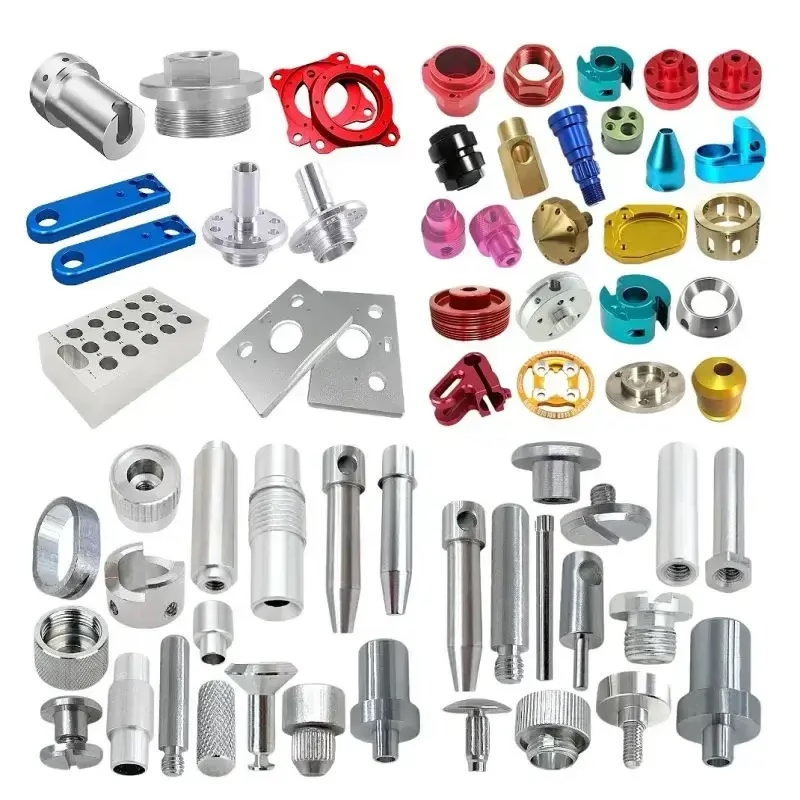
Needle bars and looper holders live or die on concentricity. If the bore and the journal are machined in two setups, the stack-up shows up as needle deflection and timing drift. We turn and bore them in one operation on mill-turn centers, then verify roundness and position on the CMM.
Stainless 316L and 17-4PH are the usual picks for needle bars because they resist wear and thread abrasion. Where weight matters, 7075 aluminum works for take-up levers, and hardened 440C suits parts that ride against thread under tension.
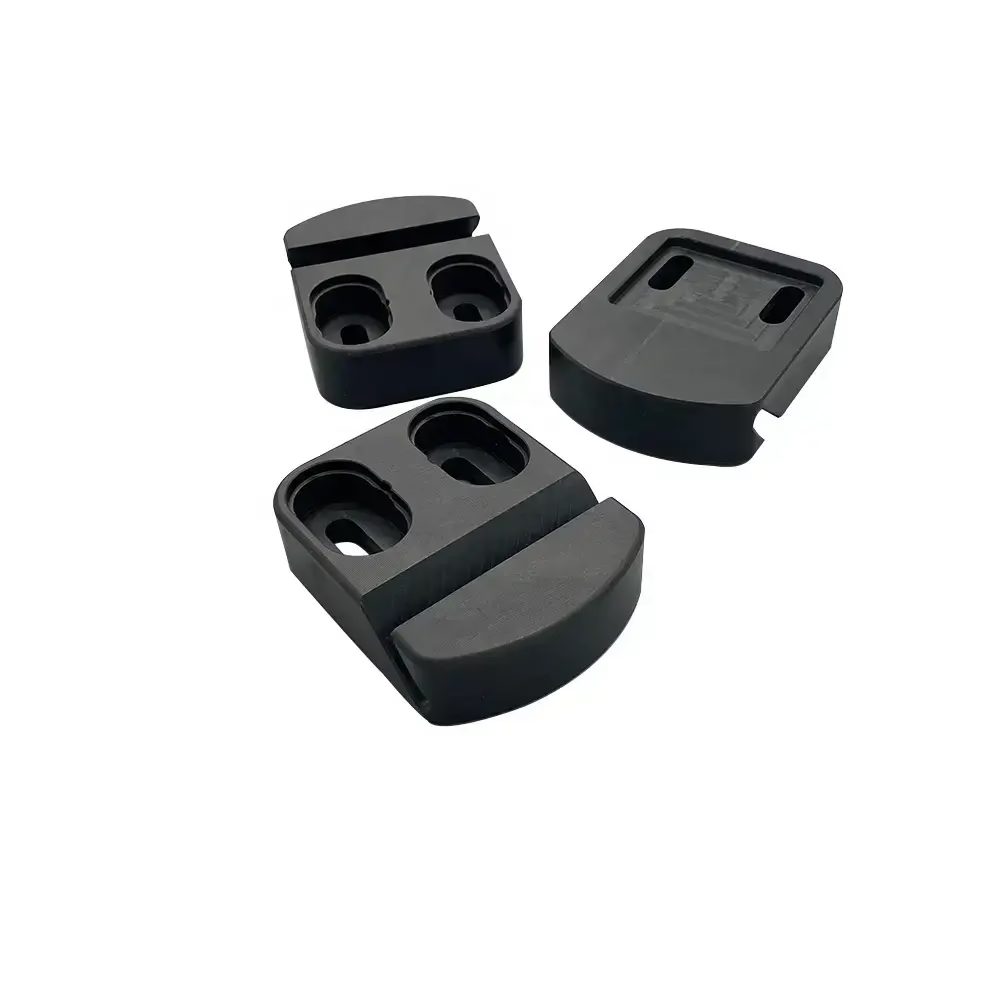
Feed dogs, cam plates and eccentric cams are where stitch length is decided. A few microns of pitch error turns into visible seam irregularity. We cut these on 4-axis and 5-axis mills with fixtures built for the part family, so tooth spacing and cam profile stay identical from the first piece to the last.
The same fixture stays with the job. When you order a repeat batch six months later, we run the original program and the original workholding. Spare parts stay interchangeable with what you already have in the field.
A starting point, not a rule. Wear surface, load and cleaning method decide it.
| Component | Common material | Why |
|---|---|---|
| Needle bar | 316L, 17-4PH | Wear resistance, corrosion from sizing agents |
| Looper holder | 440C, 420 | Takes hardening and grinding at the hook face |
| Feed dog | A2 tool steel, 440C | Tooth edges must stay sharp under abrasion |
| Cam plate | 4140, 4340 | Tough enough for repeated eccentric load |
| Thread take-up lever | 7075, 6061-T6 | Low inertia at high stitch rates |
| Bobbin case | Brass C36000 | Free-cutting, smooth thread path |
| Tension disc | 303 stainless | Corrosion resistance, easy to lap flat |
| Machine bracket | 6061-T6, A36 | Stiffness without extra weight |
Complex looper bodies and cam housings cut in one setup. 16 simultaneous 5-axis centers, up to 4,000 × 400 × 150 mm travel.
Needle bars, bushings and shafts turned and bored on mill-turn centers with live tooling for cross holes.
Feed dogs and multi-face brackets machined with the rotary table, so tooth patterns and side faces share a datum.
One-off needle plates and test cams in days, so you can validate stitch geometry before cutting hard tooling.
Anodizing, electroless nickel, bead blasting and polishing for thread contact faces and wear surfaces.
Machine guards, covers and die-cast housings produced alongside the machined internals.
| Item | Capability | Notes |
|---|---|---|
| Tolerance | ±0.005 mm (±0.0002 in) | On critical fits, stated on the drawing |
| Surface finish | Ra 0.2–0.8 μm | Polished thread contact faces |
| Maximum part size | 4,000 mm | Larger travels on 5-axis centers |
| Batch size | 1 to 10,000+ | No minimum order quantity |
| Materials | Aluminum, stainless, steel, brass, titanium, plastics | Full list on the quote form |
| Inspection | 100% before shipment | Reports on request |
| Lead time | 3–5 days for parts | Production start within 24 hours |
| Quote turnaround | Within 12 hours | Includes free DFM analysis |
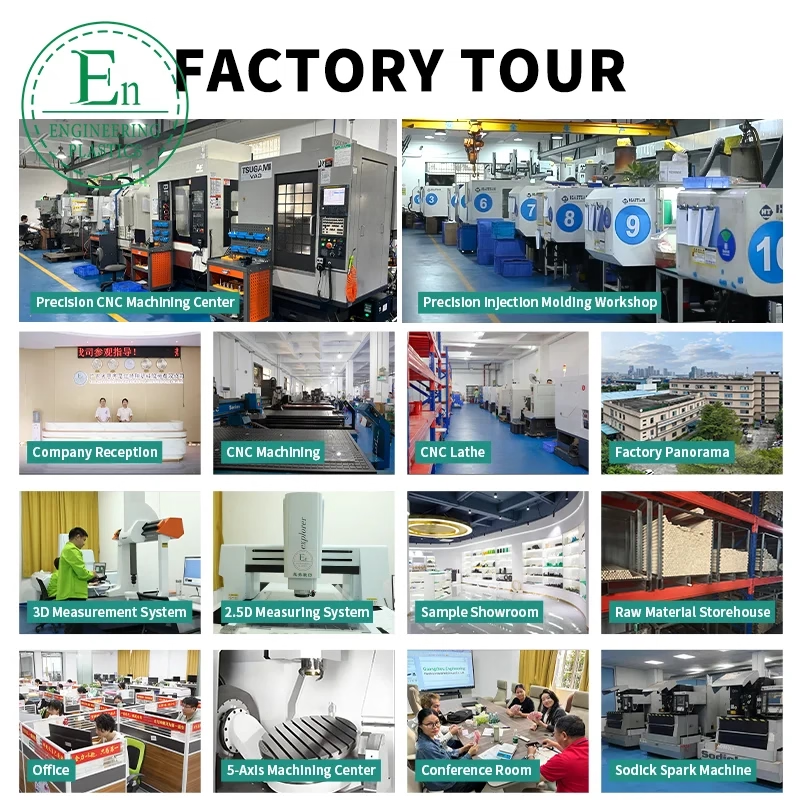
15 years building precision parts, with 3 wholly-owned plants and 7,600 m² of floor space in Dongguan and Singapore.
Held on the bores, journals and cam profiles that decide stitch quality, not just on the outside envelope.
16 five-axis centers, 16 mill-turn centers, 12 four-axis mills and 27 three-axis machines under one roof.
Raw material check, in-process monitoring and final inspection before anything ships.
Process engineers and machinists who read the drawing, not just the model file.
You get a price and a manufacturability review on the same drawing set, before you commit.
Needle bars and loopers that keep timing across a full shift at high stitch rates.
Feed and cam parts where seam length repeatability is a safety-relevant dimension.
Stainless thread paths machined and polished so fiber is not abraded in service.
Hardened feed dogs and cam plates that survive abrasion on thick material.
We cut the metal components inside the machine: needle bars, needle plates, feed dogs, looper holders and loopers, thread take-up levers, cam plates, eccentric cams, bushings, tension discs, bobbin cases and machine brackets.
We do not build the frame casting or the motor. If your drawing calls for a machined metal part with a defined fit, send it and we will tell you if it is a good fit for our process.
±0.005 mm is our stated capability on critical fits, which covers needle bar bore roundness and concentricity with the journal.
Whether we hold that on your part depends on length-to-diameter ratio and how you define the datum. Send the drawing and we will confirm before quoting, not after.
Yes, if we machined the original batch. We keep the fixtures and programs with the job, so a repeat order runs on the same workholding.
For parts made elsewhere, we can reverse-engineer from a sample or from a full dimensional report. Expect one extra step for inspection before production.
There is no minimum order quantity. We run from a single prototype to 10,000+ part batches.
For a one-off, the fixture and setup cost is spread over a single part, so unit price is higher. That is normal and we will show it on the quote.
For needle bars and looper parts, 316L and 17-4PH stainless are common. Where tooth edges must stay sharp, hardened 440C or A2 tool steel works better.
Brass C36000 is a good pick for bobbin cases and thread guides because it machines clean and gives a smooth thread path.
Quotation and free DFM analysis come back within 12 hours. Production can start within 24 hours of approval.
Parts typically ship in 3–5 days. That window assumes the drawing is final and the material is in stock, so tell us early if the alloy is unusual.
Yes. Uploads are kept secure and confidential, and we sign an NDA on request before you share drawings.
If your design is patent-pending or under a supply agreement, say so on the first message and we will handle the files accordingly.
Every part is inspected before shipment. That covers incoming raw material check, in-process monitoring on the machine, and final inspection against the drawing.
Inspection reports are available on request. For critical features like cam lift or bore position, we can supply CMM data with the shipment.
Upload a STEP file or a 2D drawing and get a price plus a manufacturability review within 12 hours.
12-hour quote100% inspectionNo minimum orderNDA available
Trusted by engineers and manufacturers worldwide










Upload your 3D model or 2D drawing and get a quotation with a free DFM analysis. Maximum processing size 4,000 mm.
CNC Metals 13 grades
CNC Plastics 10 grades
Machines & processes 12 options
Surface & post-processing 10 options
Material: not selected Machine: not selected Post-process: not selected
Fill in this short form and we'll open WhatsApp with your message ready to send. We only use these details to reply to you.
Nothing is sent until you press send inside WhatsApp.