GreatLight CNC Machining Factory logo
CNC Machining
Rapid Prototyping
Materials
Industries
News
About GL

Get Instant Quote

Plastic Parts Manufacturing

Plastic Machining and Material Selection

We machine, print and cast plastic parts from ABS to PEEK, holding the same tolerances we hold in metal. Send a drawing and get a quotation with free DFM analysis within 12 hours.

±0.005 mm toleranceOne part to 10,000+12-hour quote100% inspectionNDA on request
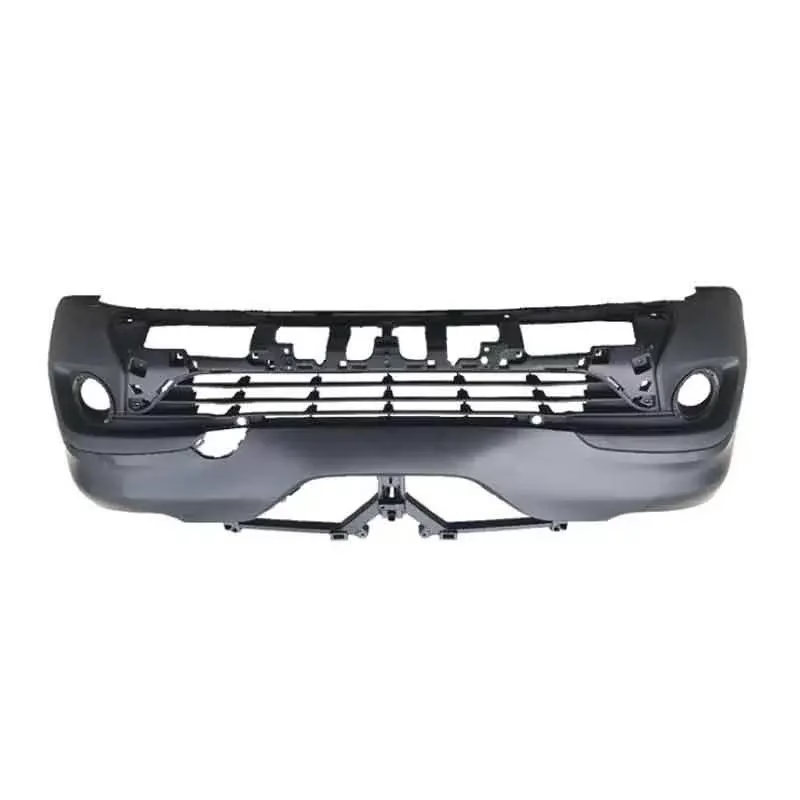
Automotive-front-bumper-plastic-rapid-prototyping-jpg
127High-precision CNC machines
±0.005 mmAchievable tolerance
15 yearsMachining since 2011
3–5 daysTypical shipping time
Where plastic parts go wrong

Four failures we see on plastic drawings

01

The material was chosen for price only

A general-purpose grade like PP or HDPE gets quoted because it is cheap, then the part creeps under load at 60 °C, or the boss strips on the first assembly. Re-cutting in POM or PA costs a second setup, a second fixture and another week.

02

Wall thickness fights the process

Thick sections on a machined plastic part hold internal stress. They bow after the last facing cut, so the flatness measured on the machine no longer matches the flatness at goods-in. Thin walls under 0.8 mm deflect instead of cutting.

03

Tolerances written for metal

A ±0.02 mm bore in unfilled PA is unrealistic. The material moves with humidity and heat. We often see a drawing that needs three dimensions tightened and the rest opened up, which nobody flags until the first article fails.

04

Finish called out with no grade behind it

A cosmetic gloss on a cast or printed housing can be buffed, but the same callout on a machined PEEK part shows every tool mark. Surface finish depends on the grade, the cutter path and the wall stiffness, not on the drawing note.

How we run plastic work

Pick the grade, then pick the process

Two decisions drive cost and function on every plastic part: which polymer, and which process makes the geometry.

CNC Lathe Technical Specifications Terminology
Material selection

Match the grade to the load, the temperature and the chemical

General-purpose plastics cover most consumer housings and covers. PE, PP, PVC, PS and ABS are cheap, mold well and take a wide range of colors. Engineering grades carry real load: PA and POM for gears and bushings, PC for impact-resistant transparent covers, PTFE for low friction and chemical resistance, PEEK for high temperature and sterilization.

Before we quote, we ask which properties can be relaxed. A bracket that only needs stiffness can run in a cheaper grade with a thicker rib. A part that sees steam cycles or repeated autoclave exposure cannot, and no redesign will fix that.

  • 1
    Load and creepContinuous load at temperature rules out unfilled PP and PE.
  • 2
    TemperaturePC holds shape past 120 °C; PEEK goes higher but costs more.
  • 3
    Chemical exposurePTFE and PEEK resist solvents that attack ABS and PC.

Get Instant Quote

CNC Machining Services Online
Process selection

Machining, printing or casting depends on the geometry

CNC machining suits tight bores, flat sealing faces and small to medium volumes. It holds ±0.005 mm where the material allows and leaves a clean, weld-free surface. Custom 3D printing wins on internal channels and lattice geometry that a cutter cannot reach, and it needs no tooling. Vacuum casting covers low-volume housings with a molded look.

The trap is using one process for everything. A printed part with a critical bore will need reaming. A machined part with a deep internal channel may cost more than a printed one. We route the job to the process that makes the feature, not the whole part.

  • 1
    CNC machiningBest for bores, threads, sealing faces, ±0.005 mm.
  • 2
    3D printingBest for internal channels, lattices, no tooling cost.
  • 3
    Vacuum castingBest for 10–200 cosmetic housings from one master.

Talk to an Engineer

Grade comparison

Common plastic grades at a glance

Typical values for unfilled grades. Filled and blended versions change the numbers.

GradeGood forWatch out for
ABSHousings, covers, fixturesUV exposure, solvents
PCImpact covers, guardsStress cracking, cost
PA (Nylon)Gears, bushings, clipsMoisture swell, creep
POMPrecision gears, slidesAcid attack, bonding
PEEKHigh temp, medical, aerospaceCost, tool wear
PTFELow friction, chemical sealsCreep, hard to bond
What we make

Plastic part services

01

Plastic CNC Machining

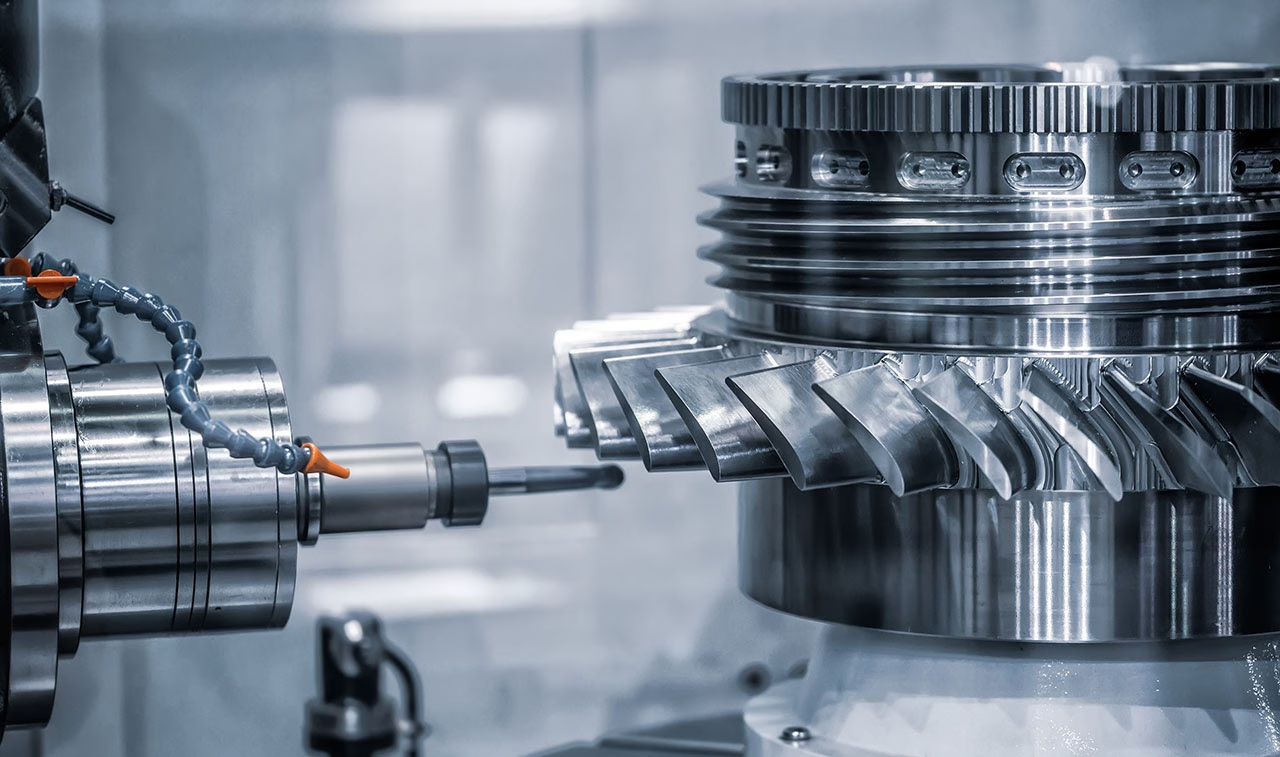
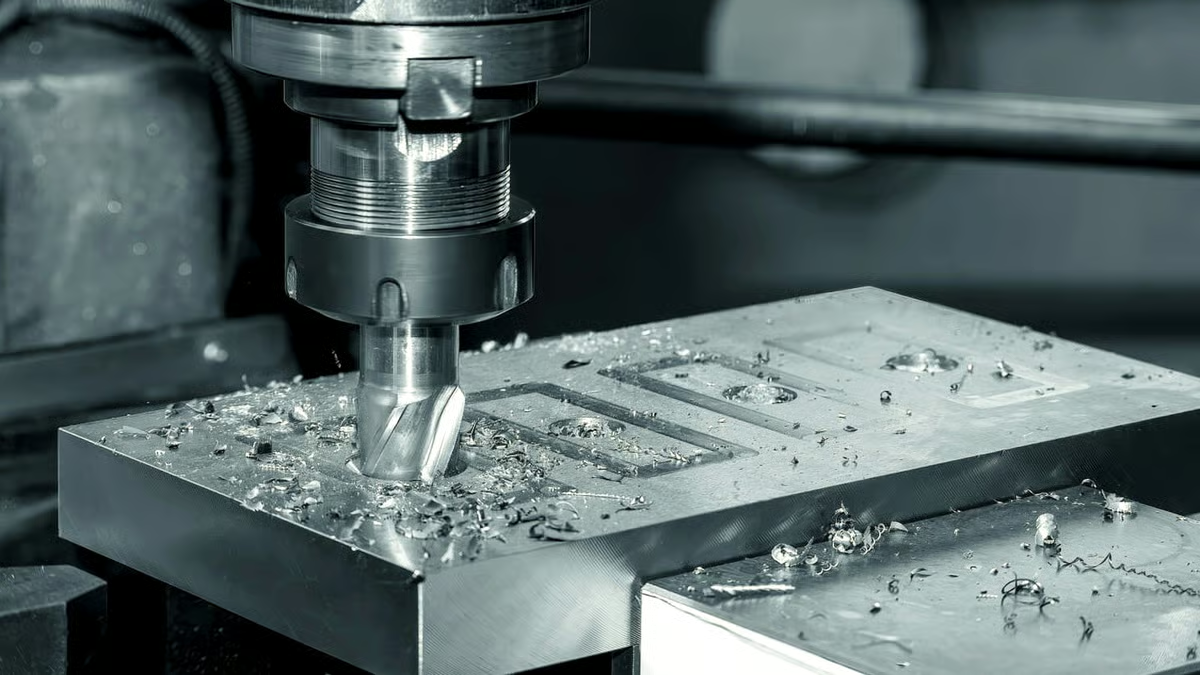
3-, 4- and 5-axis milling and turning of ABS, PC, PMMA, POM, PA, PEEK, PP, HDPE and carbon fibre. Tolerances to ±0.005 mm, finishes from Ra 0.2 to 3.2 μm.

02

Plastic Prototyping

One-off functional prototypes and fit checks. Same machines and fixtures as production, so what you approve is what ships.

03

Custom 3D Printing

Internal channels, lattice structures and organic shapes that cannot be cut. Good for early form studies and low-volume functional parts.

04

Vacuum Casting

Silicone tooling from a master pattern for 10 to 200 cosmetic and functional parts. Useful when a housing needs a molded skin.

05

Sheet Metal Fabrication

Metal frames, brackets and enclosures that pair with plastic covers. One supplier for the whole assembly, one inspection report.

06

Surface Finishing

Bead blasting, tumbling, brushing and polishing for plastic. Laser marking with a minimum character height of 1.5 mm.

Scope

What is included on a plastic job

ItemDetailNotes
Maximum part size4,000 mmLarger parts split and assembled
Tolerance±0.005 mmGrade and geometry dependent
Fine finishRa 0.2–0.8 μmPolishing on request
As-machined finishRa 1.6–3.2 μmDefault for functional parts
Order quantity1 to 10,000+No minimum order quantity
Inspection100% before shipmentMaterial, in-process, final
ReportsOn requestDimensional and material
Why GreatLight

Six reasons engineers send us plastic work

15Y

Machining since 2011

Fifteen years of cutting plastics and metals in Dongguan, with a second plant in Singapore.

127

High-precision CNC machines

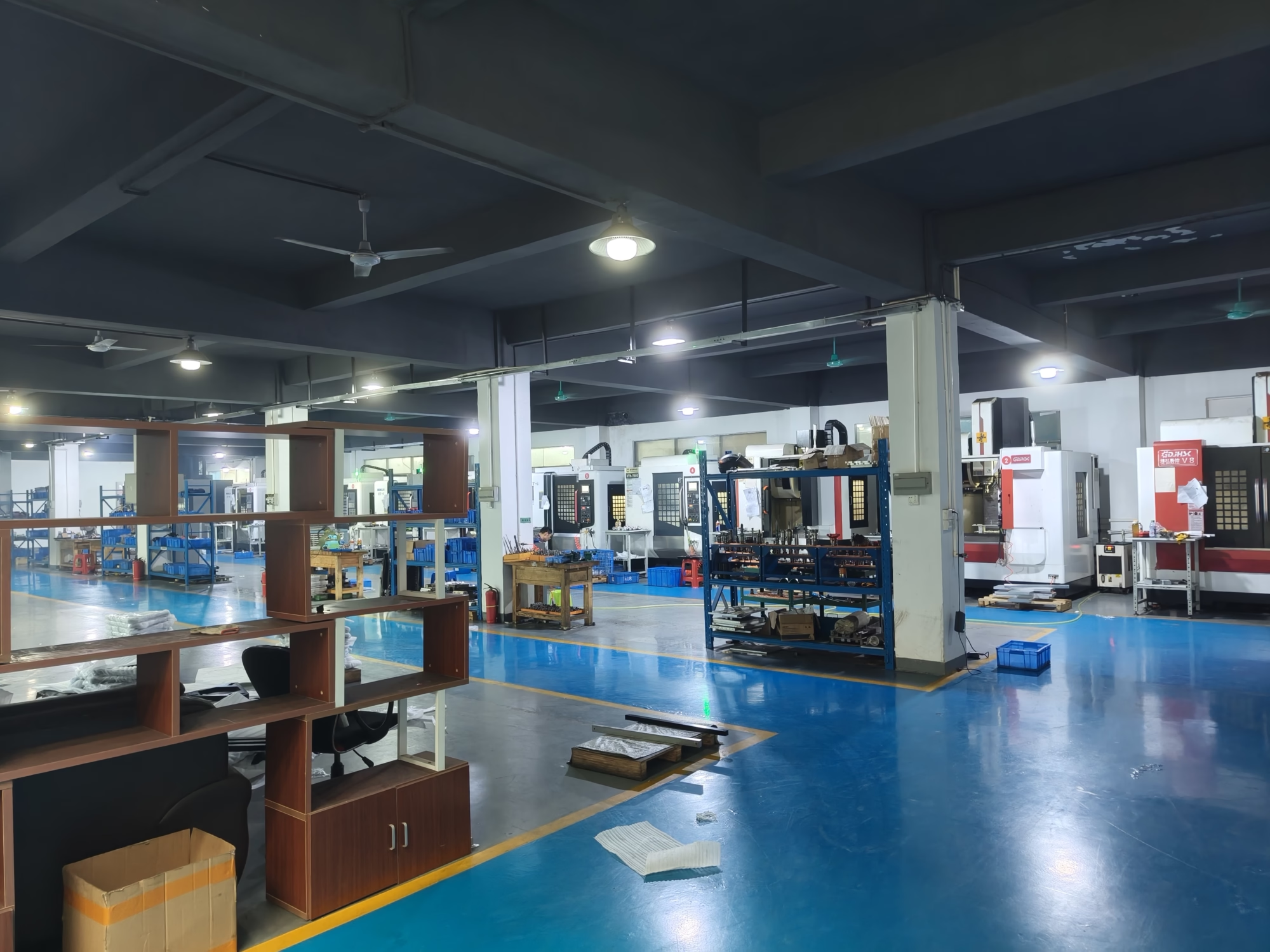
Sixteen simultaneous 5-axis centers, twelve four-axis mills, twenty-seven three-axis machines and sixteen mill-turn centers.

±0.005

Tolerance in millimetres

Held on plastic grades that allow it, verified with in-process monitoring and a final inspection before packing.

12h

Quote turnaround

Quotation and free DFM analysis within 12 hours. Production can start within 24 hours of approval.

99.99%

Qualification rate

Raw material check, in-process monitoring and 100% inspection before shipment on every order.

ISO

Certified systems

ISO 9001:2015, IATF 16949:2016, ISO 13485:2016 and ISO 27001:2022 cover quality, automotive, medical and data security.

4,000 mmMaximum processing size
16Simultaneous 5-axis centers
< 2%Historical late-delivery risk
24 hTo production start
Industry requirements

What each industry needs from a plastic part

oplus_262178

Automotive and EV

Under-hood covers and connector housings need heat resistance and stable fit over thousands of cycles.

  • IATF 16949
  • ±0.005 mm
  • 100% inspection
cnc machining

Medical devices

Instrument housings and fluid path parts need clean surfaces, no voids and traceable material.

  • ISO 13485
  • Ra 0.2–0.8 μm
  • Material reports
cnc machining

Electronics

Insulating brackets and enclosures need flat sealing faces and consistent wall thickness.

  • Flatness held
  • ±0.005 mm
  • Bead blasting
cnc machining

Industrial machinery

Wear pads, gears and guides need low friction and dimensional stability under continuous load.

  • POM and PA
  • 4,000 mm parts
  • In-process checks
FAQs

Plastic parts questions engineers ask

Can plastic parts really hold ±0.005 mm?

Yes, on grades with low moisture absorption and good stiffness, such as POM, PEEK and filled PA. The cut itself is not the limit; the material is.

Unfilled PA and PP move with humidity and temperature, so a tolerance that tight will not survive a week in a warehouse. We flag those dimensions during DFM review and propose a workable number.

When should I choose plastic over aluminium?

Choose plastic when you need electrical insulation, chemical resistance, low weight or a non-marring surface. It often cuts part cost as well.

Stay with aluminium when the part carries high point loads, sees continuous temperatures above the plastic's limit, or needs a thread that will be assembled many times.

Which grade should I pick for a wear part?

POM is the default for gears, slides and bushings. It has low friction, good stiffness and machines cleanly.

Move to PA or PEEK when the part also sees high temperature or chemicals. PTFE is the choice for the lowest friction and the widest chemical resistance, but it creeps, so it needs support.

Do you machine glass-filled or carbon-filled plastic?

Yes. Filled grades are stiffer and hold tolerance better than unfilled ones.

They also wear tooling faster and can leave a rough surface. We adjust feeds, speeds and cutters, and we check the finished surface rather than assume it.

What is the minimum order quantity?

There is none. One prototype and a 10,000-part run go through the same process, the same fixtures and the same inspection.

Small runs often make sense in plastic because tooling is not required for machining or printing.

How do you handle confidential drawings?

Uploads are secure and confidential. We can sign an NDA before you send files.

We can also quote from a simplified model or a marked-up drawing if you prefer to keep the full geometry internal.

What finish can I expect on a machined plastic part?

As-machined surfaces land between Ra 1.6 and 3.2 μm. Bead blasting or tumbling evens out tool marks.

Polishing can reach Ra 0.2 to 0.8 μm on grades that polish well, such as PC and acrylic. PEEK and filled grades stay rougher no matter how much time you spend.

How fast can you ship plastic parts?

Quotation and free DFM analysis come back within 12 hours. Production can start within 24 hours of approval, and parts typically ship in 3 to 5 days.

Large parts up to 4,000 mm or heavy finishing add time. We tell you the real date in the quote, not after the fact.

Send your plastic part for a quote

Upload a drawing or a model. We reply with a price, a process recommendation and a DFM note within 12 hours.

12-hour quote100% inspectionOne part to 10,000+NDA on request

Trusted by engineers and manufacturers worldwide

Tesla Ford Motor Company BYD Auto Denso Magna International Boeing Airbus Medtronic KUKA FANUC