
Purchase a Used CNC Machining Center: 7 Essential Checks
A used machining center can hold ±0.005 mm for another decade, or it can hold tolerance for six weeks and then start scrapping parts. The difference is rarely the brand on the door. This guide walks through the seven checks that decide which machine you are actually buying: geometry, spindle, ways, controller, documentation, power, and the real landed cost. Written for engineers and shop owners who will run the machine, not resell it.
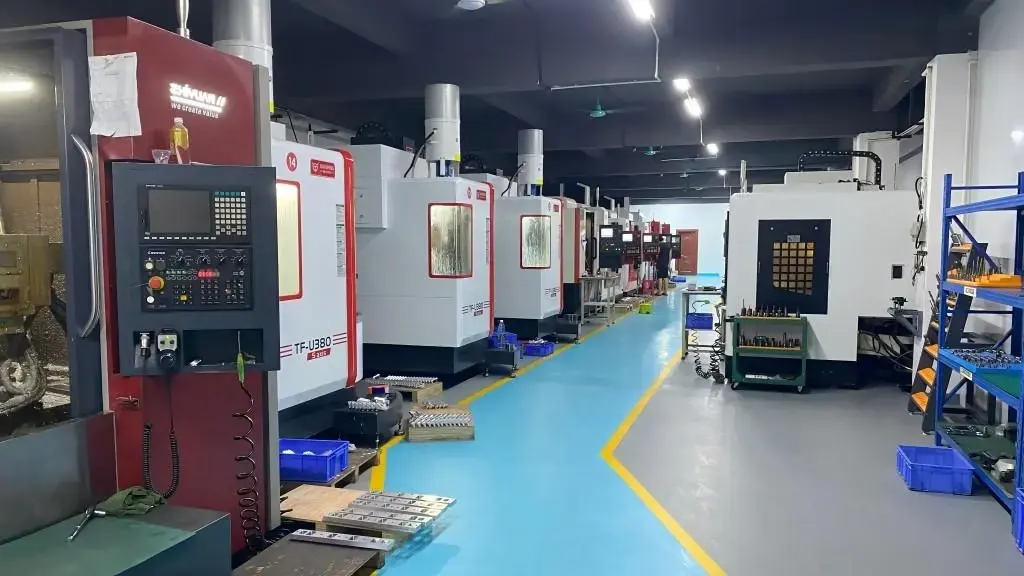
What a used machining center actually is
A machining center is a CNC machine that indexes tools automatically and moves the workpiece or the spindle in multiple axes under program control. Vertical machines (VMC) drop the spindle onto the part from above. Horizontal machines (HMC) approach from the side and clear chips better, which matters on deep pockets and long runs. Mill-turn centers add a rotating C axis and a turret, so a single setup can produce a turned and milled feature without re-fixturing.
When you purchase a used CNC machining center, you are buying a mechanical frame, a spindle, a set of motion components, and a controller. All four age at different rates. Castings and ways age slowly. Spindles, ballscrews, and electronics age fast and cost the most to replace. That is why the inspection order below starts with geometry and ends with the controller.
The used market splits into three rough groups. Machines under ten years old often still have factory support and spare parts. Machines from ten to twenty years old are the sweet spot for job shops, provided you can still buy drives and boards. Machines past twenty years old are cheap to buy and expensive to keep running, unless you already own the same model and keep a donor machine.
Age alone tells you very little. A 2008 VMC that ran one shift in a toolroom can be tighter than a 2018 machine that ran three shifts in a foundry. Hours, coolant discipline, and how often the machine was crashed matter more than the build year stamped on the plate.
Geometry, spindle, and ways decide the price
Geometry is the one thing you cannot cheaply fix. Squareness between X, Y, and Z, plus table flatness, sets the floor on what the machine can hold. Ask the seller to run a ballbar test or let you bring a granite square and dial indicator. A machine that is out of square by 0.03 mm over 300 mm will fight you on every tight-tolerance job.
Spindle condition is the second fixed cost. Check radial runout at the taper with a test bar: 0.005 mm or less is healthy for a machine expected to hold ±0.005 mm. Above 0.015 mm you are looking at a spindle rebuild, which is a real expense and weeks of downtime. Listen for growl at low rpm and check for heat after a ten-minute run at 8,000 rpm.
Ways and ballscrews tell you how much life is left. Linear guide machines show wear as visible fretting or a gritty feel when you push the table by hand with the drives off. Box way machines with Turcite or hardened ways need a straightedge and feeler gauge check on the sliding surfaces. Backlash over 0.01 mm on a ballscrew usually means a re-ball or replacement.
Tool changer and coolant system are the cheap parts that quietly ruin your week. Cycle the ATC twenty times and watch for hesitation or a dropped tool. Look inside the coolant tank for sludge that points to years of neglected maintenance. A dirty tank often means the same neglect reached the spindle and the way lube system.
Controller support and documentation
The controller determines whether the machine is an asset or a paperweight. Check the exact model and software version, then confirm the builder still sells replacement drives, boards, and parameter backups. Older Fanuc, Siemens, and Heidenhain controls generally have parts available. Obscure or discontinued controls can turn a simple board failure into a scrapped machine.
Ask for the parameter file, ladder logic, and machine backup on a USB stick. No backup means every future repair starts from scratch. If the seller cannot produce a backup, budget for the time it takes to reconstruct one, and treat that as a risk, not a detail.
Check the options list against the work you want to run. Rigid tapping, high-speed machining, fourth or fifth axis readiness, and probe packages are either enabled in software or they are not. Enabling an option later can cost four figures when the builder still sells the license. Some options are no longer offered at all.
Screenshot the option screen during your visit. Note the servo drive part numbers, the spindle drive model, and the exact control software build. These numbers let you price spares before you sign, not after the machine is on your floor and down.
Power, air, and floor before you buy
A used machining center has site requirements that are easy to underestimate. Check the nameplate kVA against your service capacity. A large HMC with a high-pressure coolant pump can pull more than a small shop expects, and adding a transformer or a service upgrade changes the payback on the deal.
Air quality matters more than most buyers think. Many machines need clean, dry air at 0.5–0.7 MPa for the tool changer, spindle air purge, and way lube. A dirty or wet air supply causes intermittent faults that look like controller problems and cost days to diagnose.
Floor and rigging are the last hidden line item. A 10,000 kg machine needs a slab that can take the point loads, plus a path wide enough for the truck and the forklift. Measure the door, the corridor, and the turn radius before you pay a deposit, not after.
Leveling and alignment after installation are part of the cost. Budget for a technician to level the machine and re-check geometry once it is in place. A machine that was accurate on the seller's floor can shift during transport, and the first cut after installation is the real test.
Used vs. new: what each choice really costs
Compare the two paths on the factors that decide the outcome.
| Factor | Used machine | New machine |
|---|---|---|
| Upfront price | Lower, but variable by condition | Higher and predictable |
| Spindle and ways | Inspect, may need rebuild | Factory tolerance, warranty |
| Controller support | Depends on model and age | Current software and parts |
| Lead time to run | Weeks for rigging and setup | Weeks for build and install |
| Spare parts risk | Real on older controls | Low for the warranty period |
| Best fit | Job shops with in-house maintenance | Shops needing guaranteed uptime |
Which path fits your shop
If you have a maintenance technician and can inspect a machine properly, a used machining center under fifteen years old with a supported control is the better value. If your uptime is contractual and you cannot absorb a spindle rebuild, buy new.
Questions engineers ask before signing
How old is too old for a used machining center?
Age is a weak signal on its own. A well-maintained machine from 2005 with a supported Fanuc or Heidenhain control can still hold ±0.005 mm in a temperature-controlled shop.
The practical limit is control support. Once the builder stops selling drives and boards, every failure becomes a scavenger hunt. Check parts availability before you check the build year.
What should I measure during an inspection?
Bring a granite square, a dial indicator, and a test bar. Check squareness between X, Y, and Z, table flatness, and spindle radial runout at the taper.
Run a ballbar test if the seller allows it. Backlash over 0.01 mm on any axis, or runout above 0.015 mm, means a rebuild is likely.
Can I run a test part before buying?
Ask for it. A test part in a material close to your own work tells you more than any spec sheet. Run a pocket, a bored hole, and a face mill pass.
Measure the result on the machine and off it. If the seller refuses a test cut, treat that as a data point about the machine and the seller.
What documents should come with the machine?
Parameter backup, ladder logic, machine backup on USB, maintenance records, and the original options list. Also ask for the electrical drawings and the leveling report.
No backup means every future repair starts from zero. Budget time to rebuild it, and price that risk into your offer.
How do I estimate the true landed cost?
Add the purchase price, rigging, transport, foundation work, power and air upgrades, leveling, and a contingency for the first repair. The contingency is not optional on older machines.
Compare that total against the price of a new machine with a warranty. The used machine often still wins, but only when the numbers are written down.
Is a used machine a good fit for tight-tolerance work?
Yes, if geometry and spindle are healthy and the shop is temperature-controlled. Thermal drift, not age, is what usually breaks tight tolerances.
If you need ±0.005 mm on a daily basis, plan for periodic ballbar checks and a spindle rebuild fund. That is the trade for the lower purchase price.
Send us your part and we will quote the machining
Upload your drawings and we will return a quotation with a free DFM analysis within 12 hours. Every order includes 100% inspection before shipment and an NDA on request.
12-hour quote100% inspectionNDA on request
More machining notes
We publish setup notes, tooling trials and inspection data from the factory floor.











