GreatLight CNC Machining Factory logo
CNC Machining
Rapid Prototyping
Materials
Industries
News
About GL

Get Instant Quote

Silicone Mold Casting

Urethane Vacuum Casting for Engineering Prototypes

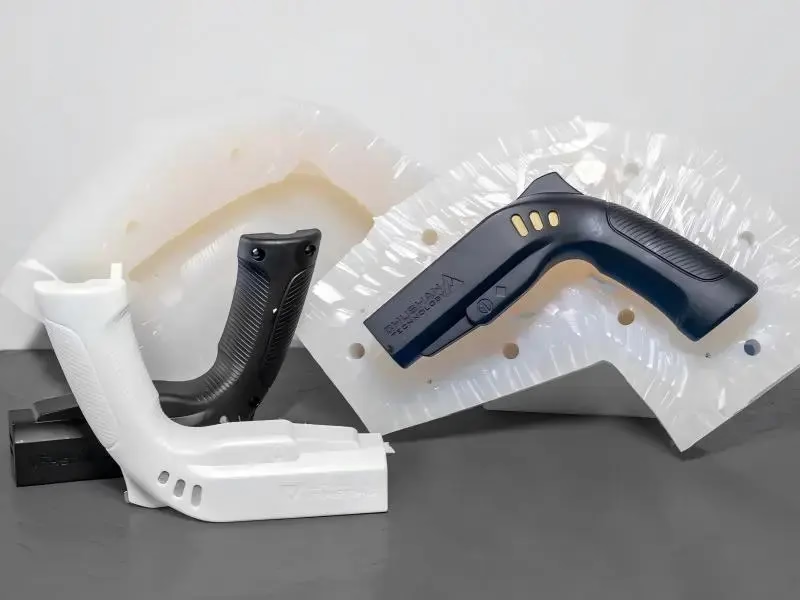
Silicone molds poured under vacuum, cast in polyurethane resin. One master pattern, 25 to 50 copies, and a color or texture that matches the final part. Send a 3D file and we will tell you if the part suits the process.

1 to 50+ copies per moldSilicone mold from 1 masterOvermolds and insertsRuns from one part upward
vacuum-casting-services1
3–5 daysParts ship after mold approval
±0.005 mmMaster pattern tolerance
12 hQuotation and DFM analysis
99.99%Qualification rate
Where it goes wrong

Four Failures That Kill a Casting Run

Most complaints trace back to the master pattern, not the resin.

01

Silicone mold tears after 15 pulls

Thin walls and sharp internal corners concentrate stress at the parting line. Each demold opens the tear a little more, so copy 20 looks worse than copy 5. Fillets of at least 0.5 mm and a draft of 1° to 2° on vertical faces keep a mold running to its expected 25 to 50 cycles.

02

Air bubbles sit right on the show surface

Resin that degasses poorly or a mold filled too fast traps voids against the cavity wall. You see them after the part is painted, not before. Vacuum degassing of the resin and a slow, bottom-up fill move the bubbles to the overflow, away from visible faces.

03

Copies shrink away from the CAD model

Polyurethane shrinks as it cures, typically a few tenths of a percent. On a 200 mm housing that is enough to break a snap fit. We compensate the master pattern for the shrink rate of the specific resin before the silicone is poured, so cast dimensions land where the drawing says.

04

Rubber overmold separates from the insert

Casting a soft durometer over a metal or rigid plastic insert only works if the insert is clean, warm, and mechanically keyed. A smooth bore and room-temperature insert give a bond that peels by hand. Undercuts, a light bead blast, and preheating fix most of it.

How we run it

One Master Pattern, Then Silicone Molds That Repeat It

The process has three moving parts: the master, the mold, and the resin. Control all three and the copies match.

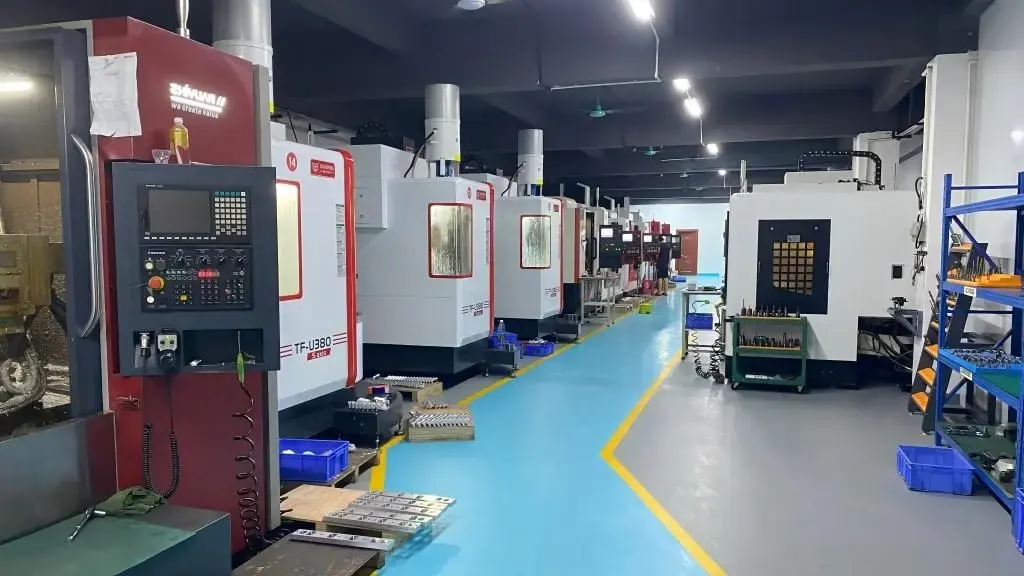
greatlight-cnc-machining-center-11 (1)
Master pattern

The Master Decides the Final Dimension

We machine or print the master to ±0.005 mm, then polish it to the surface finish you want to see on the copies. Silicone picks up every scratch on the master, so the master is finished before the mold is poured, not after.

Shrink compensation happens here. Each resin grade has its own cure shrinkage, and we scale the master by that number. Wall thickness, draft, and corner radii are checked at the same time. If a feature will not release from a flexible mold, we say so before cutting metal.

  • 1
    Machined masterCNC milled or turned when tight tolerances and sharp detail matter.
  • 2
    Printed masterSLA or DLP when the geometry is organic and the lead time is short.
  • 3
    Finished masterSanded and polished to the target texture before the silicone is poured.

Get Instant Quote

cnc-machining-hdpe
Mold and pour

Silicone Molds and the Vacuum That Fills Them

The master is suspended in a frame, silicone is poured around it, and the whole frame goes into a vacuum chamber. Pulling the air out before the silicone cures stops bubbles from forming against the pattern. That is where the process gets its name.

Cured molds are cut open along a planned parting line, the master comes out, and the cavity is filled with polyurethane under vacuum. A single mold yields 25 to 50 parts depending on geometry and resin. Soft durometers and deep undercuts shorten that count; simple blocks extend it.

  • 1
    Vacuum degassingRemoves trapped air from the silicone before cure.
  • 2
    Planned parting lineCut so the casting releases without tearing thin features.
  • 3
    Resin choiceRigid, soft-touch, clear, or high-temperature grades, matched to the end use.

Talk to an Engineer

Choosing a process

When Casting Beats CNC or 3D Printing

Pick the process by copy count, geometry, and what the part has to prove.

SituationBetter fitWhy
1 to 5 copies, simple shapeCNC machiningNo mold cost, tighter tolerance
5 to 50 copies, same shapeUrethane vacuum castingMold cost spread across copies
50 to 200 copiesVacuum casting or bridge toolingDepends on tolerance and resin
Deep undercuts, one-piece partVacuum castingFlexible silicone releases the feature
Living hinge, thin flexureVacuum castingSoft resin flexes without cracking
Optically clear, no seamsCNC or polishingCasting leaves a parting line
Overmold on metal insertVacuum castingInsert placed in cavity before pour
200+ copies, tight toleranceInjection moldingSteel tool holds size over long runs
What we do

Services Around the Casting Cell

Casting rarely stands alone. These are the steps we run in-house so the master, the mold, and the finish stay in one schedule.

01

Urethane Vacuum Casting

Silicone molds from one master, 25 to 50 copies per mold, rigid or soft durometer resin, color matched to a Pantone or RAL reference.

02

Rapid Prototyping

SLA, DLP, and FDM masters when the geometry is organic. We print the pattern, finish it, and cast from it in the same building.

03

5 Axis CNC Machining

16 simultaneous 5-axis centers for masters that need tight tolerance, sharp corners, or a machined surface straight off the tool.

04

CNC Milling & Turning

Mill-turn work for inserts, threaded bosses, and metal cores that get cast into the polyurethane part.

05

Part Surface Finishing

Paint, texture, bead blast, and laser marking. Cast parts can carry the same cosmetic finish as the production version.

06

Low-Volume Manufacturing

Bridge quantities from 50 to a few hundred parts before steel tooling is committed, using the same drawings and inspection plan.

Process window

Casting Capability at a Glance

Numbers to check before you send a file.

ParameterRangeNote
Copies per silicone mold25 to 50Fewer with deep undercuts
Minimum wall thickness0.8 mm1.5 mm for structural ribs
Draft on vertical faces1° to 2°Below 1° risks tearing
Internal corner radius0.5 mm minimumLarger radius, longer mold life
Maximum part size600 × 600 × 600 mmLarger sizes quoted case by case
Cast tolerance±0.15 mm per 100 mmTighter on the machined master
Surface finishRa 0.8–1.6 μmMatched to master polish
Insert placementMetal, PCB, threaded bossCast in during the pour
Why GreatLight

Numbers Behind the Casting Cell

We are a CNC shop first, which is why the masters hold tolerance.

15Y

Machining Since 2011

15 years of cutting metal and building patterns. Casting sits next to the machine shop, not in a separate supply chain.

127

CNC Machines In-House

Masters, inserts, and fixtures are machined on the same floor that runs the casting cell. No waiting on an outside pattern shop.

±0.005

Master Tolerance (mm)

The master pattern is machined to ±0.005 mm. Cast copies inherit that geometry minus the resin shrink we compensate for.

7600

Square Meters of Plant

7,600 m² across 3 wholly-owned plants, with 150 technicians covering machining, casting, finishing, and inspection.

4

Quality Certifications

ISO 9001:2015, IATF 16949:2016, ISO 13485:2016, and ISO 27001:2022. Your drawings stay confidential under NDA on request.

100%

Inspection Before Shipment

Raw material check, in-process monitoring, and final inspection on every run. Reports on request, including dimensional data.

3Wholly-owned plants
150Technicians on staff
24 hProduction can start
<2%Historical late-delivery rate
Where it gets used

Industries and the Parts They Cast

Experience the GreatLight Advantage in Auto Parts Processing!

Automotive & EV

Interior trim, connector housings, and gaskets cast in soft durometer resin for fit checks on a real vehicle.

  • IATF 16949:2016
  • Color matched to RAL
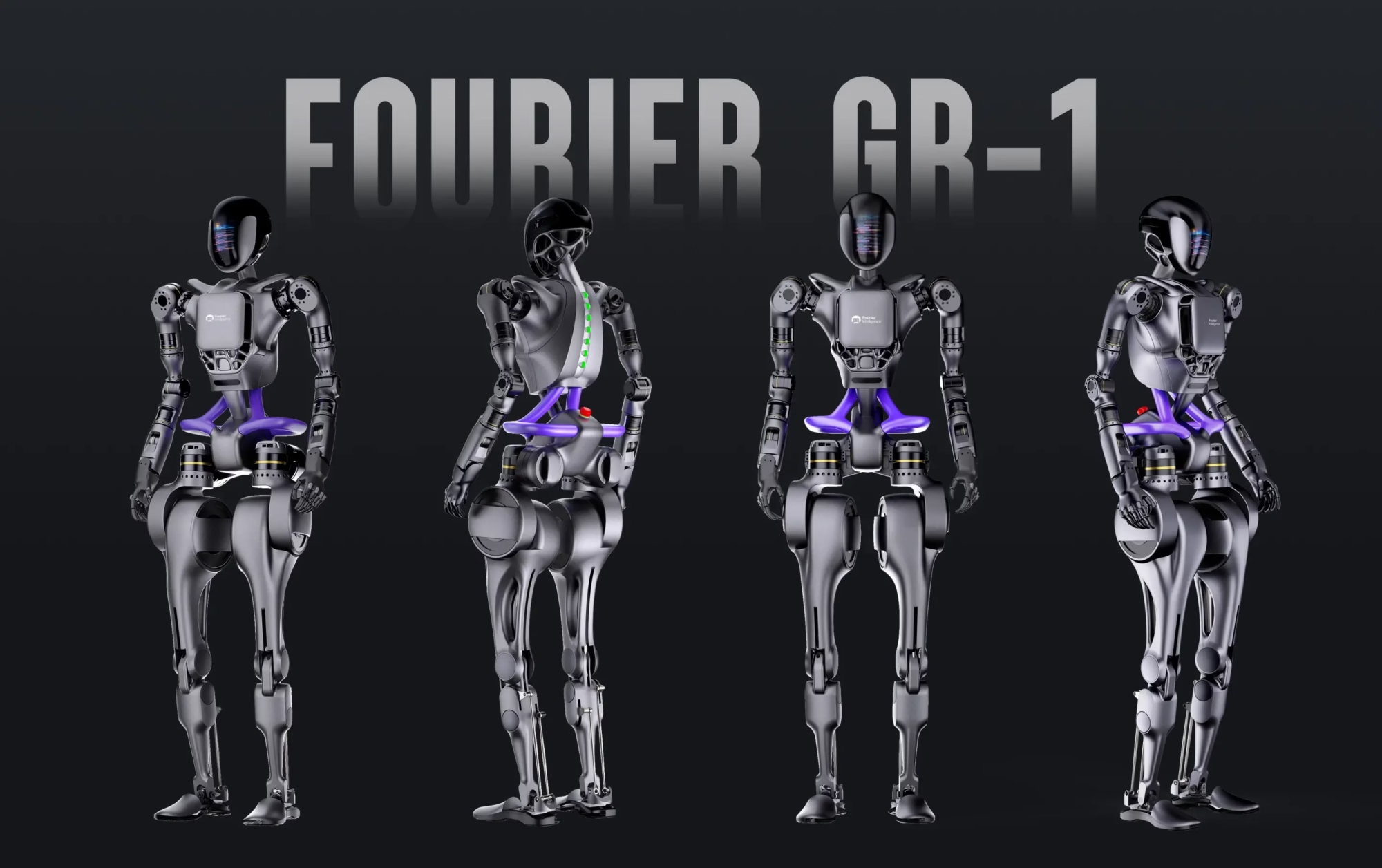
GreatLight Specializing In Humanoid Robot Components

Robotics & Automation

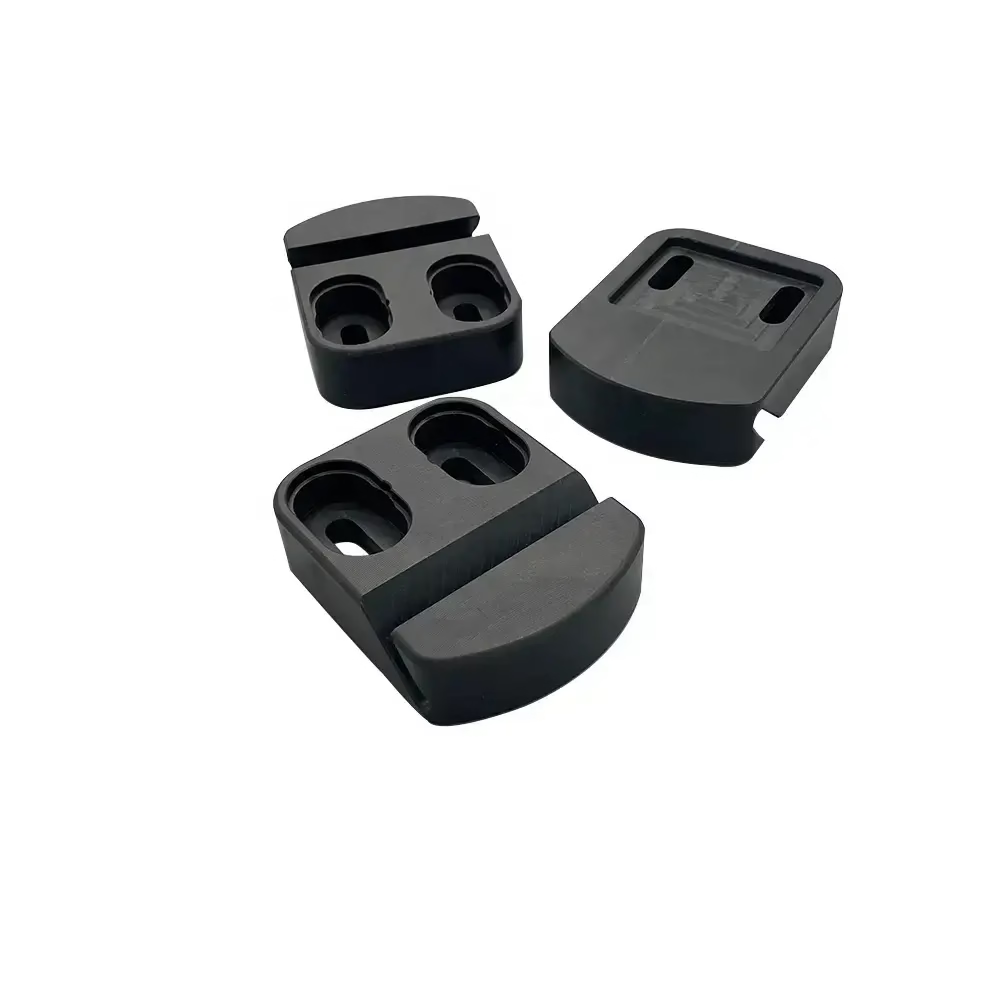
Gripper pads, cable boots, and joint covers where a flexible resin has to survive repeated deflection.

  • 25 to 50 copies per mold
  • Soft durometer grades
GreatLight Metal new factory building

Medical Devices

Housings and seals for design verification before a validated tool is cut. Smooth surfaces, no visible voids.

  • ISO 13485:2016
  • 100% inspection
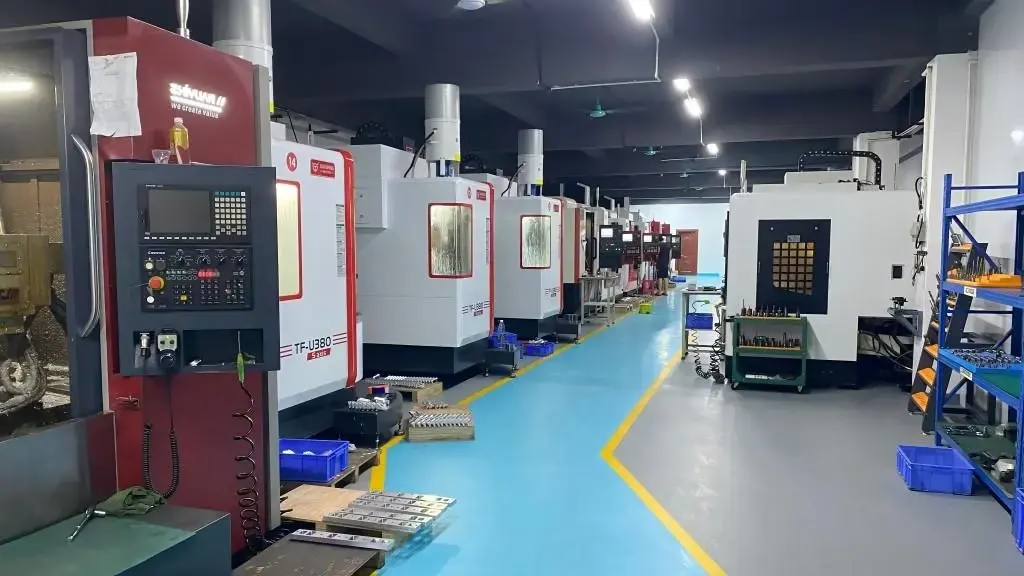
greatlight-cnc-machining-center-11

Industrial Machinery

Dust covers, bellows, and control panel seals in small runs where injection tooling cannot be justified.

  • 600 × 600 × 600 mm max
  • Overmolds on metal
FAQs

Questions Engineers Ask Before Casting

How many copies can one silicone mold produce?

Expect 25 to 50 parts from one mold. Simple blocks with generous draft sit at the top of that range. Deep undercuts, thin walls, and very soft resin sit at the bottom because the silicone stretches further on every demold.

If you need more than 50 copies, we pour a second mold from the same master. The master is kept, so the second mold matches the first.

How close is a cast part to the CAD model?

The machined master is held to ±0.005 mm. The cast copy adds resin shrinkage and silicone flex, so we quote cast tolerance around ±0.15 mm per 100 mm.

When a feature has to be exact, such as a bearing bore or a thread, we machine that feature after casting or cast in a metal insert.

What wall thickness can you cast?

0.8 mm is the practical minimum for a flat wall. Thin walls fill poorly and tear the mold on release. Structural ribs should be 1.5 mm or thicker.

Thick sections above 6 mm can shrink and sink. We core them out or split the part into two castings.

Can you cast clear or translucent parts?

Yes, but expect a visible parting line and some internal haze. Clear resin also yellows faster than opaque grades.

For an optically clear lens or light pipe, CNC machining and polishing gives a better result than casting.

Can metal inserts or PCBs be cast into the part?

Yes. Threaded bosses, metal sleeves, and small boards are placed in the cavity before the pour, and the resin encapsulates them.

The insert needs a mechanical key. A smooth bore will pull out. We usually add knurling, a groove, or a light bead blast to the insert.

How long does a casting run take?

Quotation and free DFM analysis come back within 12 hours. Once you approve the master, production can start within 24 hours.

A typical run of 25 cast parts with finishing ships in 3 to 5 days after mold approval. Paint and texture add time.

Is there a minimum order quantity?

No. We run from a single prototype to 10,000+ part runs across the shop, and casting handles the low end where tooling cost would dominate.

One casting is often enough to check fit and feel before committing to more copies.

Will you sign an NDA before I send files?

Yes. Uploads are secure and confidential, and we sign an NDA on request before you share drawings.

Our ISO 27001:2022 certification covers how we handle your data inside the plant.

Send a File, Get a Casting Plan

We review your 3D model, flag any feature that will not release from a silicone mold, and come back with a quote, a copy count, and a lead time.

12-hour quote100% inspectionNo minimum order quantityNDA on request

Trusted by engineers and manufacturers worldwide

Tesla Ford Motor Company BYD Auto Denso Magna International Boeing Airbus Medtronic KUKA FANUC