GreatLight CNC Machining Factory logo
CNC Machining
Rapid Prototyping
Materials
Industries
News
About GL

Get Instant Quote

GreatLight · Plastics Machining

5 Axis CNC Milling Plastic Parts

POM, PEEK, nylon, PC and acrylic milled multi-face on five-axis centers. Plastic behaves differently from aluminium, so the process is planned around heat, spring-back and burrs before the first cut.

POM · PEEK · PA · PC · PMMA±0.005 mm toleranceMulti-face in one setupNo minimum order
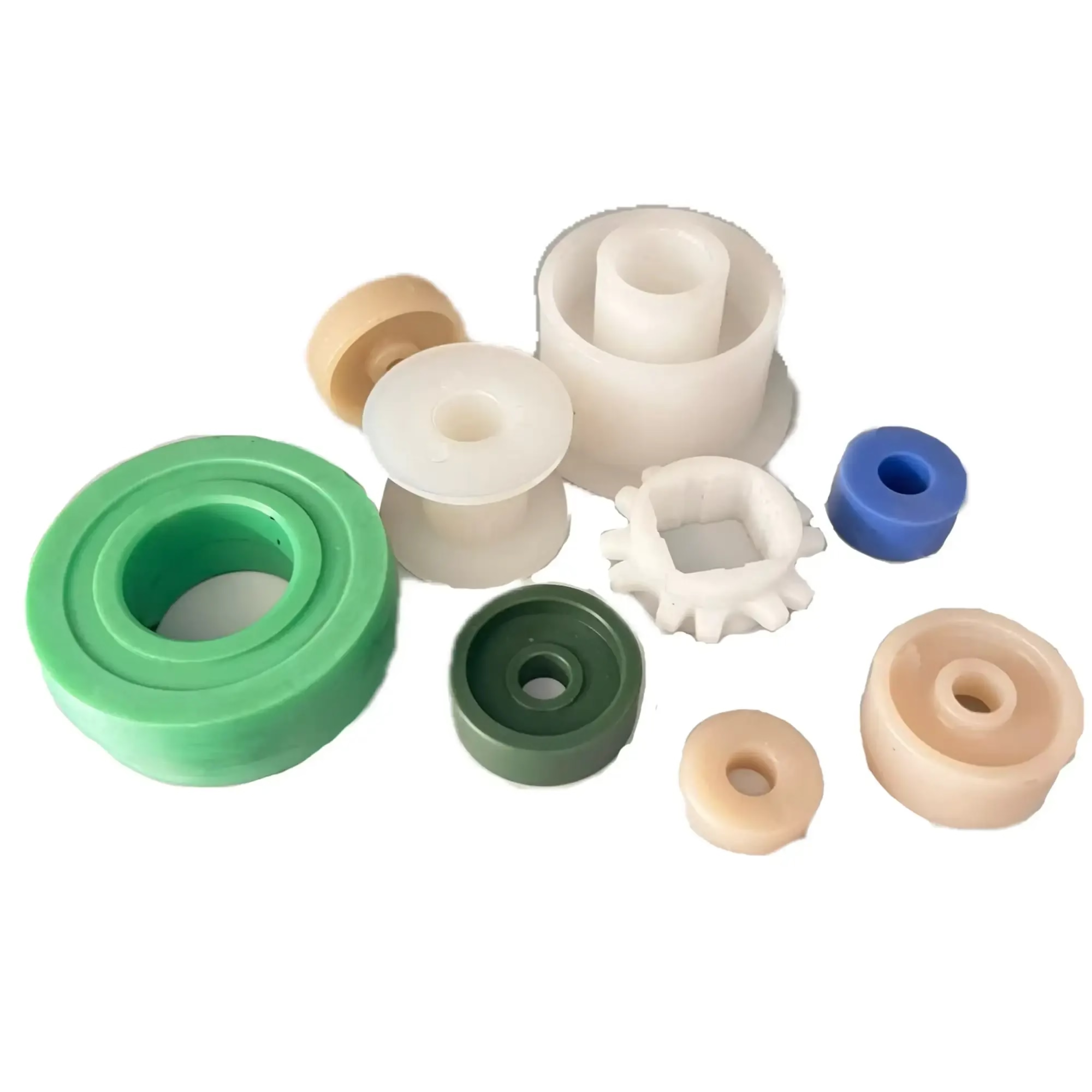
POM acetal parts machined on five axis CNC milling centers
±0.005 mmMachining tolerance
Ra 0.2–0.8 μmFine finish where required
16Five-axis centers
3–5 DaysFrom drawing to parts
Sound familiar?

Four ways a plastic part comes back wrong

Plastic is not soft metal. It conducts heat badly, it deflects under the cutter and it burrs instead of chipping, so a program written for aluminium produces a different part.

01

The first PEEK part came off the machine scorched

Cutting heat has nowhere to go in plastic, so it stays at the edge until the surface smears or burns. A scorched PEEK face cannot be polished back, which makes the cutting data and the cooling method a design decision rather than a shop preference.

02

Does the wall measure thin once the clamps are released?

A wall deflects under the cutter and springs back after the tool has passed, so the finished section is thinner than the program intended. Where the wall is very thin, the fix is a supported setup and light finishing passes, not a smaller feed.

03

Edges that fuzz instead of breaking a clean chip

Plastics leave a fine burr or fuzz where metals break a chip. Left to the end of the job it becomes a hand-finishing queue, and every hour of deburring is an hour the part is not in your test rig.

04

Is the nylon part a different size a week later?

PA absorbs moisture from the air, so a part machined dry measures larger once it has settled. That is the material, not a machining error, and it has to be designed for rather than argued about at incoming inspection.

How we cut plastics

Three changes we make to the cutting strategy

Each one addresses a way plastic differs from metal: heat that cannot escape, walls that push back, and dimensions that move after the machine is finished with them.

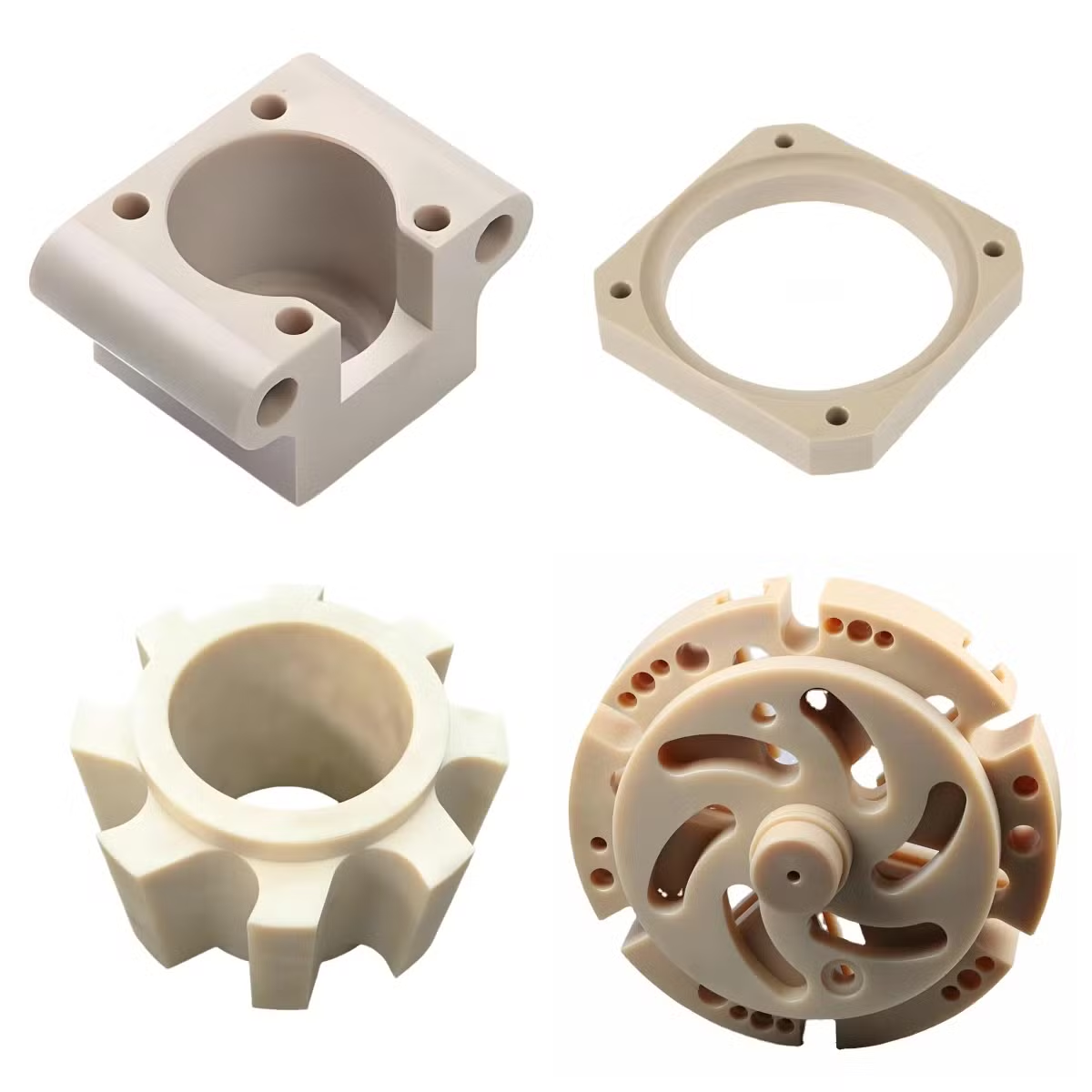
PEEK components machined for high temperature and chemical resistance
Heat

Keep the heat in the chip, not in the part

Aluminium carries cutting heat into the chip and the workpiece; plastics keep it at the edge, which is how PEEK and PC scorch or smear. Sharp tool geometry, generous clearance and an air blast instead of flood coolant keep the cut cool and the surface even.

On deep pockets we reduce the step-over and keep the tool moving rather than pushing the feed. A slower program that produces a clean part costs less than a fast one that produces a part you cannot send out.

  • 1
    Air blast, not flood coolantPlastic chips clear easily with air, and flooding a hygroscopic grade with coolant adds a drying problem you do not need.
  • 2
    Sharp, polished toolingA worn edge rubs instead of cutting, and rubbing is what scorches a high-temperature plastic.
  • 3
    Cutting data per gradePEEK, PC, POM and acrylic each want a different balance of speed, feed and step-over, and the program is written for the grade you specify.

Get Instant Quote

Large thin-wall plastic prototype part machined in one piece
Deflection

Rough with stock on, settle, then finish light

A thin plastic wall deflects away from the cutter and springs back once the tool has gone. The result is a section that is thinner in the middle than at the ends, and a part that fails the check without any obvious machining mistake.

The answer is sequence rather than force. Leave stock on during roughing, let the part come back to rest, then take light finishing passes with short tools. Large flat sections of PEEK or PC are stress-relieved between roughing and finishing when the part has to stay flat.

  • 1
    Supported, not squeezedWhere a wall is flexible we support it from behind instead of clamping harder and inducing the deflection we are trying to avoid.
  • 2
    Finishing after the last clamp changeSo the wall is measured in its released state rather than in the shape the jaws forced on it.
  • 3
    Stress relief where it is neededLarge sections and parts with a lot of material removed are annealed between operations when the material allows it.

Talk to an Engineer

Nylon PA parts machined on CNC milling centers
Hygroscopic grades

Nylon that grows after it leaves the machine

PA takes up moisture from the air, and a part machined dry will be measurably larger a week later. The two practical answers are tolerances that accommodate the swell, or a grade with lower moisture uptake.

Where a dimension really has to hold, we say so at quotation stage. Agreeing whether parts are inspected dry as machined or after conditioning removes most of the disagreement, because on these grades that decision changes the number more than the machining does.

  • 1
    Measure in the same conditionInspecting as machined on both sides is fine; inspecting dry at the machine and conditioned at receiving is not.
  • 2
    Tight limits where they belongKeep tight tolerances on the features that mate with metal, and let plastic-only dimensions move with the material.
  • 3
    POM as the alternativeWhere the part does not need nylon's toughness, POM holds dimensions far more predictably.

Talk to an Engineer

Grade selection

Which plastic for which requirement

Start from the requirement that dominates, whether that is stiffness, wear, temperature or chemical exposure, and the shortlist is short.

GradeTemperatureWear and stiffnessChemical resistanceTypical parts
POM (acetal)Up to about 90 °C continuousStiff and dimensionally stable; the best all-round machinable plasticGood against fuels, oils and solventsGears, bushings, precision slides, fixtures
PA (nylon 6/6)Up to about 100 °CTough and impact resistant; absorbs moisture and moves with humidityGood against oils, attacked by strong acidsBrackets, wear pads, covers, prototypes
PEEKUp to about 250 °CVery stiff for a plastic, with excellent wear behaviour at temperatureResistant to most solvents and to steamAerospace and medical hardware, semiconductor parts
PC (polycarbonate)Up to about 120 °CHigh impact strength, with transparent grades availablePoor against alkalis and it stress-cracks with some solventsGuards, windows, housings, lens holders
PMMA (acrylic)Up to about 80 °CRigid and optically clear, but brittle under impactGood against alcohols, attacked by acetoneDisplay parts, light guides, transparent covers
ABSUp to about 80 °CEasy to machine and bond, with moderate stiffnessModerate, and sensitive to ketonesPrototype housings, panels, jigs
Plastic services

What a plastic part order covers

Most plastic jobs use two or three of these, and the finishing steps are quoted separately so you can see what each one costs.

5X

Five-axis plastic milling

Multi-face parts cut in one setup, including pockets and bores that would otherwise need several fixtures.

TRN

Plastic turning and mill-turn

Bushings, rollers and sleeves turned from rod and bar, with milled flats or cross holes in the same program.

THD

Inserts and threads

Pockets machined for heat-set inserts, threads tapped to suit the grade, and bonded surfaces prepared.

ANN

Stress relief and annealing

Between roughing and finishing on large or heavily machined sections, where the material allows it.

OPS

Transparent parts and polishing

PC and acrylic machined to a clear finish, with polishing or vapour polishing quoted as its own operation.

QA

Inspection under agreed conditions

Critical features measured with reports on request, against a measuring condition agreed before the parts are cut.

Design checks

What we check on a plastic part before quoting

FeatureWhat we checkWhy it matters
Wall thicknessWhether the wall can be cut without chatter or spring-backThin walls deflect in soft grades and crack in brittle ones when they are released
Internal cornersCorner radius against the tool diameterA square internal corner cannot be produced by a round cutter
ThreadsThread type and engagement depthThreads in plastic strip sooner than in metal, so an insert often lasts longer
HolesDepth-to-diameter ratio and straightnessDeep small holes wander in plastic, and reaming can smear rather than cut
FlatnessWhether the part is measured as machined or after stress reliefLarge flat sections of PEEK or PC move after machining
Surface finishWhich faces are cosmeticPolishing and vapour finishing are separate operations with their own lead time
Why GreatLight

What a plastic part gets from us

Plastic machining is judged after the part has settled, not the moment it leaves the machine. These are the numbers and the practices behind that.

±0.005

Millimetres on stable sections

Our stated machining tolerance, held on the features you call out and on dimensions the drawing leaves open, with ±0.0002 in as the imperial equivalent.

Ra 0.2

Micrometre finish where required

Fine finishing reaches Ra 0.2–0.8 μm on grades that polish, and we say when a grade will not hold that.

6

Grades in everyday stock

POM, PA, PC, PMMA, ABS and PEEK are held in common sheet and rod sizes, so a design change does not wait behind a material order.

2

Stages: rough, settle, then finish

Roughing with stock left on, then finishing in light passes after the last clamp change, so thin walls are measured as released.

1

Minimum order quantity

One part is a normal order and runs on the same five-axis centers as production work, with the same inspection.

12h

Quotation, with the grade checked

Price, lead time and manufacturability notes within 12 hours, including a straight answer on whether the grade and the wall thickness will hold the tolerance you asked for.

±0.005 mmMachining tolerance
Ra 0.2–0.8 μmFine finish on request
6Grades held in stock
1Minimum order quantity
Where it is used

Plastic parts by application

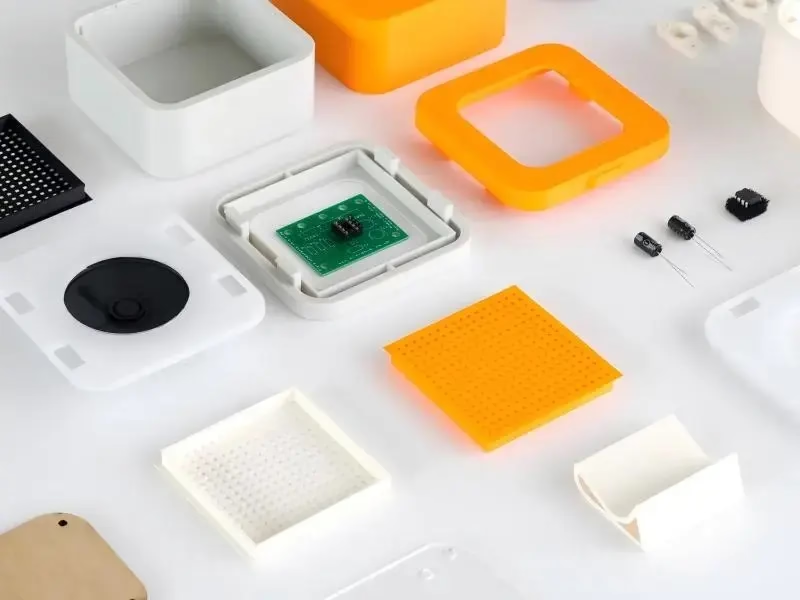
Electronic product housing prototype machined from plastic

Electronics and instrument housings

Enclosures and internal chassis where wall thickness and shielding clearance decide the design.

  • ABS and PC
  • Thin wall
  • No minimum order
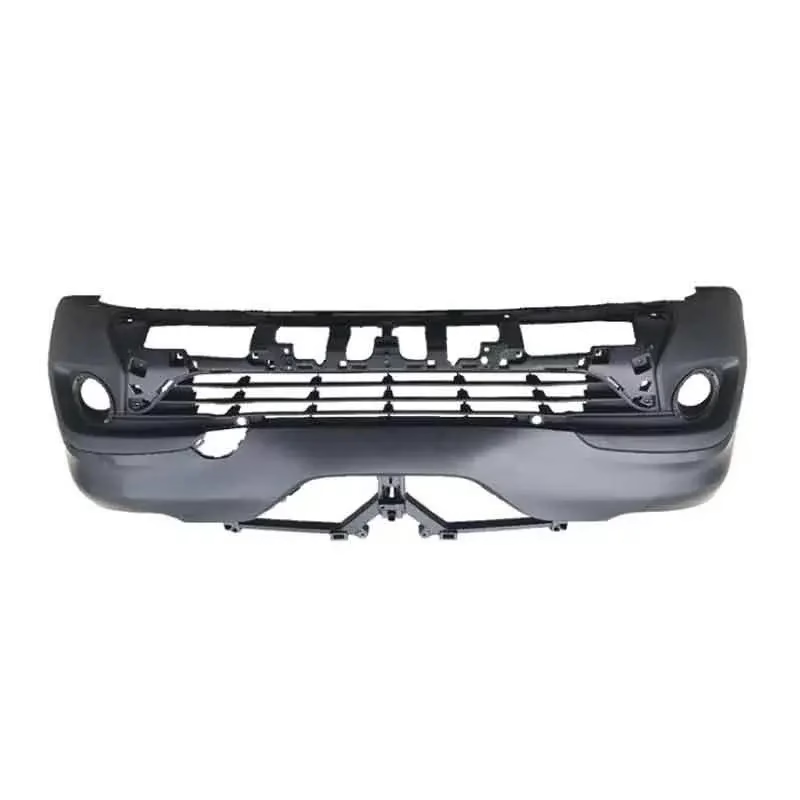
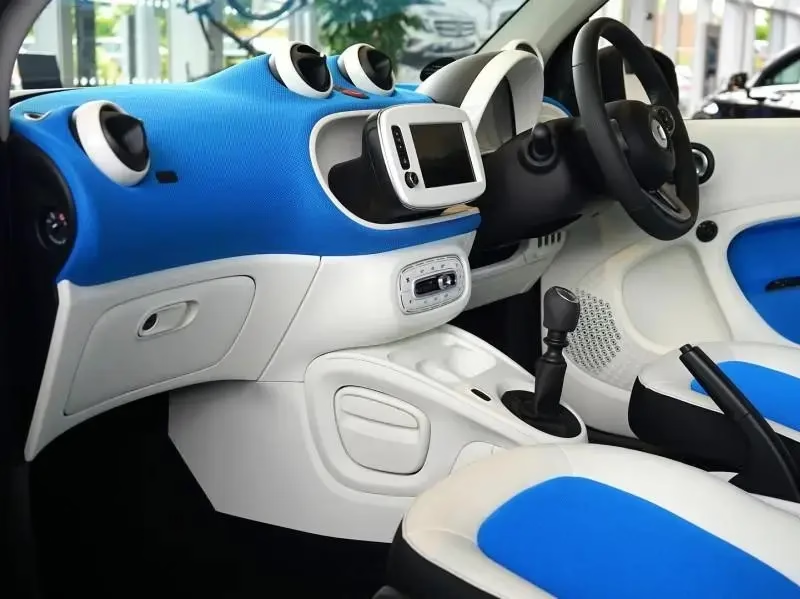
Automotive plastic prototype components machined for build support

Automotive and transport components

Trim, ducting and build-support parts that have to survive a hot bay without a mould being cut.

  • Under-bonnet heat
  • Build support
  • No mould tooling
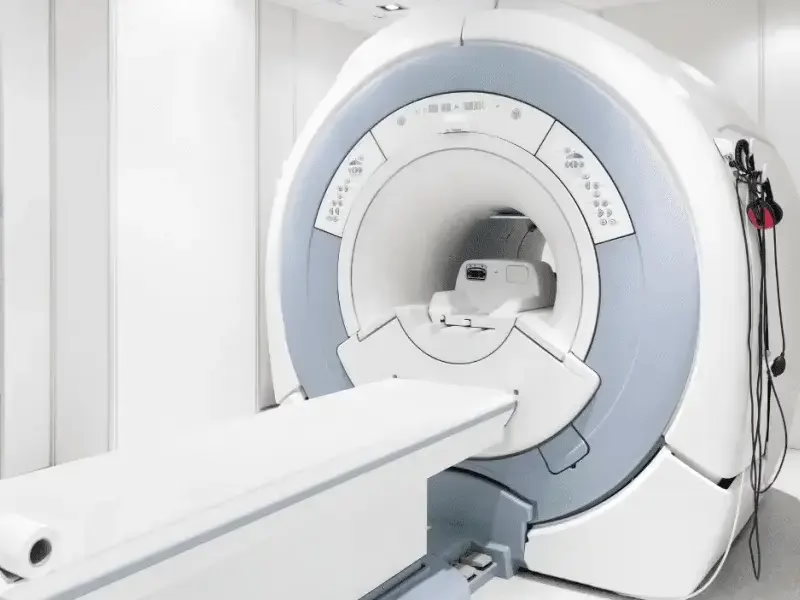
Plastic components for medical and laboratory equipment

Medical and laboratory parts

Small actuated components and fixtures machined under ISO 13485 process control, with documentation on request.

  • ISO 13485
  • PEEK and POM
  • Low volume
FAQs

Plastic machining questions

Can plastics really be held to ±0.005 mm?

On a stable section in a grade like POM, yes. ±0.005 mm / ±0.0002 in is our stated tolerance, applied to the features you call out and to dimensions the drawing leaves open.

On thin walls, wide flat panels or a hygroscopic grade like PA, the part moves with humidity and temperature, so a realistic tolerance plus a note about the environment is worth more than a tight number nobody can hold twice.

Do you anneal or stress-relieve plastic parts?

Where the material allows it and the part is likely to move, such as large PEEK or PC sections or parts with a lot of material removed, we will stress-relieve between roughing and finishing.

Tell us whether the part will be measured cold and used hot, because that decides which dimensions should be tight.

Which grades do you keep for plastic work?

POM, PA nylon, PC, PMMA, ABS and PEEK are the everyday grades, with sheet and rod stock in common sizes held in-house. Filled grades such as carbon-filled PEEK and PTFE are ordered per job, and that lead time is included in the quotation.

Do you add inserts and threads?

We machine the pockets for heat-set inserts, tap threads to suit the material and prepare bonded surfaces. Threads in plastic strip more easily than in metal, so where a fastener will be cycled often we usually suggest a heat-set insert or a coarser thread rather than a deeper tapped hole.

Can you make transparent parts?

PC and acrylic machine to a clear finish, and fine machined surfaces can be polished or vapour polished where the geometry allows. Truly optical clarity is a polishing process rather than a milling one, so it is quoted separately with its own lead time.

What is the smallest quantity you will machine?

One part. Prototype quantities have no minimum order and run on the same five-axis centers as production work with the same inspection, so a single test article behaves like the parts that follow it.

How do plastic parts get inspected?

Critical features are measured before shipment with reports on request, and we agree the measuring condition first: as machined, conditioned, or after stress relief. On hygroscopic grades that decision changes the numbers more than the machining does.

How fast can plastic parts be delivered?

Quotation and a free DFM analysis within 12 hours, production starting within 24 hours of approval, and parts shipping in 3–5 days on standard grades. Filled or specialist materials are scheduled to their own stock lead time, which is stated in the quotation.

Send the drawing, get a plastic-specific answer

We will tell you whether the wall thickness, the grade and the tolerance line up, and what it costs to machine, before you commit to a mould or a long-lead material order.

No minimum orderStress relief where neededInserts and threadsConfidential uploads

Trusted by engineers and manufacturers worldwide

Tesla Ford Motor Company BYD Auto Denso Magna International Boeing Airbus Medtronic KUKA FANUC