GreatLight CNC Machining Factory logo
CNC Machining
Rapid Prototyping
Materials
Industries
News
About GL

Get Instant Quote

Acrylic CNC Machining

Acrylic CNC Machining

We machine PMMA on 127 CNC centers, from a single clear lens cover to 10,000-unit runs. Tolerances to ±0.005 mm, flame-polished edges, and full inspection before every shipment.

PMMA and cast acrylic±0.005 mm toleranceRa 0.2–0.8 μm finishesNo minimum order quantity
CNC Machining Services Online
127High-precision CNC machines
±0.005 mmAchievable tolerance on PMMA
15 yearsMachining plastics and metals
3–5 daysTypical production shipping window
Where acrylic parts go wrong

Acrylic is easy to machine. It is harder to machine cleanly.

PMMA is soft, clear, and brittle at the same time. Four problems show up on almost every first run.

01

Do you get cloudy edges that never polish out?

PMMA melts when the tool dwells. The heat leaves a white haze along the cut that no amount of hand polishing fully removes. Feed rate, spindle speed, and cutter geometry have to be matched to the sheet, not to a generic plastic recipe.

02

Are you scrapping parts to hairline cracks?

Cast acrylic is brittle under point loads. Clamping pressure that is fine on aluminum will craze a 6 mm panel before the first pass. We use soft jaws and low-pressure fixtures, and we check the sheet for pre-existing stress before it goes on the table.

03

Does the clear part stop being clear after assembly?

Solvent vapors, thread-cutting oils, and paper masking left on too long all attack the surface. A part that measures perfectly can still fail visual inspection once it is bonded or cleaned. Masking type and removal timing matter as much as the cut.

04

Are thin walls bowing after you release the vise?

Acrylic moves when the clamping force comes off. A 1.5 mm wall that reads true in the fixture can spring 0.1 mm once free. We rough, stress-relieve where needed, then take a light finishing pass to hold the dimension the drawing actually calls for.

How we machine PMMA

Cut it cool, clamp it soft, finish it in one setup

Two capabilities carry most acrylic work: thermal control at the cutter, and edge finishing that does not distort the part.

CNC Lathe Technical Specifications Terminology
Thermal control

Chip evacuation decides whether the edge is clear or white

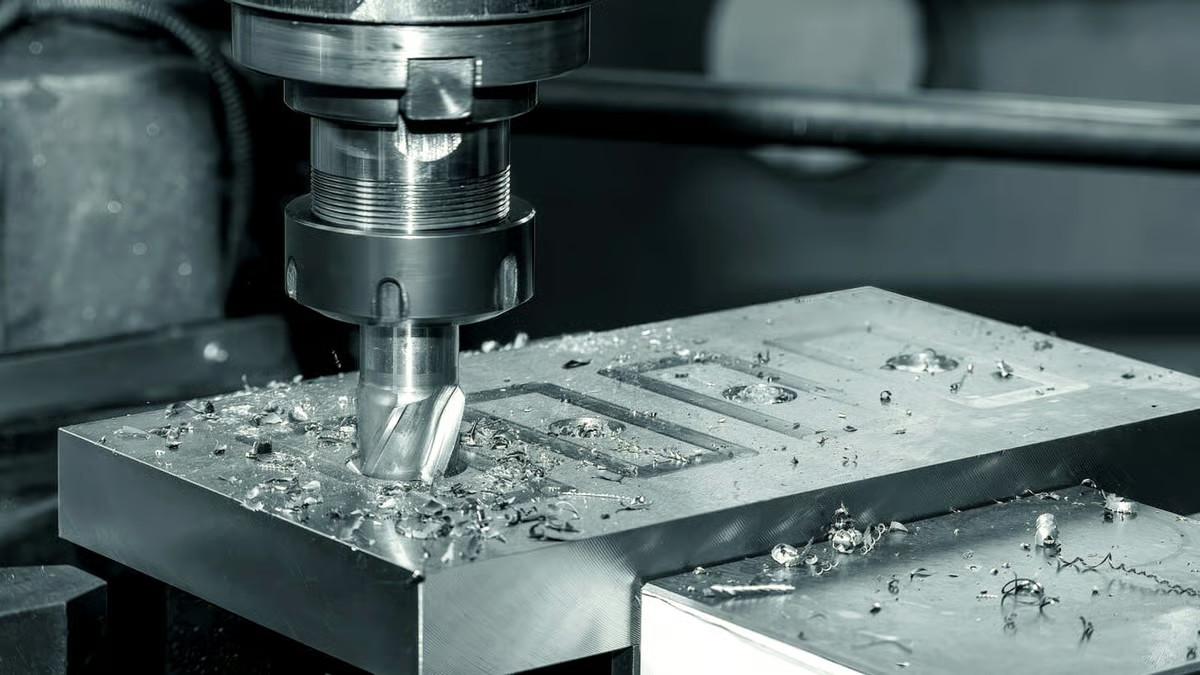
Acrylic cuts cleanly when the chip leaves the flute before it reheats the wall. We run single-flute and two-flute cutters with high helix angles, air blast instead of flood coolant, and feed rates set by chip load rather than by spindle maximum. The goal is a chip that looks like a comma, not dust.

For deep pockets and thick sheet, we program trochoidal paths so the cutter engages a constant arc instead of a full-width bite. That keeps the temperature even along the profile and avoids the local melting that turns a clear edge opaque.

  • 1
    Air blast, not flood coolantWater-based coolant clouds cast acrylic and can leave staining in the cut.
  • 2
    Single-flute finishing cuttersLarger chip room, less recutting, cleaner wall on deep profiles.
  • 3
    Trochoidal roughingConstant tool engagement keeps heat predictable across long cuts.
6011
Edge finishing

Flame polishing and vapor polishing, chosen by geometry

Machined acrylic has a matte edge unless you finish it. Flame polishing gives the clearest result on straight edges and simple curves, and it is fast. Vapor polishing reaches internal bores and tight radii that a torch cannot touch, but it needs tighter process control because the surface is being dissolved, not melted.

We pick the method from the drawing, not from habit. A light guide or a display window gets flame polishing. A fluid manifold with internal channels gets vapor polishing or a mechanical polish, depending on how much material removal the tolerance allows.

  • 1
    Flame polishingBest clarity on external straight edges and open curves.
  • 2
    Vapor polishingReaches internal bores and small radii the torch cannot.
  • 3
    Mechanical polishingUsed when the tolerance is tight and material removal must stay minimal.

Get Instant Quote

Material selection

Cast acrylic or extruded acrylic

The two grades machine differently. Pick by the part, not by the price of the sheet.

PropertyCast acrylicExtruded acrylic
Machining behaviorChips cleanly, less gummingSofter, tends to smear at high rpm
Optical clarityHigher, better for windowsSlight haze on thick sections
Thickness toleranceTighter across the sheetMore variation sheet to sheet
Best suited toOptical parts, thick panelsFlat panels, simple profiles
Solvent bondingStrong, predictable jointsFast bonding, more stress risk
CostHigher per sheetLower per sheet
What we run

Acrylic and plastic machining services

PMMA is one material in a shop that machines metals and plastics on the same floor.

01

3-axis CNC milling

Flat panels, pockets, and profiles up to 4,000 mm. The workhorse for display windows, covers, and enclosures.

02

4-axis CNC milling

Rotary work for cylindrical lenses, tubes, and parts with features on more than one face.

03

5-axis CNC machining

16 simultaneous 5-axis centers for contoured optical surfaces and undercut geometry in one setup.

04

CNC turning

Mill-turn centers handle acrylic bushings, spacers, and insulator bodies with tight concentricity.

05

Rapid prototyping

One-off clear parts for fit checks and design review, shipped before tooling is committed.

06

Surface finishing

Flame polishing, vapor polishing, bead blasting, and laser engraving with a 1.5 mm minimum character height.

Capability range

What the shop can hold on acrylic

Numbers apply to PMMA and other engineering plastics unless noted.

ItemRangeNotes
Achievable tolerance±0.005 mmOn critical features, with stable fixturing
Fine surface finishRa 0.2–0.8 μmAfter polishing operations
As-machined finishRa 1.6–3.2 μmStraight off the cutter
Maximum part size4,000 mmSingle axis, 4,000 × 400 × 150 mm
Rotary workØ400 mmTable capacity on mill-turn centers
Sheet thicknessTypically 1–50 mmCast and extruded grades
Quality rate99.99%Across inspected production
Why engineers send PMMA here

Six reasons the clear parts come back clear

±0.005 mm

Tolerance that holds on plastic

Holding a number on acrylic is harder than on aluminum. We fixture soft, cut cool, and verify after the part is free of the vise.

15Y

Fifteen years on the floor

Founded in 2011. The process knowledge comes from parts that failed early and were fixed, not from a material data sheet.

127

Machines under one roof

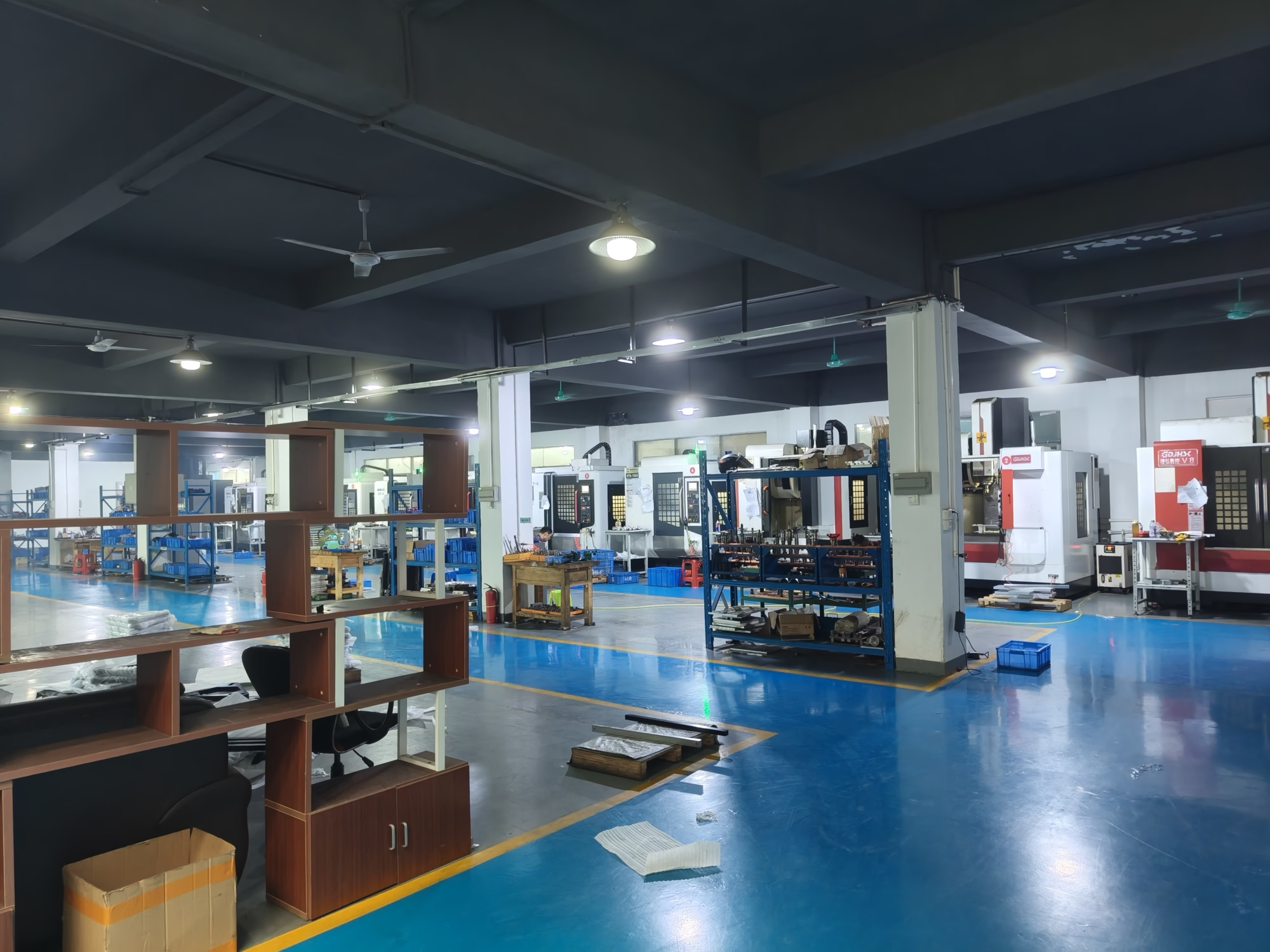
Milling, turning, and finishing in three wholly-owned plants covering 7,600 m². No brokering your job out.

12h

Quote and DFM in half a day

Send a STEP file and a drawing. You get a quotation and a free DFM analysis within 12 hours.

24h

Production starts fast

Once the drawing is locked, production can start within 24 hours. Parts typically ship in 3–5 days.

100%

Inspection before shipment

Raw material check, in-process monitoring, and final inspection on every order. Reports on request.

7,600 m²Manufacturing space
150Technicians on staff
3Wholly-owned plants
< 2%Historical late-delivery rate
Where acrylic parts go

Industry requirements and what we deliver

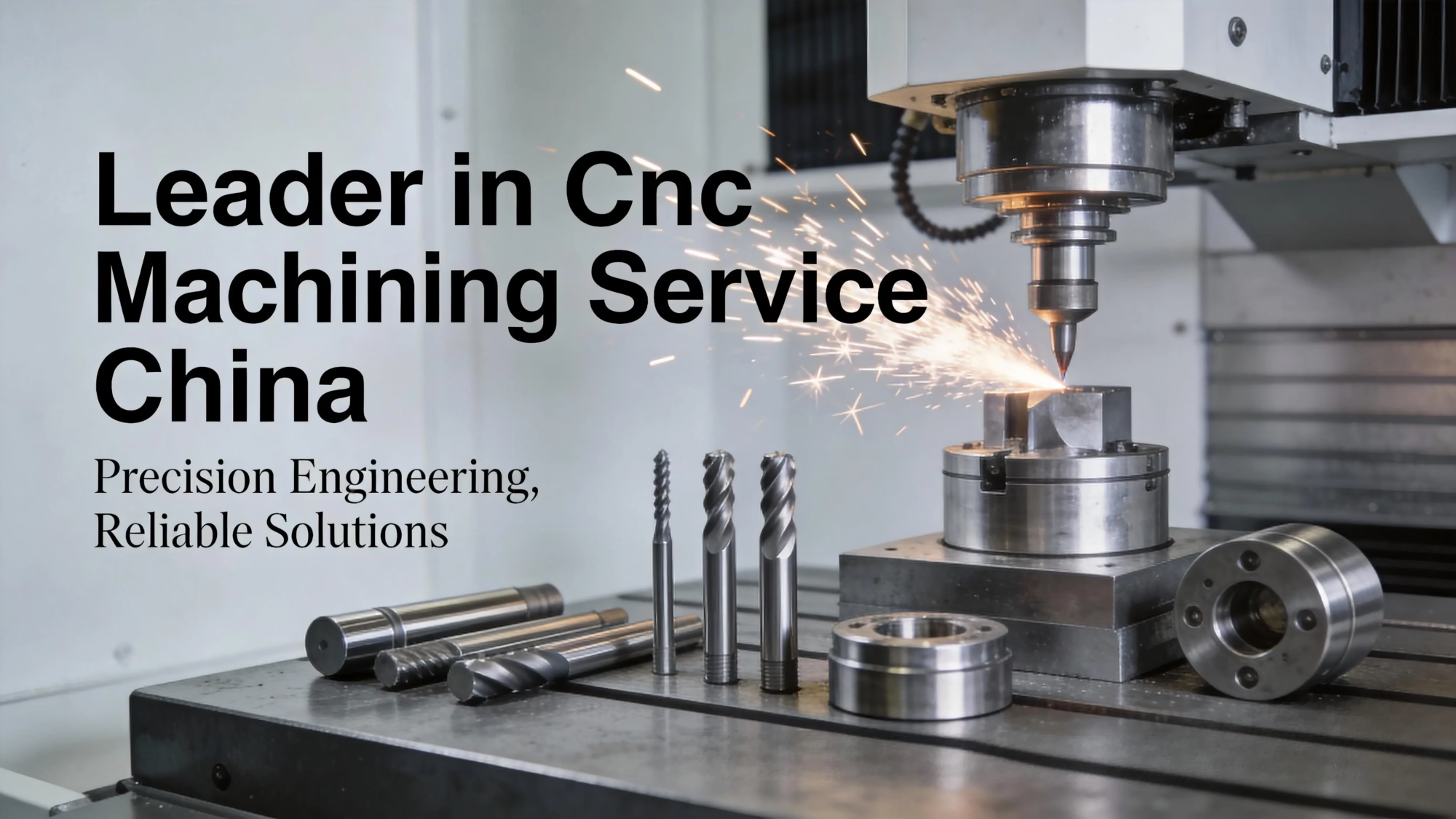
Leader in Cnc Machining Service China

Electronics and display

Light guides and window covers need edge clarity and no internal stress marks, because any haze shows under backlight.

  • Ra 0.2–0.8 μm finish
  • Vapor polished bores
GreatLight Metal new factory building

Medical devices

Instrument covers and fluid manifolds must be cleanable and dimensionally repeatable batch to batch, with traceable inspection.

  • ISO 13485:2016
  • 100% inspection
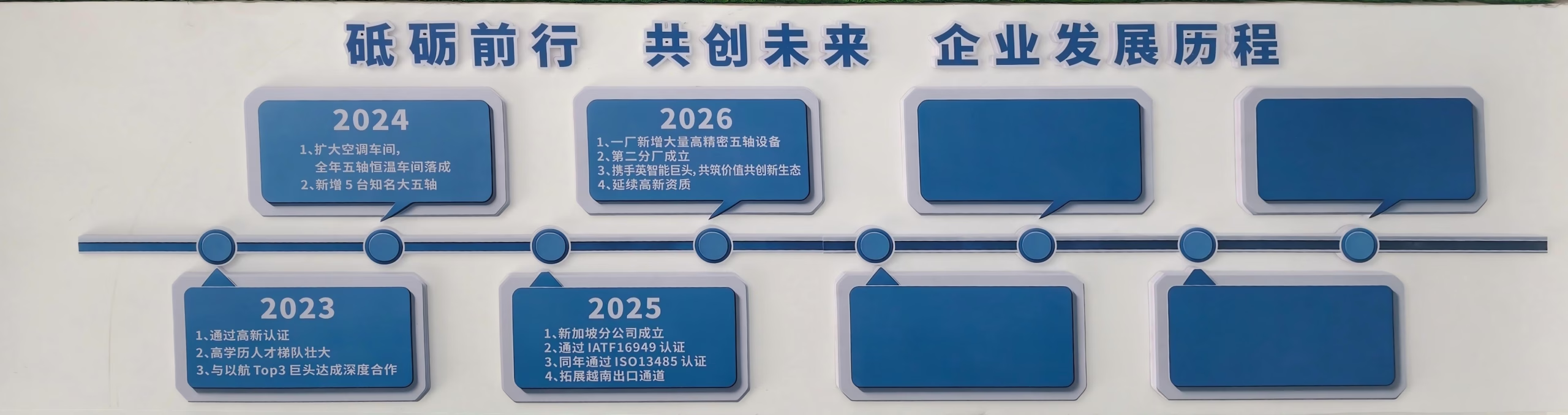
Forge ahead with determination and create the future together.

Industrial machinery

Guard panels and inspection windows take impact and vibration. Acrylic gives the clarity without the weight of glass.

  • Up to 4,000 mm
  • ±0.005 mm tolerance
oplus_262178

Automotive and EV

Interior light elements and sensor covers need color consistency and edge quality that survives bonding and aging.

  • IATF 16949:2016
  • 3–5 day shipping
FAQs

Questions engineers ask before sending PMMA

Is acrylic a good material for CNC machining?

Yes, with the right parameters. PMMA machines faster than most metals and leaves a good surface if the cutter stays cool and the chip clears. The failure mode is heat, not hardness.

It is a poor choice when the part needs high impact strength, continuous outdoor UV exposure without a coating, or operating temperatures above roughly 80 °C.

How do you hold ±0.005 mm on a soft plastic?

Clamping pressure and thermal growth are the two variables that matter most. We use soft jaws and low-pressure fixtures so the part is not distorted while it is being measured.

We also finish after releasing the vise where the geometry allows, and check critical dimensions with the part at rest rather than in the fixture.

Will the machined edges be transparent or frosted?

As-machined, acrylic edges are matte. They look frosted and scatter light.

Flame polishing or vapor polishing restores clarity. The right method depends on geometry: flame for open external edges, vapor for internal bores and tight radii.

Can you machine cast and extruded acrylic?

Both. Cast acrylic gives better optical clarity and holds thickness more consistently, so it suits optical parts and thick panels.

Extruded acrylic is cheaper and bonds quickly, but it smears more easily at high spindle speeds. Tell us the grade on the drawing and we program to it.

What is the largest acrylic part you can make?

Up to 4,000 mm on the long axis, with a travel envelope of 4,000 × 400 × 150 mm on the large machines.

For parts beyond that, we can machine in sections and bond, but the joint will be visible in a clear part. Review that trade-off before committing.

Does acrylic crack during machining?

Not from cutting forces, but it can craze from point loads and from pre-existing stress in the sheet. Cast acrylic sometimes arrives stressed from the supplier.

We inspect incoming sheet and adjust clamping when a batch shows stress. Sharp internal corners in the design are also a risk, so we add radii where the drawing allows.

What surface finishes do you offer on PMMA?

Flame polishing, vapor polishing, mechanical polishing, bead blasting, and laser engraving. Laser marking has a 1.5 mm minimum character height.
As-machined surfaces sit at Ra 1.6–3.2 μm. Polished surfaces reach Ra 0.2–0.8 μm depending on geometry and access.

What do you need to quote an acrylic CNC job?

A STEP or IGES file plus a 2D drawing with tolerances and finish callouts. Tell us the acrylic grade if it is specified.

Quotation and a free DFM analysis come back within 12 hours. There is no minimum order quantity, so a single prototype is fine. Uploads stay confidential and we can sign an NDA on request.

Send your acrylic drawing, get a quote in 12 hours

Upload the STEP file and the 2D drawing. We return a price, a DFM review, and the finishing method we recommend for your geometry.

12-hour quote100% inspectionNo minimum order quantityNDA on request

Trusted by engineers and manufacturers worldwide

Tesla Ford Motor Company BYD Auto Denso Magna International Boeing Airbus Medtronic KUKA FANUC