
01
You can see the cut from across the room
A hot beam leaves a white or frosted edge on clear PMMA. On a light guide or a front panel that edge stays visible after assembly, and the part has to be remade or hand-polished, which adds days.
We cut clear, tinted and opalescent PMMA sheet into brackets, covers, light guides and display parts. Flame-polished edges on straight cuts, drilled and tapped holes on the same drawing, one prototype or 10,000 pieces.
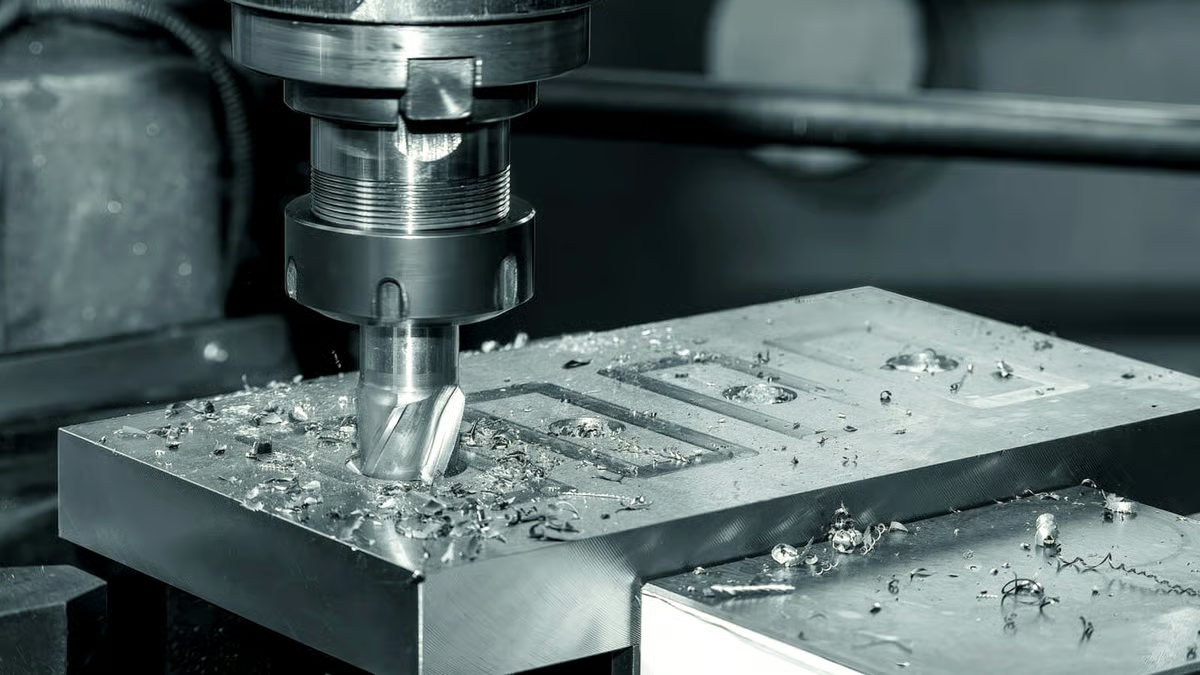
Most acrylic rejects come from heat and handling, not from the drawing.
A hot beam leaves a white or frosted edge on clear PMMA. On a light guide or a front panel that edge stays visible after assembly, and the part has to be remade or hand-polished, which adds days.
Acrylic is brittle. A hole drilled too fast, or a screw tightened into an undersized hole, starts a craze line. Two weeks later the panel is in the field with a crack running from the fastener.
Heat from a slow, high-power pass puts stress into cast sheet. A 300 mm cover comes off the bed flat and sits 1–2 mm off the frame a day later. Gaskets and seals no longer close the gap.
Lens focus drifts, nozzle tips wear, and nobody re-measures. Hole positions creep, some panels fit and some do not. Your assembly line starts sorting parts by hand instead of building.
Laser for the profile. CNC for the holes that must stay on center.
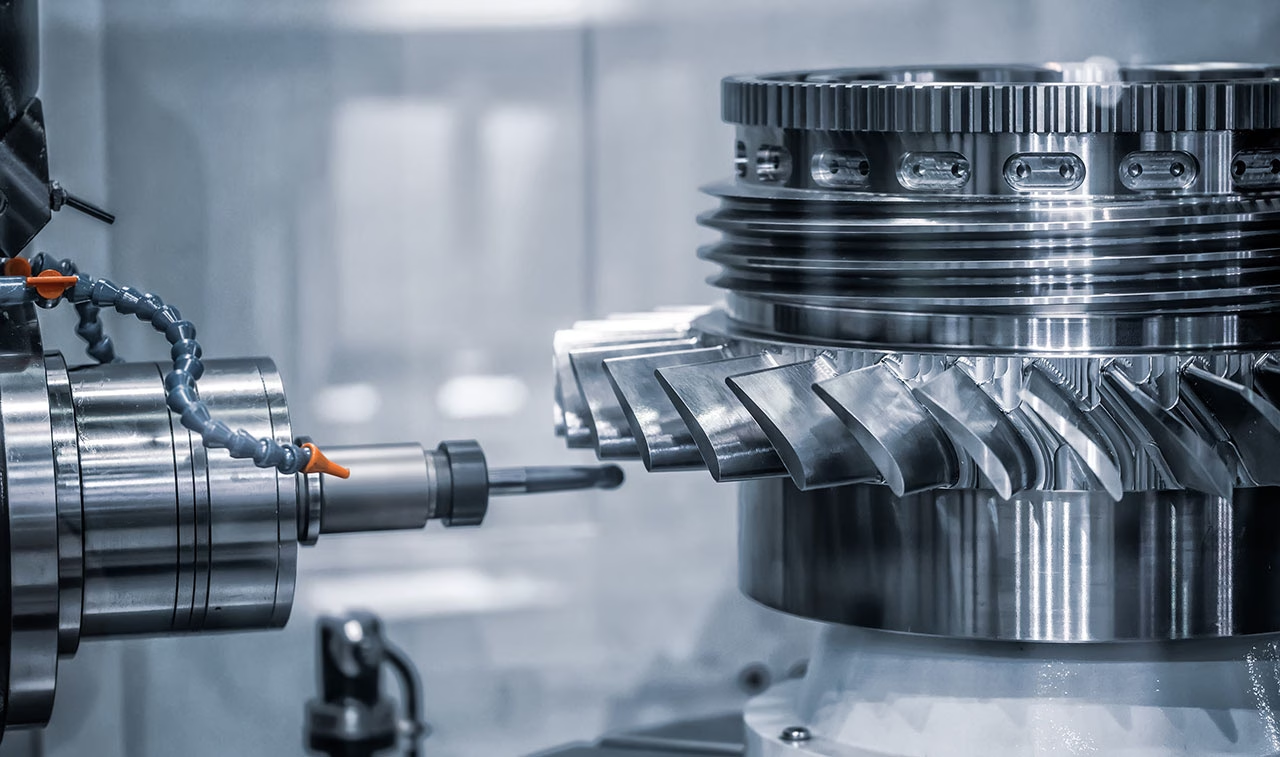
Clear PMMA cuts best when the beam moves fast and the power stays low. A slow pass melts more material than it removes, and that is where the white edge comes from. We run cast and extruded sheet on separate settings, and adjust for thickness rather than running one program across the whole range.
Straight profiles come off the bed with a flame-polished edge on cast acrylic. Tight inner corners and dense hole patterns are a different story, and we will tell you when the beam cannot hold the tolerance you drew.
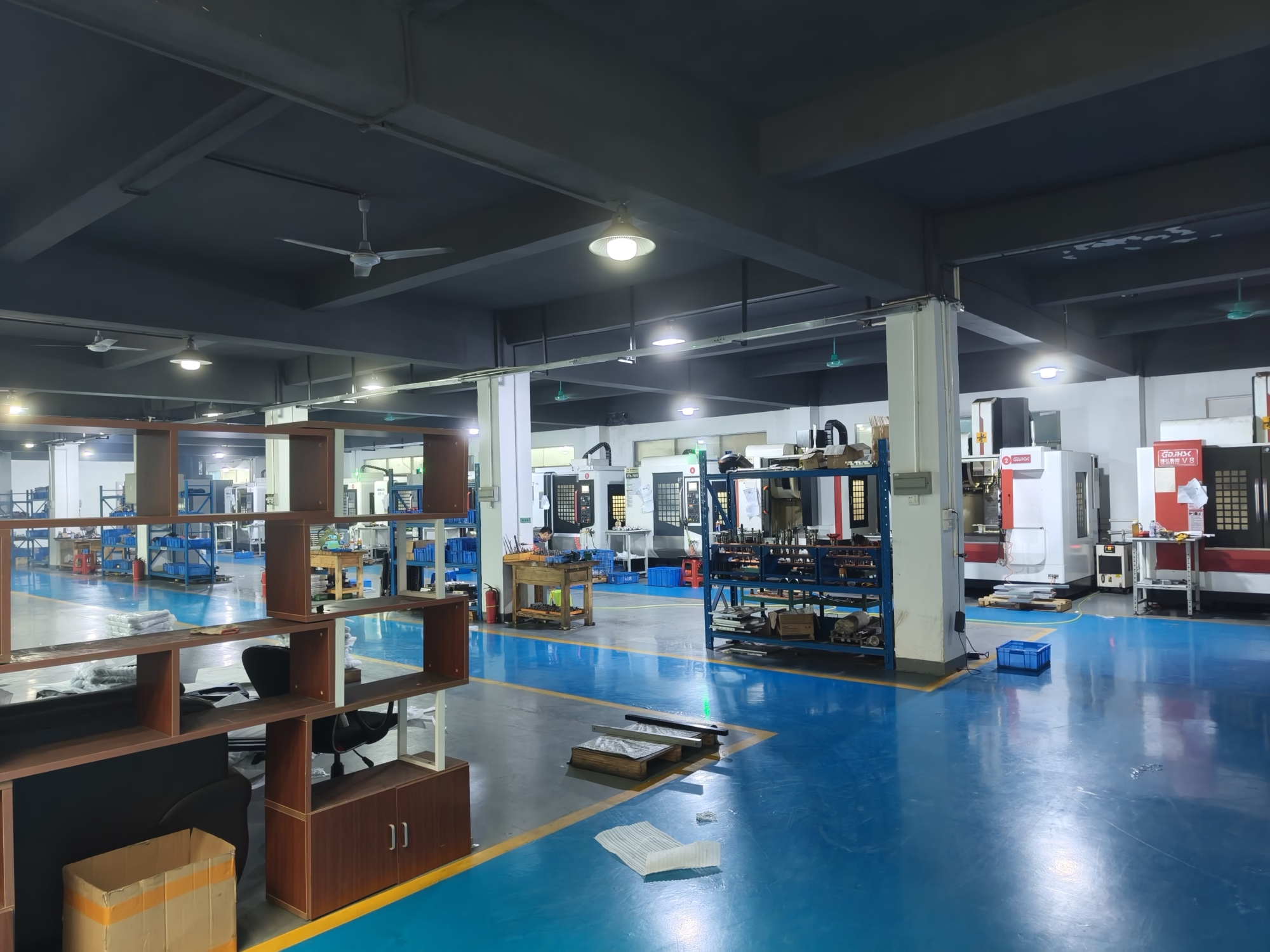
A laser-cut outline with hand-drilled holes is not a finished part. We move the blank to a CNC mill or a drill press and cut the holes, counterbores, pockets and edge chamfers dry, with cutters ground for plastic. That holds hole position and stops the cracking that starts at a hole cut with the wrong feed.
Threads in acrylic need a coarser pitch than the same size in aluminum. We tap with the right tap, not the one that was already in the machine, and we deburr the back side before the part leaves the bench.
Both run in the same shop floor. Pick by feature, not by habit.
| Feature | Laser cut | CNC routed |
|---|---|---|
| Straight outline, clear edge | Flame polished | Visible tool marks |
| Hole position | ±0.1 mm | ±0.05 mm |
| Inner corner | 0.5 mm radius minimum | 0.2 mm radius possible |
| Sheet thickness | 1–20 mm | 2–50 mm |
| Engraved text or logos | Yes, shallow depth | Yes, with V-bits |
| Best fit | Panels, covers, displays | Thick blocks, tight holes |
Same shop handles the cut, the machining and the finish.
Clear, tinted and opalescent PMMA profiles up to 4,000 mm long. Straight edges come off the bed polished. We nest parts on the sheet to cut waste on multi-part orders.
Pockets, counterbores, slots and stepped profiles on cast sheet. Dry cutting with plastic-specific tooling keeps the surface clear instead of hazy.
Hole patterns held to ±0.05 mm, tapped M3 to M12 with coarse pitch. We deburr both faces so no chip sits under a gasket.
Flame and mechanical polishing for light guides and clear covers. We match the finish on the cut edge to the face so the part reads as one piece.
Laser marking for part numbers, scales and logos, minimum character height 1.5 mm. Depth is shallow enough to leave the sheet flat.
One piece or 10,000+. No minimum order quantity. The first article is measured and the report travels with the run.
Numbers you can check against your drawing.
| Item | Range | Note |
|---|---|---|
| Sheet thickness | 1–20 mm | Laser cut |
| Maximum part size | 4,000 mm | Long panels and covers |
| General tolerance | ±0.1 mm | Laser cut profile |
| Machined tolerance | ±0.005 mm | CNC holes and pockets |
| Surface finish | Ra 0.8–1.6 μm | Machined faces |
| Edge condition | Flame polished | Straight cast PMMA cuts |
| Minimum hole | 1.0 mm | Laser, thinner sheet |
| Threads | M3–M12 | Coarse pitch, cut taps |
Fifteen years cutting and machining sheet, rod and plate. Settings for cast and extruded PMMA are written down, not guessed each time.
Holes, pockets and steps held to ±0.005 mm when the drawing needs it. Laser profiles quoted at ±0.1 mm.
Send a drawing and get a price plus manufacturability notes within 12 hours. Production can start within 24 hours of approval.
Raw material check, in-process monitoring, final inspection. Reports on request for every lot.
One prototype and a 10,000-piece run go through the same setup sheet and the same inspection.
Dongguan plus a Singapore factory. 7,600 m² of floor and 150 technicians across the group.

Clear front panels and light guides where the edge has to disappear in the assembly.

Long PMMA windows and covers for machine doors, cut to fit existing frames.
Nested parts cut from one sheet, with engraved scales and logos on the same pass.

Clear covers where flatness matters because a gasket has to seal against the face.
We cut PMMA sheet from 1 mm to 20 mm. Below 3 mm the edge is easy to keep clean. Above 12 mm the kerf widens and the edge picks up more color, so we often route the profile instead and cut only the holes with the laser.
If your part is thicker than 20 mm, send the drawing anyway. A CNC routed profile usually costs less than trying to force the laser through it.
On cast PMMA, straight cuts come off the bed with a flame-polished edge. Curves and tight corners are cooler and can look slightly frosted. We can polish those edges afterward.
Extruded sheet behaves differently from cast sheet. Tell us which one you are buying, or let us source the sheet, and the settings change with it.
Quote laser-cut profiles at ±0.1 mm. That covers the kerf compensation and normal sheet movement.
For anything tighter, we cut the outline on the laser and machine the critical features on a CNC mill. Machined holes and pockets hold ±0.005 mm when the drawing calls for it.
Yes. Holes, counterbores, slots and threads are cut after the laser pass, on the finished profile, so hole position stays tied to the outline.
Acrylic needs a coarser thread pitch than metal. We tap M3 to M12 with cut taps and deburr both faces before packing.
STEP, IGES, DXF, DWG and PDF all work. For sheet parts a DXF with the outline, hole positions and material thickness is the fastest route to a quote.
If you only have a PDF, we will redraw the outline and send it back for approval before cutting.
Parts are masked with protective film where the sheet comes masked, and separated with foam or paper between layers. Hardware is packed so nothing metal touches a clear face.
Tell us if the part is a visible cosmetic panel. Packing changes for those, and the inspection step adds a check under raking light.
No. We run one prototype and we run 10,000 pieces and up. The setup sheet and the inspection steps are the same either way.
Small runs ship in 3–5 days once production starts. Larger runs get a schedule with the quote.
Yes. Uploads are secure and confidential, and we will sign an NDA on request before you share the drawing.
We do not publish customer names, part numbers or drawings. If you need a written agreement first, ask and we will send one.
Upload your DXF or STEP file and we will come back with a price, a lead time and manufacturability notes. No minimum order quantity, and the first article is measured before the run ships.
12-hour quote100% inspectionNo minimum orderNDA on request
Trusted by engineers and manufacturers worldwide










Upload your 3D model or 2D drawing and get a quotation with a free DFM analysis. Maximum processing size 4,000 mm.
CNC Metals 13 grades
CNC Plastics 10 grades
Machines & processes 12 options
Surface & post-processing 10 options
Material: not selected Machine: not selected Post-process: not selected
Fill in this short form and we'll open WhatsApp with your message ready to send. We only use these details to reply to you.
Nothing is sent until you press send inside WhatsApp.