
01
Holes drift out of position after bending
A flat pattern that ignores bend deduction puts hole centers 0.3–0.5 mm off after forming. The mating bracket no longer lines up, and the whole batch needs rework or scrap.
GreatLight cuts, forms, and welds custom housings, brackets, and chassis in 3–5 days. Bending and laser cutting to ±0.005 mm, with 100% inspection before shipment.
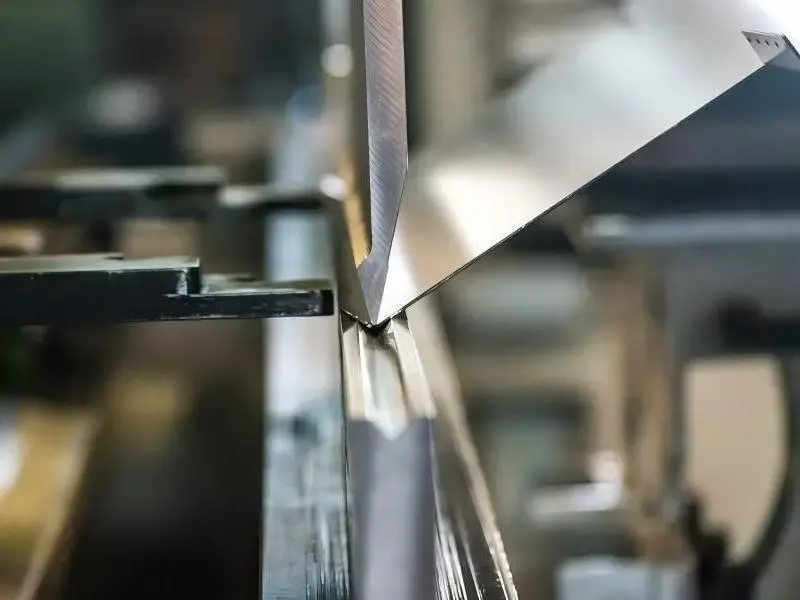
These four problems show up often enough that we plan around them before cutting any blank.
A flat pattern that ignores bend deduction puts hole centers 0.3–0.5 mm off after forming. The mating bracket no longer lines up, and the whole batch needs rework or scrap.
Heat from MIG or TIG welding warps thin panels. A frame that measured square on the bench comes back 1–2 mm out of diagonal, so doors and covers no longer fit.
Handling between cutting, bending, and packing leaves marks on brushed or anodized faces. The parts function, but they fail incoming visual inspection.
Waiting days for a price, then learning the shop outsourced finishing and added two weeks. Assembly schedules get pushed, and the launch date moves.
Cutting, forming, welding, and finishing happen under one roof, so nothing waits on a subcontractor.
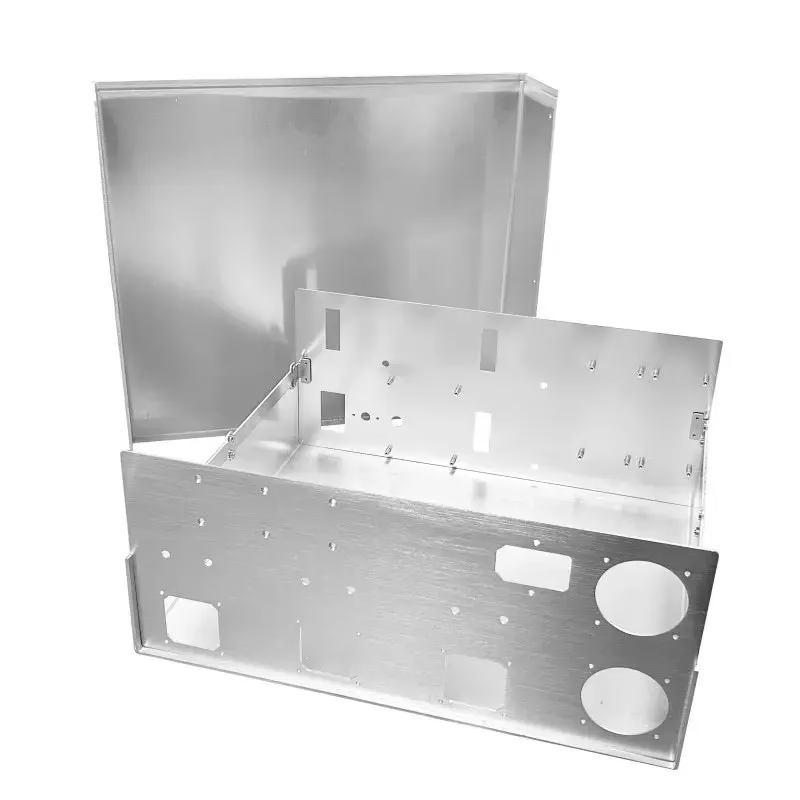
We build the flat pattern from your 3D model, not from a hand-drawn DXF. Bend deduction and K-factor are set per material and thickness, so hole positions stay where the model puts them after forming. Fiber laser cuts mild steel, stainless, aluminum, and copper up to 4,000 mm long.
Thin gauges move fast. A 1.5 mm aluminum panel with a few hundred holes cuts in minutes, and nesting keeps material cost down on larger runs. For parts that will be visible, we cut from the protected side and leave the film on until forming is done.
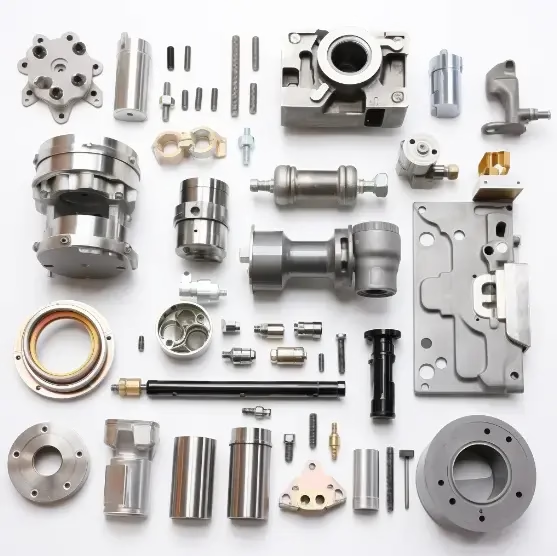
Press brakes with CNC backgauges hold bend angles to ±0.5° on panels up to 4,000 mm. For a run of 200 brackets, the first article is checked against the drawing; the rest follow the same program. We note bend order so a part that needs four bends does not get trapped by its own flange.
Welding is done by fabricators who work thin gauge daily. We use fixtures and tack sequences that limit heat input, then check diagonals before the part leaves the bench. Pressed-in nuts, standoffs, and rivets go in after welding so threads stay clean.
Pick the route before you send drawings. The wrong one adds cost without adding accuracy.
| Part condition | Recommended route | Why |
|---|---|---|
| Thickness under 3 mm, flat or few bends | Laser cut + press brake | Fastest and cheapest for thin gauge |
| Enclosed frame with seams | Cut + bend + welded assembly | Seams close gaps that bending alone cannot |
| Visible brushed or anodized face | Cut from protected side, film on | Keeps cosmetic surfaces free of marks |
| Wall thickness over 6 mm | CNC machining instead | Thick plate bends poorly and distorts |
| Tight thread or bore tolerance | Fabricate, then machine the feature | Holds ±0.005 mm where it matters |
| One prototype, no fixture budget | Laser cut + hand-formed | No tooling cost, geometry still true |
Six processes cover most enclosure, bracket, and chassis work.
Fiber laser cuts mild steel, stainless, aluminum, and copper up to 4,000 mm long. Flat patterns are built from your 3D model so holes land where the drawing says after forming.
Press brakes with CNC backgauges hold bend angles to ±0.5°. Bend order is planned so multi-flange parts do not collide with the tooling.
MIG, TIG, and spot welding for frames, enclosures, and brackets. Fixtures and tack sequences control distortion on thin panels.
Pressed-in nuts, standoffs, rivets, and threaded inserts installed after welding. Threads stay clean and hardware sits flush.
Anodizing, powder coating, zinc plating, black oxide, bead blasting, brushing, and polishing. Laser marking down to 1.5 mm character height.
When a sheet metal part needs a tight bore or thread, we machine that feature after fabrication instead of chasing it with a drill.
Standard stock we run every week. Other grades are quoted on request.
| Category | Options | Typical use |
|---|---|---|
| Aluminum | 5052, 6061, 6063, 6082, 7075 | Enclosures, brackets, panels |
| Stainless | 304, 316L, 430, 17-4PH | Food, medical, outdoor hardware |
| Steel | 1018, 1045, A36, SPCC, SECC | Chassis, frames, mounting plates |
| Copper and brass | C110, C27400, C36000 | Busbars, shielding, contacts |
| Thickness range | 0.5 mm to 6 mm typical | Thicker plate routed to CNC |
| Finishes | Anodize, powder coat, zinc, black oxide | Cosmetic and corrosion protection |
Numbers, not adjectives.
Laser cutting and bending hold ±0.005 mm on critical features. Standard panel work runs at ±0.1 mm, which is enough for most enclosures.
Send a STEP file and get a price plus notes on bend relief, hole placement, and material choice within 12 hours.
Once the drawing is released, cutting can start within 24 hours. No waiting for a fixture queue.
Raw material check, in-process monitoring, and final inspection on every lot. Reports on request.
One prototype or a 10,000-part run. Same process, same inspection, no setup surcharge for small lots.
Working with thin gauge since 2011. The bend and weld problems above are ones we have already solved.
Aluminum chassis with vent cutouts, mounting bosses, and a powder-coated face.
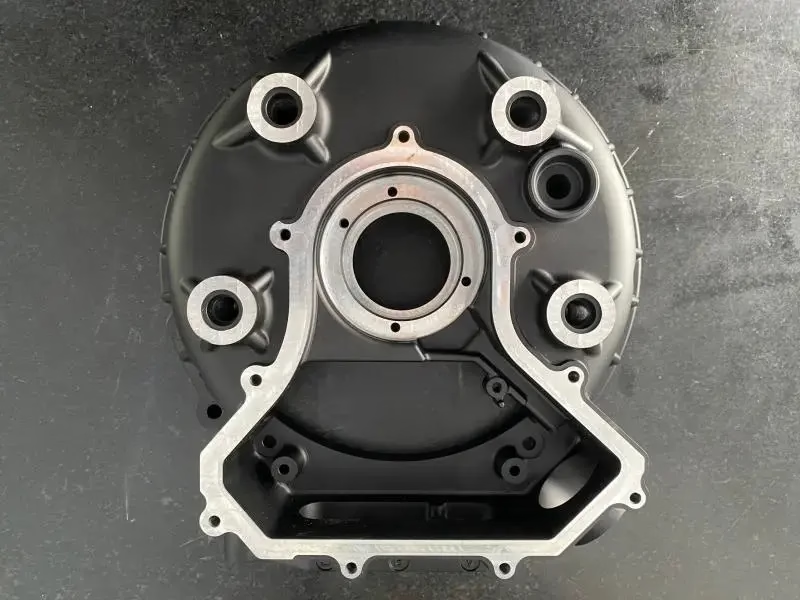
Stainless and steel brackets with pressed-in nuts, run under IATF 16949 process control.
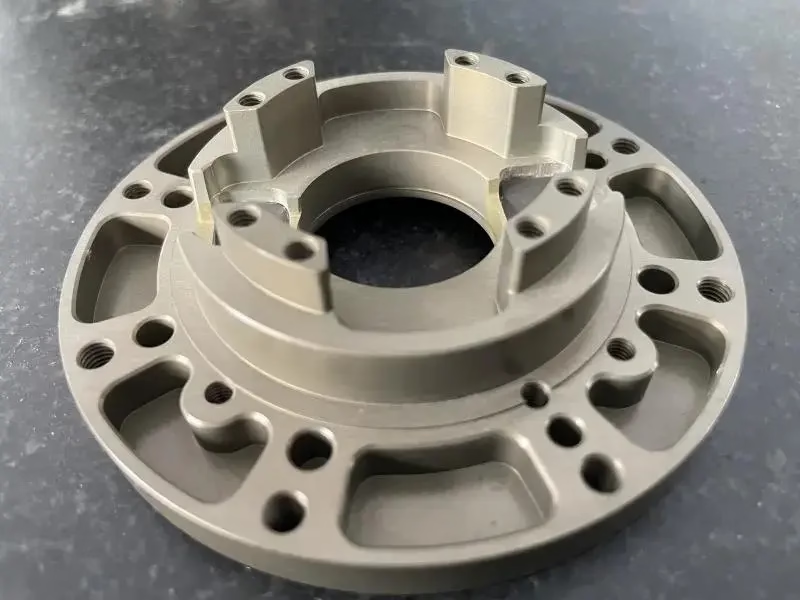
Stainless 304 and 316L covers, passivated, with edges deburred for handling.
Welded frames kept square with fixtures, then anodized for a clean finish.
STEP or Parasolid for the 3D model, plus a PDF drawing with tolerances and finish notes. A DXF alone is not enough for us to set the flat pattern correctly.
If you only have a DXF, send it with the material, thickness, and bend requirements. We will build the 3D model and flag anything that looks ambiguous before quoting.
The tolerance applies to cut features and machined details, not to every bend radius. Bends are held to ±0.5° on a CNC press brake.
If a hole or bore needs ±0.005 mm, we usually cut it undersize and machine it after forming. That costs more than a punched hole, so we only do it where the drawing calls for it.
0.5 mm to 6 mm is the common range. Thin gauges run fast on the laser and bend cleanly.
Above 6 mm, bending gets difficult and distortion is harder to control. Those parts usually go to CNC machining instead, and we will tell you when that is the better route.
Yes, with fixtures and a planned tack sequence. We tack the frame, check diagonals, then complete the welds in an order that balances heat on both sides.
We hold squareness to about 0.5 mm on frames up to 1,000 mm. Tighter than that usually means machining after welding, which we can do in-house.
Anodizing, powder coating, plating, black oxide, blasting, and polishing are all available through our process. We control the schedule instead of waiting on a third party.
Laser marking is done in-house with a minimum character height of 1.5 mm. Below that, the mark gets hard to read after coating.
No. One prototype and a 10,000-part run go through the same process and the same inspection.
Small lots do not carry a setup surcharge, though unit cost drops as quantity rises because laser nesting and bending setup are spread across more parts.
Quotation and DFM feedback within 12 hours. Production can start within 24 hours of drawing release, and parts typically ship in 3–5 days.
Finishing adds time depending on the process. Powder coating and anodizing are the usual reasons a schedule extends, so we quote them into the lead time up front.
Uploads are handled as confidential, and we sign an NDA on request before reviewing drawings.
We hold ISO 27001:2022 for information security, which covers how files are stored and who can access them.
Upload a STEP file and a drawing. We will reply with a quote and DFM notes, then start cutting within 24 hours of release.
12-hour quote100% inspectionNo minimum orderNDA on request
Trusted by engineers and manufacturers worldwide










Upload your 3D model or 2D drawing and get a quotation with a free DFM analysis. Maximum processing size 4,000 mm.
CNC Metals 13 grades
CNC Plastics 10 grades
Machines & processes 12 options
Surface & post-processing 10 options
Material: not selected Machine: not selected Post-process: not selected
Fill in this short form and we'll open WhatsApp with your message ready to send. We only use these details to reply to you.
Nothing is sent until you press send inside WhatsApp.